










Now Reading: How to Choose Your First Adjustable Dumbbells (Buyer’s Guide)
-
01
How to Choose Your First Adjustable Dumbbells (Buyer’s Guide)


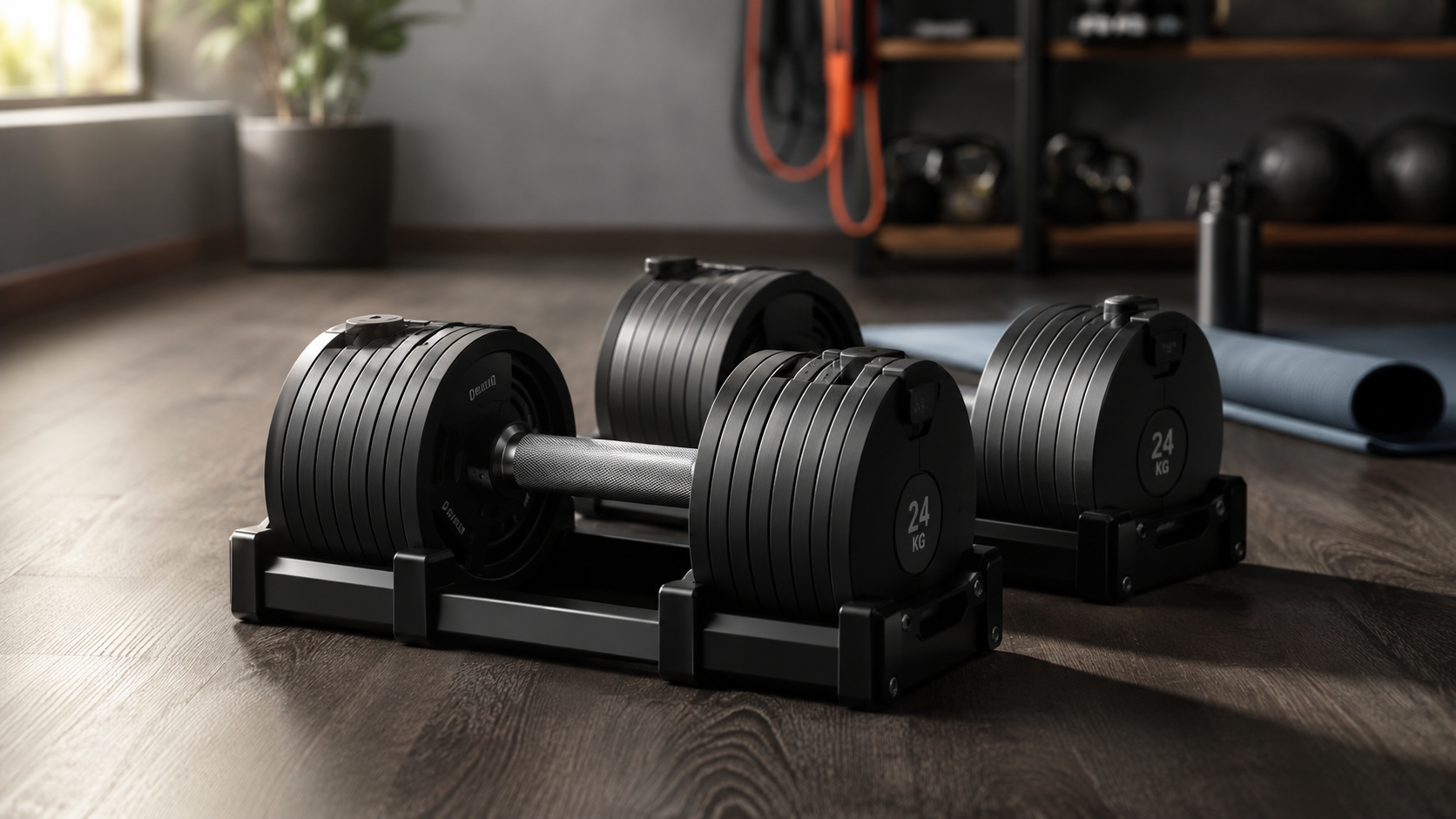
Instead of buying a dozen pairs of fixed dumbbells and watching them slowly take over your living room, a single adjustable set can replace an entire rack — and grow with you as you get stronger.
But “just buy adjustable dumbbells” isn’t enough advice when you’re staring at a wall of options ranging from $80 budget sets to $900 gym-grade systems.
This guide walks through exactly what to look for, how much weight you actually need as a beginner, and which sets are worth your money in 2026.
Why Adjustable Dumbbells Make Sense as a First Purchase
Before getting into specs, it’s worth understanding why adjustable dumbbells beat fixed ones for most beginners:
- Space-saving: One pair can replace 10–16 sets of fixed dumbbells, which matters a lot in an apartment, garage corner, or spare room.
- Cost-efficient over time: A full rack of fixed dumbbells from 5 to 50 lbs can cost more than $1,000. A comparable adjustable set typically runs $200–$450.
- Room to grow: As a beginner, you don’t yet know your ceiling. Adjustable dumbbells let you increase load in small increments instead of buying new equipment every few months.
- Faster workouts: Modern dial and pin systems let you change weight in seconds, so you’re not stopping mid-session to dig through a bin of loose plates.
Adjustable vs. Fixed Dumbbells at a Glance
| Fixed Dumbbells | Adjustable Dumbbells | |
|---|---|---|
| Space required | High (needs a rack) | Low (one compact set) |
| Upfront cost | Lower per pair, higher overall | Higher upfront, cheaper long-term |
| Weight changes | Instant (grab a new pair) | A few seconds (dial/pin/spin-lock) |
| Best for | Small collections, gyms, group training | Home gyms, beginners, tight spaces |
| Durability | Very high, minimal moving parts | Good, but depends on build quality |
If you’re genuinely tight on space or budget and only need two or three weights to start, a small set of fixed dumbbells (say, 5, 10, and 15 lbs) is a valid alternative. But for most people building a home gym from scratch, adjustable is the better long-term bet.
The 3 Main Types of Adjustable Dumbbell Systems
Not all adjustable dumbbells work the same way. Understanding the mechanism is the single most important thing before you buy, because it affects speed, durability, and price.
1. Dial (selectorized) systems — You turn a dial on the end of the handle to select a weight, then lift the handle out of its cradle; the plates you didn’t select stay behind. This is the Bowflex SelectTech-style mechanism. It’s the fastest and most beginner-friendly option, typically changing weight in 2–3 seconds.
2. Pin-selector block systems — A magnetic or mechanical pin slides into the weight stack to “lock in” your chosen load (PowerBlock is the best-known example). These tend to be more compact and very durable, though the boxy shape feels different in hand than a traditional dumbbell.
3. Spin-lock (plate-loading) systems — You manually thread weight plates onto a handle and secure them with a screw collar. This is the cheapest and most old-school option, but changing weight takes much longer and there’s more room for plates to loosen mid-set if collars aren’t checked regularly.
For a first set, dial and pin-selector systems are worth the extra cost — they’re faster, safer, and more pleasant to actually use, which matters for building a consistent habit.

7 Key Factors to Consider Before Buying
1. Weight Range
Match the range to your goals, not your ego. For general fitness and upper-body work, a 5–50 lb per hand range covers the vast majority of exercises. If you plan on heavier lower-body movements like squats, lunges, or deadlifts, look for sets that go up to 90 lb or higher — some brands sell expansion kits so you can start smaller and add weight later without replacing the whole set.
2. Increment Size
Smaller jumps let you progress safely instead of jumping straight from “too easy” to “too hard.” Look for 2.5 lb increments at the lower end (roughly 5–25 lbs), where small changes matter most for isolation exercises like curls and lateral raises. Increments of 5 lbs are usually fine once you’re above 25–30 lbs.
3. Adjustment Mechanism and Speed
A dial you twist takes seconds; a spin-lock plate you thread by hand can take a minute or more per side. If you’re doing supersets or circuit-style training, mechanism speed genuinely changes how good your workout feels. Test this in a store if you can, or check reviews specifically mentioning adjustment time.
4. Build Quality and Materials
All-metal internal construction (steel plates, metal locking mechanisms) holds up far better than dumbbells that rely heavily on plastic housings. Plastic-heavy dial systems are more prone to cracking if dropped. Rubber or urethane coating on the outer shell protects your floors and reduces noise, but check that the core structure underneath is still metal.
5. Size and Footprint
Some adjustable dumbbells stay the same physical size no matter what weight you select (common with dial systems); others visibly shrink or grow as you remove or add plates (common with pin-selector blocks). If storage space is tight, compare the footprint at maximum weight, since that’s the largest the set will ever be.
6. Comfort and Ergonomics
Handle diameter, knurling, and balance affect grip fatigue over a long session. A dumbbell that’s front- or back-heavy at certain weight settings can feel awkward during presses or curls. Non-slip rubberized handles feel more comfortable but wear out faster than knurled metal grips, which last longer but are less forgiving on bare hands.
7. Price and Warranty
Budget sets start around $80–$150, mid-range beginner sets run $250–$450, and premium/heavy-duty sets can run $600–$900+. A longer warranty (3–5 years is common among the better brands) is usually a decent signal of how confident the manufacturer is in their own durability testing.
How Much Weight Do You Actually Need as a Beginner?
This trips up a lot of first-time buyers. You don’t need the full 50 lb range on day one — you need a range that lets you start light and progress.
Rough starting guidelines for most beginners:
- Upper body (shoulder presses, curls, rows): 5–15 lbs
- Lower body (squats, lunges, deadlifts): 10–25 lbs
A simple way to check if a weight is right: you should be able to complete your target reps with good form, but the last 2–3 reps should feel genuinely challenging. If you’re breezing through your set, size up. If your form breaks down before you finish, size down.
This is exactly why adjustable dumbbells work so well for beginners — you can dial in the right weight per exercise instead of guessing with a fixed pair, and adjust upward every few weeks as you get stronger (a principle called progressive overload, which is the main driver of long-term strength and muscle gains).

Safety and Maintenance Tips
- Check the lock every time. Whether it’s a dial, pin, or spin-lock collar, confirm the weight is fully secured before lifting — plates coming loose mid-rep is the most common adjustable dumbbell injury.
- Keep the mechanism clean. Sweat, dust, and chalk can gum up dial and pin mechanisms over time. Wipe down handles and cradles after use.
- Store them in their cradle or tray if one’s included. This keeps the mechanism aligned and protects your floor.
- Don’t drop dial-based dumbbells. Unlike solid cast iron, the internal plate-release mechanism can be damaged by repeated drops, even from a low height.
- Re-check spin-lock collars periodically, even mid-workout for heavier lifts — they can loosen gradually with vibration.
Best Adjustable Dumbbells for Beginners in 2026
Most Durable / Compact — PowerBlock Elite EXP
A pin-selector block system with a 5–50 lb range (expandable to 90 lbs with add-on kits), all-steel internal build, and a notably small footprint — it stays roughly 12″ x 6″ x 6″ no matter the weight selected. Comes with a 5-year residential warranty, which reflects real confidence in the build.
→ [PowerBlock Elite EXP on Amazon]
Best User-Friendly Dial System — NÜOBELL Adjustable Dumbbells
A single-handle twist dial (rather than one dial per end) makes weight changes noticeably faster than competing dial systems, with a clear weight-readout window so you always know your setting. A strong pick if speed and simplicity matter most to you.
→ [NÜOBELL Adjustable Dumbbells on Amazon]
Best Budget Option — Amazon Basics Adjustable Dumbbell Set
A spin-lock plate-loading set at a fraction of the price of the above options. Slower to adjust and more hands-on to load, but a reasonable low-risk entry point if you’re not yet sure adjustable dumbbells are for you long-term.
→ [Amazon Basics Adjustable Dumbbell Set on Amazon]
Prices and availability change frequently — always confirm current pricing on the product page before publishing/promoting a link.
Frequently Asked Questions
Are adjustable dumbbells worth it for beginners?
Yes, for most people. They cost more upfront than one or two pairs of fixed dumbbells, but they let you grow into heavier weights without buying new equipment, and they take up far less space than a full rack.
What weight range should a beginner start with?
A range covering roughly 5–50 lbs per hand is enough for the vast majority of beginners across upper- and lower-body exercises. You won’t use the top of that range right away, but you’ll grow into it.
Dial, pin-selector, or spin-lock — which is best for a first set?
Dial and pin-selector systems are faster and generally more beginner-friendly. Spin-lock sets are cheaper but slower to adjust, which can be a real friction point when you’re just building a workout habit.
How do I know if my dumbbells are too heavy or too light?
You should be able to complete your target reps with good form, with the last 2–3 reps feeling genuinely difficult. If you can’t maintain form for the full set, size down; if the set feels easy throughout, size up.
Do adjustable dumbbells damage floors?
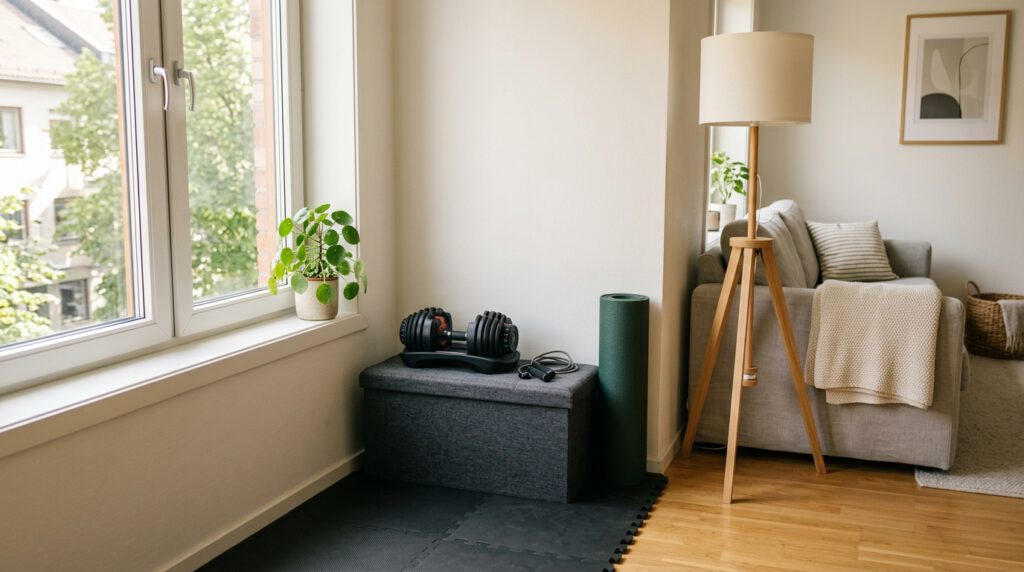
Rubber- or urethane-coated plates protect flooring far better than exposed metal. If you’re on hardwood or tile, consider adding an exercise mat underneath regardless of which set you buy.
The Bottom Line
Choosing your first adjustable dumbbells comes down to matching the weight range and adjustment mechanism to how you actually plan to train — not maxing out on specs you won’t use for a year.
Start with a dial or pin-selector system in the 5–50 lb range, pay attention to build quality over flashy features, and let progressive overload do the rest.
Related Posts
Stay Informed With the Latest & Most Important News
Previous Post
Next Post




Advertisement