

























Now Reading: Intermittent Fasting for Beginners: Does It Actually Work? (2026 Guide)
-
01
Intermittent Fasting for Beginners: Does It Actually Work? (2026 Guide)




Intermittent fasting (IF) is one of the most talked-about approaches to eating in the last decade — and also one of the most misunderstood.
Some people treat it as a metabolic miracle.
Others dismiss it as just another diet fad wearing a trendy name.
The truth, backed by a growing body of clinical research, sits somewhere more useful in between.
This guide breaks down what intermittent fasting actually is, how it works in the body, what the science says about whether it really helps you lose weight and get healthier, and — most importantly — how to start it the right way if you’re a complete beginner.
What Is Intermittent Fasting?
Most diets tell you what to eat.
Intermittent fasting is different: it focuses on when you eat. Instead of restricting specific foods, IF cycles between defined windows of eating and windows of not eating, ranging from several hours to a full day or two, depending on the method.
The idea isn’t new.
It’s rooted in basic human biology — for most of human history, food wasn’t available around the clock, and our metabolism evolved to handle stretches without it. Modern intermittent fasting is essentially a structured way of recreating that natural rhythm.
How Does Intermittent Fasting Work?When you eat, your body uses the incoming calories for energy and stores the extra as glycogen (sugar reserves) and fat.
When you go long enough without eating, your body eventually burns through its available glycogen and starts tapping into fat stores for fuel instead. Researchers call this shift metabolic switching.
In simple terms: the longer your fasting window (within reason), the more time your body spends in fat-burning mode instead of sugar-burning mode.
This is the biological mechanism behind most of intermittent fasting’s proposed benefits.
It’s worth noting, though, that a large part of IF’s effectiveness for weight loss comes from something much less exotic: eating within a shorter window naturally makes it harder to overeat, so most people simply end up consuming fewer total calories — even without deliberately counting them.

Popular Intermittent Fasting Methods
There’s no single “correct” way to fast. Here are the most common approaches, ranked roughly from easiest to hardest for beginners:
1. The 12:12 Method
Twelve hours of eating, twelve hours of fasting — for example, finishing dinner by 8 p.m. and not eating again until 8 a.m. Since a good chunk of this window overlaps with sleep, it’s the gentlest entry point and a smart place for total beginners to start.
2. The 16:8 Method (Time-Restricted Eating)
The most popular style of IF. You eat during an 8-hour window and fast for the remaining 16 hours — commonly by skipping breakfast and eating between, say, noon and 8 p.m.
3. The 5:2 Diet
You eat normally five days a week, then sharply restrict intake (roughly 500–600 calories) on two non-consecutive days.
4. Alternate-Day Fasting (ADF)
You alternate between normal eating days and very-low-calorie or zero-calorie fasting days. This is the most demanding version and generally not recommended for beginners.
Longer fasts — 24, 36, even 72 hours — do exist, but longer isn’t automatically better. Extended fasting carries higher risks (dizziness, fatigue, muscle loss, and in some cases the body shifting toward fat storage as a protective response) and should only be attempted with medical guidance.
Does Intermittent Fasting Actually Work?
Here’s the honest, evidence-based answer: yes, for weight loss — but not because of magic.
Multiple systematic reviews and meta-analyses, including several published in 2024 and 2025, have directly compared intermittent fasting against traditional continuous calorie restriction (i.e., regular dieting with the same total daily calories).
The consistent finding is that IF and calorie restriction produce similar weight loss results overall, with some analyses showing IF has a slight edge, likely because people find it easier to stick to a clock than to track every meal.
One 2025 meta-analysis of randomized controlled trials also found that intermittent fasting tends to have better adherence rates than continuous calorie restriction — in other words, people are more likely to actually stay on it.
Beyond weight, research has linked intermittent fasting to modest improvements in several other markers:
- Blood sugar and insulin sensitivity — several trials show reduced fasting glucose and insulin resistance, with some benefit for people with type 2 diabetes under medical supervision.
- Blood pressure and heart rate — modest improvements have been reported in multiple studies.
- Cholesterol and triglycerides — time-restricted eating in particular has shown modest reductions in triglycerides, though effects on LDL and HDL cholesterol remain inconsistent across studies.
- Cognitive function — some research points to improvements in working and verbal memory, largely from animal studies with early-stage human evidence.
- Exercise performance — a 2025 meta-analysis found combining IF with exercise can preserve strength and fitness markers, though results vary by fasting protocol.
The bottom line: intermittent fasting isn’t a shortcut that bypasses the laws of energy balance.
It works largely because it makes calorie reduction easier to sustain — not because fasting itself has some separate fat-melting power.
If you already do well with structured meal times, that’s a real, legitimate reason to choose IF over other diets — not a lesser one.
How to Start Intermittent Fasting the Right Way (Step-by-Step)
If you’re new to fasting, easing in gradually makes a huge difference in whether you stick with it.
- Start with 12:12. Don’t jump straight into 16:8 or 5:2. Give your body a week or two to adjust to a basic 12-hour fast before shortening the eating window further.
- Extend gradually. Once 12:12 feels easy, push your fasting window by 30–60 minutes every few days until you reach your target (commonly 14:10 or 16:8).
- Let sleep do some of the work. Roughly a third of most fasting windows happen while you’re asleep — so an 8-hour night already covers half of a 16-hour fast.
- Stay hydrated. Water, black coffee, and unsweetened tea are fine during fasting hours and genuinely help with hunger, headaches, and low energy.
- Don’t skimp on your eating window. Fasting is not license to undereat — your body still needs adequate calories, protein, fiber, and nutrients during the hours you do eat.
- Break your fast with a balanced meal, not a sugar-heavy one. Protein, fiber, and healthy fats help stabilize blood sugar and prevent the urge to overeat.
- Expect an adjustment period. Most research suggests it takes roughly two to four weeks for the body to adapt. Mild hunger, irritability, or low energy in the first week or two is normal and typically fades.

Common Beginner Mistakes to Avoid
- Jumping straight into long or extreme fasts. Going from a normal eating pattern to 16:8 or alternate-day fasting overnight is a common reason people quit within the first week.
- Overeating during the eating window. If total calorie intake stays the same (or goes up), fasting alone won’t produce weight loss — the calorie deficit still has to exist somewhere.
- Not drinking enough water. A large portion of daily fluid normally comes from food, so skipping meals without deliberately increasing water intake often causes headaches and fatigue.
- Treating the eating window as a free-for-all. Fasting doesn’t cancel out the effect of ultra-processed, high-calorie foods — food quality still matters.
- Using fasting to “punish” a cheat day. Stacking a 24- or 36-hour fast after overeating can destabilize blood sugar and hunger hormones rather than “fixing” anything.
- Ignoring warning signs. Dizziness, extreme weakness, or feeling unwell are signals to break the fast, not push through it.
What Can You Eat and Drink During a Fast?
During the fasting window:
- Water (plain or sparkling)
- Black coffee
- Unsweetened tea
During the eating window:
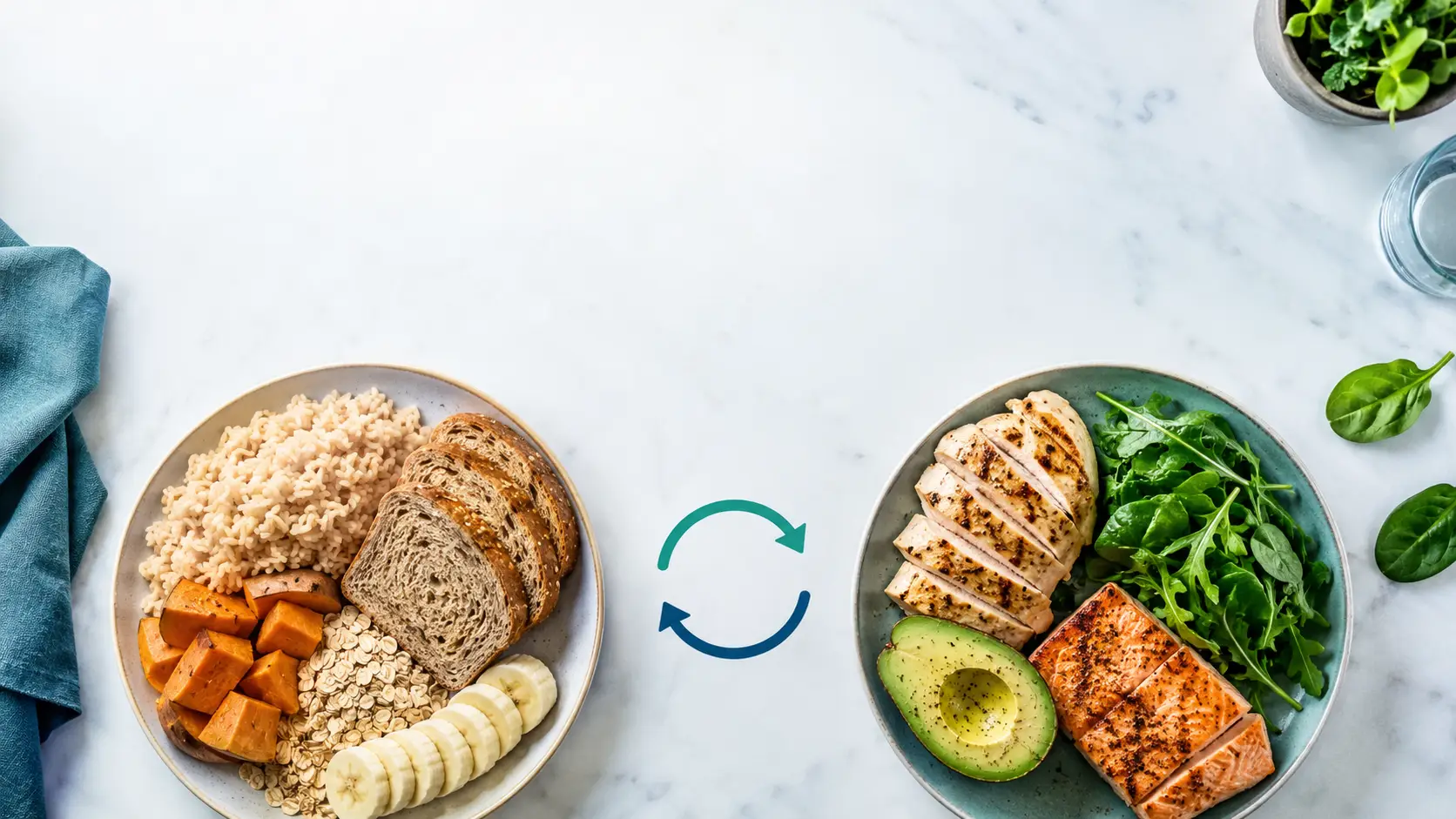
A Mediterranean-style pattern is widely recommended by nutrition experts as a strong default for intermittent fasting — leafy greens, lean protein, healthy fats, and whole, unrefined carbohydrates. Intermittent fasting doesn’t require cutting out any specific food group; it simply asks you to fit your meals into a defined window.
Who Should Avoid Intermittent Fasting?
Intermittent fasting isn’t right for everyone. It’s generally advised against for:
- Children and teenagers under 18
- People who are pregnant or breastfeeding
- People with type 1 diabetes who take insulin (fasting can raise the risk of dangerous low blood sugar)
- Anyone with a current or past eating disorder, since restrictive eating windows can trigger or reinforce disordered patterns
- Anyone with a chronic health condition, without first checking with a doctor
If you fall into any of these categories, talk to a healthcare provider before trying any fasting protocol.
Possible Side Effects
Intermittent fasting affects people differently. Common, usually temporary effects during the adjustment period include:
- Hunger and cravings
- Headaches
- Low energy or fatigue
- Irritability or mood changes
If you experience persistent anxiety, nausea, or other unusual symptoms once your body has had time to adjust, check in with a doctor.
Frequently Asked Questions
Does intermittent fasting work better than regular dieting?
Not dramatically. Head-to-head studies show intermittent fasting produces weight loss results similar to standard calorie restriction, with intermittent fasting sometimes showing a slight advantage in adherence — meaning people find it easier to stick with over time.
How long does it take to see results with intermittent fasting?
Most people need two to four weeks for their body to fully adjust to the new eating pattern. Noticeable weight or energy changes typically show up within a few weeks after that, depending on overall calorie intake.
Is 16:8 fasting good for beginners?
It’s popular and effective, but true beginners usually do better easing in with a 12:12 schedule first, then gradually extending the fasting window toward 16:8 over a couple of weeks.
Can I exercise while fasting?
Yes — many people train in a fasted state without issues, and some research suggests it may support fat loss and endurance. Start gently and see how your body responds; break your fast with a balanced meal afterward.
Is intermittent fasting safe long-term?
For most healthy adults, yes — current research supports it as a safe, sustainable eating pattern when done sensibly, with adequate nutrition during eating windows. It’s not recommended without medical guidance for the groups listed above.
The Bottom Line
Intermittent fasting genuinely works for weight loss and can meaningfully improve markers like blood sugar and blood pressure — but it works through the same fundamental principle as every effective diet: eating fewer calories than you burn, made easier through structure rather than willpower alone. It isn’t a shortcut around basic nutrition, and it isn’t for everyone.
For the right person — someone who finds clock-watching easier than calorie-counting — intermittent fasting can be a sustainable, evidence-backed way to eat.
The key for beginners is starting slow, staying hydrated, eating well during the window that counts, and listening to your body along the way.
Related Posts
Stay Informed With the Latest & Most Important News
Previous Post
Next Post









Advertisement