







Now Reading: Barefoot Shoes for Lifting: Do They Really Improve Your Squat?
-
01
Barefoot Shoes for Lifting: Do They Really Improve Your Squat?


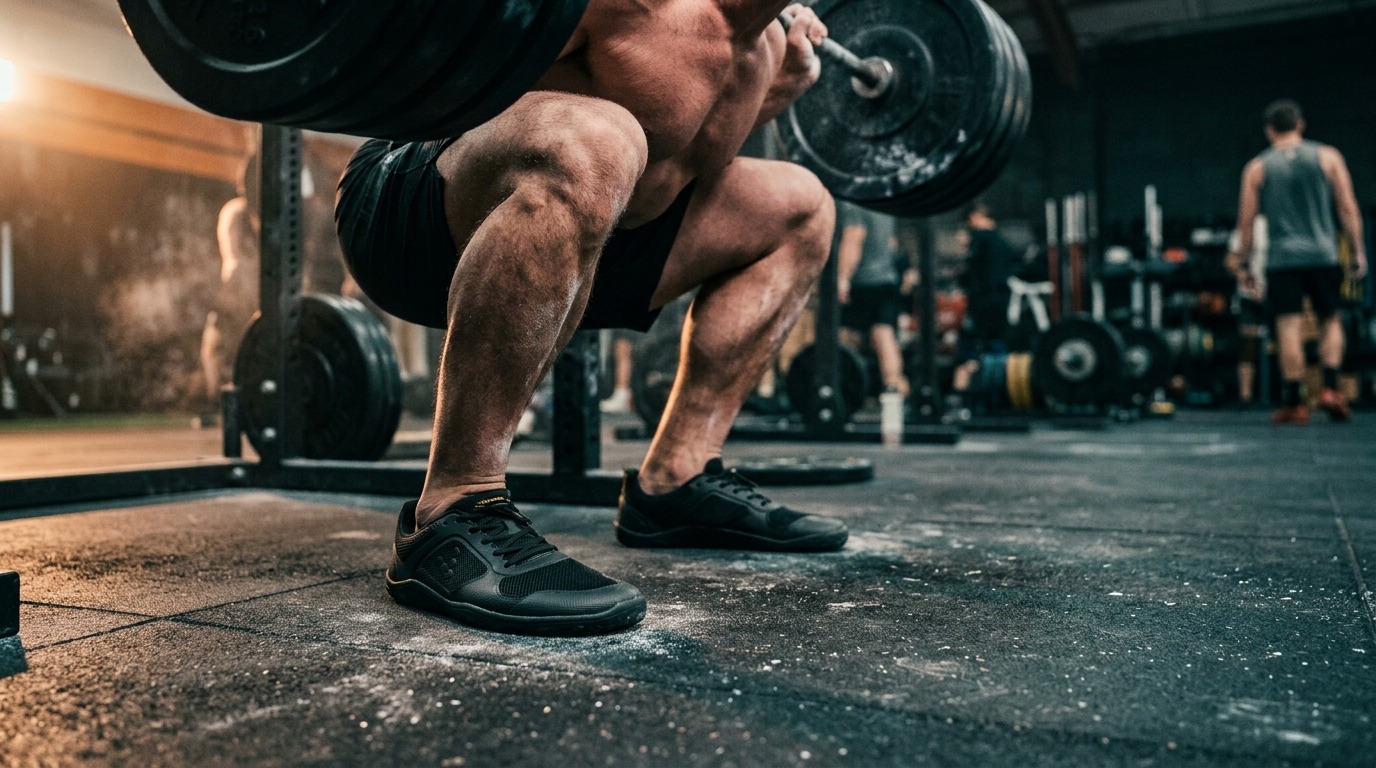
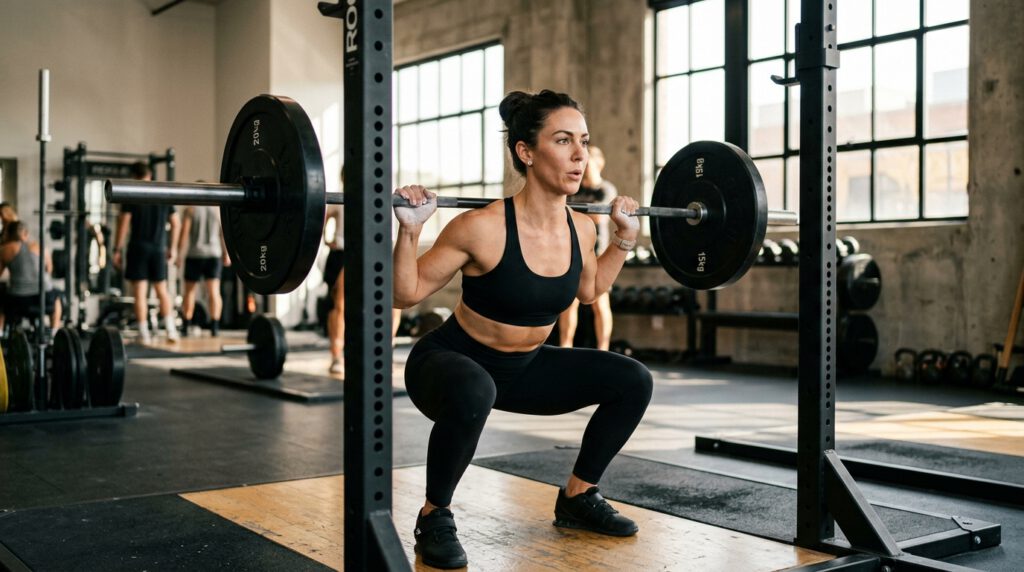
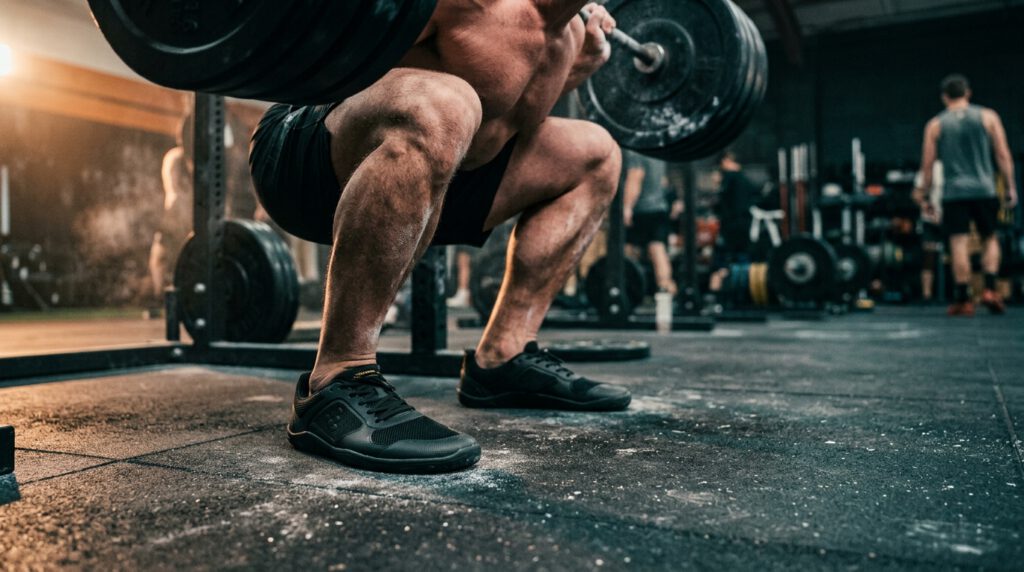
Walk into any serious gym and you’ll see three camps at the squat rack: lifters in raised-heel weightlifting shoes, lifters in flat-soled sneakers, and a growing group in thin, wide-toed barefoot shoes. Each camp swears its footwear is the smart choice.
So what does the evidence say about barefoot shoes for lifting? Short answer: they can make your squat feel more grounded, but they are unlikely to make you squat deeper or heavier by themselves. Below is what the research shows, who benefits, who doesn’t, and which pairs are worth buying.
What Are Barefoot Shoes for Lifting?
Barefoot shoes (also called minimalist shoes) copy the shape and feel of your bare foot while adding a thin layer of protection. They share four traits:
- Zero drop: the heel and forefoot sit at the same height.
- Wide toe box: your toes can spread naturally.
- Thin, flexible sole: usually around 2 to 5 mm, for maximum ground feel.
- Light, unstructured build: little or no arch support or cushioning.
Lifting barefoot itself covers a spectrum: fully barefoot, socks only, or minimalist shoes. Shoes are the practical middle ground because you keep grip and foot protection, and most gyms allow them.
Do Barefoot Shoes Improve Your Squat? What the Research Says
The honest answer is that there’s less research than the internet suggests, and most of it doesn’t favor either side strongly.
Stability. A 2025 meta-analysis found that barefoot squatting gave greater front-to-back stability but lower side-to-side stability than weightlifting shoes. In practice, a flat foot may feel steady for forward-backward balance while giving you a little less control against side-to-side wobble under heavy load. ResearchGate
Heel elevation. A broader body of work shows that raised heels tend to reduce trunk lean and center-of-pressure deviation, and a heel around 25 mm may be best for front-to-back squat stability. A review of footwear and the barbell back squat also found that weightlifting shoes decrease trunk lean and increase plantarflexion compared with running shoes and barefoot lifting. That means a more upright torso, which many lifters find easier on the lower back. ResearchGatePubMed
Depth and muscle activation. One review found that a cushioned running shoe produced more squat depth and knee flexion than barefoot, while barefoot squatting increased tibialis anterior activity, which researchers linked to lower stability. RunRepeat
Deadlifts. The evidence is thin and mixed. Small studies report slightly different muscle demands and rates of force development when lifting barefoot, but no clear change in actual performance. In a deadlift you’re already pulling from a flat, stable position with a short range of motion, so a thin flat sole fits the movement well. That’s why deadlifting in flat shoes or socks is such a common habit.
The takeaway: no strong evidence says barefoot shoes will raise your squat numbers. What they change is how the movement feels and which muscles work harder. If a heel lift helps your depth or torso position, barefoot shoes may take that away.
The Real Benefits of Lifting in Barefoot Shoes
1. Stronger feet over time
Your feet contain a lot of small stabilizing muscles. A systematic review of minimalist-shoe studies reported strength gains between 9% and 57% and muscle size gains between roughly 7% and 10.6% in healthy people. One of those studies found that foot strength rose by an average of 57.4% after six months of daily activity in minimal footwear. PubMednih
One caveat: those gains came from everyday wear and walking, not from lifting in the gym. Treat them as a reason to wear barefoot shoes regularly, not as proof they’ll boost your one-rep max.
2. Better ground feel and proprioception
Thin soles let you feel weight shifts through your heel, big toe, and little toe. Many lifters use that feedback to keep their tripod foot position stable during squats and deadlifts. This is mostly self-reported, but it’s a real reason people stick with them.
3. A flat, hard platform
A firm, low sole gives you a solid base without the squish of a cushioned running shoe. That matters for heavy pulls and for squats if your mobility is good.
The Downsides You Should Know About
- Less ankle-mobility help. Raised-heel shoes compensate for limited dorsiflexion. Barefoot shoes don’t. If your ankles are tight, you may fold forward or lose depth.
- Less protection. Thin soles won’t help much if a plate lands on your foot, and thin soles offer little cushioning for jumps.
- Adaptation time. Jumping straight into heavy sets with a lot of volume can overload the small muscles of the foot and lower leg, as sometimes happens when runners switch to minimalist shoes.
- Not ideal for Olympic lifting. Snatches and cleans generally favor a stiff, raised-heel shoe.
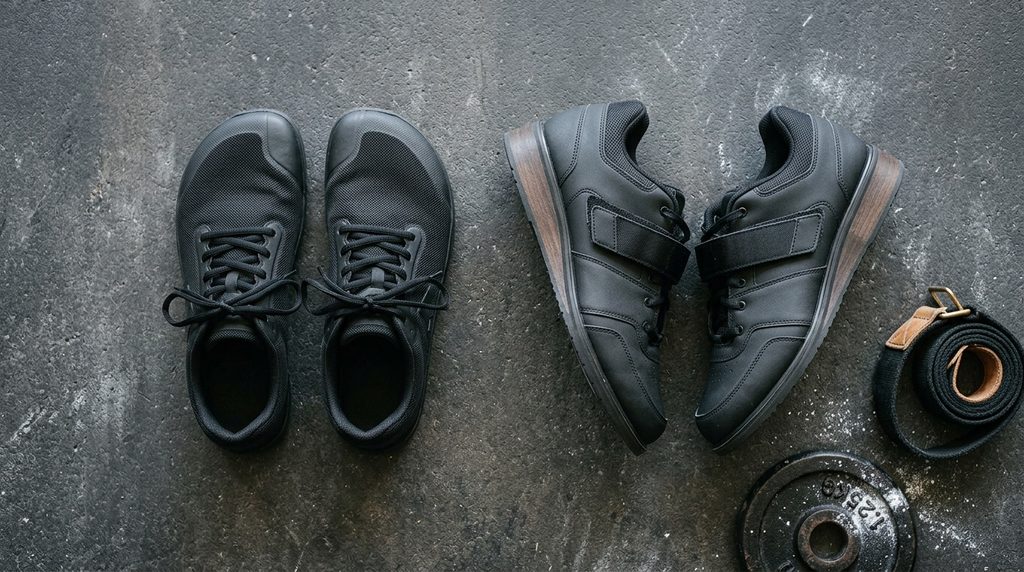
Barefoot Shoes vs. Weightlifting Shoes
| Barefoot / Zero-Drop Shoes | Weightlifting Shoes | |
|---|---|---|
| Heel height | 0 mm | Roughly 15 to 25 mm (raised) |
| Ground feel | High | Low to moderate |
| Ankle mobility demand | High | Lower (heel lift helps) |
| Torso position in squat | Often more forward lean | Often more upright |
| Best for | Deadlifts, general training, foot strength | Heavy squats, Olympic lifts |
| Everyday wear | Yes | No |
Plenty of lifters use both: barefoot shoes for deadlifts, accessories, and general training, and a raised-heel shoe for heavy squat days or Olympic lifting.
Who Should Consider Barefoot Shoes for Lifting?
A good fit if you:
- Have good ankle dorsiflexion and squat comfortably flat-footed
- Mainly deadlift, do general strength training, or train functional fitness
- Want to build foot strength and already wear minimalist shoes day to day
- Prefer a wide toe box and more natural movement
Probably skip them (or pair with a heel lift) if you:
- Struggle to hit depth without your heels rising
- Compete in Olympic weightlifting
- Have a foot or ankle injury history and haven’t checked with a professional first
Quick self-test: try the knee-to-wall test. Place your foot a few inches from a wall and see whether your knee can touch it without your heel lifting. A common benchmark is about 4 inches (10 cm). If you fall well short, work on mobility first or keep a raised-heel option for squats.
How to Switch to Barefoot Shoes Safely
- Wear them daily first. Walk in them for a few weeks before lifting.
- Start with warm-ups and light work. Then add single-leg movements and accessories.
- Move to your working sets gradually. Keep squats lighter at first and film your form from the side.
- Train your feet. A few minutes on calf stretches, sole release with a small ball, and single-leg balance (on a folded towel for extra challenge) helps the adaptation.
- Back off if something hurts. Sore arches or Achilles tendons mean you’re progressing too fast.
How to Choose the Best Barefoot Shoes for Lifting
- Zero drop and a thin, firm sole. You want ground feel without compression.
- Wide toe box. Toe splay is a main point of these shoes.
- Secure lacing and midfoot hold. Your foot shouldn’t slide inside the shoe under load.
- Grippy outsole. Gym floors and platforms vary.
- Toe and side protection. Useful for CrossFit-style training.
- Removable insole. Lets you get even closer to the floor for pulls.
Best Barefoot Shoes for Lifting on Amazon
1. Vivobarefoot Motus Strength: best purpose-built lifting option
Designed specifically for strength training with a zero-drop platform and a reinforced upper. Testers describe its 2 mm sole with 1.5 mm lugs and higher midfoot sidewalls as giving grip and support during dynamic movements.
👉 Check price on Amazon
2. Inov-8 Bare-XF 210 V3: best all-rounder for the gym
A lightweight minimalist trainer weighing about 210 g, with a TPU toe protector and rope-climb protection. A good pick if you mix lifting with cross-training.
👉 Check price on Amazon
3. Vivobarefoot Primus Lite IV: best versatile everyday and gym shoe
One reviewer notes that the removable insole lets you sit closer to the floor for deadlifts (in the previous Primus Lite III). The current version is the Primus Lite IV.
👉 Check price on Amazon
4. Xero Shoes Prio Neo: best for wide, flexible everyday training
A slim, flexible trainer with a wide toe box, popular for general gym work and daily wear.
👉 Men’s on Amazon | Women’s on Amazon
5. WHITIN Minimalist Cross-Trainer: best budget way to try barefoot shoes
Reviewers call it the cheapest sensible entry point for testing barefoot training. It’s less polished than premium brands, so expect shorter durability.
👉 Check price on Amazon
As an Amazon Associate, we may earn from qualifying purchases.
Frequently Asked Questions
Are barefoot shoes good for squats?
They can be, if your ankle mobility is good and you’re comfortable squatting flat-footed. If you rely on heel elevation to reach depth, a raised-heel weightlifting shoe usually works better.
Are barefoot shoes good for deadlifts?
Yes, for most lifters. A thin, flat, firm sole keeps you close to the floor and shortens the pull slightly, which suits the movement.
Do barefoot shoes improve your squat?
There’s no strong evidence they raise your squat strength or depth. They mainly change ground feel, stability, and muscle demands.
Are barefoot shoes better than weightlifting shoes?
Neither is universally better. Weightlifting shoes help with depth and torso position; barefoot shoes help with ground feel and foot strength. Many lifters use both.
Can I do heavy squats in barefoot shoes?
Yes, but build up gradually. Give your feet and calves several weeks to adapt before loading heavy.
Are barefoot shoes safe for lifting?
For most healthy people, yes, with a gradual transition. If you have foot or ankle problems, check with a healthcare professional first.
Final Verdict
Barefoot shoes for lifting are a tool, not a shortcut. They won’t automatically add pounds to your squat, but they give you honest ground feedback, a stable flat base, and a route to stronger feet. If your ankles are mobile and you love deadlifts, they’re an easy win. If you squat heavy and need a heel lift, keep a pair of weightlifting shoes in your bag too.
References
- Duan et al., 2025, meta-analysis on heel height and squat stability (ResearchGate)
- Footwear and Elevated Heel Influence on Barbell Back Squat: A Review (PubMed 33844006)
- Minimalist shoes and plantar intrinsic foot muscle size and strength: systematic review (PubMed 35878616)
- Daily activity in minimal footwear increases foot strength (Scientific Reports, 2021)
Related Posts
Stay Informed With the Latest & Most Important News
Previous Post
Next Post








Advertisement