






Now Reading: How to Get a Six Pack: The Honest Answer Nobody Wants to Hear
-
01
How to Get a Six Pack: The Honest Answer Nobody Wants to Hear


Six-pack abs are one of the most searched fitness goals on the internet — and one of the most misunderstood.
Type “how to get a six pack” into Google and you’ll get ab-roller ads, 30-day-challenge PDFs, and supplements that promise to “melt belly fat.” None of it works, and deep down, most people searching already suspect that.
So here’s the honest version instead.
You already have abs.
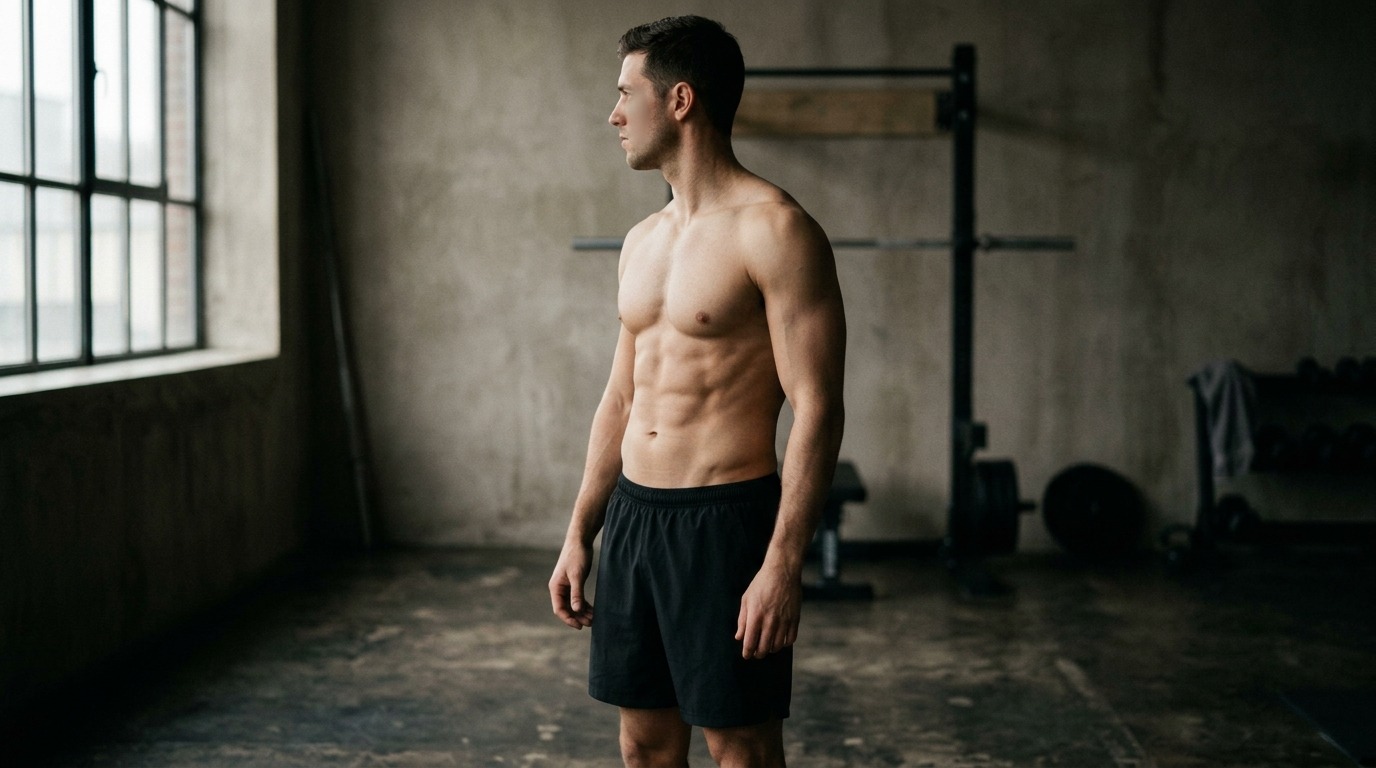
Everyone does — the rectus abdominis, the long muscle that makes up the “pack,” sits under the skin of every human being, trained or not.
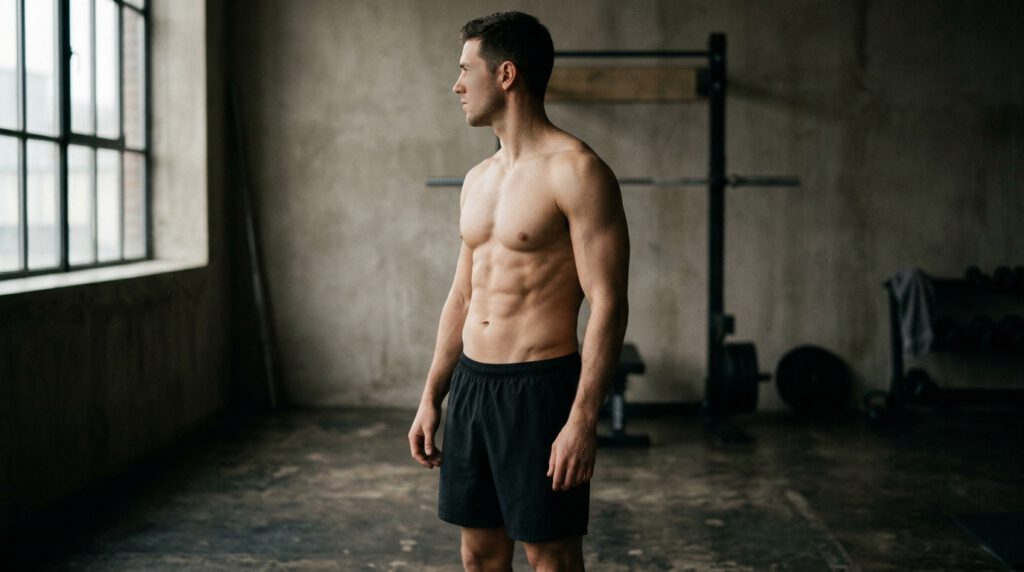
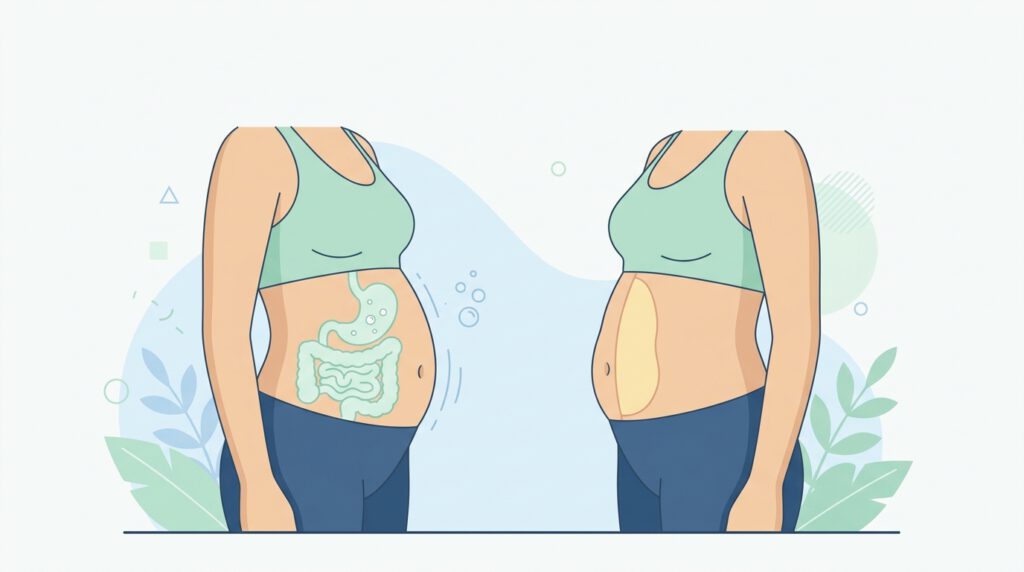
The only reason you can’t see yours is that there’s a layer of body fat sitting on top of it. Getting a six-pack isn’t really about building your abs. It’s about losing enough fat to reveal the muscle that was always there. Ab training helps shape and thicken that muscle, but it’s not what makes it visible.
That’s the whole game. It’s just not a fun answer, which is why an entire industry exists to sell you a more exciting one.
Table of contents
- Key takeaways
- What body fat percentage do you need to see abs?
- How do you actually measure your body fat percentage?
- Six-pack myths, debunked
- The three levers that actually build a six-pack
- Nutrition: where your six-pack is actually made
- The best ab exercises (and how to program them)
- Genetics, body shape, and why your six-pack won’t look like theirs
- The health case for losing belly fat — beyond how it looks
- A quick word on why you want this
- How long does it actually take to get a six-pack?
- Frequently asked questions
- The bottom line
Key takeaways
- Visible abs need low body fat — roughly 10–14% for men and 16–20% for women, though the exact number varies by individual and by who’s measuring.
- Abs are revealed in the kitchen. A calorie deficit removes the fat covering your abs; ab exercises don’t.
- Spot reduction is a myth. Crunches strengthen your abs; they don’t burn the fat sitting on top of them.
- Strength training and protein protect your muscle while you’re in a deficit, so what gets revealed is actual muscle, not a flat, soft stomach.
- It takes months, not weeks, and your six-pack’s shape (four blocks, six, eight, symmetrical or not) is largely genetic.
- A flat stomach and a healthy stomach aren’t automatically the same thing — extreme leanness has real costs, and it’s worth being honest with yourself about why you want this before you chase it.
What body fat percentage do you need to see abs?
This is the number that actually matters, and it’s the one most content skips past to get to the exciting stuff (exercises, supplements, “hacks”).
Different reference sources land on slightly different exact figures, since body fat percentage is estimated rather than measured with perfect precision — but they cluster in a consistent range:
| Body fat % (men) | What you’ll typically see |
|---|---|
| 20%+ | No visible abs, softer midsection |
| 15–17% | Flat stomach, faint upper ab outline |
| 12–14% | Ab outlines clearly visible |
| 10–12% | A defined, classic six-pack |
| Below 10% | Sharply defined, visible separation and vascularity |
| Body fat % (women) | What you’ll typically see |
|---|---|
| 25%+ | No visible abs |
| 20–22% | Faint upper ab outline |
| 16–19% | Clear ab definition |
| Below 16% | Sharply defined abs |
Women carry more essential fat than men (roughly 10–13% vs. 2–5%) because of hormonal and reproductive biology, which is why the same visual definition shows up at a higher body fat percentage.
Pushing much below that essential-fat floor for extended periods is where things like irregular periods and lower bone density start to show up — this is a case where “leaner is better” stops being true.
Two caveats worth being upfront about: body fat percentage isn’t the only variable (see the genetics section below), and most home methods for estimating it come with a real margin of error.
How do you actually measure your body fat percentage?
Chasing a specific number is only useful if you can measure it with some consistency.
None of the accessible options are perfectly accurate — the goal is picking one and tracking the trend, not treating any single reading as gospel.
- Mirror and photos. Honestly, for the goal of “visible abs,” this is the most direct feedback you have. A flat lighting, same-time-of-day progress photo every week or two tells you more than a number does.
- Smart scales (bioelectrical impedance). Cheap and convenient, but sensitive to hydration, food in your stomach, and even the time of day. Useful for tracking direction over months, not for trusting an exact number.
- Skinfold calipers. Inexpensive, and reasonably good at tracking change over time if the same person measures the same sites the same way each time. Prone to operator error.
- Waist circumference. A plain tape measure around your waist, tracked over weeks, is a surprisingly reliable low-tech proxy for fat loss around the midsection specifically.
- DEXA scan or Bod Pod. The most accurate options, but they cost money and aren’t something you’ll do weekly. Good for an occasional accurate checkpoint, not for constant tracking.
Six-pack myths, debunked
“Crunches burn belly fat”
This is the big one, and it’s been tested directly.
In a controlled study, six weeks of dedicated ab training produced no greater reduction in abdominal fat than doing no ab training at all — the ab-training group got stronger, but didn’t lose more belly fat (Vispute et al., 2011, Journal of Strength and Conditioning Research).
Spot reduction — burning fat from one specific area on demand — isn’t something the body does. Fat comes off according to your overall energy balance and your individual fat-storage pattern, not according to which muscle you just trained.
“100 reps a day will eventually reveal abs”
Volume trains the muscle; it doesn’t touch the fat on top of it. Plenty of people with genuinely strong cores never see them, because their body fat percentage is still too high. What determines visibility is body fat, full stop — not rep count.
“Ab belts, waist trainers, and fat-burner supplements work”
EMS belts stimulate muscle contraction, not fat loss. Waist trainers compress, they don’t reduce fat. No over-the-counter supplement reliably and safely accelerates fat loss enough to matter. If a product’s entire pitch is “burn fat without the deficit,” that’s the industry selling you the fun answer instead of the honest one.
“Fasted cardio unlocks stubborn fat”
Whether you eat before your workout has a minor, mostly short-term effect on which fuel source your body uses in that specific session — it doesn’t meaningfully change fat loss over weeks, which is driven by your total calorie balance across the whole day.
The three levers that actually build a six-pack
Everything that works comes down to three levers, and dropping any one of them stalls the other two:
- A calorie deficit — removes the fat sitting over your abs. This is non-negotiable; nothing else on this list works without it.
- Strength training + protein — protects the muscle underneath while you’re losing weight. Without resistance training, a meaningful share of the weight you lose in a deficit is muscle, not fat; with it, that share drops substantially. This is the step people skip, and it’s the difference between “thinner” and “defined.”
- Direct ab training — builds and thickens the rectus abdominis itself, so once the fat is gone, there’s actually something visible and well-shaped underneath it.
Diet alone can get you flat. Diet plus training is what gets you a six-pack rather than just a smaller stomach.
Nutrition: where your six-pack is actually made
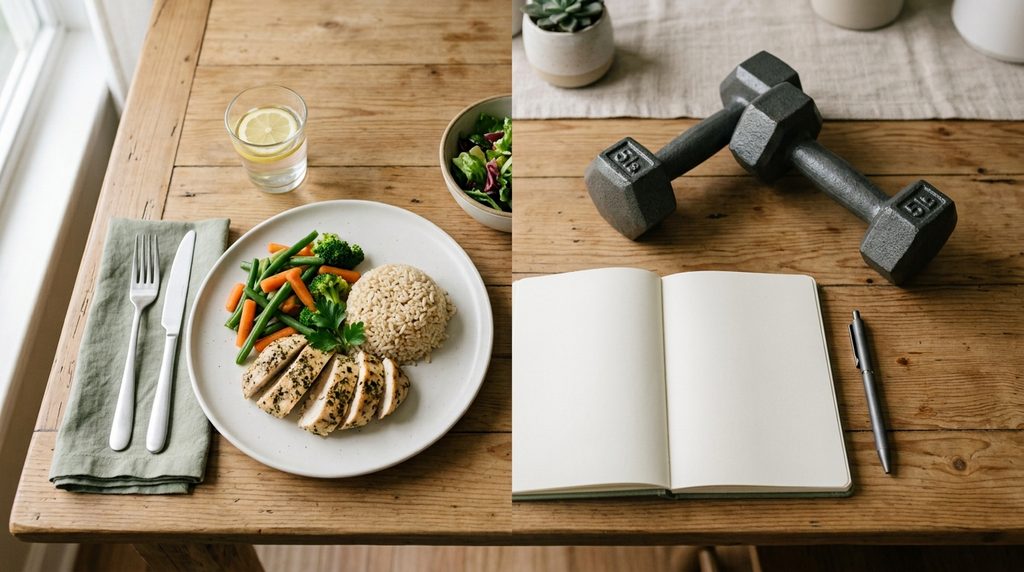
The cliché “abs are made in the kitchen” survives because it’s true — the majority of the outcome comes down to what and how much you eat.
- A moderate calorie deficit. Roughly 300–500 calories per day below maintenance is a sustainable, evidence-backed range for most people. Larger, more aggressive deficits tend to cost more muscle and are harder to stick to for months.
- Enough protein. Somewhere around 1.6–2.2 g per kilogram of body weight per day is well-supported for preserving lean mass during a deficit (Morton et al., 2018, British Journal of Sports Medicine). Good sources: lean meat, fish, eggs, dairy, legumes, tofu.
- Carbs and vegetables, not “clean eating.” Whole grains, potatoes, rice, fruit, and vegetables fuel your training and help you stay full on fewer calories. Carbs aren’t the obstacle — a sustained calorie surplus is.
- Alcohol and ultra-processed, high-sugar food are worth watching specifically, because they’re the easiest way to slip into a surplus without noticing, and alcohol in particular blunts fat oxidation while you’re drinking it.
Consistency across the week matters more than any single meal or day.
Being in a deficit on average, even with some flexibility day to day, beats a “perfect” diet you abandon after three weeks.
The best ab exercises (and how to program them)
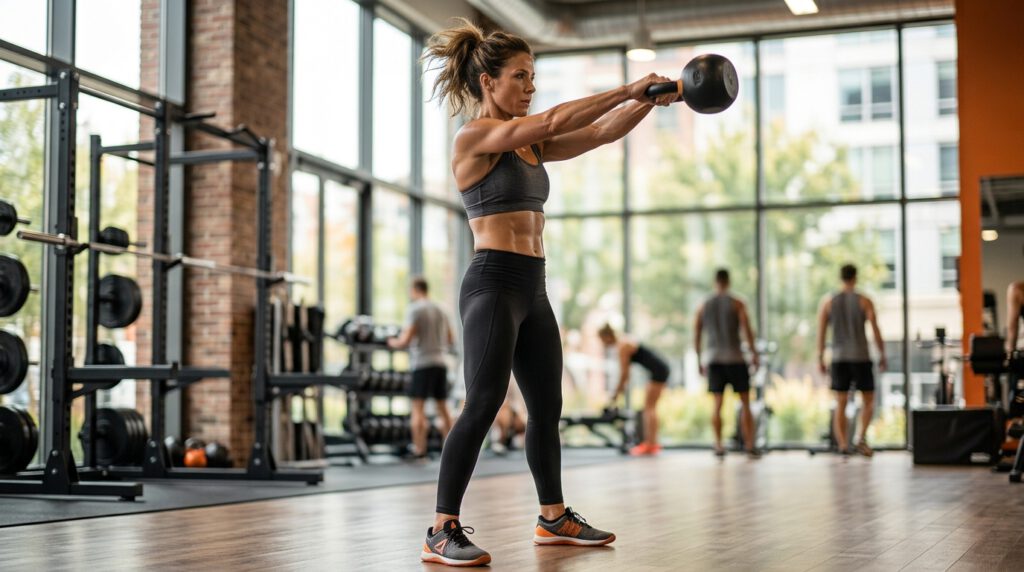
Once fat loss is handled by your diet, ab training is what determines how good the muscle looks once it’s visible. Train abs like any other muscle group — with resistance, full range of motion, and 2–3 sessions per week, not daily.
- Crunches — target the rectus abdominis directly. Move slowly under control; speed and momentum just recruit your hip flexors instead of your abs.
- Leg raises / hanging leg raises — bias the lower abs, which is typically the last region to show definition for most people.
- Planks — build core stability and total-body tension rather than isolating one muscle; a strong plank supports almost every other lift you do.
- Side planks and side crunches — target the obliques, which sharpen the visual taper of the waist.
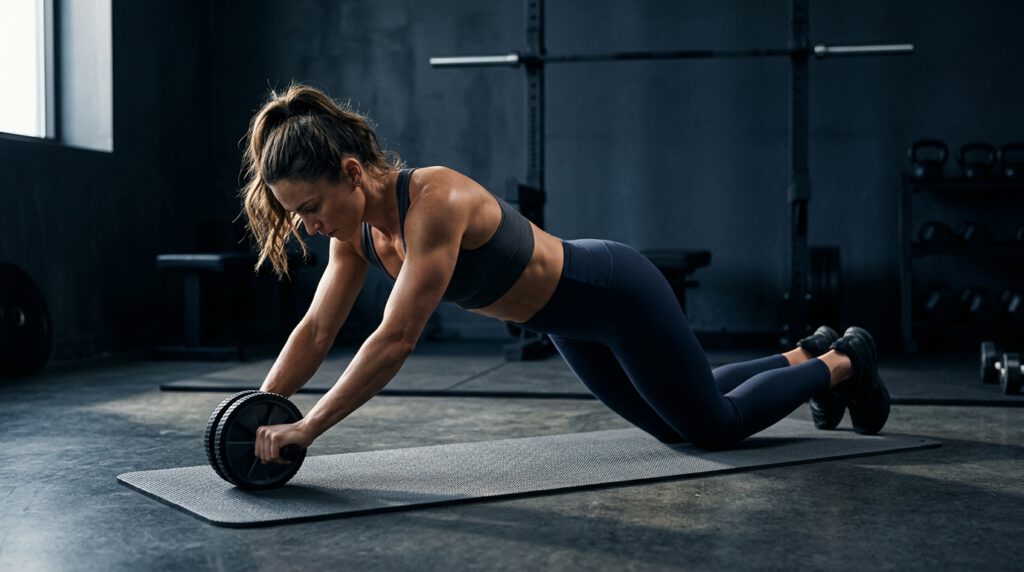
- Loaded variations (cable crunches, ab wheel, weighted leg raises) — once bodyweight movements feel easy, add resistance rather than just chasing higher reps, the same progression principle you’d apply to any other muscle.
Ab training is also cheap on time and equipment — bodyweight versions of all of the above work fine at home. The scarce resource isn’t a gym membership; it’s the calorie deficit and the consistency.
Genetics, body shape, and why your six-pack won’t look like theirs
Two people at the exact same body fat percentage can look noticeably different, and genetics explains most of the gap:
- Muscle shape and segmentation — whether you end up with a symmetrical eight-pack, an asymmetrical six-pack, or a four-pack with wider spacing is determined by the number and arrangement of the tendinous intersections in your rectus abdominis. It isn’t trainable.
- Where you store fat first, and lose it last. People carrying more fat around the midsection (an “apple” shape) typically need to get leaner overall before the abdomen specifically shows definition, compared to people who store fat more evenly or lower on the body (“pear” shape). This is largely hormonal and genetic, not a reflection of effort.
- Sex differences in fat distribution. Men typically store more fat viscerally around the abdomen; women typically store more subcutaneously around the hips and thighs — part of why the target body fat ranges differ between men and women.
None of this makes a six-pack unachievable for a given person — it just means the timeline and the specific leanness required is individual, and comparing your progress photos to someone with a different genetic starting point isn’t a useful benchmark.
The health case for losing belly fat — beyond how it looks
Setting the aesthetic goal aside for a moment, carrying excess fat specifically around the abdomen is one of the better-established risk factors in preventive health, independent of your overall weight or BMI.
Fat around the middle comes in two types: subcutaneous fat (under the skin, mostly cosmetic) and visceral fat (wrapped around your internal organs).
Visceral fat is metabolically active — it releases inflammatory compounds and hormones linked to insulin resistance, high blood pressure, and elevated LDL cholesterol, which is why it’s associated with a higher risk of cardiovascular disease and type 2 diabetes even in people whose overall weight looks “normal.”
A simple, free screening tool is your waist circumference. UK NHS guidance flags increased risk starting at:
- 94 cm (37 in) or more for men, 80 cm (31.5 in) or more for women — worth addressing.
- 102 cm (40 in) or more for men, 88 cm (34 in) or more for women — high enough that it’s worth talking to a doctor.
That’s a genuinely useful reframe: the same habits that eventually reveal a six-pack (a moderate deficit, strength training, less alcohol and ultra-processed food) are also just good preventive medicine for your heart and metabolism, whether or not you ever see the abs themselves.
A quick word on why you want this
It’s worth being honest with yourself about the “why” before you spend months chasing this.
A six-pack is a genuinely fine goal if it’s tied to something concrete — a sport, a specific event, or just a physique you’d enjoy having.
It’s a much shakier goal if the underlying hope is that finally seeing your abs will make you like yourself more; that particular problem doesn’t resolve at any body fat percentage.
It’s also worth knowing that the aesthetic end of fitness culture has a real cost for some people.
Research among fitness professionals in Norway found disordered eating patterns in a notable share of both male and female fitness instructors, and “muscle dysmorphia” — a distorted body image where a lean, muscular person still sees themselves as too soft or too small — is a recognized condition, not a personal failing.
None of this means wanting a six-pack is unhealthy.
It just means it’s worth checking in with yourself along the way, and it’s worth knowing that if your relationship with food or your body image starts to feel controlling rather than motivating, that’s a signal worth taking seriously rather than pushing through.
How long does it actually take to get a six-pack?
Longer than most content wants to admit, and it depends entirely on your starting point.
A sustainable, muscle-preserving rate of fat loss is roughly 0.5–1% of body weight per week.
Someone starting around 20% body fat and aiming for 12% is realistically looking at several months of consistent effort, not weeks — and that’s assuming training and nutrition are both dialed in the whole time.
Crash diets can move the scale faster, but they cost disproportionate amounts of muscle and water weight along the way, and the “reveal” at the end tends to look flat and depleted rather than defined — which somewhat defeats the point.
Slower and consistent produces a better-looking result than fast and unsustainable, on top of being much easier to actually maintain afterward.
Frequently asked questions
How do I get a six-pack?
Lower your body fat with a moderate calorie deficit until you reach roughly 10–14% (men) or 16–20% (women), preserve your muscle with strength training and adequate protein, and train your abs directly 2–3 times a week. The muscle is already there; the deficit is what reveals it.
How long does it take to get abs?
Realistically, months rather than weeks. A safe, sustainable pace is about 0.5–1% of body weight lost per week, so going from roughly 20% to 12% body fat typically takes several months depending on your starting weight and consistency.
What body fat percentage do you need to see abs?
Around 12–14% for a noticeable outline and 10% or below for a sharply defined six-pack in men; around 16–20% for women, since women carry more essential fat.
Can you get abs from doing crunches alone?
No. Crunches strengthen and shape the rectus abdominis, but a controlled study found six weeks of ab training didn’t reduce abdominal fat any more than doing no ab training at all. The fat covering the muscle only comes off through an overall calorie deficit.
How often should I train my abs? Two to three times a week, with resistance and controlled form, is enough — the abs are a muscle like any other and need recovery between sessions. Training them daily doesn’t speed anything up; your body fat percentage is the limiting factor, not training frequency.
Can you get a six-pack without a gym?
Yes. Bodyweight ab exercises (crunches, leg raises, planks) work fine at home, and full-body bodyweight strength training can preserve muscle during a deficit. Equipment matters far less than the calorie deficit and consistency.
Why won’t my lower abs show even though the rest of my stomach looks leaner?
The lower abdomen is typically the last area to lean out for most people, and no exercise burns fat there specifically. It responds to the same overall fat loss as everywhere else — leg raises and hanging leg raises train that region, but they don’t remove fat from it faster.
Is the shape of a six-pack — four blocks, six, eight — genetic?
Yes. Everyone has the same rectus abdominis muscle, but the number and symmetry of visible segments is set by tendinous connections that aren’t trainable. Getting lean enough will reveal whatever shape you have; it won’t change the shape itself.
The bottom line
There’s no version of this where the answer is more exciting than “eat a bit less than you burn, lift weights, eat enough protein, train your abs directly, sleep properly, and give it several months.” That’s the entire method.
Every product or shortcut promising otherwise is selling you a more fun story than the true one — and the true one is the only one that’s ever actually worked.
Related Posts
Stay Informed With the Latest & Most Important News
Previous Post
Next Post







Advertisement