



















Now Reading: Best Pre and Post Workout Meals (With Timing Explained) | Complete Guide
-
01
Best Pre and Post Workout Meals (With Timing Explained) | Complete Guide


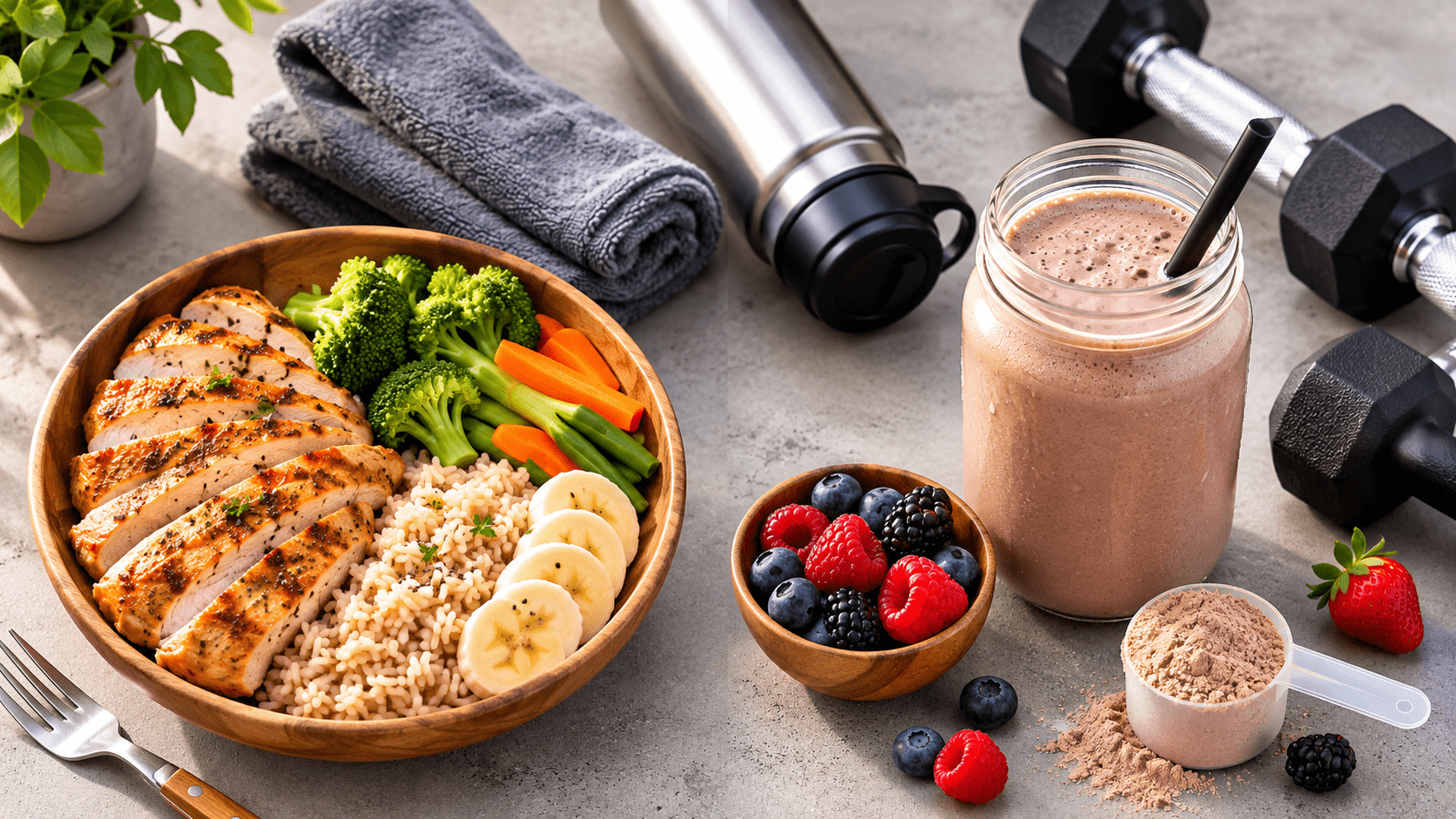
What you eat before and after you train can matter almost as much as the workout itself. Fuel your body the right way, and you get more energy, better performance, and faster recovery.
Get the timing wrong, and you might deal with an upset stomach mid-set or muscles that take days longer to bounce back.
This guide breaks down exactly what to eat before and after a workout, when to eat it, and how to adjust based on your training style, your schedule, and your goals.
Table of contents
- Why Meal Timing Actually Matters
- What the Research Actually Says
- Pre-Workout: What to Eat and When
- Post-Workout: What to Eat and When
- Timing Comparison at a Glance
- Adjusting for Your Schedule
- Adjusting for Your Goal
- Vegan and Vegetarian Pre- and Post-Workout Options
- Hydration: The Piece People Skip
- Common Mistakes to Avoid
- FAQ
- The Bottom Line
Why Meal Timing Actually Matters
Exercise changes the way your body handles fuel. Before training, your goal is to have enough available energy (blood sugar and glycogen) without food sitting heavy in your stomach. After training, your goal shifts to replacing what you burned and giving your muscles the raw material to repair themselves.
Three nutrients do most of the work:
- Carbohydrates break down into glucose, which powers muscle contractions and keeps your energy steady during exercise.
- Protein supplies the amino acids your body needs to repair muscle fibers that get broken down during training.
- Water and electrolytes keep your muscles functioning properly and your performance from dropping off as you sweat.
Nail the timing of these three things, and everything else — meal size, food choice, personal comfort — gets easier to figure out.
What the Research Actually Says
A lot of “pre and post workout nutrition” advice online is guesswork dressed up as science, so it’s worth grounding this in what sports nutrition researchers have actually found:
- The International Society of Sports Nutrition (ISSN) recommends spacing protein intake throughout the day, with roughly 20 to 40 grams of high-quality protein every three to four hours to keep muscle protein synthesis elevated.
- For endurance athletes or anyone training at high volume, a high-carbohydrate diet in the range of 8 to 12 grams of carbohydrate per kilogram of body weight per day helps maximize glycogen stores.
- The so-called “anabolic window” — the idea that you have a strict 30- to 60-minute window after training to eat or lose your gains — is largely a myth. Research by sports nutrition scientists Alan Aragon and Brad Schoenfeld found the window is more forgiving than fitness marketing suggests, especially if you ate a normal meal a few hours before training. What matters more is your total daily protein and carbohydrate intake.
- That said, if you train fasted, train twice in one day, or go longer than three to four hours without eating beforehand, eating sooner after your session (within roughly an hour) does help speed up recovery.
In short: timing helps, but it is not as rigid or as high-stakes as some pre-workout supplement marketing makes it sound.
Pre-Workout: What to Eat and When
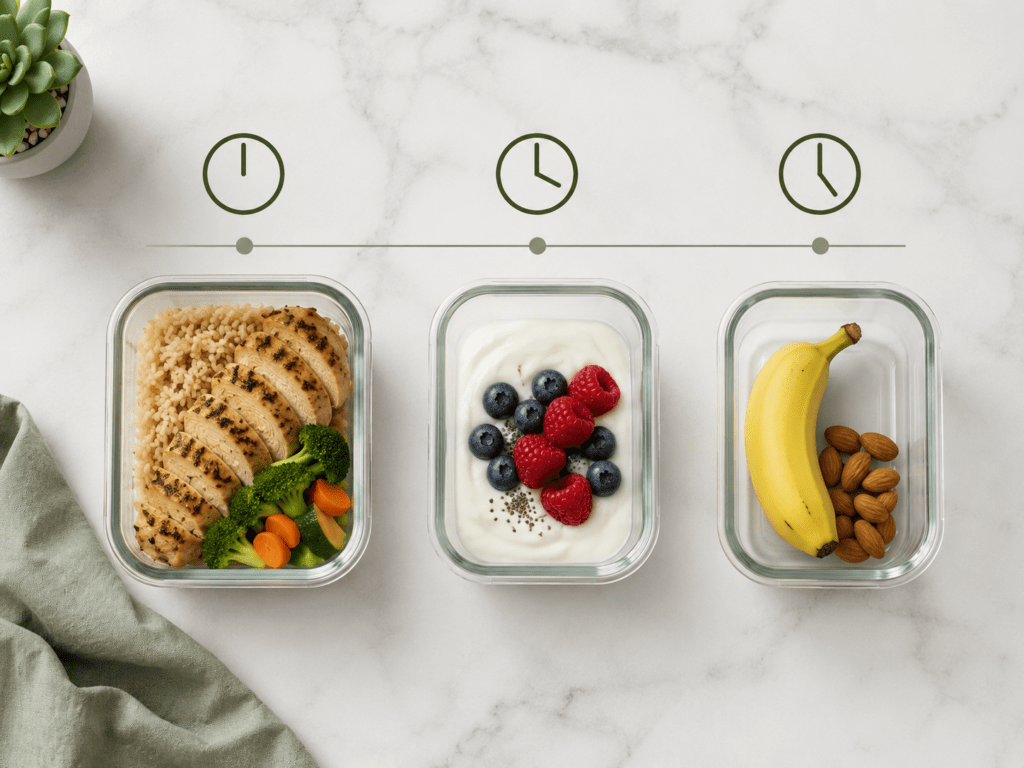
The goal before a workout is simple — top off your energy stores without upsetting your stomach. How much you eat and what kind of food you choose depends mainly on how much time you have.
3 to 4 Hours Before: Eat a Full Meal
With several hours to digest, you can eat a complete, balanced meal.
- Aim for: 1–4 g of carbohydrate per kg of body weight, plus 20–40 g of protein, with moderate fat.
- Examples: Grilled chicken with rice and vegetables; a burrito bowl with brown rice, beans, and grilled protein; oatmeal with Greek yogurt and banana.
1 to 2 Hours Before: Go Lighter
As your session gets closer, cut back on fat and fiber, which digest slowly and can cause bloating or cramping once you start moving.
- Aim for: 0.5–1 g of carbohydrate per kg of body weight, plus roughly 20–30 g of easy-to-digest protein.
- Examples: Greek yogurt with berries; a bagel with a thin layer of peanut butter; eggs with toast.
30 to 60 Minutes Before: Keep It Small and Fast
At this point, food is just a quick top-up, not a meal. Stick to simple carbs with very little fat, fiber, or protein so your stomach isn’t working while your muscles need the blood flow.
- Aim for: 20–50 g of simple carbohydrate.
- Examples: A banana; rice cakes with honey; a small glass of fruit juice; a whey or plant-based protein shake if you tolerate liquids well.
Adjusting for Your Workout Type
| Workout Type | Best Approach | Why |
|---|---|---|
| Strength training | Balanced meal 2–3 hours before (20–30 g protein + carbs) | Gives muscles time to digest and prepare without a heavy stomach during lifts |
| HIIT / high-intensity cardio | Carb-focused snack 1–2 hours before, low fat and fiber | Fast-digesting carbs are the primary fuel for short, intense efforts |
| Long-distance / endurance cardio | Larger carb meal 3–4 hours before, small top-up snack 30 minutes before if needed | Glycogen stores need to be maximized for extended efforts |
| Yoga, Pilates, light stretching | Light snack 1–2 hours before | Comfort matters more than heavy fueling for low-intensity sessions |
Post-Workout: What to Eat and When
After training, your body is in repair mode. The priority is replacing lost glycogen and giving your muscles amino acids to rebuild.
- Aim for: 30–40 g of high-quality protein paired with carbohydrates, ideally within about 2 hours of finishing (sooner — within an hour — if you trained fasted or didn’t eat much beforehand).
- Examples: Grilled salmon with a sweet potato and vegetables; a protein smoothie with fruit and yogurt; scrambled eggs with whole-wheat toast; lean beef or turkey with quinoa.
If you’re not hungry right after training, that’s fine — rehydrate with water or an electrolyte drink and eat a full meal once your appetite returns. What matters most is getting a solid protein-and-carb meal in at some point, not the exact minute you eat it.
Post-Workout by Training Type
- After strength training: Prioritize protein (30–40 g) to support muscle repair, paired with moderate carbs.
- After HIIT or cardio: Prioritize carbohydrate replenishment alongside protein — think chocolate milk, a fruit-and-protein smoothie, or a tuna sandwich.
- After yoga or light training: A lighter snack is usually enough — fruit, nuts, or yogurt, plus fluids to replace what you sweated out.
Timing Comparison at a Glance
| Timing Window | Macro Focus | Digestion Speed | Best For |
|---|---|---|---|
| 3–4 hrs before | Balanced carbs, protein, moderate fat | Slow | Endurance, heavy lifting sessions |
| 1–2 hrs before | High carb, moderate protein, low fat/fiber | Moderate | HIIT, standard resistance training |
| 30–60 min before | Simple carbs only | Fast | Early morning or short, intense sessions |
| 0–2 hrs after | 30–40g protein + carbs | N/A | All workout types |
Adjusting for Your Schedule
- Morning workouts: There’s rarely time for a full meal. A small, fast snack (banana, a few dates, or a small shake) 15–30 minutes beforehand works better than skipping food entirely, especially for sessions longer than 45 minutes.
- Lunchtime workouts: If breakfast was several hours earlier, have a light snack like yogurt and fruit 60–90 minutes before training.
- Evening workouts: Let lunch be your main fuel source. If you’re training more than four hours after lunch, add a light carb snack 60–90 minutes beforehand so you’re not running on empty.
Adjusting for Your Goal
- Building muscle: Prioritize hitting your total daily protein target (roughly 1.6–2.2 g/kg body weight is the range most research supports) spread across meals, with a solid protein-rich meal after training.
- Losing fat: Timing matters less than staying in a moderate calorie deficit while still eating enough protein around workouts to preserve muscle. Don’t skip your post-workout meal just because you’re cutting calories elsewhere.
- Endurance performance: Carbohydrate availability is the priority — both before (to fuel the session) and after (to replenish glycogen for your next one).
Vegan and Vegetarian Pre- and Post-Workout Options
Plant-based eaters can hit the same targets with a few swaps.
Good plant protein sources with a solid leucine content (the amino acid that helps trigger muscle repair) include tofu, tempeh, edamame, and soy protein powder — combining legumes with grains also helps round out the amino acid profile.
- Pre-workout: Oats with soy milk and a scoop of plant protein powder; a banana with a rice cake and almond butter; a smoothie with plant milk, fruit, and pea or soy protein.
- Post-workout: A tofu or tempeh stir-fry with rice; a lentil and quinoa bowl; a plant-based protein shake with fruit; chickpeas with whole grains.
Because plant proteins are typically slightly less efficient at stimulating muscle repair per gram compared to animal or whey protein, aiming toward the higher end of the 20–40 g range post-workout is a reasonable adjustment for vegans and vegetarians.
Hydration: The Piece People Skip
Hydration should start well before you get to the gym, not during your warm-up.
- Drink roughly 500–700 mL of water in the 2–3 hours before training, then take small sips as your session gets closer rather than gulping large amounts.
- Even a 2% loss in body fluid can measurably hurt performance, so don’t wait until you’re thirsty to start drinking.
- For sessions under 60 minutes, water is usually enough. For longer or hotter sessions, an electrolyte or sports drink helps replace sodium and other minerals lost through sweat.
Common Mistakes to Avoid
- Training on a completely empty stomach for long or intense sessions. This can lead to light-headedness, poor performance, and even muscle loss over time.
- Eating a heavy, high-fat meal too close to training. This is one of the most common causes of cramping, nausea, and sluggishness mid-workout.
- Skipping the post-workout meal because you’re “not hungry.” Rehydrate and wait if needed, but don’t skip the meal altogether.
- Overthinking the exact minute you eat. Consistency across your training week matters far more than hitting a precise 47-minute window.
FAQ
Should I train fasted or eat first?
It depends on your workout. For moderate-to-high intensity sessions lasting more than 45–60 minutes, eating beforehand generally supports better performance and helps preserve muscle.
For low-intensity workouts under 45 minutes, fasted training is usually fine — though if you feel light-headed or fatigued training on empty, a small carb snack 30–60 minutes before can help.
What if I feel sick eating before a workout?
This usually happens because your body is trying to digest food and send blood to your working muscles at the same time. Give yourself more of a buffer — 2–3 hours after a full meal or 30–60 minutes after a light snack — and stick to low-fat, low-fiber carbs if you need something close to training time.
Do I really need to eat within 30 minutes after training?
No. The “anabolic window” is more flexible than it’s often made out to be. Eating a protein-and-carb meal within about two hours of finishing is enough for most people, unless you trained fasted or have a second session later that same day.
Do I need electrolytes before every workout?
Not usually. A balanced meal and regular water intake cover most people’s needs for typical sessions under an hour. Electrolytes become more important for longer, harder, or hotter workouts where sweat losses are significant.
The Bottom Line
You don’t need complicated supplements or a rigid eating schedule to fuel your workouts well. Match your meal size to how much time you have before training — bigger meals when you have hours to digest, smaller and simpler snacks the closer you get to your session.
After training, aim for 30–40 g of protein with some carbs within a couple of hours, and don’t stress over the exact minute. Test your approach on regular training days, adjust based on how your body responds, and build a routine you can repeat every week — that consistency will do more for your results than any perfect meal plan ever could.
Related Posts
Stay Informed With the Latest & Most Important News
Previous Post
Next Post








Advertisement