



















Now Reading: What to Eat Before Bed Without Ruining Your Diet
-
01
What to Eat Before Bed Without Ruining Your Diet


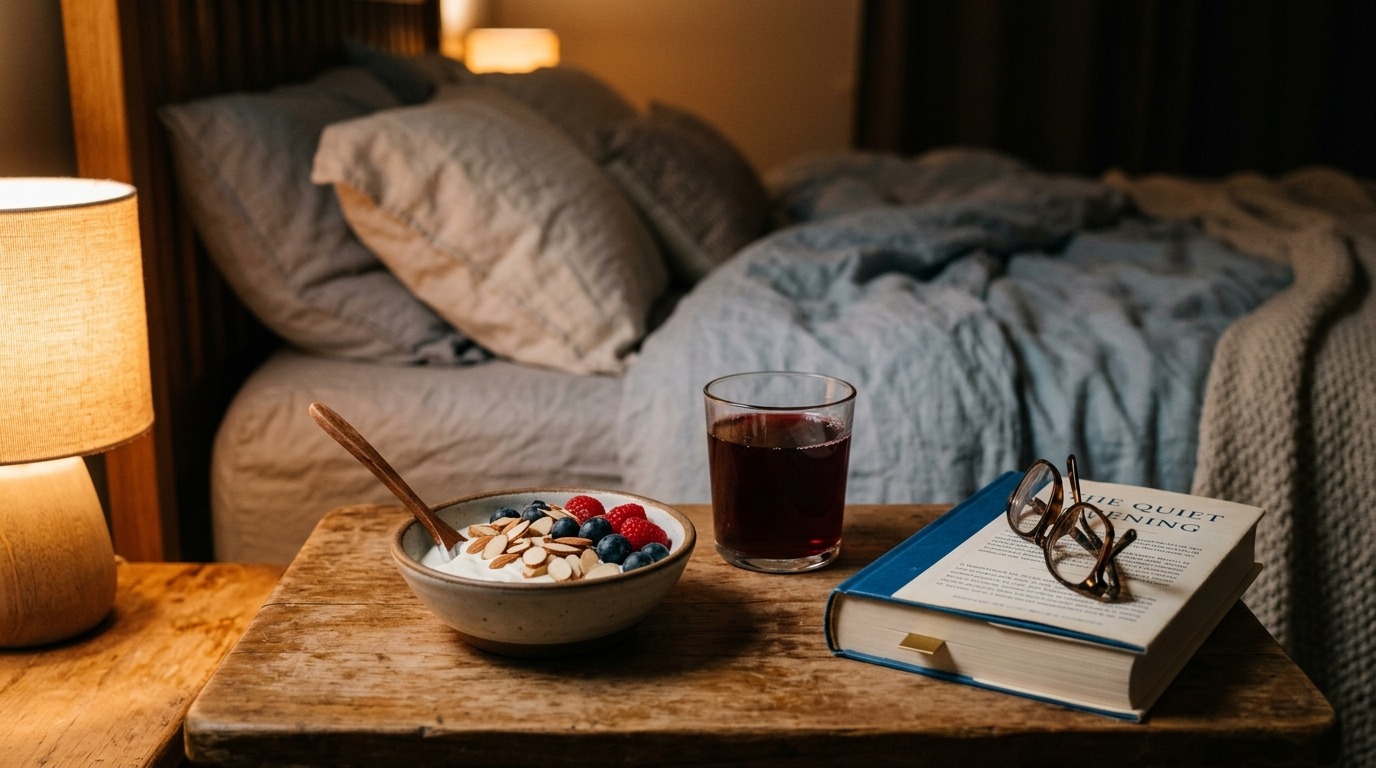
Late-night hunger doesn’t have to derail your progress.
The right bedtime snack — chosen carefully — can actually support your goals instead of working against them. Here’s what the research says, and exactly what to eat (and avoid) before you turn in.
Table of contents
Does Eating Before Bed Actually Ruin Your Diet?
This is the part most articles skip, and it’s the first question anyone worried about their diet actually has.
The old belief that your metabolism “shuts down” at night, causing calories to convert straight to fat, isn’t well supported.
Your resting metabolic rate stays nearly as active while you sleep as it is during the day, and there’s limited evidence that calories eaten late somehow “count more” than calories eaten earlier.
So why do multiple studies still link late-night eating with weight gain? The most consistent explanation is simple: a bedtime snack is often an extra meal, not a substitute for one — meaning extra calories on top of what you already ate that day.
Research has found that people who experience stress tend to see a rise in the hunger hormone ghrelin in the evening, making it even more likely that a late-night snack will push total calorie intake past what the body needs.
There’s also a metabolic wrinkle worth knowing: eating before bed can raise blood sugar, cholesterol, and triglyceride levels, and the thermic effect of food — the energy your body burns digesting a meal — may be lower in the evening for some people, which is one reason very large, high-fat meals close to bedtime are best avoided.
The bottom line: it’s not when you eat that sabotages a diet — it’s what and how much. A small, protein-and-fiber-based snack under 200 calories is very different from a bowl of cereal or a slice of pizza at 11 p.m.
The Rules of Diet-Friendly Night Eating
Before getting into specific foods, three rules keep a bedtime snack from turning into a diet setback:
1. Keep it under 150–200 calories. This is small enough to curb hunger without meaningfully adding to your daily total.
2. Time it right. Most experts recommend finishing eating two to four hours before bedtime for optimal digestion and reflux prevention, though a very small snack closer to bedtime (30–60 minutes prior) is generally fine if it’s light.
3. Pair protein with fiber or healthy fat. This combination slows digestion, keeps blood sugar stable overnight, and helps prevent the 3 a.m. hunger wake-up that refined carbs tend to cause.
The Best Diet-Friendly Foods to Eat Before Bed
Greek Yogurt (~100–150 calories)
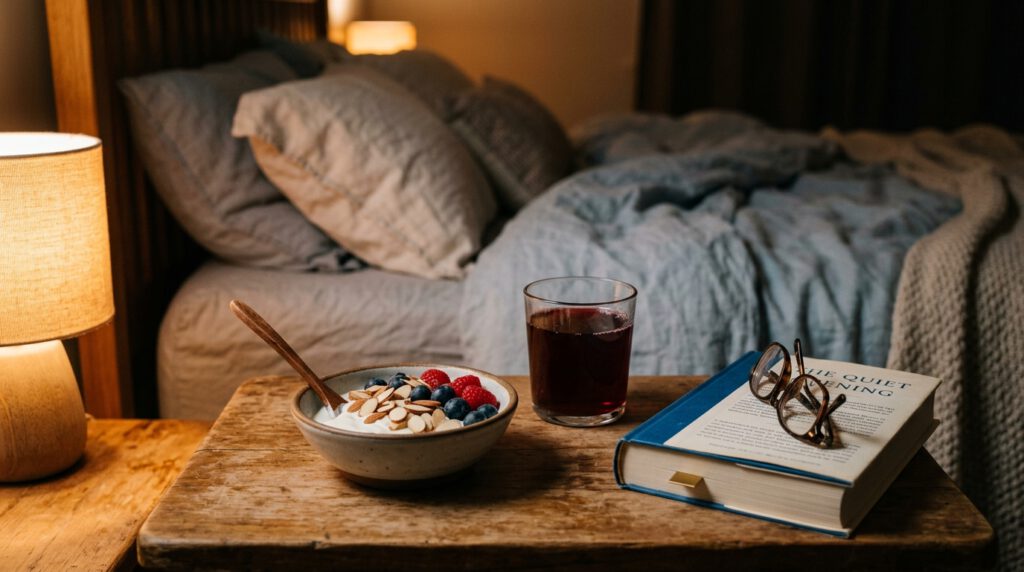
Plain, low-fat Greek yogurt delivers casein — a slow-digesting protein that feeds your muscles for hours — along with calcium and GABA, a neurotransmitter that helps calm the nervous system before sleep. Stick to unsweetened varieties; flavored yogurts can quietly add 15–20g of sugar.
Cottage Cheese (~90–100 calories per ½ cup)
Even higher in casein than yogurt, cottage cheese is one of the most protein-dense, low-calorie options available.
A small Florida State University study found that consuming about 30 grams of protein roughly 30 minutes before bed had a positive impact on metabolism — cottage cheese was the food used.
A Small Handful of Almonds or Pistachios (~150–160 calories)
Nuts supply magnesium, healthy fats, and small amounts of natural melatonin. The catch: they’re calorie-dense, so portion control matters — stick to about 10–12 nuts, not a full handful straight from the bag.
Tart Cherry Juice (~4 oz, ~40 calories)
One of the few foods with meaningful natural melatonin content. A small glass gives a sleep-support boost without the calorie load of a full snack.
Air-Popped Popcorn (~100 calories for 3 cups)
A genuinely filling, high-volume, low-calorie option — good for anyone who wants something to chew on rather than a few bites.
Turkey or Lean Deli Slices (~60–90 calories, 15–20g protein)
Turkey contains tryptophan, which supports melatonin production, plus a strong protein-to-calorie ratio.
Kiwi (1–2 pieces, ~40–90 calories)
In a small clinical study, adults with self-reported sleep problems who ate two kiwis an hour before bed for four weeks fell asleep faster and reported better sleep quality — a rare case of a fruit being studied specifically for pre-bed use.
Hard-Boiled Egg (~70 calories, 6g protein)
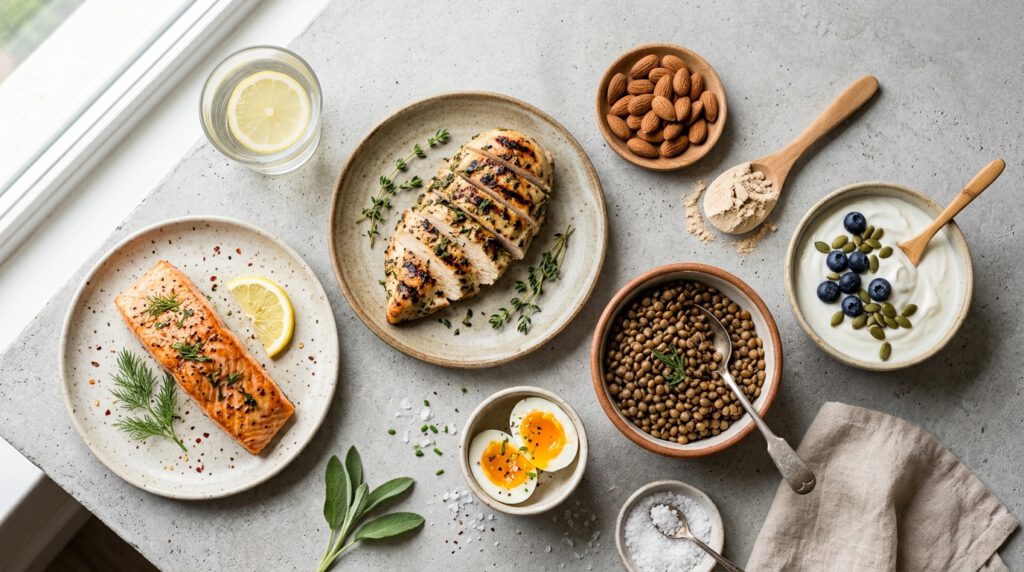
Pure, portioned protein with zero added sugar — a good savory option for anyone not into dairy.
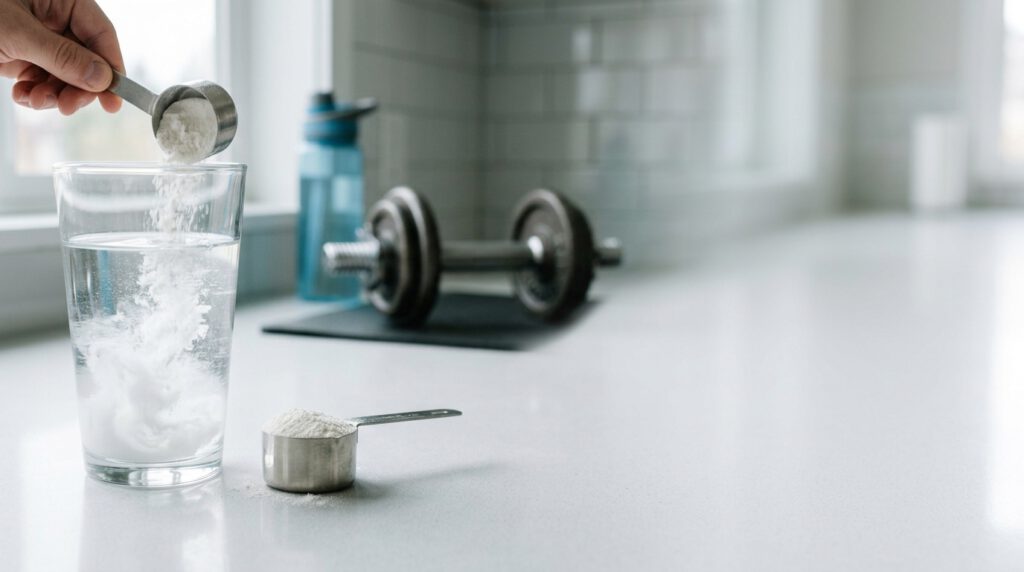
Casein Protein Shake with Water or Almond Milk (~120–150 calories)
For anyone training regularly, a small casein shake supports overnight muscle repair without the calorie density of a full meal.
Foods and Drinks to Avoid Before Bed
- Sugar and refined carbs (cookies, ice cream, white bread, cereal): cause blood sugar spikes followed by crashes that can wake you up and trigger more hunger the next day.
- Heavy, fried, or greasy foods (pizza, burgers, fast food): digest slowly while lying flat, increasing the risk of acid reflux and disrupted sleep.
- Spicy or highly acidic foods: common reflux triggers, especially close to bedtime.
- Caffeine: stimulants close to bedtime disrupt sleep and mood in both adults and children — avoid it within 4–6 hours of sleep.
- Alcohol: may make you feel drowsy initially, but it fragments deep sleep and reduces overall sleep quality — the opposite of what a “diet-friendly” night should do.
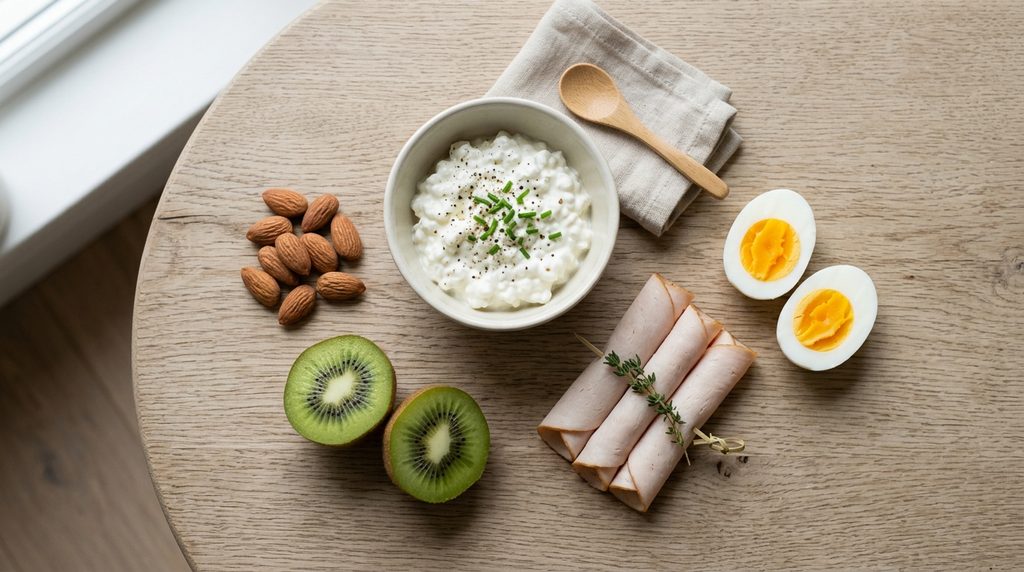
Sample 3-Day Diet-Friendly Bedtime Snack Rotation
| Day | Snack | Approx. Calories | Protein |
|---|---|---|---|
| Day 1 | ½ cup Greek yogurt + cinnamon | 100 | 12g |
| Day 2 | ½ cup cottage cheese + 5 almonds | 130 | 16g |
| Day 3 | 1 hard-boiled egg + small kiwi | 110 | 8g |
FAQs
Is it bad to eat before bed if I’m trying to lose weight?
Not inherently. The issue is usually portion size and food choice, not timing itself — a small, protein-based snack is unlikely to affect weight loss.
How many calories should a bedtime snack have?
Generally 100–200 calories is the sweet spot: enough to curb hunger, not enough to meaningfully add to your daily total.
What’s the best time to eat before bed?
Aim to finish eating 1–2 hours before sleep when possible, and keep anything eaten closer to bedtime very light.
Related Posts

Stay Informed With the Latest & Most Important News
Previous Post
Next Post









Advertisement