

















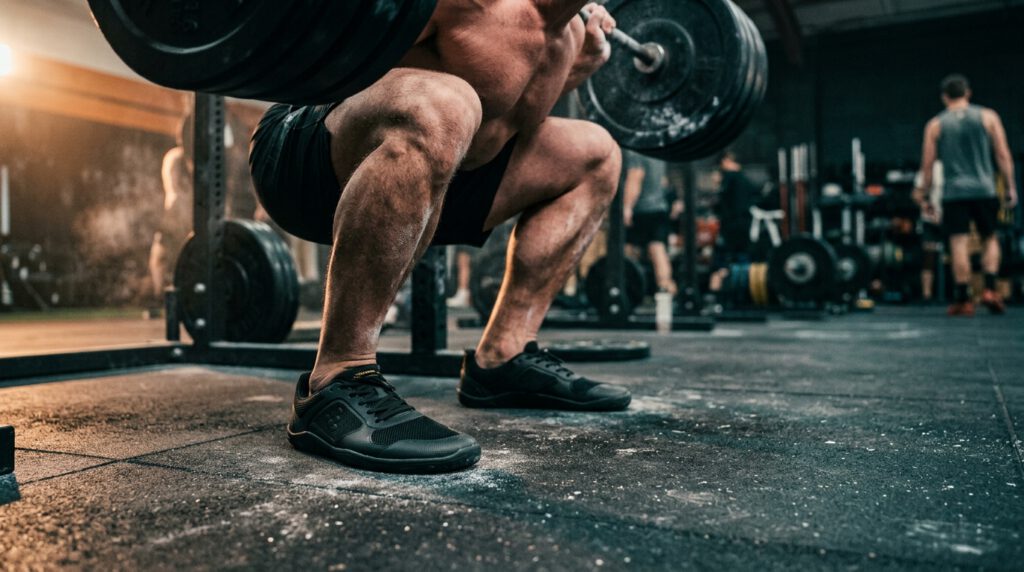



Now Reading: Best Compound Exercises for Maximum Muscle Growth (Ranked by Science)
-
01
Best Compound Exercises for Maximum Muscle Growth (Ranked by Science)


If you want to build maximum muscle in minimum time, compound
exercises are non-negotiable. These multi-joint movements recruit large groups
of muscles simultaneously, allowing you to lift heavier loads, trigger stronger
hormonal responses, and accumulate more total muscle stimulus per set than any
isolation exercise can offer.
But not all compound lifts are
created equal. Some produce significantly more hypertrophy stimulus than
others, and the science — from electromyography (EMG) studies to controlled
hypertrophy trials — now gives us a clear ranking of which movements deliver
the greatest returns.
In this guide, you’ll find the
best compound exercises for muscle growth, organized by muscle group and backed
by research, so you can structure your program around what actually works.
Table of contents
- What Are Compound Exercises?
- Why Compound Exercises Are Superior for Muscle Growth
- Can You Build Muscle with Only Compound Exercises?
- The Best Compound Exercises, Ranked by Muscle Group
- Compound vs. Isolation Exercises: What Does the Research Say?
- How to Structure Your Training Around These Exercises
- Frequently Asked Questions
- Conclusion
What Are Compound Exercises?
Compound exercises are
multi-joint movements that engage several muscle groups at the same time.
Unlike isolation exercises such as bicep curls or leg extensions, compound
lifts coordinate entire kinetic chains.
• Squat — quads, glutes, hamstrings, calves, and core
• Bench Press — pecs, anterior deltoids, and triceps
• Deadlift — hamstrings, glutes, quads, lats, traps, and core
• Pull-Up — lats, biceps, rear delts, and core
• Overhead Press — anterior and lateral deltoids, triceps, and core
• Bent-Over Row — lats, rhomboids, traps, and rear delts
Why Compound Exercises Are Superior for Muscle Growth
1. Greater Hypertrophy Stimulus
A review published in the Journal
of Strength & Conditioning Research confirmed that compound lifts,
when progressively overloaded, activate the three primary mechanisms of
hypertrophy: mechanical tension, muscle damage, and metabolic stress —
simultaneously.
2. Time Efficiency
Research published in Sports
Medicine recommends prioritizing bilateral, multi-joint exercises to
maximize training efficiency. Instead of dedicating separate exercises to each
muscle, compound movements handle multiple targets in a single set.
3. Elevated Anabolic Hormones
Evidence from the European
Journal of Applied Physiology found that performing large-muscle-group
compound exercises significantly increases testosterone and growth hormone
levels — far more than isolation movements do. This systemic hormonal response
accelerates muscle growth across the entire body.
4. Superior Cardiovascular Demand
A study in Frontiers
comparing compound and isolation exercises found that multi-joint movements
produce greater improvements in cardiovascular fitness and VO2 max, making them
doubly efficient for athletes and general fitness.
Can You Build Muscle with Only Compound Exercises?
Yes. A study published in Applied
Physiology, Nutrition and Metabolism compared a program built entirely
on compound exercises against one that combined compound and isolation
movements. The result? No significant difference in muscle size or strength
gains between the two groups.
This means compound lifts alone
are sufficient for most people. Adding targeted isolation work can help address
specific weaknesses, but it’s optional — not essential.
The Best Compound Exercises, Ranked by Muscle Group
The following ranking is based
on EMG muscle activation data, hypertrophy research, and stimulus-to-fatigue
ratio — a measure of how much muscle growth a movement stimulates relative to
how much systemic recovery it demands.
1. Legs: Barbell Back Squat & Bulgarian Split Squat
Barbell Back Squat

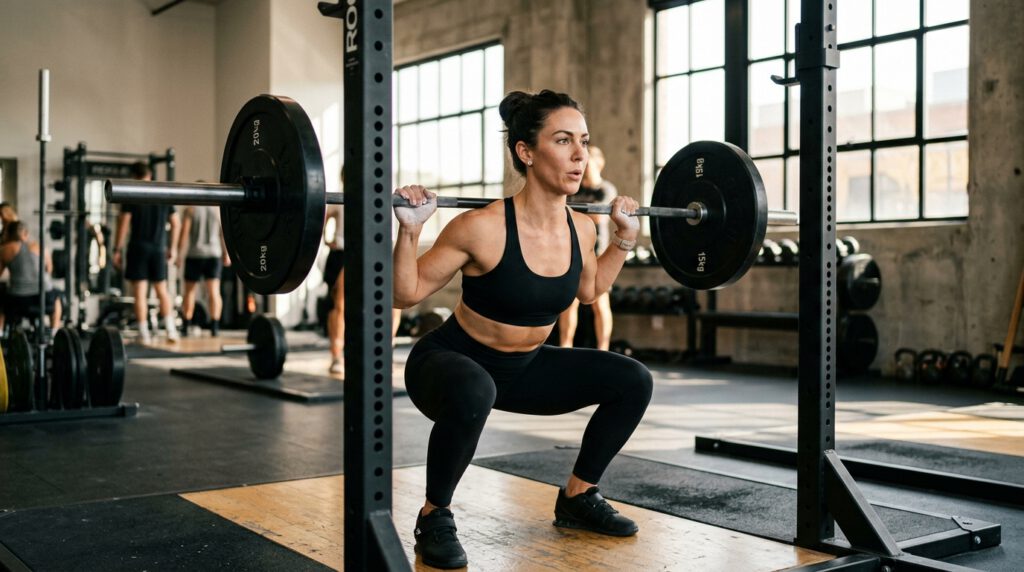
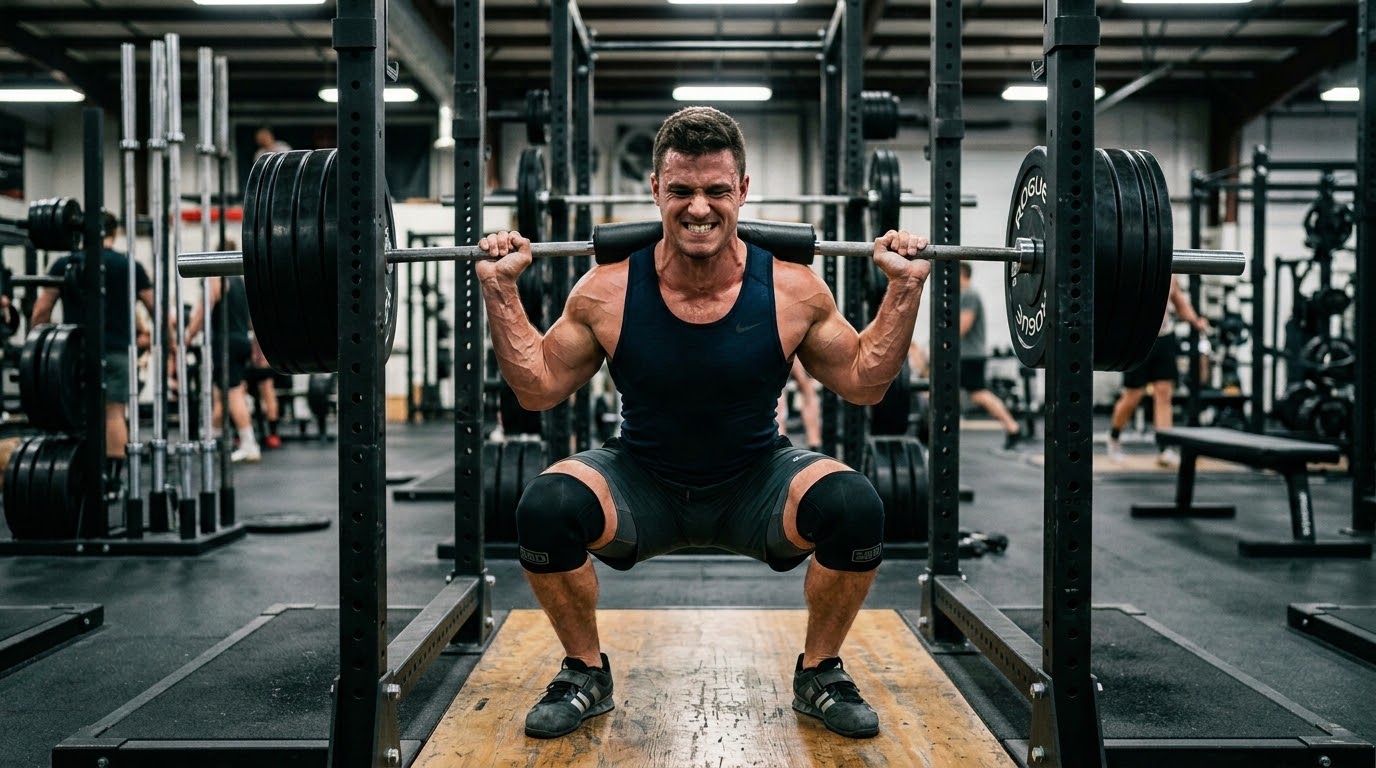
The barbell back squat is the
undisputed king of lower-body development. It maximally recruits the quadriceps,
glutes, and spinal erectors, while also demanding significant core and
upper-back stability. No other lower-body movement allows you to overload the
quads and glutes with as much absolute weight.
How to perform it:
1. Set the barbell on the meaty part of your upper back (not your neck).
2. Step out with feet slightly wider than shoulder-width, toes angled outward.
3. Brace your core, maintain an upright torso, and push your hips back.
4. Descend until your thighs pass parallel to the floor.
5. Drive through your entire foot to return to the starting position.
Bulgarian Split Squat

Research shows that the
Bulgarian Split Squat produces comparable quad and glute activation to the back
squat while using approximately half the absolute weight — significantly
reducing spinal compressive load. It also corrects left-to-right muscle imbalances,
making it an essential complement or even a primary leg movement.
How to perform it:
6. Place your rear foot on a bench behind you, laces down.
7. Step your front foot far enough forward that your shin remains
vertical at the bottom.
8. Lower your hips until your rear knee nearly touches the floor.
9.
Push explosively through your
front heel to stand back up.
Pro Tip: Pair these
two movements for complete quad and glute development — the back squat for
maximum loading, and the split squat for unilateral correction and reduced
spinal fatigue.
2. Back: Barbell Row & Pull-Ups
Barbell Bent-Over Row

The barbell row targets the
lats, rhomboids, traps, and rear deltoids. The bent-over position also forces
the lower back and hamstrings to work isometrically throughout the set,
creating a demanding full-body stimulus that goes far beyond just the back.
How to perform it:
10. Hinge at the hips until your chest is near parallel to the
floor.
11. Hold the bar with a double-overhand grip, slightly wider than
shoulder-width.
12. Keeping your back flat, row the bar toward your lower sternum.
13. Squeeze your shoulder blades together at the top.
14. Lower under control and repeat.
Pull-Ups & Chin-Ups

Pull-ups are arguably the
ultimate upper-body pulling exercise, training the lats, biceps, rear deltoids,
traps, and core in a vertical pulling plane — perfectly complementing the
horizontal pull of rows.
•
Pull-ups (overhand grip) =
greater lat width emphasis
•
Chin-ups (underhand grip) =
greater biceps involvement
3. Chest: Barbell Bench Press & Weighted Dips

The bench press is the most effective movement for overloading
the sternal head of the pectoralis major, along with the anterior deltoids and
triceps. Its ability to be progressively loaded makes it the gold standard for
upper-body pushing strength and mass.
Weighted Dips are one of the
most biomechanically advantageous exercises for lower chest and triceps
development. Leaning forward slightly emphasizes the chest; staying upright
shifts the load more toward the triceps.
4. Shoulders: Standing Overhead Press

The standing barbell overhead press is the premier movement
for anterior and lateral deltoid growth. Standing (vs. seated) recruits intense
core stabilization and forces greater total-body involvement, making it a
top-tier upper-body builder. Brace your core hard, keep the bar path vertical,
and lock out fully at the top.
5. Posterior Chain: Romanian Deadlift (RDL)

While the conventional deadlift is foundational, the Romanian
Deadlift (RDL) is superior for pure hamstring and glute hypertrophy.
By
eliminating the bounce off the floor and maintaining constant tension
throughout the movement, the RDL places maximum, continuous load on the
hamstrings and glutes through their full active range of motion.
Compound vs. Isolation Exercises: What Does the Research Say?
Multiple studies have directly
compared compound and isolation movements for hypertrophy:
•
Gentil et al. — Lat
pulldowns vs. dumbbell curls produced similar elbow flexor growth.
•
Mannarino et al. — Curls
produced roughly double the bicep growth compared to rows.
•
Brandão et al. —
Skullcrushers grew the long/medial triceps heads more; bench press favored the
lateral head.
•
Avery et al.
(meta-analysis) — No statistically significant difference in hypertrophy
between single- and multi-joint movements across 7 studies.
Key Takeaway: Compound
exercises are not worse than isolation movements for muscle growth — and they
are dramatically more time-efficient. Build your program around compounds, and
add isolation work only where you have specific gaps.
How to Structure Your Training Around These Exercises
15. Start each session with your primary compound lift — when you
are freshest, perform the movement that requires the most technique and allows
the most load.
16. Use lower reps and heavier weight for compounds — 3–5 sets of
4–8 reps works well for driving strength and mechanical tension.
17. Follow up with secondary compounds — e.g., Romanian deadlifts
after squats, or dips after bench press.
18. Finish with isolation work (optional) — higher reps (10–20) for
targeted muscles you want to bring up.
Frequently Asked Questions
How many compound exercises should I do per workout?
2–4 compound movements per
session is optimal for most people. More than that and fatigue accumulates
quickly, compromising performance on later sets.
Can beginners do all these
exercises?
Yes, but with lighter loads
while learning technique. Consider starting with goblet squats, dumbbell bench
press, and dumbbell shoulder press until your form is solid.
Should I do compound
exercises every day?
No. Compound movements are
highly demanding on the central nervous system and connective tissue. Allow at
least 48 hours of recovery between training the same muscle groups.
Are compound exercises good
for fat loss?
Yes. Because they elevate heart
rate more than isolation exercises and build more total muscle mass, compound
lifts boost your metabolic rate both during and after training.
Conclusion
The science is clear: compound
exercises are the most efficient and effective tool available for building
maximum muscle mass. Movements like the barbell back squat, bench press,
bent-over row, overhead press, and Romanian deadlift provide unmatched
hypertrophy stimulus per unit of time invested.
Build your training program
around these five categories, apply progressive overload consistently, and you
will have everything you need to drive serious, long-term muscle growth.
Ready
to take it further?
Tell us your training days per week, experience
level, and any equipment limitations — and we’ll design a fully customized
hypertrophy split around these movements.
Related Posts
Stay Informed With the Latest & Most Important News
Previous Post
Next Post










Advertisement