

























Now Reading: Insulin Sensitivity vs Insulin Resistance: A Complete Guide to Carb Tolerance
-
01
Insulin Sensitivity vs Insulin Resistance: A Complete Guide to Carb Tolerance


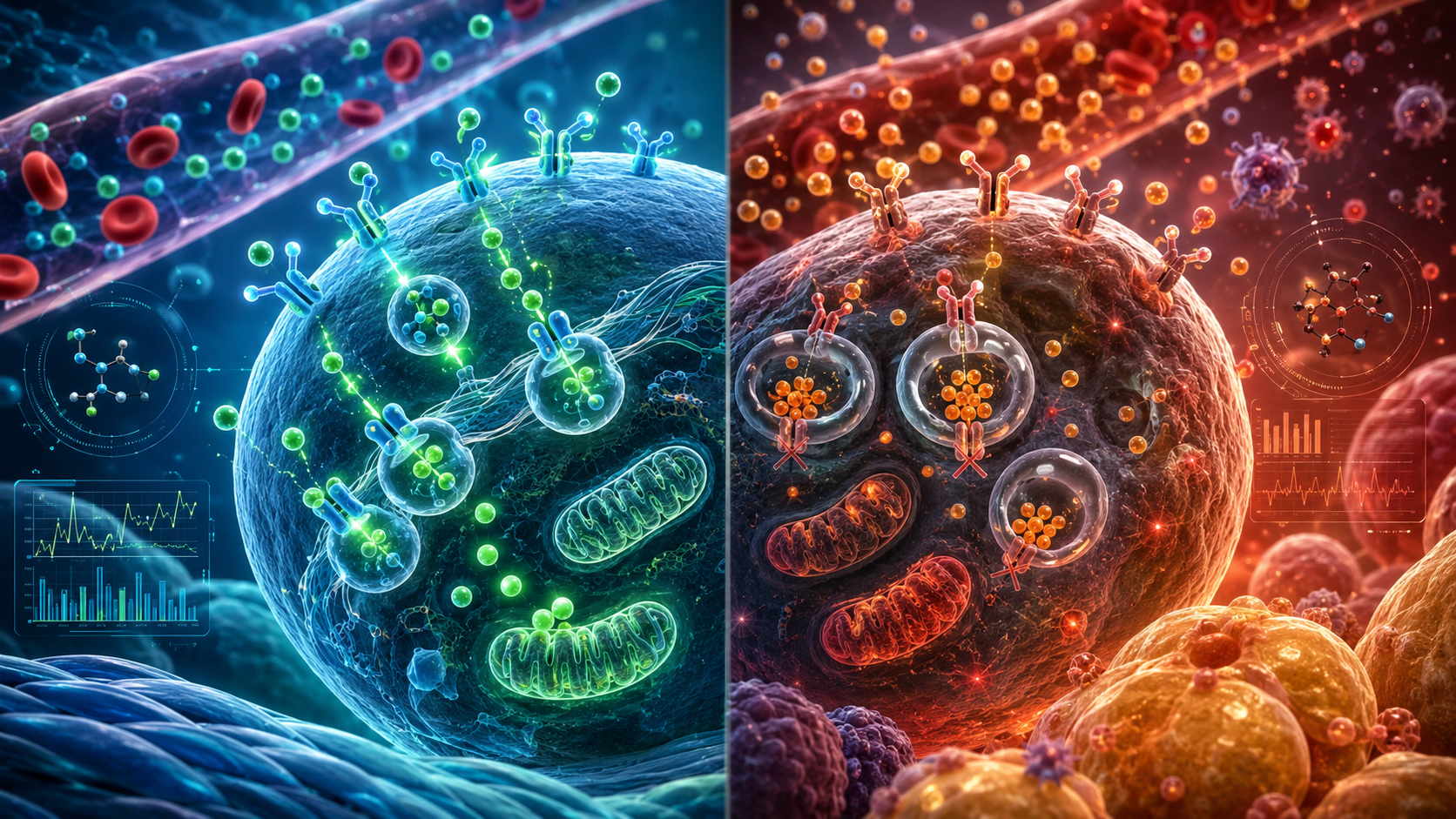
Why can some people eat carbohydrates without energy crashes while others feel tired, hungry, and foggy after meals?
The answer often comes down to insulin sensitivity versus insulin resistance — two opposite metabolic states that determine how efficiently your body handles carbohydrates and blood sugar.
At the cellular level, insulin acts like a messenger that tells your cells to absorb glucose from the bloodstream. When this system works properly, energy remains stable and metabolism functions efficiently. But when cells stop responding to insulin signals, glucose builds up in the blood, insulin levels rise, and metabolic health begins to decline.
Understanding this process is essential for improving carbohydrate tolerance, preventing Type 2 diabetes, enhancing fat loss, and optimizing long-term health.
Table of contents
- What Is Insulin Sensitivity?
- What Is Insulin Resistance?
- The Cellular Mechanism: How Insulin Works
- What Happens During Insulin Resistance?
- Insulin Sensitivity vs. Insulin Resistance
- The Progression Toward Carbohydrate Intolerance
- Common Symptoms of Insulin Resistance
- What Causes Insulin Resistance?
- The Role of Carbohydrates in Insulin Resistance
- Simple Sugars vs. Complex Carbohydrates
- Glycemic Index and Insulin Sensitivity
- How Exercise Improves Insulin Sensitivity
- Can Insulin Resistance Be Reversed?
- Medical Treatments for Insulin Resistance
- Why Insulin Resistance Matters Beyond Diabetes
- Key Takeaways
- Frequently Asked Questions
- Conclusion
What Is Insulin Sensitivity?
Insulin sensitivity refers to how responsive your cells are to insulin.
When you are insulin sensitive:
- Your body needs only small amounts of insulin
- Muscle and liver cells absorb glucose efficiently
- Blood sugar remains stable
- Carbohydrates are used effectively for energy or glycogen storage
- The pancreas experiences minimal stress
People with high insulin sensitivity typically experience:
- Stable energy levels
- Better workout performance
- Fewer cravings
- Improved metabolic flexibility
- Easier fat management
In simple terms, insulin-sensitive cells “listen” to insulin signals properly.
What Is Insulin Resistance?
Insulin resistance occurs when cells become less responsive to insulin.
Instead of absorbing glucose efficiently, muscle, liver, and fat cells begin ignoring insulin’s message. As a result:
- Glucose remains in the bloodstream
- The pancreas produces more insulin to compensate
- Blood insulin levels rise (hyperinsulinemia)
- Fat storage increases
- Energy regulation worsens
Over time, the pancreas can become exhausted from constant overproduction, eventually leading to:
- Prediabetes
- Type 2 diabetes
- Metabolic syndrome
- Cardiovascular disease
Insulin resistance is often called “impaired insulin sensitivity” because the body develops a tolerance to insulin’s effects.
The Cellular Mechanism: How Insulin Works
To understand carbohydrate tolerance, it helps to examine how cells process glucose at the microscopic level.
Step 1: Carbohydrates Become Glucose
After eating carbohydrates, digestion breaks them down into glucose, which enters the bloodstream.
Step 2: The Pancreas Releases Insulin
In response to rising blood glucose, the pancreas secretes insulin.
Step 3: Insulin Binds to Cell Receptors
Insulin acts like a key that attaches to insulin receptors on muscle, liver, and fat cells.
Step 4: GLUT4 Transporters Move to the Cell Surface
In healthy insulin-sensitive cells, insulin signaling activates specialized transport proteins called GLUT4 transporters.
These transporters move to the cell membrane and open “doors” that allow glucose to enter the cell.
Step 5: Glucose Is Used or Stored
Once inside the cell, glucose can:
- Produce energy (ATP)
- Replenish muscle glycogen
- Support cellular function
What Happens During Insulin Resistance?
In insulin resistance, the signaling pathway becomes disrupted.
The insulin “key” still reaches the receptor, but the internal signaling system malfunctions. GLUT4 transporters fail to move properly, leaving glucose trapped in the bloodstream.
Several mechanisms contribute to this breakdown:
Intracellular Fat Accumulation
Excess fat stored inside muscle and liver cells (ectopic fat) interferes with insulin signaling pathways.
Chronic Low-Grade Inflammation
Inflammatory compounds disrupt receptor communication and reduce insulin responsiveness.
Physical Inactivity
Sedentary behavior decreases GLUT4 activity and worsens glucose uptake efficiency.
Excess Caloric Intake
Long-term overeating increases fat accumulation and metabolic stress.
Insulin Sensitivity vs. Insulin Resistance
| Feature | Insulin Sensitivity | Insulin Resistance |
|---|---|---|
| Cellular Response | Strong response to small insulin amounts | Weak response to normal insulin |
| Blood Sugar Control | Stable | Elevated or unstable |
| Pancreatic Workload | Low | High |
| Energy Levels | Steady | Fatigue and crashes |
| Carb Handling | Efficient glycogen storage | Increased fat storage |
| Fasting Insulin | Low | Elevated |
| Metabolic Flexibility | High | Reduced |
| Common Symptoms | Stable appetite and energy | Brain fog, cravings, hunger |
The Progression Toward Carbohydrate Intolerance
Insulin resistance usually develops gradually over many years.
Stage 1: Compensation
Cells begin resisting insulin, so the pancreas compensates by producing more insulin.
At this stage:
- Blood glucose may still appear “normal”
- Fasting insulin often rises
- Symptoms may be subtle
This hidden stage is known as hyperinsulinemia.
Stage 2: Decompensation
Over time, pancreatic beta cells become overworked and lose efficiency.
The pancreas can no longer produce enough insulin to overcome resistance.
Stage 3: Hyperglycemia
Blood glucose begins rising consistently.
This progression can lead to:
- Prediabetes
- Type 2 diabetes
- Metabolic syndrome
Common Symptoms of Insulin Resistance
Many people develop insulin resistance long before diagnosis.
Common warning signs include:
- Afternoon energy crashes
- Constant hunger
- Intense sugar cravings
- Brain fog
- Increased abdominal fat
- Difficulty losing weight
- Elevated fasting insulin
- High triglycerides
- Darkened skin patches (acanthosis nigricans)
What Causes Insulin Resistance?
Scientists believe insulin resistance develops through a combination of genetics, lifestyle, and environmental factors.
Excess Body Fat
Obesity — especially visceral fat — strongly correlates with insulin resistance.
Fat tissue may release inflammatory signals that impair insulin function.
Sedentary Lifestyle
Lack of physical activity reduces glucose uptake by muscles.
Aging
Insulin sensitivity often declines with age.
Genetics
Some individuals are genetically predisposed to developing insulin resistance.
Chronic Overnutrition
Consistently consuming more calories than the body needs increases fat accumulation and metabolic stress.
The Role of Carbohydrates in Insulin Resistance
Contrary to popular belief, carbohydrates themselves are not automatically harmful.
Research suggests that the quality of carbohydrates matters more than total carbohydrate intake alone.
Simple Sugars vs. Complex Carbohydrates
Simple Sugars
Sugars like fructose and sucrose may negatively affect insulin sensitivity when consumed excessively over long periods.
High intakes of sugary beverages and ultra-processed foods are strongly associated with metabolic dysfunction.
However, human studies remain more mixed than animal research.
Complex Carbohydrates
Complex carbohydrates rich in fiber digest more slowly and produce smaller glucose spikes.
Examples include:
- Oats
- Beans
- Lentils
- Vegetables
- Whole grains
Higher fiber intake is consistently associated with improved insulin sensitivity and lower diabetes risk.
Glycemic Index and Insulin Sensitivity
The glycemic index (GI) measures how quickly carbohydrate foods raise blood sugar.
Low-GI Foods
These digest more slowly and may reduce glucose spikes:
- Legumes
- Steel-cut oats
- Non-starchy vegetables
- Most fruits
High-GI Foods
These digest rapidly and can increase insulin demand:
- Sugary cereals
- White bread
- Candy
- Refined grains
Research on GI remains somewhat controversial, but lower-GI eating patterns may benefit people with impaired glucose tolerance.
How Exercise Improves Insulin Sensitivity
Exercise is one of the most powerful tools for reversing insulin resistance.
The “Backdoor” Glucose Pathway
Muscle contraction activates GLUT4 transporters independently of insulin.
This allows muscles to absorb glucose even when insulin signaling is impaired.
Benefits of Exercise
Regular physical activity:
- Improves glucose uptake
- Lowers fasting insulin
- Increases glycogen storage
- Enhances mitochondrial function
- Reduces visceral fat
One simple strategy is the 10-10-10 Rule:
- Walk for 10 minutes after breakfast
- Walk for 10 minutes after lunch
- Walk for 10 minutes after dinner
This helps blunt post-meal glucose spikes significantly.
Can Insulin Resistance Be Reversed?
In many cases, yes.
Insulin resistance is often an acquired metabolic condition rather than a permanent disease.
Effective Strategies Include:
Weight Loss
Reducing ectopic fat inside muscle and liver cells helps restore insulin signaling.
Resistance Training
Building muscle improves glucose disposal capacity.
Aerobic Exercise
Cardio increases mitochondrial efficiency and glucose utilization.
Fiber-Rich Nutrition
Higher fiber intake improves blood sugar stability and satiety.
Sleep Optimization
Poor sleep worsens insulin resistance and appetite regulation.
Stress Management
Chronic stress elevates cortisol, which can impair glucose control.
Medical Treatments for Insulin Resistance
Although no medications are approved solely for insulin resistance, some diabetes medications improve insulin sensitivity.
These include:
- Metformin
- Thiazolidinediones (TZDs)
These medications help lower blood glucose partly by improving insulin responsiveness.
Why Insulin Resistance Matters Beyond Diabetes
Insulin resistance affects far more than blood sugar.
Research links insulin resistance to:
- Cardiovascular disease
- Hypertension
- Obesity
- Fatty liver disease
- Cognitive decline
- Chronic inflammation
Because insulin influences multiple organs — including the brain, liver, pancreas, muscle, and fat tissue — metabolic dysfunction can impact the entire body.
Key Takeaways
- Insulin sensitivity allows efficient glucose use with minimal insulin
- Insulin resistance forces the body to overproduce insulin
- GLUT4 transporters play a central role in glucose uptake
- Exercise improves glucose uptake independently of insulin
- Fiber-rich carbohydrates generally support better metabolic health
- Insulin resistance develops gradually and often silently
- Lifestyle changes can significantly improve or reverse insulin resistance
Frequently Asked Questions
What is the difference between insulin sensitivity and insulin resistance?
Insulin sensitivity means cells respond efficiently to insulin, while insulin resistance means cells respond poorly, requiring higher insulin levels to control blood sugar.
Can insulin resistance be reversed naturally?
Yes. Exercise, weight loss, improved sleep, stress management, and higher fiber intake can substantially improve insulin sensitivity.
What foods improve insulin sensitivity?
Fiber-rich whole foods such as vegetables, legumes, oats, berries, and minimally processed carbohydrates are associated with better insulin function.
Does exercise lower insulin resistance?
Yes. Physical activity activates GLUT4 transporters and improves glucose uptake, even without insulin.
Is insulin resistance the same as diabetes?
No. Insulin resistance often develops years before diabetes and may exist even when blood sugar appears normal.
Conclusion
Insulin sensitivity and insulin resistance represent two very different metabolic realities.
In an insulin-sensitive state, glucose is efficiently transported into cells, energy remains stable, and metabolism functions smoothly. In insulin resistance, that communication system begins to fail, forcing the body into chronic metabolic stress.
The encouraging news is that insulin resistance is highly responsive to lifestyle intervention. Regular movement, improved nutrition, better sleep, and weight management can dramatically restore metabolic flexibility and carbohydrate tolerance over time.
Understanding how insulin works at the cellular level provides one of the clearest roadmaps for improving long-term metabolic health.
Related Posts

Stay Informed With the Latest & Most Important News
Previous Post
Next Post









Advertisement