

























Now Reading: How to Set Realistic Fitness Goals (and Actually Reach Them)
-
01
How to Set Realistic Fitness Goals (and Actually Reach Them)


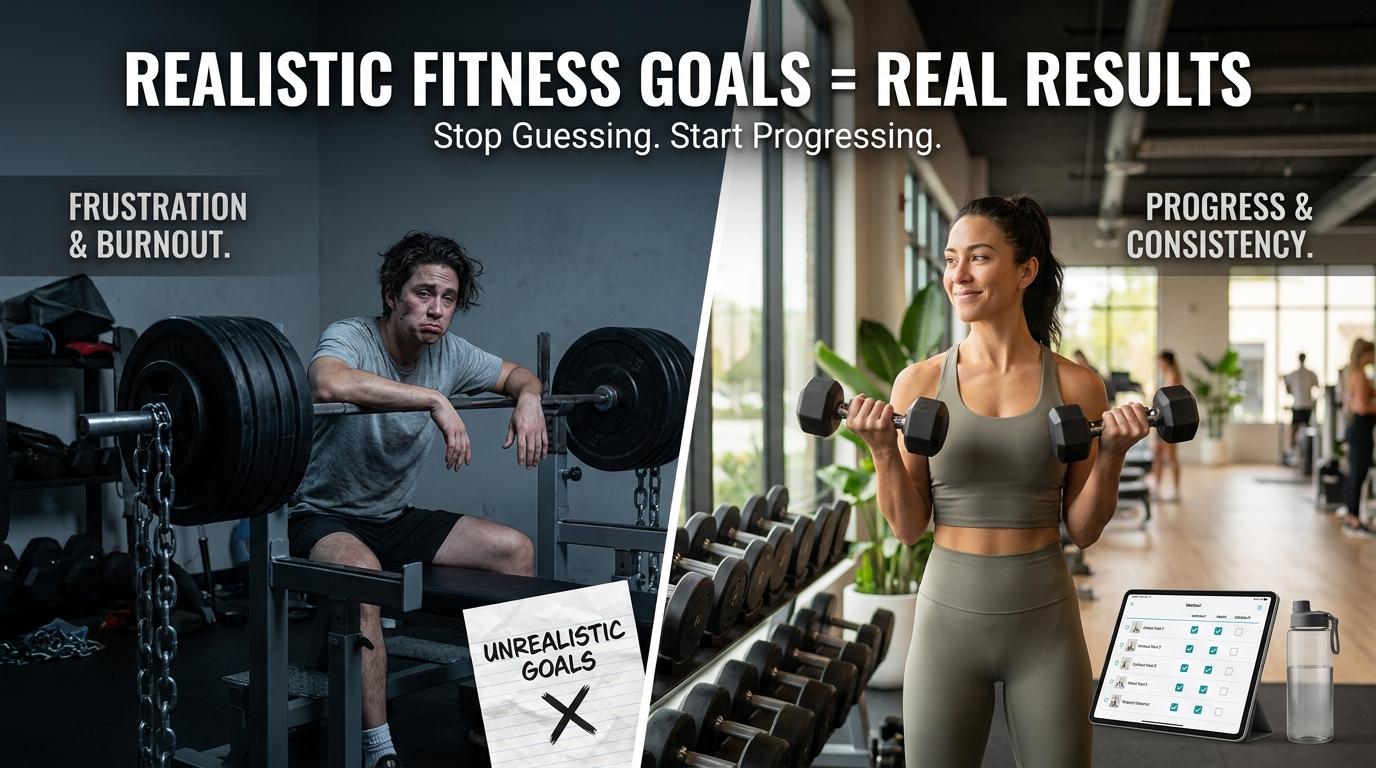
If you’re like most people, you’ve probably set big fitness goals before—only to lose motivation a few weeks later. The truth is, setting goals is easy.
Sticking to them? That’s the real challenge.
The secret isn’t more motivation. It’s creating realistic fitness goals that fit your lifestyle, keep you consistent, and deliver long-term results.
In this guide, you’ll learn exactly how to set achievable goals—and actually reach them.
Table of contents
- Why Setting Realistic Fitness Goals Matters
- The Problem With Unrealistic Timelines
- Use the SMART Method for Fitness Goals
- Break Big Goals Into Smaller Milestones
- Use the MTO Formula (Minimum, Target, Outstanding)
- Focus on Consistency Over Intensity
- Build Habits With “Workout Snacks”
- Track Your Progress
- Focus on the Process, Not Just Results
- Use Accountability to Stay Committed
- Support Your Goals With Healthy Habits
- Common Mistakes to Avoid
- Shift Your Mindset for Long-Term Success
- 6 Simple Tips to Actually Reach Your Fitness Goals
- Conclusion
Why Setting Realistic Fitness Goals Matters
Clear goals give your workouts purpose. They help you stay focused, measure progress, and celebrate wins—both big and small.
But unrealistic goals can do the opposite:
Cause burnout
Lead to frustration
Make you quit early
Research shows that structured goal-setting improves adherence to healthy habits. The key is setting goals that challenge you without overwhelming you.
The Problem With Unrealistic Timelines
We’ve all seen promises like “lose 10 pounds in a week.” But real progress doesn’t work that way.
Healthy fat loss: 1–2 pounds per week
Muscle gain: 1–2 pounds per month
Expecting fast results often leads to disappointment. Instead, think long-term:
👉 What can you realistically achieve in 3–6 months?
Use the SMART Method for Fitness Goals
One of the most effective ways to set goals is the SMART framework:
Specific: Clearly define your goal
Measurable: Track your progress
Achievable: Keep it realistic
Relevant: Align it with your lifestyle
Time-bound: Set a deadline
Example:
❌ “I want to get fit”
✅ “I want to do 10 push-ups in 2 months”
This clarity makes your goal actionable and trackable.
Break Big Goals Into Smaller Milestones
Large goals can feel overwhelming. The solution? Break them down.
Instead of:
“Lose 20 pounds”
Do this:
Lose 1 pound per week
Work out 3–4 times weekly
Small wins build momentum—and momentum builds success.
Use the MTO Formula (Minimum, Target, Outstanding)
Consistency is everything. The MTO method helps you stay on track:
Minimum: 3 workouts/week (non-negotiable)
Target: 4 workouts/week
Outstanding: 5 workouts/week
Even during busy weeks, hitting your minimum keeps your progress alive.
Focus on Consistency Over Intensity
You don’t need extreme workouts—you need consistency.
A simple routine done regularly beats:
Short bursts of intense effort
“All-or-nothing” thinking
Make fitness part of your schedule:
Morning workouts
Evening sessions
Short daily movement
Build Habits With “Workout Snacks”
Fitness doesn’t have to mean long gym sessions.
Try habit stacking with small activities:
Squats during breaks
Calf raises while brushing teeth
1–5 minute mini workouts
These small actions add up—and make consistency easier.
Track Your Progress
Tracking keeps you motivated and aware of your improvement.
You can use:
Fitness apps
Workout journals
Progress photos
Body measurements
Focus on progress—not perfection.
Focus on the Process, Not Just Results
Don’t only reward outcomes like weight loss.
Instead, celebrate:
Completing workouts
Sticking to your routine
Building healthy habits
This mindset shift is what creates long-term success.
Use Accountability to Stay Committed
You’re more likely to succeed when someone keeps you accountable.
Options include:
Workout partners
Fitness groups
Personal trainers
Online communities
Accountability turns intention into action.
Support Your Goals With Healthy Habits
Fitness goes beyond exercise.
To maximize results:
Eat nutritious whole foods
Stay hydrated
Get enough sleep
Manage stress
Your lifestyle directly impacts your progress.
Common Mistakes to Avoid
1. Doing Too Much Too Soon
Starting too hard leads to burnout or injury. Build gradually.
2. Ignoring Rest Days
Recovery is essential for muscle growth and performance.
3. Lack of Flexibility
If your plan isn’t working, adjust it—don’t quit.
Shift Your Mindset for Long-Term Success
To make your results last, focus on:
Progress over perfection
Habits over hacks
Consistency over intensity
Remember: You’re not just chasing a number. You’re building a healthier, stronger version of yourself.
6 Simple Tips to Actually Reach Your Fitness Goals
Set clear and realistic goals
Start small and build momentum
Create a consistent routine
Combine fitness with healthy habits
Stay accountable
Give yourself grace
Conclusion
Setting realistic fitness goals is the foundation of long-term success.
When you:
Use the SMART method
Stay consistent
Focus on small wins
You don’t just reach your goals—you maintain them.
Fitness doesn’t have to be complicated. Keep it simple, stay consistent, and trust the process.
Related Posts
Stay Informed With the Latest & Most Important News
Previous Post
Next Post










Advertisement