
























Now Reading: Why Motivation Doesn’t Work (And What to Rely on Instead)
-
01
Why Motivation Doesn’t Work (And What to Rely on Instead)



You’ve felt it before.
A podcast, a late-night scroll through transformation photos, a birthday that ends in a zero — and suddenly you’re “all in.” New gym membership. New notebook. New 5 a.m. alarm. For three, maybe five days, it works.
Then a rough night’s sleep, a stressful meeting, or just an ordinary Tuesday shows up, and the fire is gone.
If that cycle sounds familiar, you’re not undisciplined and you’re not broken. You’ve just been relying on the wrong tool.
A Forbes Health survey found the average New Year’s resolution survives less than four months, and research cited by Psychology Today puts the February drop-off rate as high as 80%.
That’s not a willpower crisis affecting a few unlucky people — it’s what happens whenever anyone builds a plan on top of a feeling.
This article breaks down why motivation was never designed to carry long-term change, what the psychology and habit research actually says works instead, and how to build a routine that holds up on the days you don’t feel like it — because those days are most of them.
Table of contents
Why Motivation Fails
It’s a Feeling, Not a Strategy
Motivation isn’t a character trait or a resource you either have or lack.
It’s an emotional and physiological state — shaped by sleep, blood sugar, stress hormones, mood, and even the weather.
Ask yourself what was different on your last “motivated” day versus your last “I can’t be bothered” day. Usually the honest answer isn’t about willpower.
It’s that you slept better, felt less overwhelmed, or had a small win that morning.
Building your goals around a feeling this unstable is like planning a road trip around whether it happens to be sunny.
Some days it will be.
Most days, it won’t.
It Peaks Early, Then Fades — By Design
Nearly every plan starts with a burst of enthusiasm.
Psychologists call the appeal of a new start the “fresh start effect” — the pull of a clean slate like January 1st or a Monday morning.
That novelty is real, but it’s also temporary by nature: your brain habituates to new routines quickly, and once something stops being novel, the emotional charge behind it fades too.
This isn’t a sign you’re “not cut out for it.” It’s a universal pattern. Elite athletes and high performers hit the same dip — the difference is they never expected motivation to be the thing carrying them past it.
It’s the First Thing to Disappear Under Pressure
When life gets hard — a bad week at work, poor sleep, a personal setback — motivation is usually the first casualty.
It quietly evaporates precisely when you need consistency most, leaving traffic, a comfortable couch, or a bit of fatigue more than capable of winning the argument.

The Science Behind Why “Just Try Harder” Doesn’t Work
Motivation research backs this up from a different angle.
Self-Determination Theory (developed by psychologists Edward Deci and Richard Ryan) is one of the most extensively tested frameworks in motivation science.
It argues that people aren’t simply “motivated” or “unmotivated” — everyone is always motivated by something.
The real question is whether three basic psychological needs are being met:
- Autonomy — feeling like your actions are your own choice, not something imposed on you
- Competence — feeling capable and able to see yourself improving
- Relatedness — feeling connected to and supported by other people
When these three needs (sometimes shortened to ARC) go unmet, motivation doesn’t just dip — it becomes fragile and short-lived, no matter how much willpower or hype gets thrown at it.
This is a big part of why generic advice like “just want it more” fails: it skips straight past the actual psychological conditions that sustain follow-through.
Habit research tells a similar story.
The well-documented habit loop — cue, craving, response, reward — shows that consistent behavior isn’t driven by inspiration at all.
It’s driven by environmental triggers and repetition until an action becomes close to automatic.
Author James Clear’s often-cited framing captures the shift well: every action is a small vote for the type of person you’re becoming, and no single “unmotivated” day decides that identity — the pattern does.
What to Rely on Instead
1. Discipline
Discipline is simply doing the necessary thing whether or not you feel like it in the moment.
It isn’t about gritting your teeth harder than everyone else — it’s a skill built through repetition and small, boring wins, not a personality trait some people are born with and others aren’t.
Discipline is what’s left standing after the initial excitement burns off.
2. Systems and Routines
A system removes the daily negotiation.
If a habit is wired into an automatic routine — same time, same trigger, same next step — you’re not relying on a fresh decision (or a fresh supply of motivation) every single day.
Habit stacking is a simple way to start: attach a new habit to one you already do without thinking, using a format like “After I [existing habit], I will [new habit].”

3. Environment Design
Make the good choice the easy choice and the bad choice the hard one.
Lay out workout clothes the night before.
Keep the guitar out of its case.
Delete the app instead of relying on restraint every time you open your phone.
Motivation doesn’t have to fight friction if you remove the friction first.
4. The Action-First Rule
Waiting to feel ready is one of the most common ways plans stall out.
Motivation typically follows action, not the other way around — take one small, almost embarrassingly easy step, and momentum tends to show up after you’ve already started, not before.
5. Identity, Not Just Outcomes
Instead of framing a goal purely around a result (“lose 10 pounds,” “write a book”), frame it around identity (“I’m someone who trains three times a week,” “I’m a writer”).
Every small, consistent action becomes evidence supporting that identity, which makes the next action easier — independent of how you feel that day.
6. Accountability
You’re measurably more likely to follow through when someone else is aware of the plan — a coach, a friend, a group, or even a public commitment.
Accountability doesn’t replace discipline; it backs it up on the days discipline alone isn’t quite enough.
What This Looks Like on an Ordinary Day
It’s Wednesday.
You’re tired, behind on work, and the last thing you want to do is your evening routine.
- Motivation says: “Skip it today, you’ve earned a break.”
- Discipline says: “Do a smaller version — even ten minutes counts.”
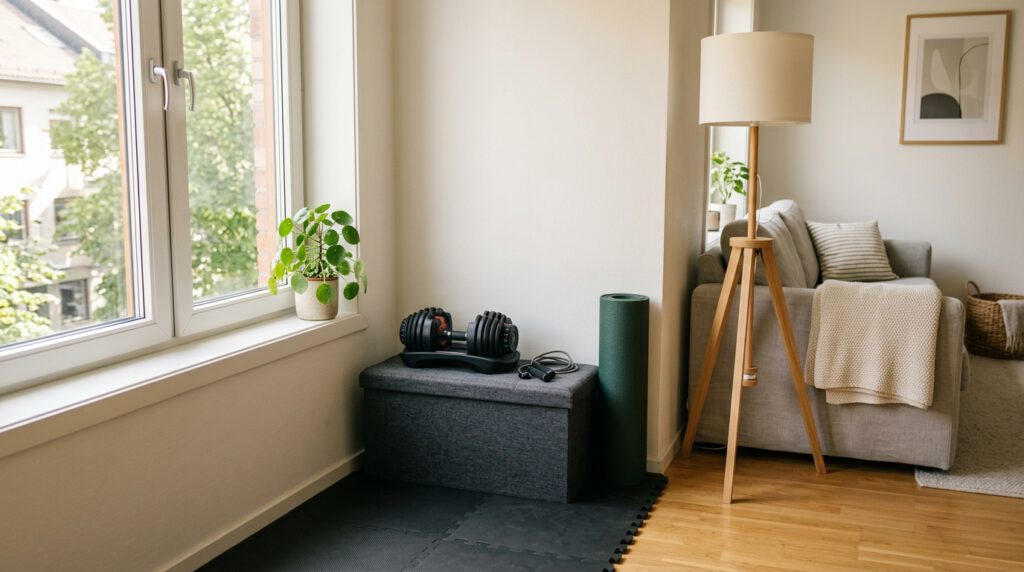
- Environment design says: “Your gear is already by the door, so starting costs nothing.”
- Identity says: “This is who I am now, not a decision I have to re-make every night.”
- Accountability says: “Someone’s expecting an update from you tomorrow.”
None of these depend on how inspired you feel. That’s exactly the point.
The Bottom Line
Motivation isn’t a personal failing — it’s an unreliable narrator.
It shows up when your biology and circumstances line up, and it leaves the moment they don’t.
That’s not a flaw in you; it’s how feelings work.
What actually predicts long-term change isn’t how pumped up you can get on day one.
It’s whether you have systems, discipline, environment design, and support structures in place for day 47, day 90, and the ordinary Tuesday in between.
Build those, and you stop needing motivation to show up — you show up anyway, and results follow.
Frequently Asked Questions
Is motivation completely useless?
No — motivation is a great spark for getting started, but a poor long-term fuel source.
Use it when it shows up, but build systems that don’t depend on it.
What’s the difference between motivation and discipline?
Motivation is a feeling that comes and goes based on mood and circumstances.
Discipline is a trained behavior — doing the necessary action regardless of how you feel.
How long does it take to build a habit without relying on motivation?
It varies widely by person and behavior, but research on habit formation generally points to somewhere in the range of a few weeks to a few months of consistent repetition before a behavior starts to feel automatic rather than effortful.
What’s the fastest way to start when I have zero motivation?
Shrink the task until it feels almost too easy to skip — two minutes, one page, one set.
Action tends to generate motivation, not the other way around.
Related Posts



Stay Informed With the Latest & Most Important News
Previous Post
Next Post










Advertisement