

























Now Reading: The Best Warm-Up Routine Before Any Workout (5 Minutes, Full Body)
-
01
The Best Warm-Up Routine Before Any Workout (5 Minutes, Full Body)



Skipping the warm-up is one of the easiest habits to fall into — you’re short on time, you want to get straight to the “real” workout, and five minutes of arm circles feels like a waste.
But that short window before your session does more heavy lifting than most people realize.
It raises your core temperature, gets blood moving into the muscles you’re about to use, and switches your nervous system from “resting” to “ready to perform.”
This guide gives you a complete 5-minute, full-body warm-up you can use before almost any workout — strength training, running, HIIT, or sports — plus the science behind why it works, how to adjust it to your specific session, and the mistakes that quietly undermine most people’s warm-ups.
Table of contents
Why Warming Up Actually Matters
A warm-up isn’t just a formality before the “real” exercise — it’s an active part of the workout that prepares your body on three levels: physical, cardiovascular, and neurological.
It raises muscle temperature and blood flow. Dynamic movement dilates blood vessels and increases circulation, delivering more oxygen to your muscles.
Warmer, better-oxygenated muscle tissue contracts more efficiently, which translates directly into better strength, speed, and power output once you start your main set.
It protects your joints and connective tissue. Cold muscles and tendons are stiffer and more prone to strains or tears.
A gradual warm-up lubricates the joints and lengthens muscle fibers, letting them move through a full range of motion safely before you load them with real effort.
It eases the strain on your heart. Jumping straight into intense effort forces your cardiovascular system to catch up abruptly.
A gradual increase in heart rate is easier on the heart and is especially important for beginners or anyone with a cardiovascular condition.
It improves coordination and performance. A 2024 review in Arthroscopy, Sports Medicine, and Rehabilitation found that structured dynamic warm-up programs — built around agility, mobility, and core activation — consistently improved athletic readiness and reduced injury risk across sports and skill levels.
Other research on resistance training has linked a proper warm-up to measurably higher one-rep max performance in lifts like the squat and leg press.
It gets your head in the game. Physical readiness is only half the story.
Moving through a warm-up gives you a mental transition point — a few minutes to shift focus away from your day and onto the workout ahead, which helps you move with more intention and less risk of careless mistakes.
Dynamic Stretching vs. Static Stretching (Know the Difference)
This is one of the most misunderstood parts of warming up, and getting it wrong can actually hurt your performance.
- Dynamic stretching means moving a muscle through its full range of motion — think leg swings, arm circles, or walking lunges. This is what you want before a workout: it increases flexibility, activates the nervous system, and raises your heart rate at the same time.
- Static stretching means holding a stretch in one position for 20–30 seconds or longer — like reaching for your toes and holding it. Research consistently shows this can temporarily reduce muscle power and strength output, making it a poor choice right before training. Save static stretches for your cooldown, when your muscles are already warm and the goal is to restore length, not generate force.
Simple rule: move before you train, hold after you train.
The 5-Minute Full Body Warm-Up Routine
This routine hits your major joints and muscle groups in order — upper body, cardio, lower body — so you finish fully warm and ready to move at higher intensity. Do each move for about 60 seconds.
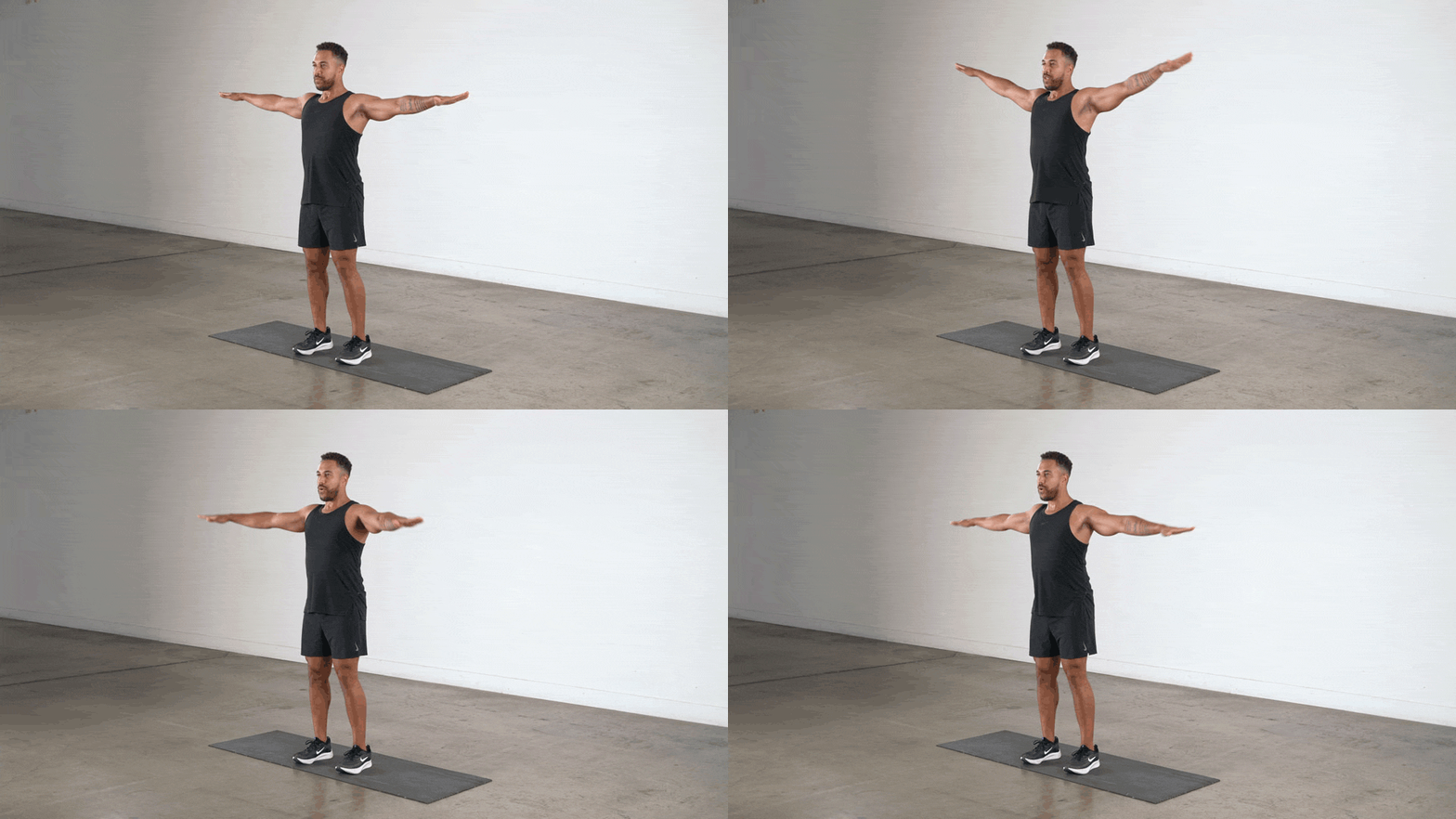
Minute 1: Arm Circles & Torso Twists
Extend your arms out to the sides and make large circles — 30 seconds forward, 30 seconds backward — to loosen your shoulders.
Then gently rotate your torso side to side to wake up your core and mid-back.
Minute 2: Jumping Jacks
Jump your feet out wide while raising your arms overhead, then return to start.
Keep a light, steady rhythm rather than going all-out — the goal here is to elevate your heart rate and body temperature, not to gas yourself before you’ve begun.

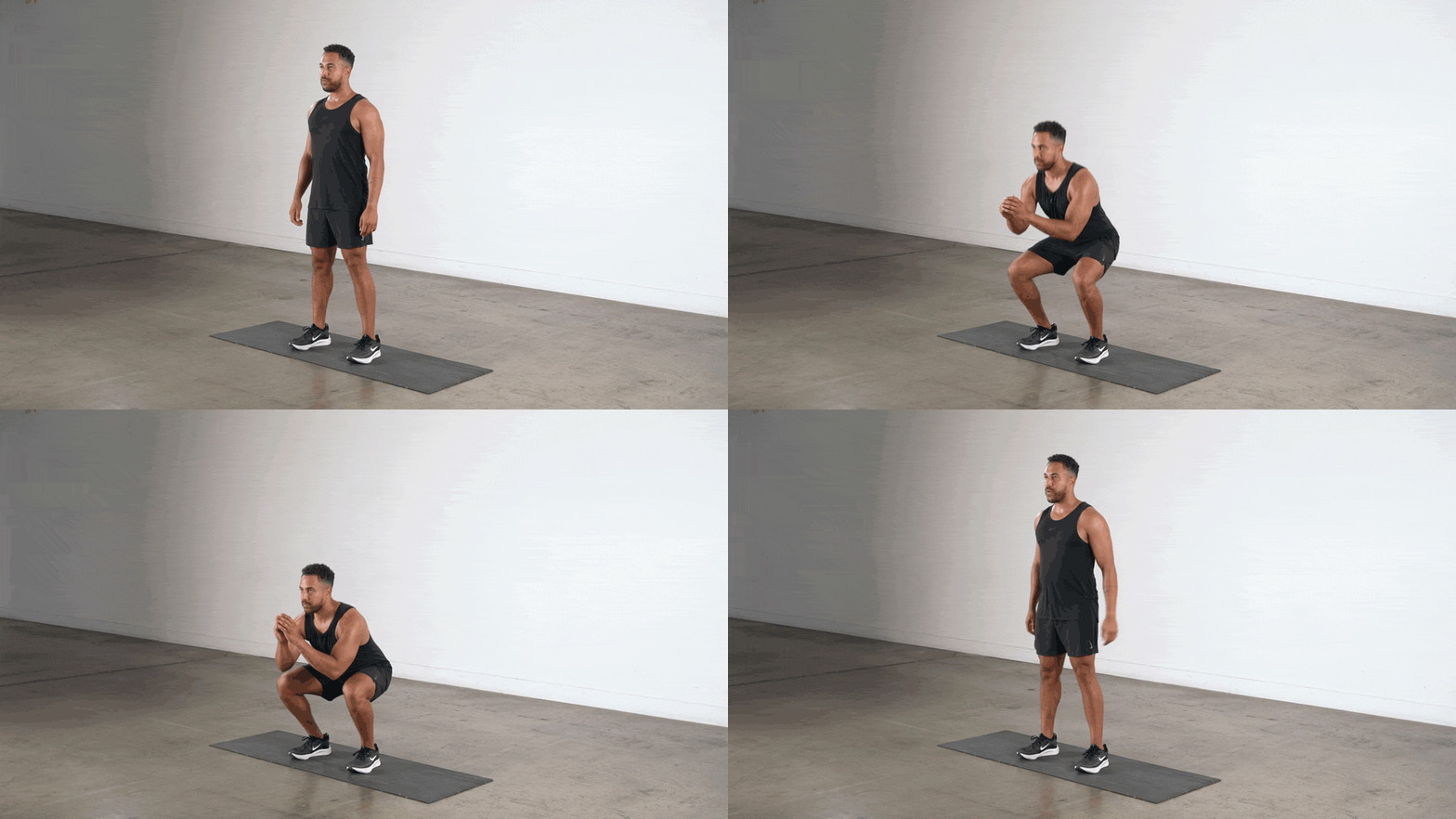
Minute 3: Bodyweight Squats
Stand with feet shoulder-width apart, push your hips back and down while keeping your chest up, then drive through your heels to stand.
This activates your glutes and quads and rehearses the hip-hinge pattern you’ll use in most lower-body work.
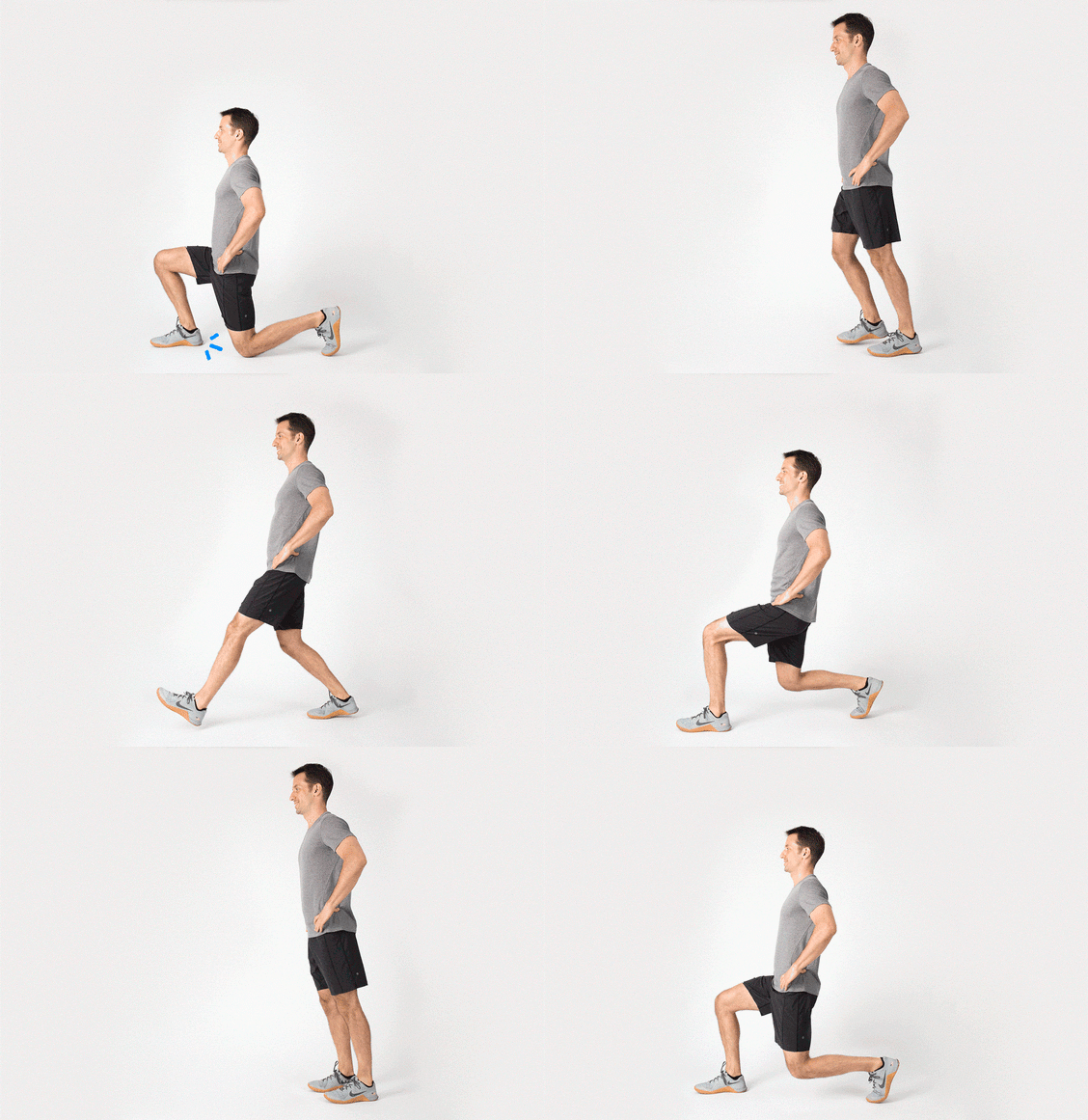
Minute 4: Alternating Forward Lunges
Step forward into a lunge until both knees bend to roughly 90 degrees, then push off your front foot and switch legs.
This move opens up your hip flexors and fires up your glutes, quads, and hamstrings together.
Minute 5: High Knees
Drive your knees up toward your chest at a quick pace while pumping your arms, as if jogging in place. This is your final push — it should leave you breathing a little harder and fully primed to move into your main workout.
Tip: if a movement feels off — tight, painful, or unbalanced on one side — that’s useful information. Scale it back, or spend a few extra seconds mobilizing that area before continuing.

How to Adjust the Warm-Up for Your Workout
A general warm-up like the routine above works well for most sessions, but matching it to what’s coming next makes it even more effective.
- Before strength training: add a few light, resistance-based reps of the actual lift you’re about to do (empty-bar squats before a heavy squat session, for example) to prime the exact movement pattern.
- Before running: emphasize the lower body — leg swings, walking lunges, high knees, and butt kicks — to prepare your hip flexors, hamstrings, and calves for repetitive impact.
- Before HIIT or plyometric work: spend extra time on landing mechanics and lower-body stability, such as single-leg balance drills, since jumping-based workouts put more demand on your joints.
- Before low-impact workouts (rowing, cycling, yoga): a shorter, gentler cardio warm-up plus mobility work is usually enough — there’s no need to run beforehand.
As a general guideline, the more intense your main workout, the longer your warm-up should be — five minutes is a solid baseline, but 8–10 minutes is worth it before a high-intensity or heavy-lifting session, and warm-up time should generally increase as you get older, since muscles and joints tend to stiffen with age.
Common Warm-Up Mistakes to Avoid
- Skipping it entirely. This is still the single biggest mistake — even two or three minutes of movement beats none.
- Static stretching beforehand. Holding long stretches on cold muscles can reduce power output and doesn’t meaningfully lower injury risk before training. Save it for after.
- Going too hard, too fast. Starting at full intensity on stiff, cold muscles is a common way to get hurt. Build up gradually instead of sprinting into your first set.
- Doing the same warm-up regardless of the workout. A warm-up built for a run won’t fully prepare you for a heavy lifting session, and vice versa — match it to what you’re about to do.
- Overdoing it. A warm-up should leave you energized, not exhausted. If you’re gassed before your first working set, scale it back.
How Long Should You Warm Up For?
Five minutes is a reliable minimum for most workouts, and it’s enough to raise your heart rate, loosen your major joints, and mentally shift into training mode. For longer or more intense sessions — heavy lifting, sprint work, competitive sports — stretching that to 8–10 minutes gives your body more time to fully prepare, especially your joints and connective tissue.
FAQs
Do I need to warm up before every workout, even a short one?
Yes. Even a 20-minute workout benefits from a few minutes of warm-up — it’s less about the length of your session and more about preparing cold muscles and joints before you load them.
Is walking enough of a warm-up?
A brisk walk can raise your heart rate, but it doesn’t fully prepare the joints and muscle groups you’re about to train. Pairing light cardio with a few dynamic movements, like the routine above, is more effective.
Can I stretch statically before I work out if I feel stiff?
It’s better to use dynamic stretches instead. Static stretching on cold muscles can reduce strength and power right when you need it most — save deep, held stretches for your cooldown.
What’s the difference between a warm-up and a cooldown?
A warm-up gradually raises your heart rate and prepares your body for effort; a cooldown does the opposite, gradually lowering your heart rate and using static stretches to help muscles recover their length after training.
The Bottom Line
Five minutes is a small price to pay for a workout that feels stronger, safer, and more controlled from the first rep.
This routine — arm circles, jumping jacks, squats, lunges, and high knees — covers your whole body in order, gets your heart rate up gradually, and sets you up to train at your best.
Do it before every session, adjust it slightly based on what’s ahead, and skip the static stretching until you’re done.
Related Posts
Stay Informed With the Latest & Most Important News
Previous Post
Next Post










Advertisement