

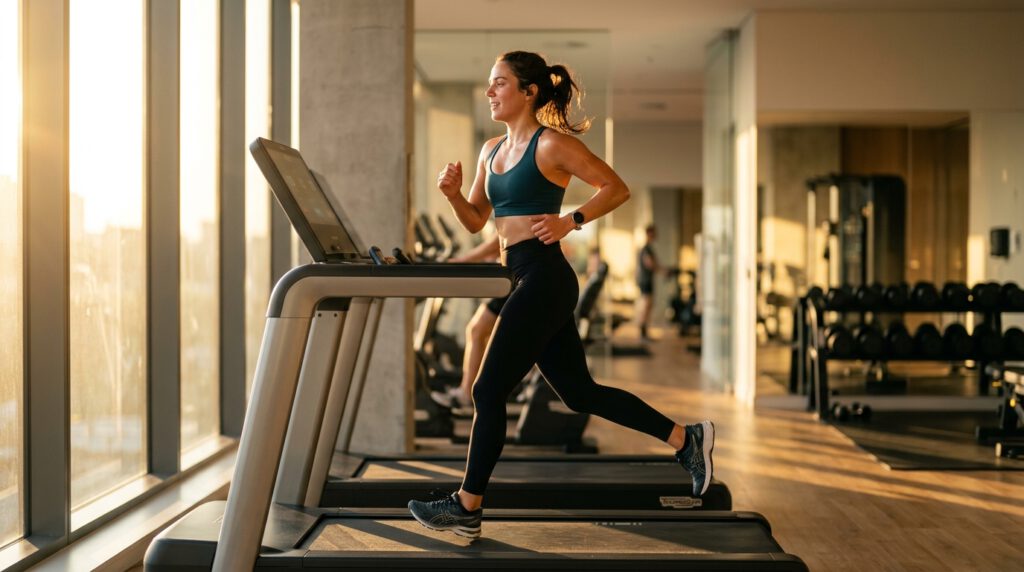















Now Reading: Treadmill vs Outdoor Running: Which Burns More Fat?
-
01
Treadmill vs Outdoor Running: Which Burns More Fat?


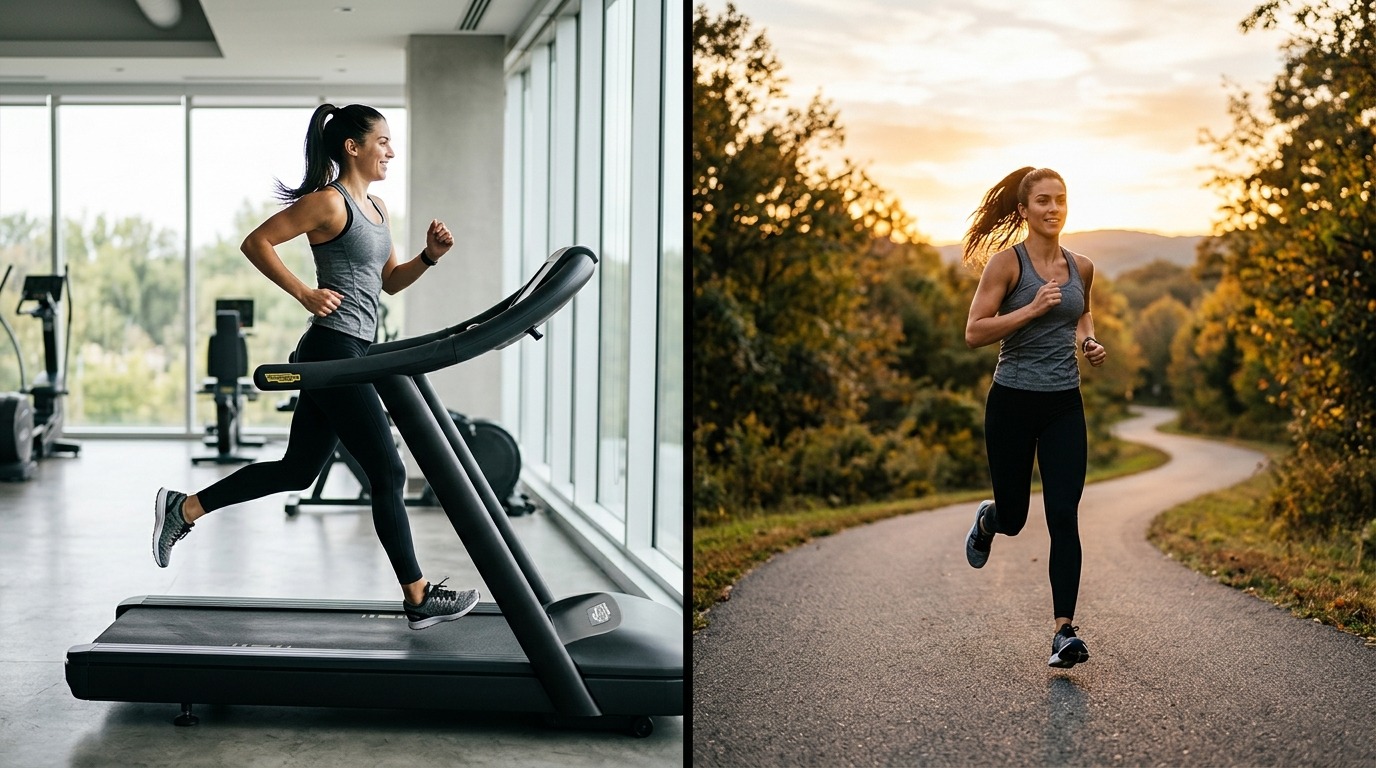
If you’ve ever stood in a gym staring at a treadmill and wondered whether you’d be better off outside, you’re not alone.
It’s one of the most debated questions in fitness, and the honest answer is more nuanced than a simple “outdoor wins” or “treadmill wins.”
The surface you run on does change how your body burns energy — but the effect is smaller than most people think, and a few simple adjustments can close the gap entirely.
This guide breaks down what the research actually shows about calorie burn, fat oxidation, muscle activation, and injury risk, so you can decide which option fits your goals, your joints, and your lifestyle.
Table of contents
- Quick Answer
- Why the Calorie Burn Difference Exists
- Fat Burn Isn’t Just About Calories — It’s About Fuel Source Too
- Muscle Activation and Body Composition
- Impact on Joints and Injury Risk
- Other Factors Worth Weighing
- So, Which Actually Burns More Fat?
- How to Maximize Fat Burn on Either Surface
- Frequently Asked Questions
- Final Takeaway
Quick Answer
Outdoor running burns roughly 3–5% more calories than flat treadmill running at the same pace, mainly because of wind resistance and the work your body does to propel itself forward on uneven, non-moving ground.
You can erase almost all of that difference by setting your treadmill to a 1% incline. Beyond that small gap, total fat loss comes down to your overall calorie deficit, consistency, and how well the workout fits into your life — not which surface you happened to run on.
Why the Calorie Burn Difference Exists
On a treadmill, the belt moves under you and gives your stride a small assist.
Outdoors, you have to generate 100% of the forward propulsion yourself, while also fighting air resistance and adapting to changes in terrain, camber, and footing.
Sports scientists have long recommended a 1% treadmill incline to offset the lack of wind resistance and belt assistance, a rule of thumb that recent research has revisited directly.
A 2024 study published in Current Issues in Sport Science tested this rule in highly trained runners and found that adding a 1% gradient increased oxygen consumption by roughly 4% compared to a flat treadmill, bringing the metabolic cost much closer to outdoor running at the same pace.
In practice, this means the “treadmills are easier” effect is real, but modest, and it disappears almost completely once you tilt the deck.
Body composition research backs this up.
A controlled six-week trial comparing outdoor and treadmill running in recreationally active young men found that both groups reduced body fat percentage significantly, with no meaningful difference in fat-loss outcomes between the two surfaces.
Where the two groups did differ was in muscle: the outdoor group preserved leg muscle mass, while the treadmill group saw a small decline — a detail we’ll come back to below.
Fat Burn Isn’t Just About Calories — It’s About Fuel Source Too
Here’s where it gets more interesting than a simple calories-in-calories-out comparison. Your body burns a mix of fat and carbohydrate for fuel, and which one it prioritizes depends heavily on exercise intensity — not just on total energy expended.
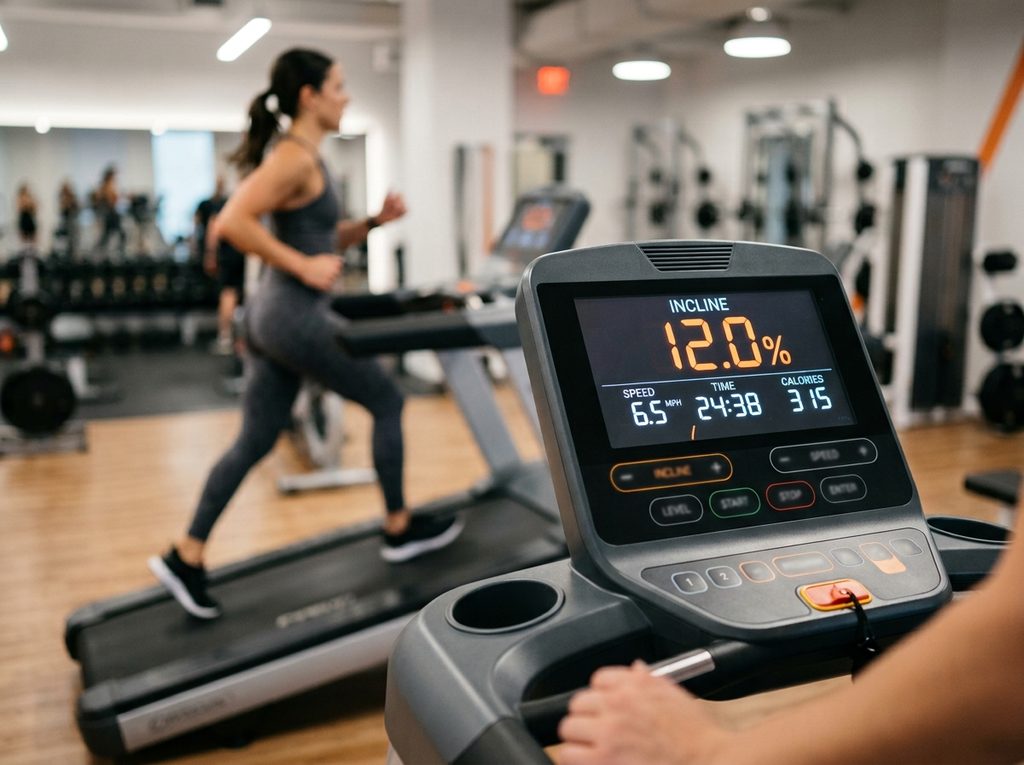
A recent study published in the International Journal of Exercise Science compared the viral “12-3-30” treadmill workout (a 30-minute walk at 12% incline and 3 mph) against self-paced running matched for total calorie burn.
The results were striking: running pulled about 33% of its energy from fat, while the lower-intensity incline walk pulled closer to 40% from fat. This lines up with what’s known about heart-rate training zones — at roughly 65–75% of max heart rate (classic “zone 2” territory), the body favors fat as fuel, while higher intensities shift it toward burning stored carbohydrate for quick energy.
The catch: running burned the same total calories about seven minutes faster than the incline walk. So if you’re short on time, faster and more intense wins on raw calorie burn.
If you’re specifically trying to spare muscle and carbohydrate stores while nudging your body toward fat as a fuel source, a slower, higher-incline effort has a real physiological edge.
Neither approach requires being outdoors — this comparison was treadmill versus treadmill, and it shows that intensity, not surface, is often the bigger lever for fat oxidation.
Muscle Activation and Body Composition
Because the treadmill belt does part of the work of moving your legs backward under you, several studies have found slightly lower or more consistent muscle activation on a treadmill compared to outdoor running, though findings here are mixed and some studies find no meaningful difference in stride mechanics between the two.
Outdoor running asks more of your stabilizing muscles — glutes, hips, ankles, and core — because you’re constantly making micro-adjustments for uneven ground, cambered sidewalks, wind, and obstacles.
This is reflected in the six-week trial mentioned earlier: the outdoor group preserved leg skeletal muscle mass over the training block, while the treadmill group experienced a small decrease.
For fat loss specifically, this matters because maintaining muscle mass helps protect your resting metabolic rate while you’re in a calorie deficit — a genuine, if modest, point in outdoor running’s favor for body composition over the long term.
Impact on Joints and Injury Risk
A common assumption is that treadmills are automatically “easier” on the joints because of their cushioned belts. There’s some truth here — treadmills do produce lower peak impact forces on the shins and joints than harder outdoor surfaces like asphalt or concrete — but the overall picture is more balanced than that:
- Most current research finds no strong evidence that either surface causes more chronic joint damage than the other on its own.
- The single biggest predictor of running injury in recreational runners isn’t the surface — it’s how quickly training volume or intensity increases. Rapid jumps in mileage or pace outweigh whatever cushioning benefit a treadmill offers.
- Outdoor running introduces its own injury risks: uneven footing, curbs, roots, and slick pavement can lead to acute injuries like ankle sprains that a flat treadmill deck simply doesn’t present.
- Treadmills carry a different category of risk — slips, trips, and falls related to the moving belt — which is why they account for a large share of home exercise-equipment injuries reported each year.
In short: treadmills reduce impact stress but add fall risk; outdoor terrain adds impact and footing variability but removes belt-related hazards. Neither is a clear winner on safety — how you progress your training matters far more than where you run.
Other Factors Worth Weighing
Fat loss isn’t only a physiology question — it’s also a “will I actually keep doing this” question, and both surfaces have real practical trade-offs.
Treadmill advantages:
- Available in any weather, at any hour, with no daylight or safety concerns
- Precise control over pace, incline, and interval timing
- Lower-impact surface, useful when returning from injury
- Built-in tracking for pace, distance, heart rate, and calories
Outdoor running advantages:
- Free, with no gym membership or equipment required
- Exposure to natural light and greenery, which research links to lower rates of depression and high blood pressure
- Greater route variety, which tends to keep motivation higher over time
- Builds bone density more effectively, since impact on firmer, varied surfaces creates more mechanical stress that stimulates bone strength
So, Which Actually Burns More Fat?
Putting it all together:
- Per-minute calorie burn: Outdoor running has a small edge (about 3–5%) at matched pace, almost entirely erased by a 1% treadmill incline.
- Fat as a fuel source: Determined mainly by intensity and heart rate zone, not by indoor versus outdoor — a slower, higher-incline treadmill session can pull a higher percentage of energy from fat than a faster outdoor run, even if the outdoor run burns more total calories in less time.
- Long-term body composition: Outdoor running has shown a modest advantage in preserving lean muscle mass during a training block, which supports metabolism over time.
- The real deciding factor: Total energy expenditure sustained consistently over weeks and months. The workout you’ll actually stick to will always outperform the “technically optimal” workout you abandon after two weeks.
How to Maximize Fat Burn on Either Surface
- On the treadmill: Set a 1% to 2% incline for standard runs to match outdoor effort. For a lower-intensity, fat-prioritizing session, try a 30-minute walk at 10–15% incline and a moderate pace (build up gradually — this is demanding on the calves and lower back if you’re not conditioned for it).
- Outdoors: Seek out routes with natural inclines or light trail sections to increase muscle engagement and calorie burn without changing your pace.
- Either surface: Alternate between steady-state runs (continuous, moderate effort) and interval or HIIT sessions (short bursts of high intensity followed by recovery). Research shows both approaches support fat loss effectively; the right mix depends on your fitness level and how much time you have per session.
- Combine both: Many runners get the best results by mixing treadmill sessions for structured training or bad weather with outdoor runs for variety and mental refreshment — this also naturally varies the stress placed on your joints and muscles.
Frequently Asked Questions
Does a treadmill incline really replace outdoor conditions?
Yes, largely. A 1% incline is the most commonly cited setting to offset the lack of wind resistance and belt assistance, and recent lab testing confirms it brings treadmill effort close to outdoor running at the same speed.
Is walking on an incline better for fat loss than running?
It can shift a higher percentage of your energy toward fat as fuel, since lower-intensity effort favors fat oxidation. However, running burns the same total calories faster, so the “better” choice depends on whether you’re optimizing for fuel source or for time efficiency.
Which is safer for beginners?
Treadmills are generally considered more beginner-friendly because of adjustable, lower-impact settings and a controlled environment, which is also useful when returning from injury. That said, beginners should still progress mileage and intensity gradually on either surface, since rapid increases in training load are the leading cause of running injuries.
Can I lose fat with outdoor running alone, with no treadmill?
Absolutely. The surface is a secondary factor. What matters most is maintaining a consistent calorie deficit through regular training, adequate recovery, and proper nutrition.
Final Takeaway
Neither treadmill nor outdoor running is definitively “better” for burning fat — the physiological gap between them is small and easy to close with a simple incline adjustment.
What moves the needle is intensity, consistency, and whether the workout fits realistically into your life.
Choose the treadmill when you need control, safety, or convenience; choose outdoor running when you want variety, mental health benefits, and a slight edge in long-term muscle preservation. Better yet, use both — and let your calendar, not the debate, decide which one you lace up for today.
Related Posts
Stay Informed With the Latest & Most Important News
Previous Post
Next Post









Advertisement