















Now Reading: Does Lifting Weights Make Women Bulky? (The Truth Backed by Science)
-
01
Does Lifting Weights Make Women Bulky? (The Truth Backed by Science)


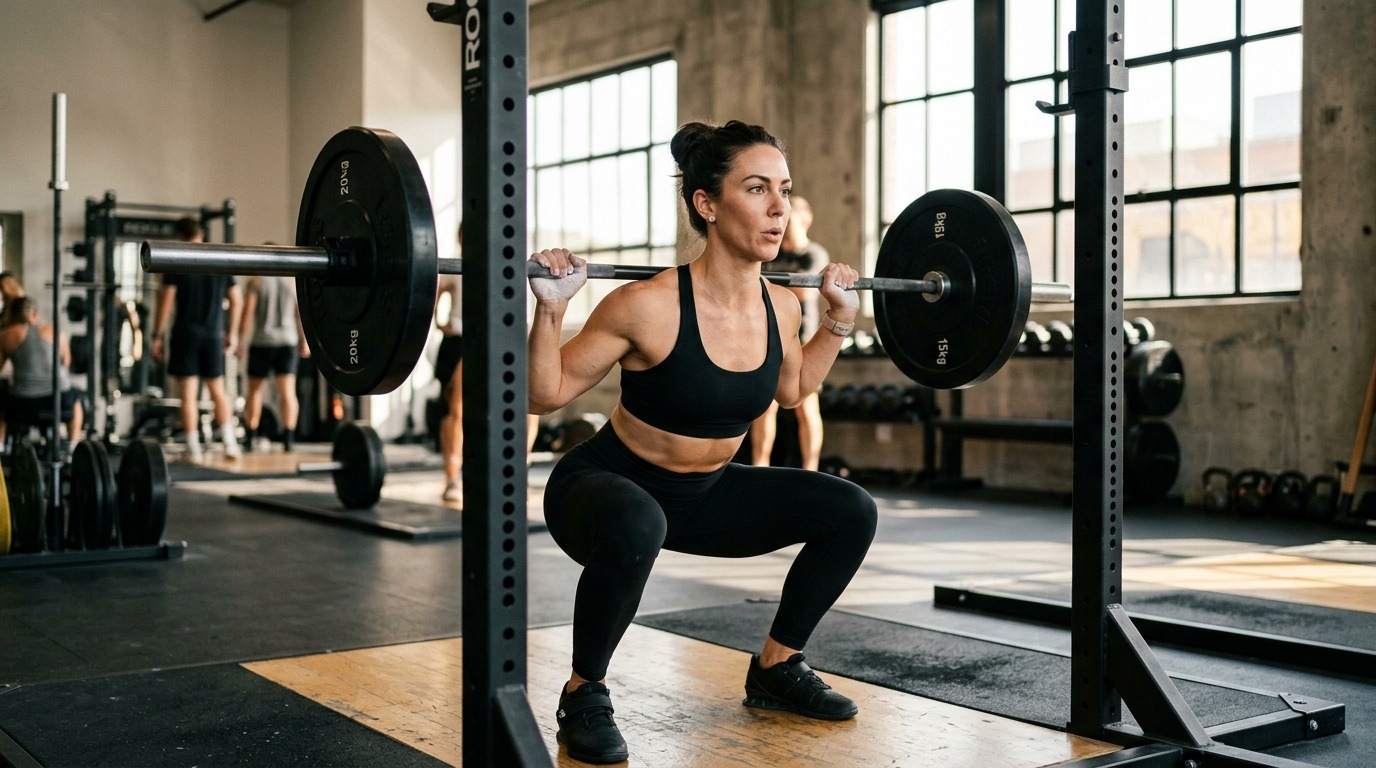
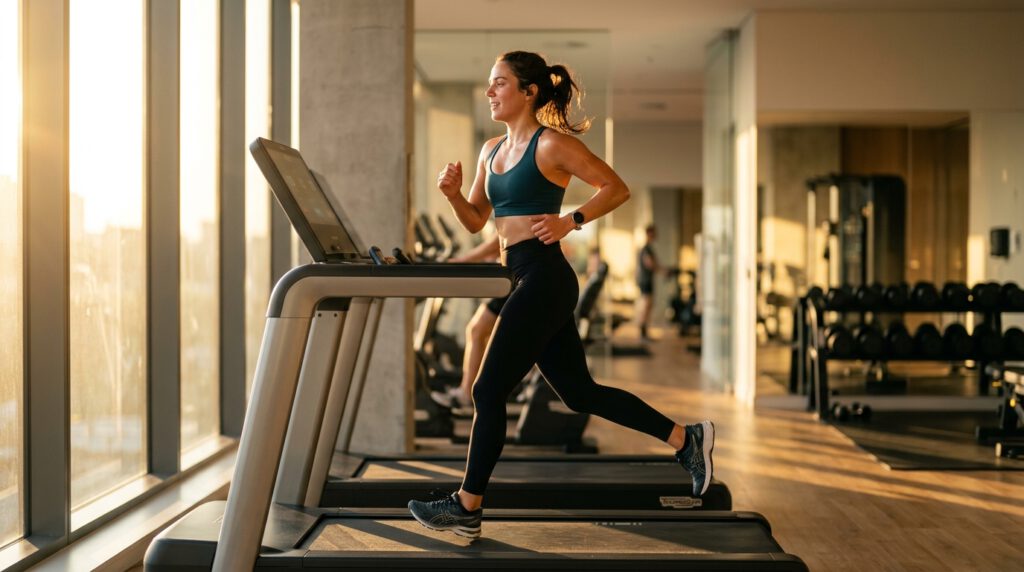
Walk into almost any gym and you’ll see it: rows of women on the treadmills and StairMasters, and a weight room dominated by men. Ask why, and one answer comes up again and again — “I don’t want to get bulky.”
It’s one of the most persistent myths in fitness, and it keeps countless women away from the single most effective tool for building a strong, lean, and healthy body.
So let’s settle it with actual science: no, lifting weights will not make you bulky. Here’s exactly why — and what really happens to a woman’s body when she starts strength training.
Table of contents
- Why the “Bulky” Fear Exists in the First Place
- The Real Science: Why Women Don’t Bulk Up Easily
- Correcting a Common Myth: “Light Weights Tone, Heavy Weights Bulk”
- The Real Reason Some Women Feel “Bulky” After Starting to Train
- The Real Benefits of Strength Training for Women
- How to Train for a Lean, Toned Look (Not “Bulk”)
- Frequently Asked Questions
- The Bottom Line
Why the “Bulky” Fear Exists in the First Place
The myth didn’t come from nowhere.
Decades of fitness marketing pushed women toward light dumbbells and endless cardio while men were told to “lift heavy.”
Social media doesn’t help either — one scroll shows a bodybuilder with extreme muscle mass, the next shows a influencer doing tiny pulses with 2lb weights, and there’s rarely any context explaining the years of specialized training and often pharmacological support behind the more extreme physiques.
The result is a genuine, understandable — but scientifically unfounded — fear that picking up a barbell will quickly turn a woman “manly” or oversized.
The Real Science: Why Women Don’t Bulk Up Easily
1. Testosterone Is the Limiting Factor
Testosterone is the primary hormone driving significant muscle hypertrophy, and men naturally produce roughly ten times more of it than women after puberty. Research on sex differences in resistance training consistently points to this hormonal gap as the main reason men can build noticeably more absolute muscle mass and size over time.
This doesn’t mean women’s testosterone does nothing — it still supports strength and recovery — but without the high circulating levels men have, the kind of rapid, dramatic muscle growth that causes “bulk” simply isn’t biologically accessible to most women through training alone.
2. Relative Gains Are Similar — Absolute Size Isn’t
Here’s where it gets interesting, and where a lot of fitness content gets it wrong. A growing body of research, including several 2021–2025 systematic reviews and meta-analyses, has found that when men and women follow the same resistance training program, their relative (percentage) gains in muscle strength and size are often comparable. Women aren’t “worse” at building muscle proportionally — some studies even show women make faster relative strength gains in the upper body during the early weeks of training.
The catch is absolute size. Because men start with a larger baseline of muscle mass and a higher proportion of the fast-growing type II muscle fibers, the same percentage gain translates into more visible bulk on a man’s frame than on a woman’s. A woman who builds 15% more muscle in her biceps will look leaner and more toned, not bulky — because 15% of a smaller starting point is a small, well-defined change.
3. Real Hypertrophy Requires Years, Not Weeks
Building the kind of significant muscle mass associated with “bulky” physiques takes sustained progressive overload, a structured training program, and — critically — eating in a consistent calorie surplus for months or years. Most women training for general fitness aren’t doing any of that; they’re training a few times a week and often eating at maintenance or in a deficit, which is a completely different physiological environment from the one required to add serious size.
4. Female Bodybuilders Are the Exception, Not the Rule
Extremely muscular female physiques you see in bodybuilding competitions are the product of years of specialized hypertrophy-focused training, very specific high-calorie diets, favorable genetics, and — in many competitive cases — the use of anabolic steroids or other performance-enhancing substances that artificially raise testosterone. None of that reflects what happens to the average woman doing a few strength sessions a week.
Correcting a Common Myth: “Light Weights Tone, Heavy Weights Bulk”
This is one of the most repeated pieces of fitness advice — and current research doesn’t support it. For years, the “hypertrophy zone” of 6–12 reps was treated as the only rep range that builds muscle, while high-rep, lighter-weight training was assumed to only build “endurance” or “tone.”
Multiple studies led by hypertrophy researcher Brad Schoenfeld and others have since shown that muscle growth is remarkably similar across a wide range of rep ranges — from around 5 reps up to 30+ reps per set — as long as the sets are taken close to muscular failure and total training volume is comparable. What actually drives muscle growth is proximity to failure and weekly volume, not a “magic” rep number.
The practical takeaway for women: lifting heavier weights for lower reps is not what pushes you toward being bulky, and lifting lighter weights for high reps is not a shortcut to “toning” without building muscle. Muscle is muscle. What determines whether you look leaner or larger is your overall body composition — which brings us to the real factor at play.
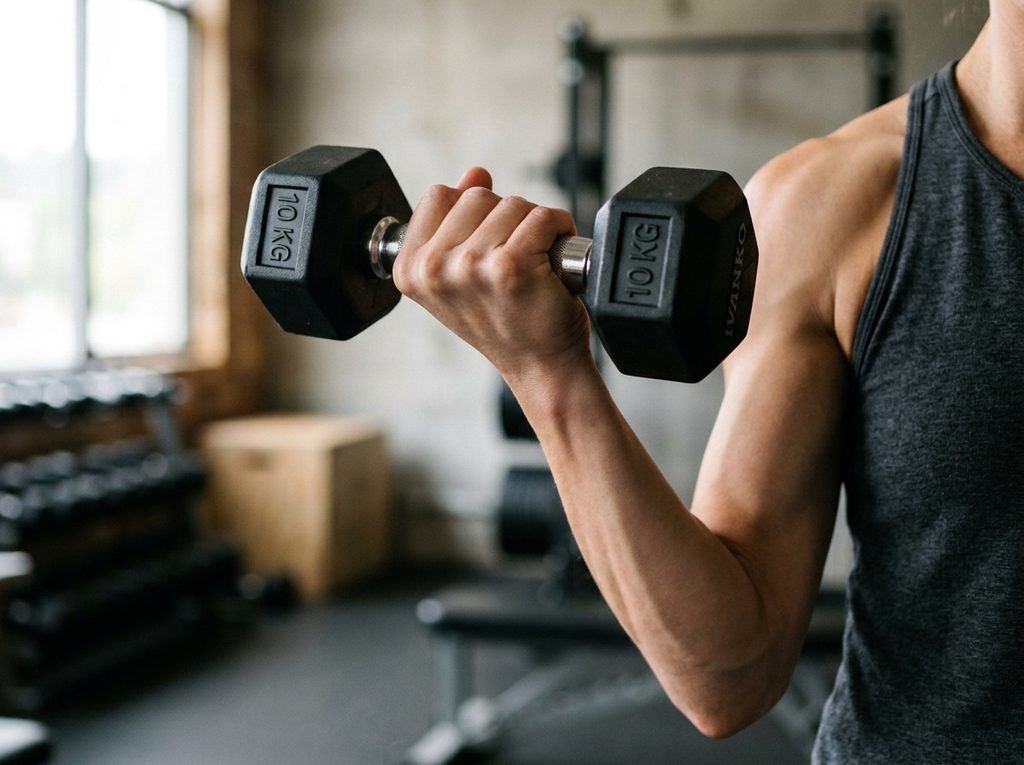
The Real Reason Some Women Feel “Bulky” After Starting to Train
If lifting weights doesn’t cause bulk on its own, why do some women feel bigger after starting a program? A few genuine, temporary factors are usually responsible:
- Water retention and glycogen storage. New training stimulates your muscles to store more glycogen and water, which can make muscles look slightly fuller for the first few weeks. This settles down as your body adapts.
- Muscle growth on top of existing body fat. If you build muscle without also reducing body fat, your limbs can feel firmer and slightly larger in the short term — not because you’re “bulky,” but because muscle is sitting under the same layer of fat that was already there. Continued training and appropriate nutrition typically reveal a leaner shape over time.
- Body composition, not muscle mass, drives the “bulky” look. Muscle tissue is denser and more compact than fat tissue, so building muscle while gradually reducing fat almost always makes a woman look smaller and more defined, not larger.
The Real Benefits of Strength Training for Women
The fear of bulk causes many women to miss out on benefits that go far beyond aesthetics:
Stronger bones and lower osteoporosis risk. Resistance training places mechanical stress on bone, stimulating bone-building cells and increasing bone mineral density — especially protective for women after menopause, when bone loss accelerates.
A faster resting metabolism. Muscle tissue is metabolically active, meaning more lean mass helps the body burn more calories even at rest, which supports long-term weight management.
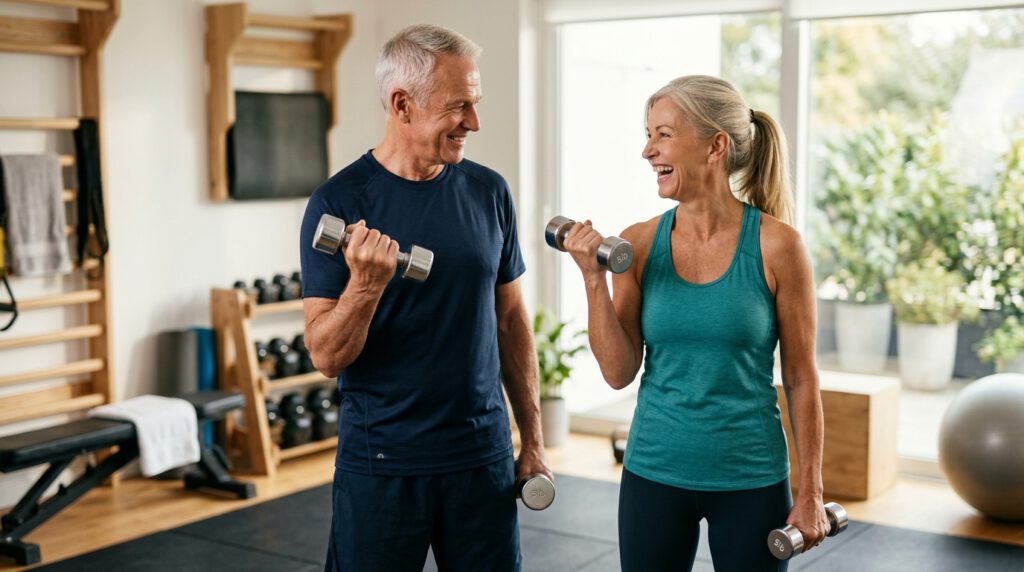
Protection against age-related muscle loss (sarcopenia). Hormonal shifts during and after menopause accelerate muscle loss. Regular strength training is one of the most effective countermeasures, helping preserve mobility, balance, and independence later in life.
Better metabolic health. Resistance training improves insulin sensitivity and body composition, which helps reduce the risk of type 2 diabetes, high blood pressure, and other components of metabolic syndrome.
Support for PCOS symptoms. Polycystic Ovary Syndrome affects a significant portion of women of reproductive age and is closely tied to insulin resistance. Strength training has been shown to improve insulin sensitivity and support healthier body composition in women managing PCOS.
Improved mental health. Consistent resistance training is associated with reduced symptoms of anxiety and depression, improved mood, and greater self-confidence, including in postpartum women.
Injury resilience and functional strength. Stronger muscles better support joints, improve balance and coordination, and reduce the risk of everyday injuries and falls.
How to Train for a Lean, Toned Look (Not “Bulk”)
If your goal is definition and strength without significant size gain, focus on these principles:
- Train with moderate-to-heavy resistance. Don’t be afraid of real weights — challenging your muscles is what builds strength and definition, and it will not “accidentally” make you bulky.
- Prioritize progressive overload within a sustainable program. Gradually increasing weight or reps over time drives results; random, inconsistent training doesn’t.
- Manage your nutrition intentionally. Because significant hypertrophy requires a sustained calorie surplus, eating at maintenance or in a slight deficit while getting enough protein supports muscle tone without unwanted size.
- Get enough protein. Adequate protein intake supports muscle repair and the lean, defined look most women want, without requiring a surplus of total calories.
- Be patient with the first few weeks. Any initial “fuller” feeling from water retention or new training stimulus is temporary — stick with the plan and body composition will follow.
- Consider working with a qualified trainer, especially when starting out, to build confidence with proper form and appropriate training intensity.
Frequently Asked Questions
Will lifting weights make my thighs or arms bigger?
Not in the “bulky” sense. Certain muscles may feel slightly firmer or fuller at first due to glycogen and water retention, but over time, resistance training combined with fat loss typically leads to more defined, not larger, limbs.
Can muscle turn into fat if I stop lifting?
No — muscle and fat are two entirely different tissue types and one cannot convert into the other. Stopping training without adjusting your diet can lead to muscle loss and fat gain happening at the same time, which can create the illusion of “muscle turning to fat.”
Should women over 40 lift weights?
Yes — strength training becomes even more important with age, as it directly counters the muscle and bone loss that accelerates around menopause.
Do I need to lift heavy to avoid getting bulky?
No. Both heavier, lower-rep training and lighter, higher-rep training build similar amounts of muscle when performed close to failure. Neither approach is inherently “bulkier” than the other — body composition and total calorie intake matter far more than rep range.
How long would it actually take to look “bulky” from lifting? Significant muscle size typically takes years of dedicated, hypertrophy-focused training combined with a sustained calorie surplus — not something that happens accidentally from a normal strength training routine.
The Bottom Line
Lifting weights doesn’t make women bulky — biology simply doesn’t work that way.
Lower testosterone levels, the reality of how long genuine hypertrophy takes, and the role nutrition plays in body composition all mean that for the vast majority of women, resistance training builds a leaner, stronger, more defined physique — not an oversized one.
The women who do develop significant muscle size do so through years of deliberate, specialized training and nutrition, often with additional support that has nothing to do with a normal gym routine.
If anything, avoiding weights out of fear of bulk means missing out on stronger bones, a healthier metabolism, better mental health, and a more resilient body at every age.
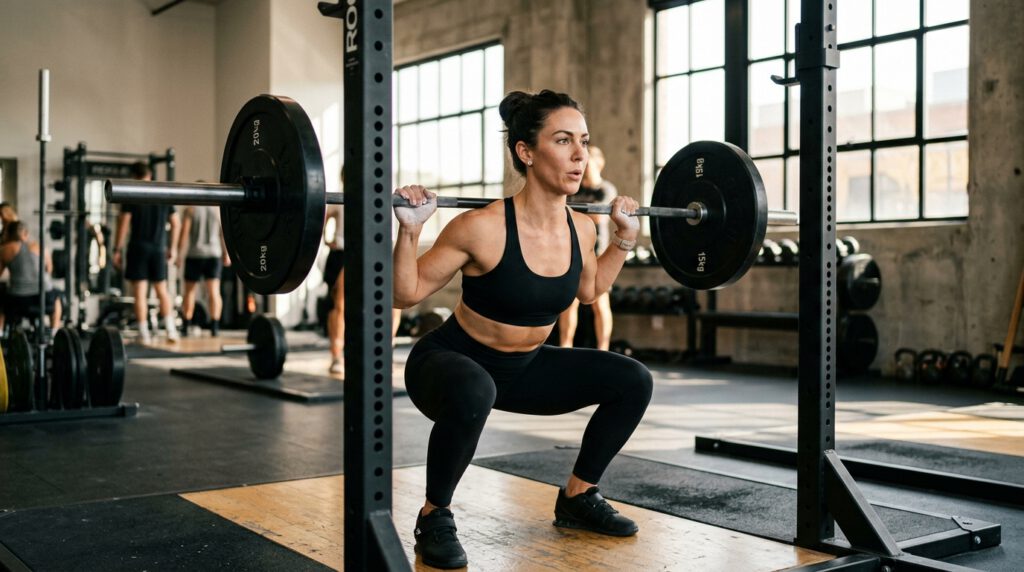
The barbell isn’t something to fear — it’s one of the most effective tools a woman has for building the exact physique most people associate with “toned.”
Stay Informed With the Latest & Most Important News
Previous Post
Next Post









Advertisement