























Now Reading: Is It Safe to Take Protein Powder Every Day Long-Term?
-
01
Is It Safe to Take Protein Powder Every Day Long-Term?


Millions of people add a scoop of protein powder to their morning smoothie, post-workout shake, or bowl of oats without thinking twice.
But if you’re doing this every single day — for months or years — is it actually safe?
The short answer: for most healthy adults, taking protein powder daily is safe, as long as you stay within recommended amounts, choose a well-tested product, and don’t use it to replace real food entirely.
But “safe” comes with real caveats worth understanding before you commit to a daily scoop for the long haul.
This guide breaks down what the science actually says about long-term protein powder use — including the risks nobody talks about, like heavy metal contamination, how much protein powder is genuinely safe per day, who should be more cautious, and how to pick a product that won’t work against your health goals.
Table of contents
- What Is Protein Powder, Exactly?
- The Real Benefits of Daily Protein Powder
- So, Is It Actually Safe to Take Every Day? The Key Risk Factors
- How Much Protein Powder Is Safe Per Day?
- Do You Actually Need Protein Powder?
- How to Choose a Protein Powder That’s Actually Safe for Daily Use
- Frequently Asked Questions
- The Bottom Line
What Is Protein Powder, Exactly?
Protein powder is a concentrated, powdered source of protein, typically derived from:
- Milk (dairy): whey and casein
- Soy
- Peas
- Rice
- Hemp
- Eggs
Depending on the brand, a single scoop delivers anywhere from 10 to 30 grams of protein, and many products also contain added sugars, artificial flavoring, thickeners, and extra vitamins or minerals.
Powders marketed for muscle building tend to be higher in protein per scoop; those marketed for weight loss or meal replacement are often lower.
Nutrition Comparison: Whey vs. Casein vs. Plant-Based (per ~1/3 cup serving)
| Nutrient | Whey | Casein | Pea | Hemp | Soy |
|---|---|---|---|---|---|
| Calories | 113 | 110 | 120 | 120 | 90 |
| Protein | 25 g | 24 g | 24 g | 14 g | 20 g |
| Carbs | 2 g | 0 g | 1 g | 6 g | 0 g |
| Fiber | 0 g | 0 g | 0 g | 5 g | 0 g |
| Total fat | 0.5 g | 0 g | 2 g | 3 g | 0.5 g |
| Sodium | 50 mg | 25 mg | 320 mg | 0 mg | 170 mg |
| Calcium | 150 mg | 579 mg | 43 mg | 40 mg | 193 mg |
Whey and casein come from milk and are considered “complete” proteins with all essential amino acids, digested at different speeds — whey quickly, casein slowly. Pea, hemp, and soy are the main plant-based options, useful for people who are vegan, lactose intolerant, or allergic to dairy.
The Real Benefits of Daily Protein Powder
Before getting into the risks, it’s worth understanding why so many people rely on it daily in the first place.
- May support healthy blood pressure. Regularly consuming whey protein has been linked in research reviews to a meaningful decrease in systolic blood pressure — relevant given that nearly half of American adults have high blood pressure.
- May help with weight management. Protein is highly satiating. Some studies show protein supplementation improves feelings of fullness, which can support weight-loss efforts (though weight loss ultimately depends on total calorie balance, not the supplement alone).
- Supports muscle growth. Higher protein intake is consistently linked to greater lean body mass, especially when combined with resistance training.
- Aids recovery. After an injury or during aging, protein needs go up. For people who struggle to eat enough food — post-surgery patients, older adults with reduced appetite — protein powder can help close the gap and preserve muscle mass during healing.
So, Is It Actually Safe to Take Every Day? The Key Risk Factors
1. Kidney Health
For people with normal, healthy kidney function, research has not established that higher protein intake causes kidney damage. Older studies raised this concern, but more recent research has largely failed to confirm it in healthy populations. That said, most of this research is short-term — there isn’t enough long-term data to say definitively that daily protein powder use over many years is completely risk-free for the kidneys.
The picture changes for people with chronic kidney disease, diabetes, or other risk factors for kidney problems — for them, high protein intake (from any source, including powder) may accelerate kidney damage. Since early kidney disease often has no symptoms, it’s worth talking to a doctor before starting a daily protein powder habit if you have diabetes, high blood pressure, or a family history of kidney disease.
2. Contaminants and Heavy Metals — the Biggest Underrated Risk
This is the risk that gets the least attention but arguably matters most for long-term daily use. Protein powders are regulated as dietary supplements, not food — meaning the FDA does not verify what’s actually in the tub before it reaches shelves.
Independent testing has repeatedly found cause for concern:
- A 2025 Clean Label Project report screened 134 protein powders for 130 types of toxins and found that 47% exceeded at least one California Proposition 65 limit for heavy metals like lead, arsenic, cadmium, and mercury — with 21% of samples testing more than double the safety threshold. One product contained BPA (a plastic-linked chemical) at 25 times the allowed limit. Interestingly, “organic” products weren’t necessarily safer — some contained roughly twice the cadmium and three times the lead of non-organic counterparts, likely because plants absorb heavy metals from contaminated soil.
- A separate 2025 Consumer Reports investigation tested 23 popular protein powders and shakes and found that more than two-thirds exceeded the 0.5-microgram daily lead threshold that many experts consider the maximum safe level for adults. Consumer Reports noted this doesn’t pose immediate danger for a healthy adult having an occasional serving, but flagged it as a real concern for daily, long-term consumption, especially stacked on top of lead exposure from other foods.
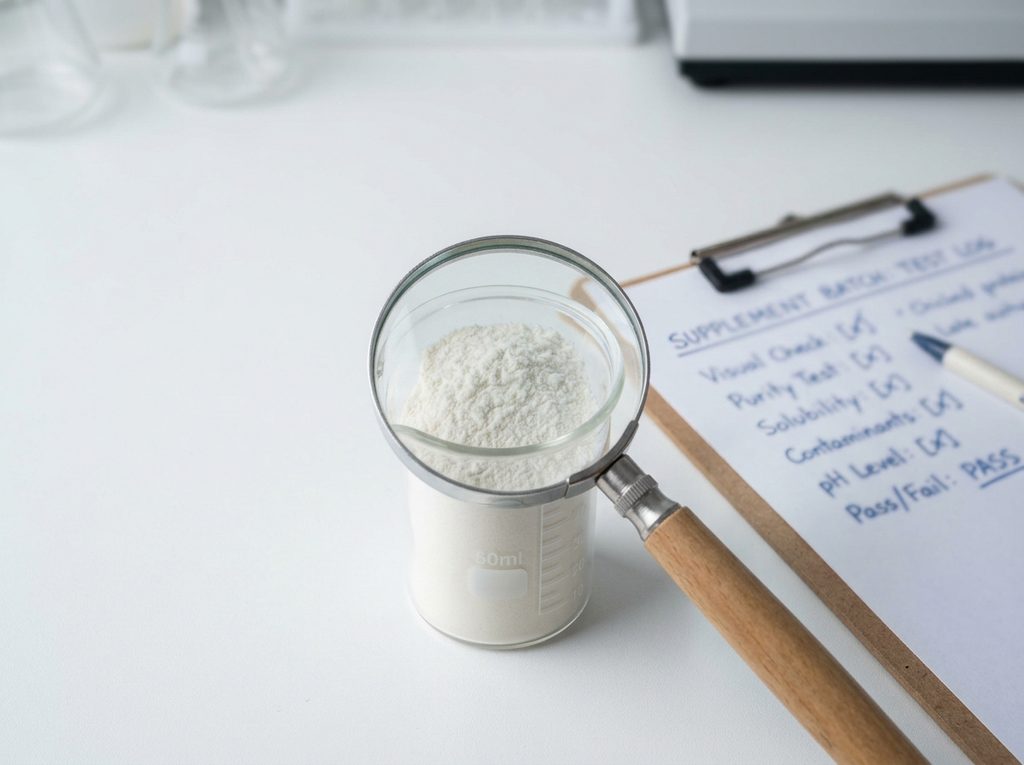
This is precisely why the daily habit matters more than an occasional shake — low-level heavy metal exposure is a cumulative, long-term risk, not an acute one. The practical takeaway: third-party testing matters enormously if you’re using protein powder every day for years. Look for certifications like NSF Certified for Sport, Informed Choice/Informed Sport, or USP Verified, which involve independent lab testing of the actual product batch — not just a marketing claim of “purity” on the label.
3. Added Sugars and Calories
Flavored protein powders vary enormously. Some have zero added sugar; others pack up to 23 grams of added sugar per scoop. Combined with milk or fruit in a smoothie, a “healthy” shake can quietly turn into a 1,200-calorie drink. Over months of daily use, this can contribute to unwanted weight gain or blood sugar spikes — the American Heart Association recommends capping added sugar at 24 g/day for women and 36 g/day for men, and a single poorly chosen scoop can eat up a big chunk of that budget.
4. Digestive Distress
Dairy-based powders (whey, casein) commonly cause bloating, gas, cramping, or diarrhea in people with lactose intolerance or dairy sensitivity. Switching to a whey protein isolate (which strips out most of the lactose) or a plant-based powder often resolves this.
5. Other Documented Side Effects of Overdoing It
Research has linked excessive daily protein powder intake (generally above ~40 g per serving, or well beyond total daily protein needs) to:
- Worsening acne — some studies tie high whey protein intake to increased acne severity, likely through hormonal pathways.
- Dehydration — processing large amounts of protein increases the body’s fluid needs to flush out nitrogenous waste products like urea.
- Digestive issues — bloating, constipation, or diarrhea from excess intake.
- Possible mood/behavior effects — a smaller body of research has explored a link between very high protein intake and increased aggression, though more study is needed here.
How Much Protein Powder Is Safe Per Day?
There’s no single official “supplement dosage” limit, since needs depend on your total daily protein intake from food, not just powder. General guidelines:
- Baseline protein needs (RDA): ~46 g/day for women, ~56 g/day for men, to simply avoid deficiency.
- For muscle building: 1.4–2.0 grams of protein per kilogram of body weight per day. Athletes in intense resistance training or a caloric deficit may need up to 3.1 g/kg.
- Per-scoop guidance: Most whey protein products are designed to deliver 20–40 g per serving. Intake above 40 g per serving has been associated with more side effects (acne, digestive upset) without added muscle-building benefit — your body can only use so much protein at once for muscle synthesis.
- Timing: Spreading protein intake across the day (roughly every 3–4 hours) rather than one huge dose appears to support muscle protein synthesis better than a single large serving.
In practice, this means protein powder should usually be a top-up, not your main protein source. Most healthy adults can hit their daily protein target through food alone — an egg (6 g), a cup of Greek yogurt (18 g), a handful of nuts (5–7 g), a cup of milk (8 g), and a chicken breast (25–30 g) already gets you most of the way to the RDA without a single scoop.
Do You Actually Need Protein Powder?
Protein powder is a convenience tool, not a necessity, for most healthy people. It tends to be genuinely useful for:
- People with reduced appetite (older adults, or those in cancer treatment) who struggle to eat enough whole food
- People recovering from surgery or a slow-healing wound, since the body needs extra protein for tissue repair
- People with higher calorie/protein needs, such as burn patients or serious athletes
- Vegans or vegetarians who find it hard to hit protein targets through food alone
- Busy people who genuinely won’t otherwise eat enough protein day to day
If none of these apply to you, you can likely meet your needs through whole foods: eggs, dairy, legumes, fish, poultry, lean meat, nuts, and seeds — with the added benefit of fiber, micronutrients, and no contamination risk.
How to Choose a Protein Powder That’s Actually Safe for Daily Use
If you’ve decided daily protein powder fits your routine, these factors matter far more for long-term safety than flavor or brand hype:
- Third-party tested. Look for NSF Certified for Sport, Informed Choice/Informed Sport, or USP Verified seals — these mean an independent lab has verified label accuracy and screened for contaminants and banned substances, not just the manufacturer’s own claim.
- Low or no added sugar. Check the nutrition label, not just the marketing on the front of the tub.
- Simple ingredient list. Fewer fillers, gums, and artificial additives generally means a cleaner product.
- Matches your digestion. Whey isolate or hydrolyzed whey (very low lactose) or a plant-based blend if you’re sensitive to dairy.
- Reasonable protein-per-scoop (20–30 g). Avoid “mega-dose” products well above what your body can use in one sitting.
Recommended Protein Powders (Third-Party Tested Picks)
As an Amazon Associate, [Site Name] earns from qualifying purchases. Prices and details are accurate as of publication but may change on Amazon.
| Product | Best For | Protein/Serving | Key Certification |
|---|---|---|---|
| Optimum Nutrition Gold Standard 100% Whey | Best-value everyday whey | 24 g | Banned Substance Tested |
| Transparent Labs 100% Grass-Fed Whey Isolate | Cleanest label / no artificial additives | 28 g | Grass-fed, no artificial sweeteners/dyes |
| Garden of Life Sport Organic Plant-Based Protein | Vegan / dairy-free daily use | 30 g | USDA Organic + NSF Certified for Sport |
| Dymatize ISO100 Hydrolyzed Whey Isolate | Sensitive stomachs / lactose intolerance | 25 g | <0.5g lactose, hydrolyzed for fast digestion |
Frequently Asked Questions
Can taking protein powder every day damage my kidneys?
Not for people with healthy kidneys, based on current evidence — but people with existing kidney disease, diabetes, or high blood pressure should talk to a doctor first, since these conditions raise the risk from high protein intake.
Is whey protein safer than plant-based protein for daily use?
Neither is inherently “safer” — whey has stronger muscle-building research behind it, while plant proteins avoid dairy-related digestive issues. Both have shown heavy metal contamination in independent testing, so the deciding factor is third-party certification, not the protein source itself.
What happens if I stop taking protein powder?
Nothing dangerous — protein powder isn’t something your body becomes dependent on. As long as you replace it with adequate dietary protein from food, there’s no withdrawal effect.
Is it bad to have a protein shake every single day, even on rest days?
No — your body uses protein for far more than just muscle repair after workouts (it also supports immune function, hormones, skin, and hair), so daily intake on rest days is fine as long as total protein stays within your needs.
The Bottom Line
For the average healthy adult, taking protein powder every day is generally safe — the science doesn’t show it causing kidney damage, hormonal problems, or other serious harm in people without pre-existing conditions, as long as intake stays within reasonable limits (roughly 20–40 g per serving, fit into your overall daily protein target).
The bigger long-term risk isn’t the protein itself — it’s what else might be in the tub.
Heavy metal contamination, found by multiple 2025 independent investigations in a large share of tested products, is the strongest reason to be selective about which protein powder you use daily, not whether you use one at all.
Choosing a third-party tested product, watching added sugar, and treating protein powder as a supplement to real food — not a replacement for it — is the safest way to make this a genuine long-term habit.
This article is for informational purposes only and is not a substitute for professional medical advice. Talk to your doctor before starting any new supplement, especially if you have kidney disease, diabetes, or another chronic condition.
Related Posts
Stay Informed With the Latest & Most Important News
Previous Post
Next Post










Advertisement