







Now Reading: Best Ab Machines That Actually Work (And Ones That Are a Waste of Money)
-
01
Best Ab Machines That Actually Work (And Ones That Are a Waste of Money)


Walk into any big-box gym or scroll through late-night TV ads and you’ll find two very different worlds of “ab equipment”.
On one side are tools grounded in real strength-training principles — resistance, range of motion, and progressive overload.
On the other are gadgets built almost entirely on marketing copy, promising a six-pack for $39.99 and ten minutes a day.
The good news is that telling the two apart isn’t complicated once you know what to look for.
In this guide, we’ll cover exactly which ab machines are worth your money, which ones to skip, and how to build a core-training setup — at home or in a commercial gym — that actually produces results.
Table of contents
- Do Ab Machines Actually Work?
- What Separates a Real Ab Machine From a Gimmick
- Best Ab Machines That Actually Work
- 1. Ab Roller / Ab Wheel — Best All-Around Core Builder
- 2. Captain’s Chair / Vertical Knee Raise — Best for Lower Abs and Hip Flexors
- 3. Adjustable Decline Bench — Best for Progressive Overload
- 4. Cable Tower (Kneeling Cable Crunch) — Best for Long-Term Strength Gains
- 5. Core Sliders — Best for Dynamic, Full-Body Core Work
- 6. Hanging Ab Straps — Best for Advanced Hanging Leg Raises
- Ab Machines That Are a Waste of Money
- Quick Comparison Table
- How to Choose the Right Ab Machine for You
- How Often Should You Train Your Abs?
- Frequently Asked Questions
- The Bottom Line
Do Ab Machines Actually Work?
Yes — but only the ones that let you progressively overload your core the same way you would train any other muscle group.
Your abdominal muscles respond to resistance training just like your chest, back, or legs: get stronger and more developed when you consistently increase the demand placed on them over time.
Where ab machines can’t help is fat loss.
Decades of exercise science have consistently debunked “spot reduction” — the idea that training a specific body part burns fat from that exact area.
Comparative studies on one-legged training and abdominal-only exercise programs have found no meaningful difference in local fat loss between trained and untrained regions; when body fat drops, it drops based on genetics and overall energy balance, not on which muscle you just worked.
A few newer studies using more precise imaging have found small, statistically modest local effects during aerobic-plus-core training, but the consensus from major research reviews and institutions like the University of Sydney remains the same: you cannot out-crunch your diet.
That means the real job of an ab machine is to build and strengthen the muscle, not melt the fat covering it.
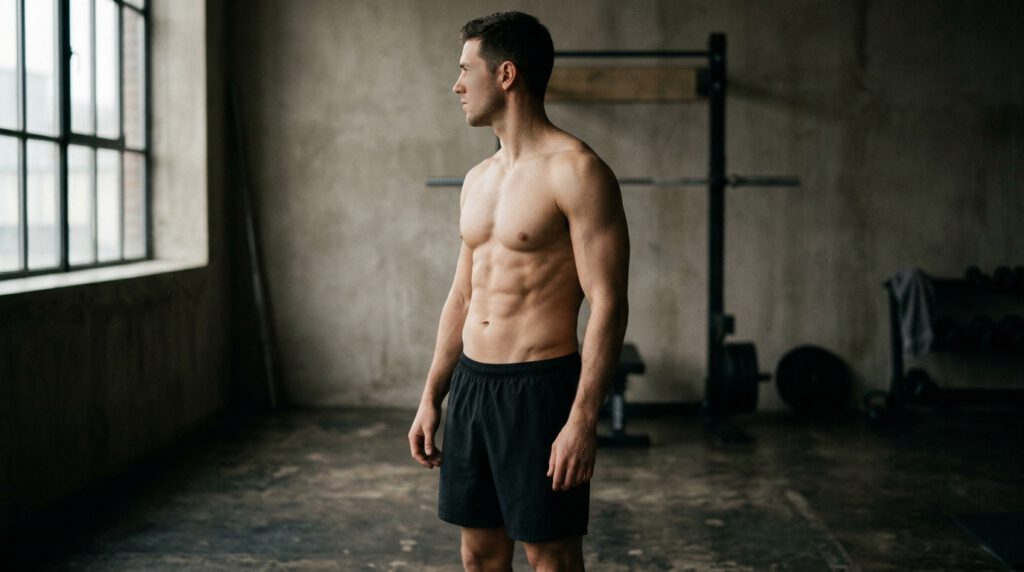
Visible abs are a function of low body fat plus well-developed abdominal muscle. A great ab machine gets you the second half of that equation; nutrition and overall activity get you the first.
What Separates a Real Ab Machine From a Gimmick
Before ranking specific products, it helps to know the criteria that actually matter:
- Progressive overload: Can you make the exercise harder over time — more weight, more resistance, more range of motion — or does it stay exactly as difficult on day 200 as it was on day one?
- Natural biomechanics: Good core equipment works with your spine’s natural range of motion (flexion, anti-extension, anti-rotation). Anything that forces heavy, loaded twisting through the lumbar spine works against your anatomy, not with it.
- Range of motion: Machines that let your torso move through a full, controlled range recruit more muscle fibers than short, choppy movements.
- Genuine muscular tension: If a machine is doing most of the work for you — springs that push you upright, momentum, or electrical current instead of your own contraction — it isn’t training the muscle in any meaningful way.
Machines that check these boxes build strength. Machines that don’t are, at best, a novelty, and at worst, a source of lower-back strain.
Best Ab Machines That Actually Work
1. Ab Roller / Ab Wheel — Best All-Around Core Builder
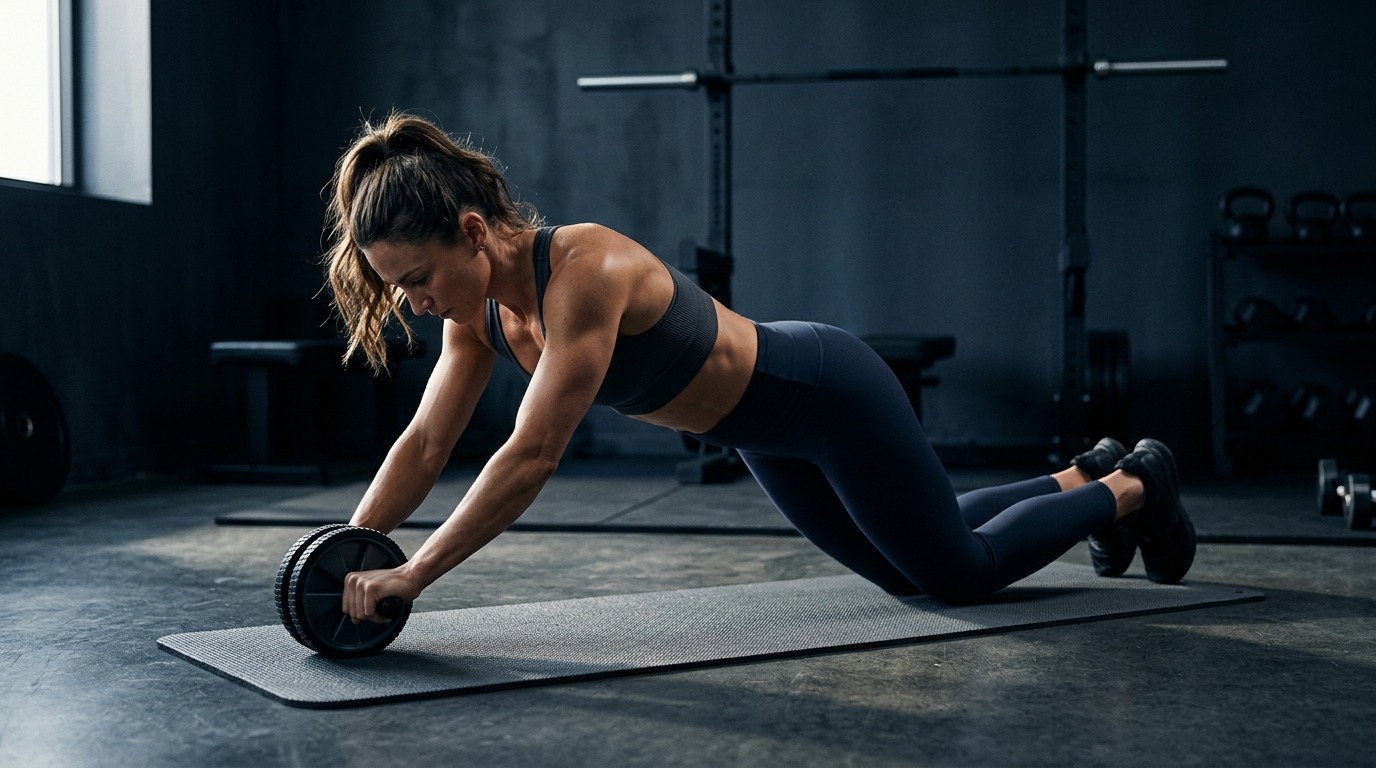
Few pieces of equipment deliver more per dollar than a well-built ab wheel.
Rolling out forces your entire core — rectus abdominis, obliques, and deep stabilizers — to fight eccentrically against your bodyweight to keep your spine from collapsing toward the floor.
It also recruits the lats and shoulders, making it one of the only “ab” tools that trains the core as the stabilizing unit it actually is, rather than isolating a single muscle.
The Perfect Fitness Ab Carver Pro is the standout pick in this category.
Its wide, curved wheel and built-in carbon-steel spring resistance make it noticeably more stable and forgiving than a basic straight-wheel roller, which matters for anyone building up to full rollouts for the first time.
It also allows you to “carve” left and right to bias the obliques — something flat, narrow wheels can’t do.
With over 25,000 reviews and a 4.6-star average, it’s also one of the most-purchased ab tools on Amazon for a reason.
If you want to start cheaper and work your way up, the Vinsguir Ab Roller Wheel is a solid budget option, with a wide, textured non-slip wheel and padded handles for a fraction of the price.
Caution: avoid ultra-cheap, flimsy plastic wheels with no internal spring or bearing quality.
They tend to wobble under load, which is a common cause of the face-plants and lower-back hyperextension beginners run into when trying rollouts for the first time.
2. Captain’s Chair / Vertical Knee Raise — Best for Lower Abs and Hip Flexors
You’ll find this machine in almost every commercial gym, and for good reason.
By locking your upper body against padded arm supports, it isolates the lower abs and hip flexors during hanging or supported knee raises, without putting any load through your lower back the way floor-based leg raises can.
The XMark Captain’s Chair with Dip Stand brings this gym staple home, doubling as a dip and push-up station so you get upper-body training out of the same footprint.
It’s a smart pick if you want a single piece of equipment that does more than just abs.
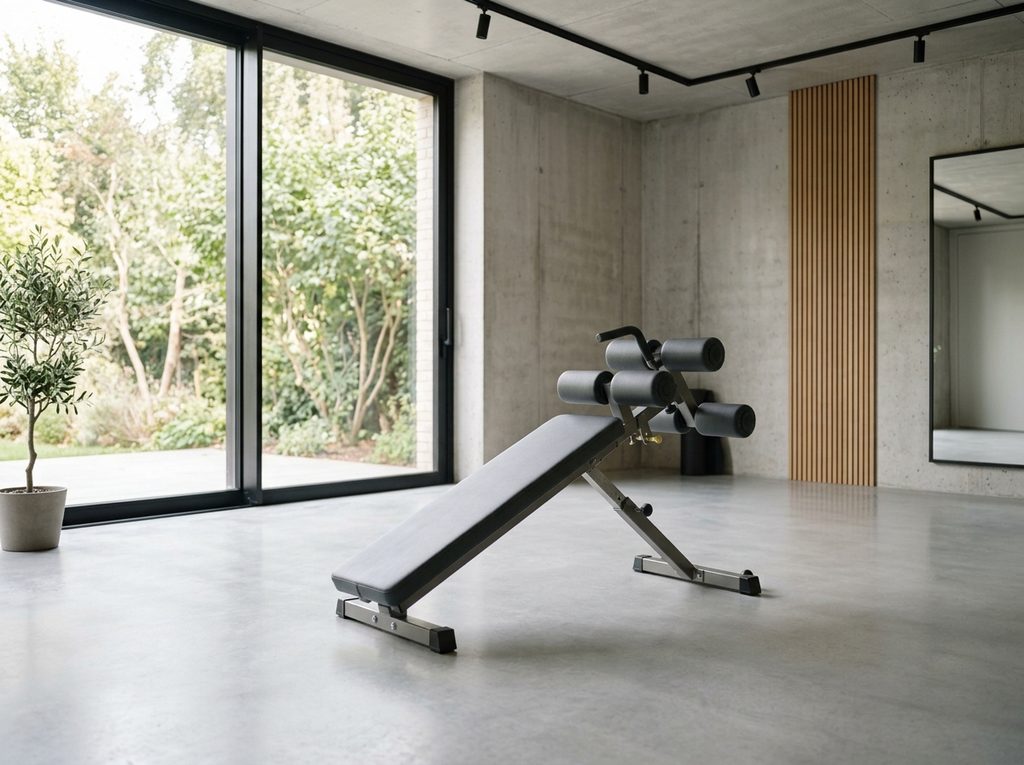
3. Adjustable Decline Bench — Best for Progressive Overload
A decline bench is one of the simplest ways to keep your core training progressing for years, not weeks.
By increasing the decline angle, you add gravitational load to sit-ups, crunches, and Russian twists — the same principle that makes weighted squats more effective than bodyweight squats over time.
The XMark Adjustable Decline Ab Workout Bench offers 12 levels of decline on a heavy-duty steel frame, so beginners and advanced lifters alike can dial in the right intensity.
Its rated capacity, thick padding, and transport wheels make it a durable long-term investment rather than something you’ll outgrow in a month.
4. Cable Tower (Kneeling Cable Crunch) — Best for Long-Term Strength Gains
If you have access to a cable machine, the kneeling cable crunch is arguably the single best exercise for building visible, thick abdominal muscle.
Nothing else on this list lets you increase resistance in small, precise increments the way a weight stack does, which is exactly what drives long-term hypertrophy.
This isn’t something you’ll buy for a home gym — it requires a cable tower or functional trainer — but if you belong to a commercial gym, it deserves a permanent place in your core routine.
5. Core Sliders — Best for Dynamic, Full-Body Core Work
Sliders add an unstable, gliding element to bodyweight movements like mountain climbers, pikes, and body saws, forcing your core to control motion in a way static exercises don’t.
They’re inexpensive, packable, and versatile enough to double as a lower-body and full-body training tool.
The DMoose Core Sliders are dual-sided for use on carpet or hard floors and cost less than most gym accessories, making them an easy add-on to any core routine.
6. Hanging Ab Straps — Best for Advanced Hanging Leg Raises
If you have a pull-up bar or power tower, hanging ab straps let you perform leg and knee raises with your grip fully supported, so your forearms fatigue before your core does.
This is one of the more advanced movements on this list, but it’s also one of the most effective for developing the lower abs and hip flexors under a genuinely long range of motion.
The DMoose Hanging Ab Straps use padded arm sleeves and steel carabiners rated for heavy use, and they pair naturally with any pull-up bar or power tower you already own.
Ab Machines That Are a Waste of Money
EMS Ab Stimulator Belts
EMS belts have been the subject of formal regulatory action, not just internet skepticism.
The Federal Trade Commission has filed complaints against multiple EMS-belt marketers for falsely advertising “six-pack abs without exercise,” and the FDA has stated plainly that no EMS device is currently cleared for weight loss, girth reduction, or building visible abs.
Independent research backs this up: a randomized controlled trial in adults with abdominal obesity found no significant change in body composition, strength, or appearance from EMS use compared to a control group.
EMS does have a legitimate medical use — preventing muscle atrophy in rehab settings — but as a stand-alone six-pack shortcut, it isn’t supported by the evidence.
Seated Rotary Torso Machines
This machine has you sit in a padded seat and twist your torso against weight-stack resistance.
The problem isn’t the concept of oblique training — it’s loading your lumbar spine with rotational force under resistance, which runs against how the spine is built to move and is a well-documented contributor to lower-back strain and disc issues.
There are far safer ways to train rotational core strength, like cable woodchoppers or controlled Pallof presses, that don’t lock your spine into a twisting motion under heavy load.
Spring-Assisted “As-Seen-On-TV” Crunchers
Devices that use springs or resistance bands to assist you upward through a crunch are working against the point of the exercise. By pushing you back up, they remove tension from your abs during the exact phase of the movement that should be building strength — making them noticeably less effective than a basic floor crunch performed with good form.
Cheap, Flimsy Plastic Ab Wheels
Not all ab wheels are created equal.
Ultra-cheap wheels without an internal spring, quality bearing, or wide stable base tend to wobble mid-rollout, which is one of the more common causes of beginners losing control and hyperextending their lower back.
If you’re buying a roller, spend the extra few dollars on one with a stable, wide-wheel design like the options above.
Quick Comparison Table
| Machine | Primary Target | Verdict |
|---|---|---|
| Ab Roller / Wheel | Total core, lats, stabilizers | Must-use |
| Captain’s Chair / VKR | Lower abs, hip flexors | Highly effective |
| Adjustable Decline Bench | Upper abs, full range crunches | Must-use |
| Cable Tower (Kneeling Crunch) | Upper/lower abs | Best for progressive overload |
| Core Sliders | Full core, stability | Great supplement |
| Hanging Ab Straps | Lower abs, hip flexors | Advanced but effective |
| EMS Ab Belts | Superficial nerves only | Skip |
| Rotary Torso Machine | Obliques | Skip — back injury risk |
| Spring-Assisted Cruncher | Upper abs (reduced tension) | Skip |
| Cheap Plastic Ab Wheel | Core (unstable) | Skip — buy a quality wheel instead |
How to Choose the Right Ab Machine for You
Beginner: start with a decline bench or a supported crunch machine before jumping into ab rollouts or hanging leg raises — both demand a level of core control that takes a few weeks to build.
Space is tight: an ab roller, core sliders, or hanging straps (using a doorway pull-up bar) take up almost no storage space compared to a bench or power tower.
Long-term progression: prioritize equipment with adjustable resistance or incline — a decline bench, cable tower, or spring-loaded ab roller will still be challenging you a year from now, unlike fixed-resistance gadgets.
Budget is the main constraint: a quality ab wheel is still the best dollar-for-dollar core tool available. You genuinely don’t need to spend more than $30–$40 to get a well-built one.
How Often Should You Train Your Abs?
Your core is a muscle group like any other — it needs recovery, not daily punishment.
Two to four sessions per week, with a day of rest between sessions, is enough to build visible strength and definition over time. A simple weekly structure might look like:
- 2–3 sessions/week: 3–4 sets of an ab roller or cable crunch movement, plus one lower-ab exercise (knee raises or hanging leg raises)
- Rest days: allow 48 hours between sessions so the muscle can recover and adapt
Remember that core training is only one half of the visible-abs equation.
Pair it with a calorie-appropriate diet and regular full-body training or cardio if fat loss is part of your goal — no machine on this list, no matter how good, will do that part for you.
Frequently Asked Questions
Can ab machines give you a six-pack on their own?
No. They can build and strengthen the muscle, but visibility depends on your body fat percentage, which is controlled by overall diet and activity — not which muscle you’re training.
Is an ab roller safe for beginners?
Yes, if you start with short, controlled ranges of motion (kneeling, not standing) and choose a wide, stable wheel rather than a cheap, narrow one. Build up range gradually as your control improves.
Are EMS ab belts a scam?
Not exactly a scam, but the marketing claims around them (six-pack abs with no exercise) have been challenged by the FTC and aren’t supported by clinical research.
They have legitimate use in physical therapy, just not for building visible abs on their own.
What’s the single best ab machine for a small home gym?
A quality ab roller. It costs the least, takes up almost no space, and trains more of the core — including stabilizers and lats — than almost anything else on this list.
Do I need a gym membership to train abs effectively?
No. A decline bench, ab roller, sliders, and hanging straps can replicate almost everything a commercial gym’s ab machines do, minus the cable tower.
The Bottom Line
The best ab machines are the ones that let you get progressively stronger over time while respecting how your spine is actually built to move.
An ab roller, captain’s chair, decline bench, and cable tower cover almost every angle your core needs — flexion, anti-extension, and controlled rotation — without the injury risk or false promises that come with EMS belts, rotary torso machines, and spring-assisted gadgets.
Combine consistent training on the right equipment with a solid nutrition plan, and the results will show up where it counts.
Stay Informed With the Latest & Most Important News
Previous Post
Next Post





Advertisement