























Now Reading: Belly Fat vs. Bloating: How to Tell the Difference (2026 Guide)
-
01
Belly Fat vs. Bloating: How to Tell the Difference (2026 Guide)


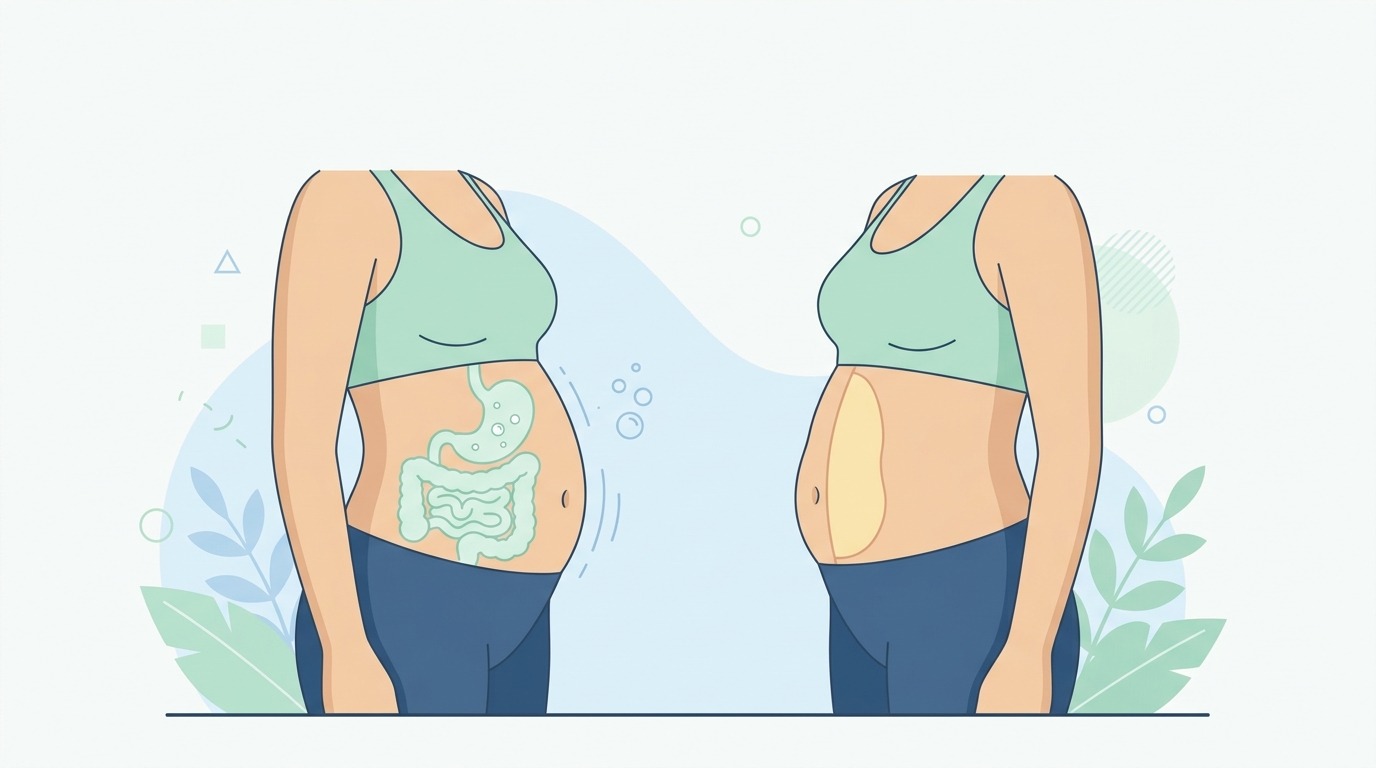
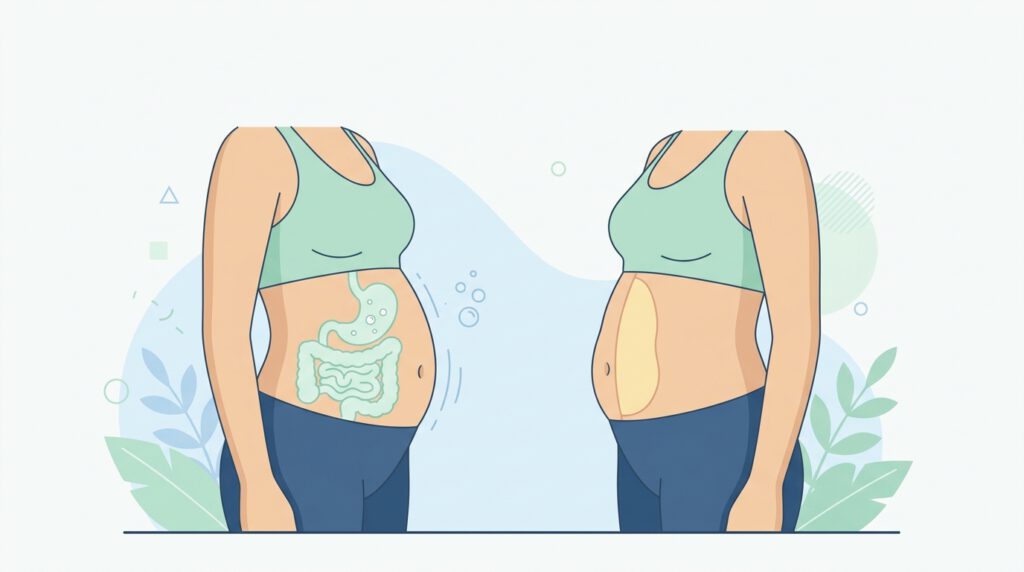
You catch your reflection in the mirror, or your jeans feel tighter than they did yesterday, and the same question pops up: is this belly fat, or am I just bloated?
The two can look almost identical from the outside, but they come from completely different processes inside your body — and telling them apart matters, because the fix for one won’t do much for the other.
Here’s how to read the signals your body is sending you, what causes each one, and when a bloated belly is worth a call to your doctor.
Table of contents
The Quick Answer
The fastest way to tell them apart is to check how your stomach behaves over the course of a day and how it feels when you press on it.
| Bloating | Belly Fat | |
|---|---|---|
| Timing | Comes and goes — flatter in the morning, bigger by evening or after meals | Stays fairly constant morning, noon, and night |
| Speed of change | Appears and disappears within hours or days | Builds up gradually over weeks or months |
| Texture | Tight, firm, or drum-like; may feel gassy or achy | Soft and squishy to the touch |
| The pinch test | You usually can’t grab a distinct roll — the pressure is internal | You can pinch a soft handful between your fingers |
| Common triggers | Gas, certain foods, hormones, digestive issues | Excess calories over time, hormones, inactivity |
| What relieves it | Passing gas, a bowel movement, or time | Doesn’t resolve on its own — needs sustained lifestyle change |
Now let’s break down why each of these differences happens.
What Bloating Actually Is
Bloating is the sensation that your belly is unusually full, tight, or swollen.
Physiologically, it’s often the result of your diaphragm dropping and your abdominal wall relaxing to make extra room — sometimes for trapped gas, sometimes for fluid, sometimes just for a large meal working its way through your system.
Because it’s tied to a specific trigger, bloating tends to switch on and off quickly. Many people wake up with a flat stomach and watch it expand over the course of the day, especially after meals.
Common causes of bloating include:
- Eating too quickly, or eating a very large meal
- Gas-producing foods (beans, cruciferous vegetables like broccoli and cabbage, dairy, carbonated drinks)
- Food intolerances, such as to gluten or lactose
- Constipation or slow digestion
- Irritable bowel syndrome (IBS), and other digestive conditions
- Bacterial overgrowth or infections in the gut
- Certain medications, including some pain relievers, corticosteroids, and opioids
- Hormonal shifts — bloating is extremely common in the days before a period, during ovulation, and during perimenopause and menopause, when fluctuating estrogen and progesterone affect fluid balance and gut motility
- Ovarian cysts or other gynecological conditions
- Delayed stomach emptying (gastroparesis)
Notice that most of these causes are temporary by nature — which is exactly why bloating fluctuates so much, while belly fat doesn’t.
What Belly Fat Actually Is
Belly fat is stored energy — extra calories your body has banked as fat tissue around your midsection.
Unlike bloating, it isn’t triggered by a single meal or a stressful week; it accumulates slowly, in response to a sustained calorie surplus, hormonal changes, genetics, and how active you are.
There are actually two types of belly fat, and the difference matters for your health, not just your appearance:
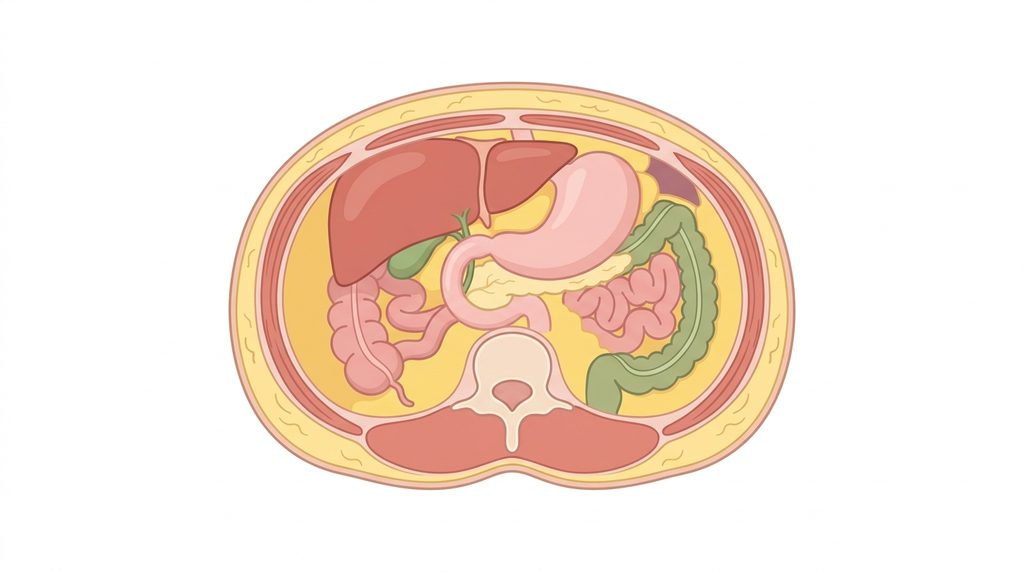
- Subcutaneous fat sits directly under the skin. It’s the soft, “pinchable” layer you can find on your belly, hips, thighs, and arms. About 90% of the fat in your body is this type.
- Visceral fat lies much deeper, wrapped around your internal organs (liver, intestines, stomach). You can’t pinch it, and it tends to make the abdomen feel firmer or more “hard-packed” rather than soft. Visceral fat is also metabolically active — it releases inflammatory compounds and fatty acids that are linked to a higher risk of type 2 diabetes, heart disease, fatty liver, and metabolic syndrome. This is why waist size, not just weight, is used as a health marker.
This is worth knowing because a firm, protruding belly isn’t automatically bloating — it can also be a sign of higher visceral fat, especially if it’s been there for months rather than hours.
Three Simple Self-Tests
You don’t need special equipment to get a good read on what’s going on. Try these:
1. The Pinch Test
Grab the skin and tissue on your stomach between your fingers.
- Soft and squishy, easy to grab a handful? That’s subcutaneous fat.
- Tight, firm, and hard to grab at all? That points to bloating (or a higher share of visceral fat).
2. The Morning-vs-Evening Test
Look at (or measure) your stomach first thing in the morning, on an empty stomach, before eating or drinking anything. Then check again in the evening.
- Noticeably flatter in the morning and bigger by night? That’s bloating.
- Roughly the same size all day, every day? That’s belly fat.
For a more precise version, measure your waist with a tape measure at the same spot — midway between your bottom rib and hip bone — first in the morning and again at night. A difference of an inch or more in a single day usually points to bloating, gas, or water retention rather than fat gain, since fat simply doesn’t change that quickly.
3. The Multi-Week Trend Test
If you want to track things properly, measure your waist once a week, always under the same conditions (morning, empty stomach, after using the bathroom). Fat gain or loss shows up as a gradual trend over weeks. Bloating shows up as noisy, day-to-day swings that don’t add up to a consistent trend.
Can You Have Both at the Same Time?
Yes — and it’s actually common. If you already carry some belly fat, a bout of bloating on top of it can make your midsection look and feel considerably bigger than usual. The two aren’t mutually exclusive; they simply require different solutions.
How to Reduce Bloating
Because bloating is usually driven by digestion, gas, or hormones, the fixes are mostly short-term and dietary:
- Slow down at meals. Eating too fast means swallowing more air and overwhelming your digestion.
- Watch your fiber intake. Fiber is good for you, but ramping it up too quickly can cause gas — increase it gradually.
- Cut back on carbonated drinks, which introduce gas directly into your gut.
- Identify trigger foods. Beans, cruciferous vegetables, dairy (if you’re lactose intolerant), and artificial sweeteners are common culprits.
- Stay hydrated. Dehydration can actually worsen bloating and constipation.
- Eat smaller, more frequent meals instead of three large ones.
- Manage stress, since it directly affects gut motility and can worsen IBS-type symptoms.
- Move after meals. A short walk can help gas move through your system faster.
How to Reduce Belly Fat
Because belly fat is stored energy that builds up over time, the approach has to be sustained rather than a quick fix:
- Create a modest calorie deficit through diet, rather than crash dieting.
- Prioritize protein at meals, which supports fullness and preserves muscle while losing fat.
- Add strength training, not just cardio — building muscle helps your body use energy more efficiently and protects against losing muscle instead of fat.
- Get regular aerobic exercise, which is consistently linked to reductions in visceral fat specifically.
- Limit alcohol, added sugar, and trans fats, all of which are linked to increased abdominal and visceral fat.
- Prioritize sleep, since poor sleep is associated with increased hunger hormones and abdominal fat storage.
- Be patient with visceral fat specifically — the encouraging news is that visceral fat tends to respond faster to lifestyle changes than subcutaneous fat, often showing measurable improvement within two to three months of consistent effort.
One important caveat: you cannot “spot reduce” fat from just your stomach through targeted exercises like crunches. Fat loss happens across the whole body based on genetics and overall calorie balance, not the specific muscles you train.
When to See a Doctor About Bloating
Occasional bloating after a big meal is normal and rarely a cause for concern. But persistent or unusual bloating deserves medical attention — particularly for women, since it’s one of the most commonly overlooked early symptoms of ovarian cancer.
See a doctor if your bloating:
- Lasts most days for three weeks or longer
- Is severe, or noticeably different from your usual pattern
- Comes with pelvic or abdominal pain
- Is accompanied by feeling full quickly after eating very little (early satiety)
- Comes with changes in urinary urgency or frequency
- Is paired with vomiting, frequent heartburn, unexplained weight loss, or changes in bowel habits
- Causes visible abdominal swelling that doesn’t fit your normal pattern
These symptoms don’t automatically mean anything serious — the overwhelming majority of bloating is caused by diet, IBS, or hormones.
But because early ovarian cancer symptoms are easy to dismiss as “just bloating,” doctors recommend getting persistent, unexplained bloating checked rather than waiting it out. A doctor can rule out serious causes with a simple pelvic exam, ultrasound, or blood test, and address the more common, more benign explanations at the same time.
The Bottom Line
If your stomach changes size throughout the day, feels tight or gassy, and settles down within a day or two, you’re almost certainly dealing with bloating — and diet or lifestyle tweaks are the right fix.
If your stomach looks and feels the same from morning to night, is soft enough to pinch, and has built up gradually over weeks or months, that’s belly fat, and it responds to sustained changes in diet, exercise, and sleep rather than a quick trick.
And if bloating sticks around for weeks, gets worse, or comes with other symptoms like pain, early fullness, or changes in your bathroom habits — don’t wait it out. Get it checked.
This article is for general information and isn’t a substitute for personalized medical advice. If you’re concerned about persistent bloating, unexplained weight changes, or abdominal pain, talk to a healthcare provider.
Related Posts

Stay Informed With the Latest & Most Important News
Previous Post
Next Post










Advertisement