























Now Reading: Dirty Bulk vs. Clean Bulk: Which Actually Builds More Muscle?
-
01
Dirty Bulk vs. Clean Bulk: Which Actually Builds More Muscle?


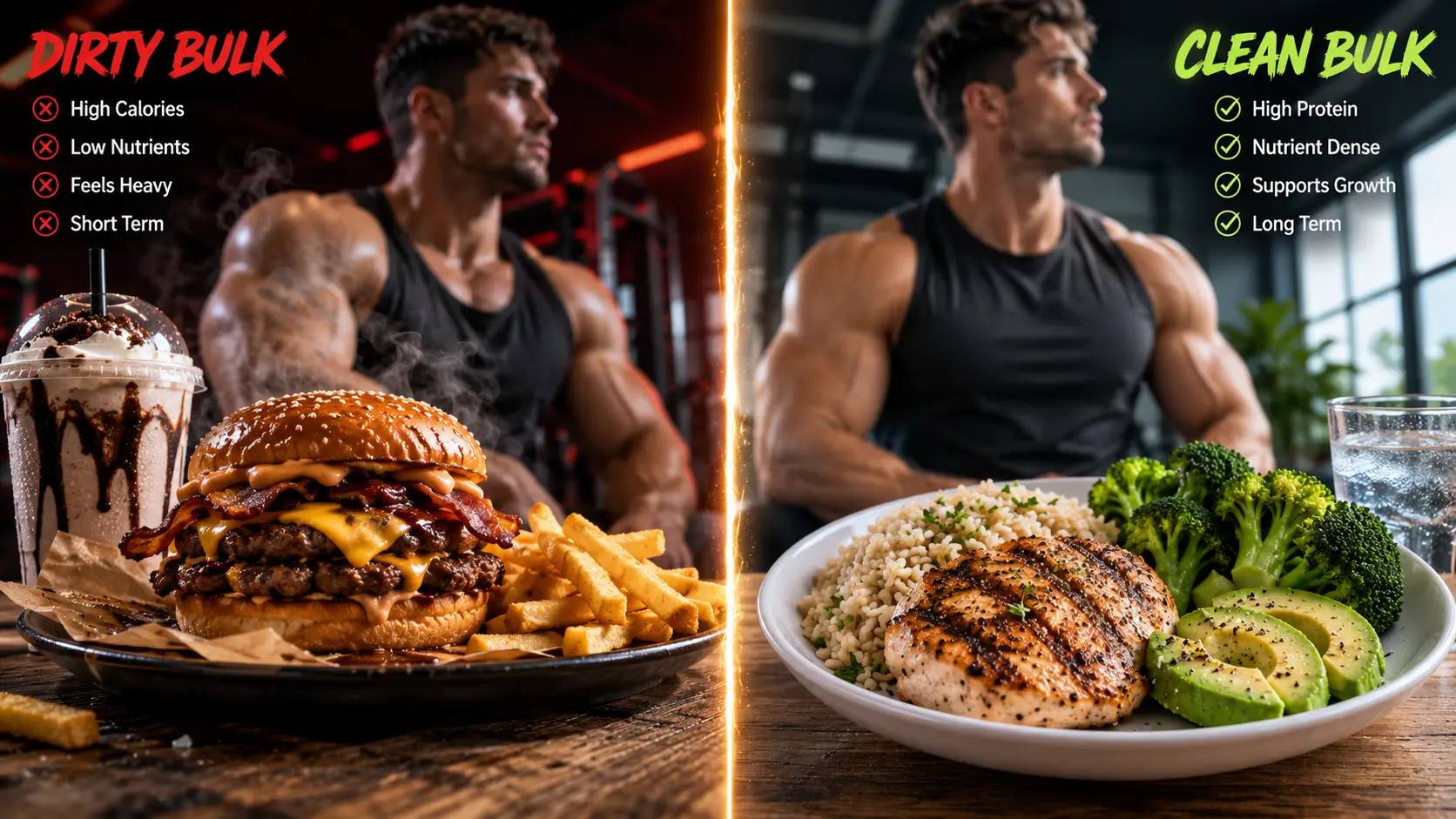
If you’ve spent any time in the gym or the fitness community, you’ve probably heard the debate: dirty bulk vs. clean bulk.
Both methods promise serious muscle gains, but they take completely different approaches to nutrition — and the results can be worlds apart.
In this guide, we’ll break down exactly what each method involves, what the science says about muscle growth and fat gain, and which approach is actually worth your time and effort.
Table of contents
What Is Bulking?
Before we compare the two methods, let’s get clear on what bulking actually means.
Bulking is a nutrition strategy where you intentionally eat more calories than you burn. The goal is to give your body the extra fuel it needs to build new muscle tissue — especially when combined with consistent strength training and progressive overload.
The key variables that determine your results during a bulk include:
- Total calorie intake (how big your surplus is)
- Protein intake (the building block of all muscle)
- Food quality (nutrient-dense whole foods vs. processed junk)
- Training consistency (no diet replaces hard work in the gym)
Now, let’s look at how dirty bulking and clean bulking each handle these variables.
What Is a Dirty Bulk?
A dirty bulk (also called “eat big to get big”) is a high-calorie approach with little to no concern for food quality. The idea is simple: eat as much as possible — fast food, processed snacks, sugary drinks, whatever — to hit massive calorie numbers and drive rapid weight gain.
Dirty Bulk Strategy at a Glance
| Factor | Dirty Bulk |
|---|---|
| Calorie Surplus | 500–1,000+ extra calories/day |
| Food Quality | Processed foods, fast food, sweets |
| Macro Tracking | Minimal or none |
| Weight Gain Rate | Fast |
| Fat Gain | High |
Pros of Dirty Bulking
- Quick scale weight gain — you’ll see the numbers go up fast
- Strength gains — higher calories can help push your lifts up quickly
- Easier to hit calorie targets — no need for strict meal prep
- Useful for hardgainers who seriously struggle to eat enough
Cons of Dirty Bulking
- Excessive fat gain — most of the weight you gain will be body fat, not muscle
- Digestive issues — a diet heavy in processed food often causes bloating and gut discomfort
- Energy crashes — blood sugar spikes from junk food lead to sluggishness
- Long cutting phase required — you’ll spend months trying to strip off the fat you gained
- Risk of losing muscle — aggressive cuts after dirty bulks often result in muscle loss
- Long-term health risks — diets high in processed foods are linked to increased inflammation, higher cholesterol, and insulin resistance
What Is a Clean Bulk?
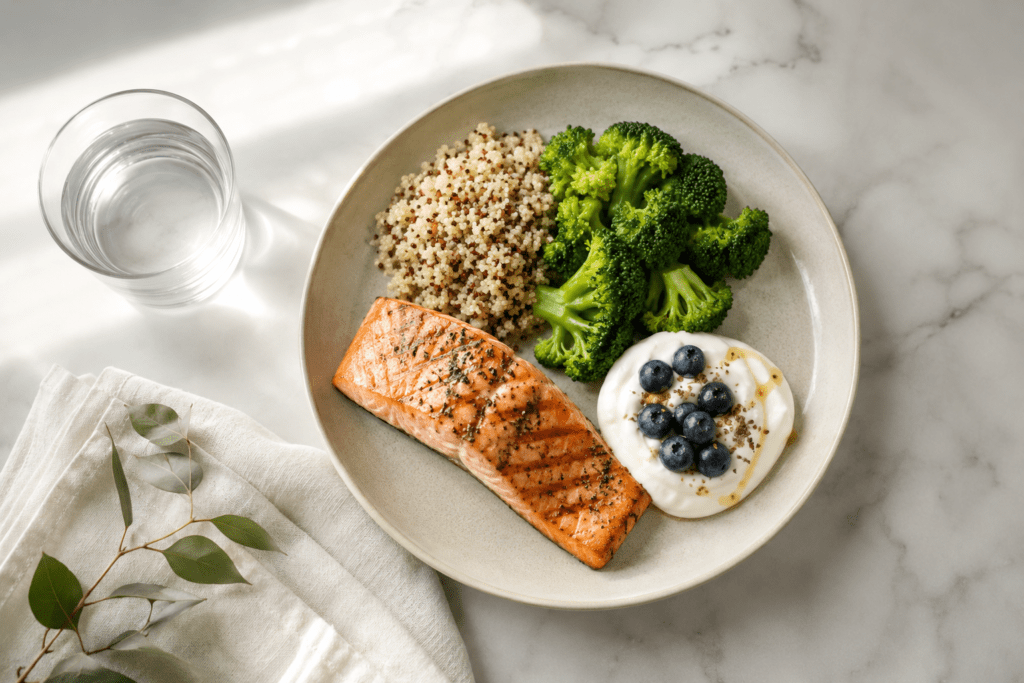
A clean bulk (also called a lean bulk) takes a more controlled and strategic approach. Instead of eating anything available, it focuses on nutrient-dense whole foods with a moderate calorie surplus — just enough to fuel muscle growth without loading up on excess body fat.
Clean Bulk Strategy at a Glance
| Factor | Clean Bulk |
|---|---|
| Calorie Surplus | 200–500 extra calories/day |
| Food Quality | Whole foods, lean proteins, complex carbs, healthy fats |
| Macro Tracking | Yes — protein, carbs, and fats are monitored |
| Weight Gain Rate | Slower (~1% of body weight per month) |
| Fat Gain | Minimal |
Pros of Clean Bulking
- Higher quality muscle gain — controlled surplus means more of your weight gain is actual muscle
- Better hormone health — avoiding excess fat helps protect testosterone and growth hormone levels
- Sustained energy — whole foods provide steady energy throughout the day
- Minimal cutting phase needed — because fat gain is low, you won’t need an extreme diet after
- Better long-term health — nutrient-dense foods support recovery, immunity, and overall performance
Cons of Clean Bulking
- Requires more planning — meal prep, macro tracking, and discipline are non-negotiable
- Slower process — gaining muscle the “right way” takes patience
- Can be harder to hit calorie goals — whole foods tend to be more filling, making it harder to eat enough
Dirty Bulk vs. Clean Bulk: The Science-Backed Comparison
1. Rate of Muscle Growth
Here’s the truth that many dirty bulking advocates miss: your body can only build muscle so fast, no matter how many extra calories you eat.
Research on trained athletes comparing a nutrition-controlled group and a free-eating group showed that while both groups aimed for similar weight gain, the controlled diet group actually consumed more total calories — and gained more weight. Crucially, nearly 72% of total weight gained in the structured group was lean muscle mass.
The takeaway? More calories help up to a point, but the quality and structure of your diet determine how much of that weight is actual muscle vs. fat.
A daily surplus of 300–500 calories is widely considered the sweet spot for maximizing muscle growth while keeping fat gain under control.
2. Fat Gain
Any bulk will come with some fat gain — that’s unavoidable. But how much fat you gain depends heavily on your approach.
Studies comparing high-calorie diets with varying protein levels found that low protein intake leads to significantly more fat gain, even when total calories are matched. This is critical: dirty bulks often rely on high-fat, high-sugar foods that crowd out protein, which shifts more of your surplus toward fat storage.
Research also shows that exceeding 600–700 extra calories per day significantly increases body fat accumulation, regardless of training. A dirty bulk regularly blows past this threshold.
3. Nutrition Quality and Muscle Support
Building muscle isn’t just about protein and calories. Key vitamins and minerals also play a role:
- Vitamins A, C, and E — found primarily in fruits and vegetables, support muscle repair
- B vitamins, zinc, and vitamin D — important for protein metabolism and hormone production
- Calcium — essential for muscle contractions and bone health
A dirty bulk loaded with processed food often creates hidden nutritional deficiencies even at high calorie intakes. This can quietly undermine your muscle-building efforts and recovery — something many bulkers don’t realize until they’re already deep into a plateau.
Which Builds More Muscle: Dirty Bulk or Clean Bulk?
The verdict: Clean bulking builds more high-quality muscle in the long run.
Here’s a quick summary comparison:
| Category | Dirty Bulk | Clean Bulk |
|---|---|---|
| Muscle Gain Rate | Fast initially | Slower but consistent |
| Fat Gain | High | Minimal |
| Hormone Support | Poor (excess fat disrupts hormones) | Good |
| Nutrition Quality | Low | High |
| Post-Bulk Cutting Phase | Long and difficult | Minimal or none |
| Long-Term Health | Risky | Supportive |
| Overall Winner | ❌ | ✅ |
While a dirty bulk may give you a faster jump on the scale and help move your lifts up quickly, most of that weight is fat — not muscle. And the longer, harder cutting phase that follows puts your muscle gains at serious risk.
Clean bulking, on the other hand, ensures that the weight you gain is predominantly lean muscle, protects your hormonal environment, and sets you up for long-term progress without an extreme crash diet afterward.
How to Do a Clean Bulk Correctly
If you’re ready to take the smarter approach, here’s how to set up your clean bulk for success:
Step 1: Set Your Calorie Surplus
Aim for 300–500 extra calories per day above your Total Daily Energy Expenditure (TDEE). This range is backed by research as the ideal window for muscle gain while minimizing fat accumulation.
Step 2: Hit Your Protein Target
Aim for 1.6–2.2g of protein per kilogram of body weight daily. Best sources include:
- Chicken breast, turkey, and lean beef
- Eggs and Greek yogurt
- Salmon and tuna
- Cottage cheese
- Whey protein, plant-based protein
Step 3: Choose Quality Carbs and Fats
- Carbohydrates: Rice, oats, sweet potatoes, whole grain bread — fuel your workouts and recovery
- Fats: Avocado, olive oil, nuts, seeds, fatty fish — avoid trans fats and limit saturated fats
Step 4: Time Your Nutrition
- Eat protein every 3–4 hours to maximize muscle protein synthesis
- Include a protein-rich meal or shake before bed to support overnight recovery
- Prioritize fast-digesting carbs around your workouts
Step 5: Stay Consistent and Track Progress
- Monitor weekly scale weight and adjust calories if weight gain is too fast or too slow
- Take progress photos and body measurements alongside scale weight
- Adjust your surplus up or down based on results every 2–4 weeks
Supplements to Support Your Bulk
While food should always come first, a few evidence-backed supplements can enhance your results:
- Creatine Monohydrate — increases strength and power output; 5g daily is the standard dose
- Whey Protein — convenient way to hit protein targets, especially post-workout
- Beta-Alanine — helps buffer lactic acid, reducing muscle fatigue during high-rep sets (5–6g/day)
- Vitamin D — often deficient in gym-goers; supports testosterone and immune function
Final Thoughts
The dirty bulk vs. clean bulk debate has a clear winner when you look at the evidence. A clean, controlled bulk consistently outperforms dirty bulking in terms of the quality of muscle gained, hormonal health, long-term fitness outcomes, and overall well-being.
Yes, it requires more planning, more discipline, and more patience. But the trade-off is a leaner, stronger physique — without the grueling cut phase that always follows a dirty bulk.
Build smarter, not just bigger. Your future self will thank you.
Disclaimer: This article is for informational and educational purposes only and should not be taken as medical or nutritional advice. Consult a qualified health professional before making significant changes to your diet or training.
Related Posts
Stay Informed With the Latest & Most Important News
Previous Post
Next Post










Advertisement