




















Now Reading: Run Clubs: Why Group Running Is Suddenly Everywhere
-
01
Run Clubs: Why Group Running Is Suddenly Everywhere



Running used to be the sport you did to get away from people.
Headphones in, door shut, nobody to answer to but the pavement. In 2026, that’s no longer the default.
On Strava alone, new running clubs grew 3.5x year-over-year in 2025, part of a wider surge that pushed the platform past 1 million total clubs for the first time.
Zoom out further and running club participation has climbed 59% globally over the past two years, making group running one of the fastest-growing social activities on the internet’s largest fitness network.
You’ve probably seen it firsthand: a pack of forty runners taking over your city’s sidewalks on a Wednesday night, more focused on the post-run coffee than their splits.
This isn’t a niche fitness trend. It’s a full-blown cultural shift in how people — especially under-35s — are choosing to spend their free time. Here’s what’s actually driving it, where it came from, and how to find (and survive) your first one.
Table of contents
Why Are Run Clubs So Popular Right Now?
The short answer: run clubs have quietly become the replacement for a lot of things society used to have and doesn’t anymore.
They’re the new “third place.”
Sociologist Ray Oldenburg coined the term third place back in 1989 to describe the informal, low-cost gathering spots — cafés, pubs, community centers, barbershops — that sit outside home (“first place”) and work (“second place”) and hold communities together.
Many of those spaces have been shrinking for decades, squeezed out by suburban sprawl, remote work, and the death of the drop-in hangout. Run clubs have stepped neatly into that gap: they’re free, they happen on a predictable schedule, and nobody needs an invitation to show up.
They ask nothing of you socially.
Bars and dinner parties demand small talk. A run club just needs you to show up and move your legs. There’s no pressure to carry a conversation, no cover charge, and no dress code beyond whatever you already own.
That low barrier to entry matters more than it sounds — for a generation that’s exhausted by the effort of “putting yourself out there,” running next to someone is a much easier ask than sitting across from them.
Built-in accountability replaces willpower.
Skipping a solo jog costs you nothing but a guilty conscience.
Skipping a 6 a.m. meetup where six people are expecting you is a different kind of decision entirely. Group expectation does the motivational heavy lifting that no app or plan really can.
Social platforms made local running visible for the first time.
Strava and Instagram turned a scattered, word-of-mouth activity into something searchable and scroll-able.
Run clubs now have logos, merch drops, and their own aesthetic — which means discovering one near you is as easy as checking a map layer.
It’s arriving at the exact moment loneliness peaked.
This isn’t incidental timing.
Surveys from the American Psychological Association found that more than half of U.S. adults report feeling isolated, left out, or lacking companionship at least some of the time, and roughly three in ten adults under 35 say they feel lonely daily or several times a week.
The World Health Organization now treats loneliness as a global public health priority on par with smoking or obesity.
Run clubs offer a rare kind of remedy: physical movement stacked directly on top of consistent human contact, with none of the emotional labor that traditional socializing requires.
The Psychology Behind the Boom: “Friendship by Osmosis”
There’s real psychology underneath the trend, and it explains why running specifically — not book clubs, not pickup basketball — has become the vehicle of choice.
Running side-by-side creates what researchers describe as parallel play: an activity where two people are engaged together without any obligation to make eye contact or fill silence.
It removes the performance anxiety of a typical face-to-face hangout. You don’t have to be interesting. You just have to keep pace.
Repetition does the rest. Show up to the same run once and you’re a stranger. Show up a few times and you start recognizing faces, then trading nods, then trading numbers.
Some researchers call this incidental intimacy — the trust that builds through light, repeated contact rather than one big, deep conversation. It’s a slower, lower-stakes route to friendship than the ones most adult social lives are built around, which is exactly why it works for people who find traditional networking exhausting.
There’s even a physiological layer to it.
When people run in sync — matching stride and breathing — it’s thought to activate mirror neurons, the brain cells that fire both when we perform an action and when we watch someone else perform it.
The theory is that this synchrony nudges a subtle, subconscious sense of “we’re doing this together,” which helps explain why bonds formed on a group run can feel disproportionately strong for how little was actually said.
A Brief History of the Run Club
Run clubs aren’t new — what’s new is the scale. Group running in Britain dates back to organized road clubs in the late 1800s, though for most of the 20th century it stayed the domain of serious, competitive athletes. That changed with the jogging boom of the 1970s and ’80s, when mass-participation marathons turned running into something ordinary people did, not just something elites raced.
The modern, come-as-you-are run club really took shape in the 2010s.
Groups like November Project, which started in Boston and spread internationally, and Midnight Runners in London, stripped away membership fees and pace requirements entirely. The pitch was simple: turn up, run, hang around after.
That accessibility — cool without being exclusive — is what set the template every run club since has copied.
Then came the pandemic. With gyms closed and team sports suspended, running became one of the only outlets left, and millions of people picked it up for the first time.
When restrictions lifted, a lot of those new runners didn’t want to go back to running alone. Group running didn’t just survive that period; it became one of the clearest signs of collective recovery from it, and the momentum never really stopped.
It’s Not Really About the Miles
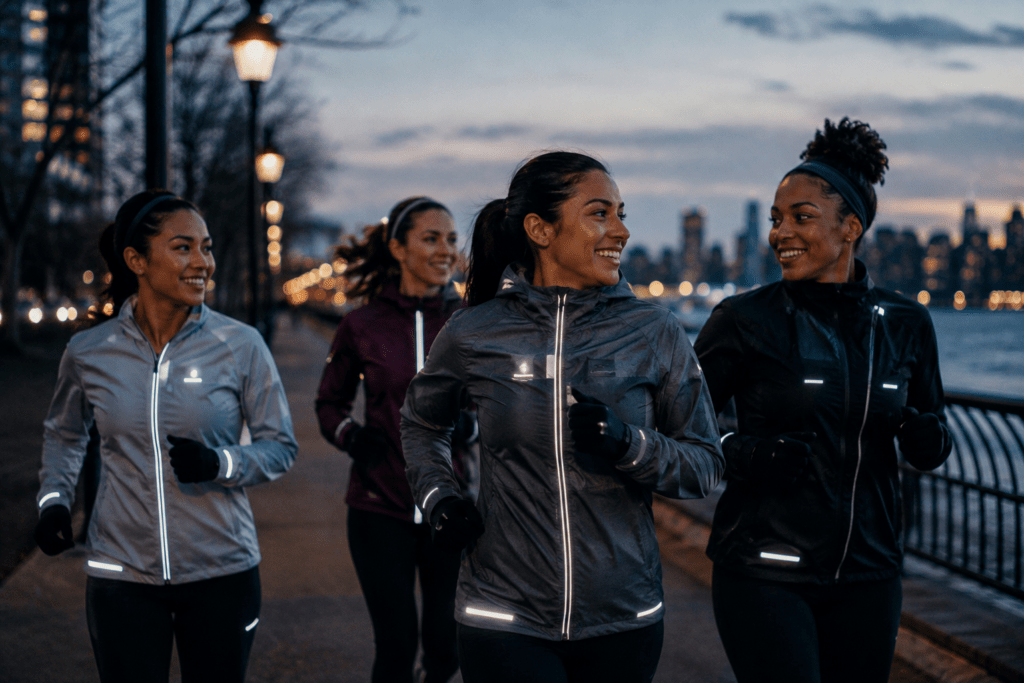
Scroll past the finish-line photos and the more interesting story is what’s happening at the club level — communities forming around identity, safety, and shared experience rather than pace.
Take women-only night running collectives, a category that’s grown specifically around a problem road running has never fully solved: the safety calculus women make every time they consider a run after dark — which route, who to text, whether it’s worth the risk at all.
Groups built around this aren’t chasing personal bests; they’re built so nobody has to make that calculation alone. Elsewhere, you’ll find run clubs organizing mental health check-ins mid-route, fundraising together, or built specifically around queer runners, runners of color, new parents, or older athletes who’ve found in group running a sense of expression that goes well beyond exercise.
That’s the part the aesthetic finish-line photo never captures: the dark mornings, the group chat that gets you out the door, the person who slows down to stay with you at kilometer 18.
The run is almost incidental. What people are actually showing up for is who they get to do it with.
What Group Running Actually Does for Your Fitness
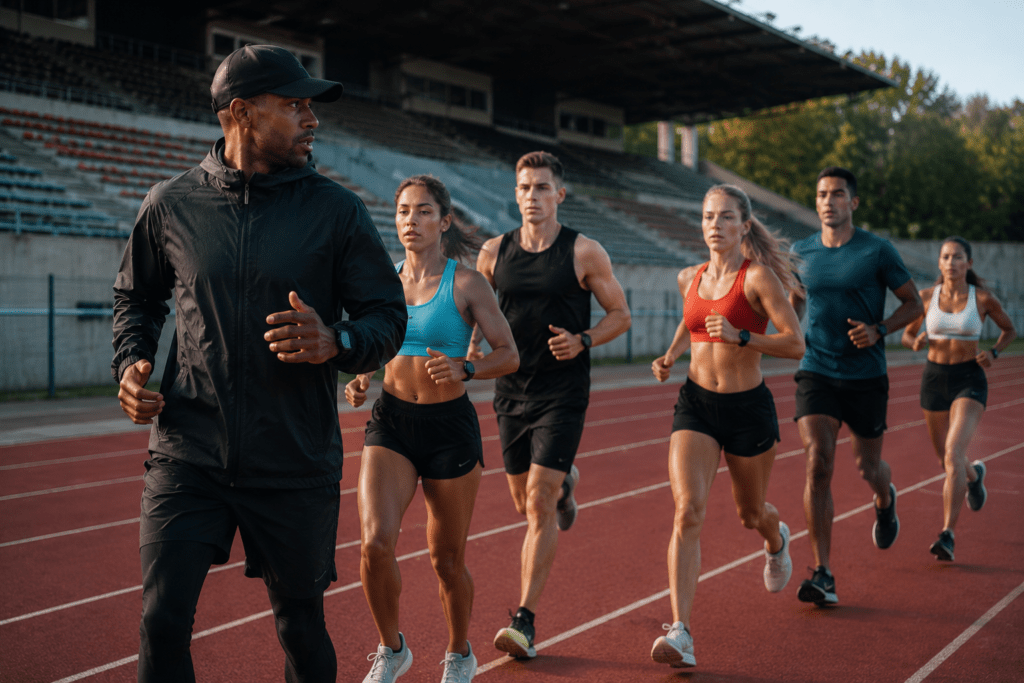
The social case for run clubs is well documented at this point, but there’s a training upside too.
- Pacing partners make hard miles easier. A long run at conversational pace feels shorter when there’s actually someone to talk to.
- You’ll do workouts you’d otherwise skip. Structured sessions — track intervals, tempo runs, hill repeats — are far harder to bail on when a coach and a group are waiting.
- Shared effort builds mental toughness. Pushing through discomfort next to someone hitting the same wall makes it easier to push through your own.
- Groups increase training volume. Strava’s data backs this up directly: runs done in groups of ten or more average roughly 40% longer than solo efforts.
How to Find the Right Run Club for You
Not every club is the same, and the right fit matters more than the name on the T-shirt.
- Start at your local running store. Most specialty stores host free, no-commitment weekly group runs with a wide range of paces — a low-stakes way to test the waters.
- Search Strava, Meetup, and Instagram. Strava’s club directory and local Facebook groups are the fastest way to see what’s actually happening near you, including pace, distance, and vibe.
- Try more than one before committing. Go to two or three different groups. Notice how organizers handle mixed paces and whether newcomers actually get welcomed or just tolerated.
- Ask what happens after the run. Coffee, breakfast, a beer — the post-run ritual is often the actual reason people keep coming back.
If you’re not sure whether you’re after a purely social scene or a more structured training group, it’s worth being honest with yourself about your current mileage and goals before you pick — a beginner-friendly social club and a competitive marathon-training pack are very different commitments.
What to Wear to Your First Run
You don’t need much.
A moisture-wicking top, shoes you’ve already broken in (never debut new shoes on a group run), and weather-appropriate layers are enough. Nobody is grading your kit — showing up is the only real requirement.
FAQs
Most are. The majority operate as informal, volunteer-run meetups with no membership fee, often anchored to a running store, park, or café.
No. Most clubs run in pace groups or use a run-walk structure so people of different abilities can stay together. Trying a few different clubs will help you find one that matches your pace and goals.
Check Strava’s club directory, search Meetup or Instagram for your city plus “run club,” or ask at a local running specialty store — most host or know about weekly group runs.
Generally, yes. Many are specifically designed to welcome new runners, with pacers who hang back with slower groups and no qualifying time or distance to join.
Related Posts


Stay Informed With the Latest & Most Important News
Previous Post
Next Post









Advertisement