























Now Reading: Electrolytes vs Sports Drinks: What Your Body Actually Needs
-
01
Electrolytes vs Sports Drinks: What Your Body Actually Needs


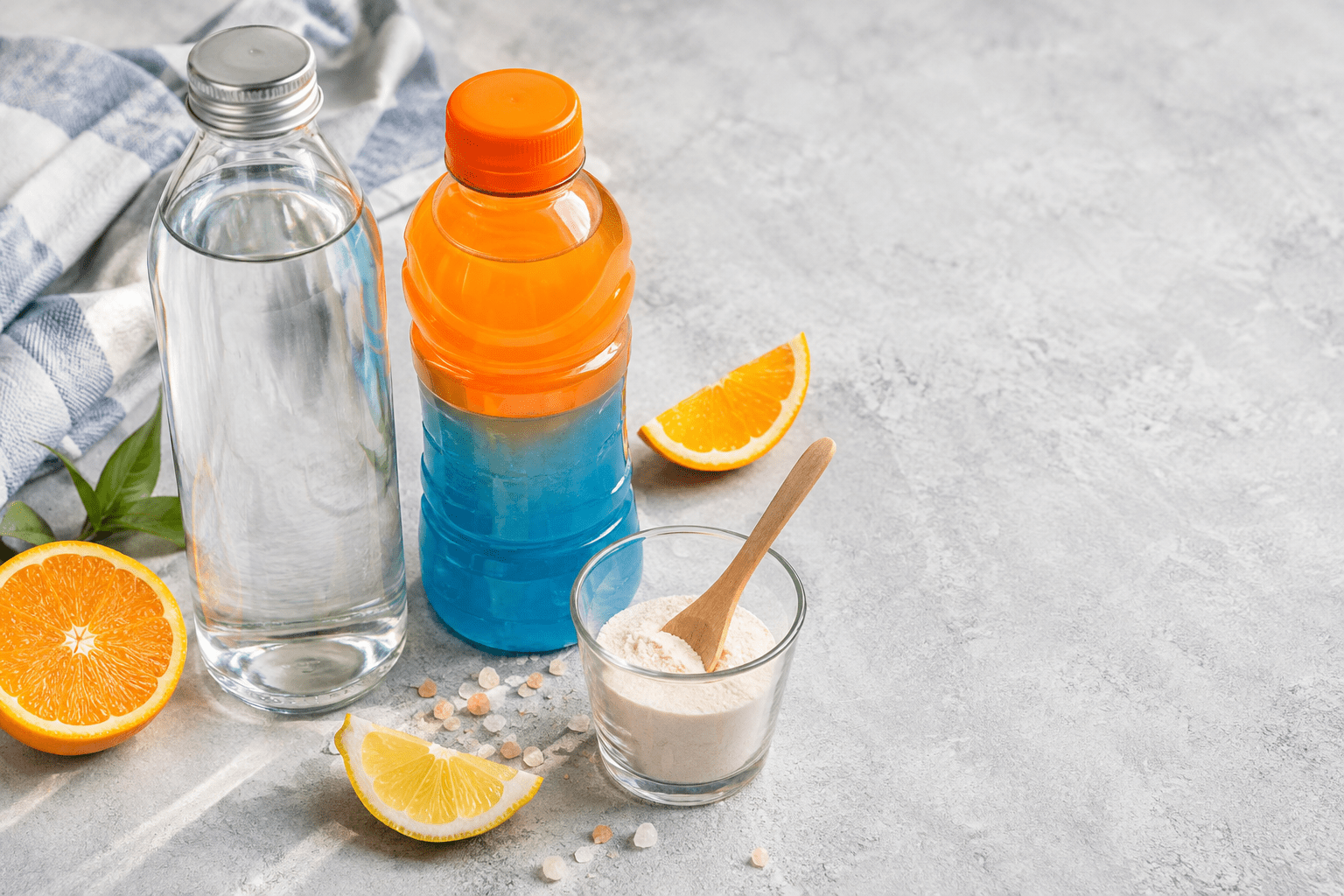
Walk down any beverage aisle and you’ll see the words “electrolytes” and “hydration” slapped on everything from neon-colored sports drinks to plain flavored water. It’s easy to assume they’re interchangeable.
They’re not — and mixing them up can mean you’re either under-fueling a hard workout or drinking unnecessary sugar and calories on a day you never needed them.
Here’s the simple version: electrolytes are minerals your body needs; sports drinks are products that combine electrolytes with sugar for energy.
One is a nutritional requirement. The other is a fueling tool. Knowing which one your body actually needs — and when — is the difference between hydrating smart and just following marketing.
Table of contents
- What Are Electrolytes, Exactly?
- What Sports Drinks Actually Are
- Electrolytes vs Sports Drinks: The Core Differences
- The Science of Absorption: Why Tonicity Matters
- When Your Body Actually Needs Which One
- How to Calculate Your Own Sweat Rate
- Popular Electrolyte and Sports Drinks, Compared
- Sugar: When It Helps and When It Hurts
- Why Kids Need a Different Approach
- The Overhydration Risk: Hyponatremia
- Who Might Need More Electrolytes Than Average
- A Simple Homemade Electrolyte Drink
- Frequently Asked Questions
- The Bottom Line
What Are Electrolytes, Exactly?
Electrolytes are minerals that carry an electrical charge when dissolved in fluid.
That charge is what allows your nerves to fire, your muscles to contract, and your heart to beat in a steady rhythm. The main electrolytes your body relies on are:
- Sodium — regulates fluid balance and drives water absorption in the intestines
- Potassium — supports muscle contraction and nerve signaling
- Chloride — works alongside sodium to maintain fluid balance
- Magnesium — involved in muscle function and energy metabolism
- Calcium — supports muscle contraction, nerve transmission, and bone health
Your body regulates blood levels of these minerals tightly.
Healthy kidneys excrete the excess when you take in too much and conserve them when supplies run low.
That’s why most people who eat a varied diet — fruits, vegetables, dairy, nuts, whole grains, lean protein — get enough electrolytes without ever thinking about it. Milk, orange juice, coconut water, and broths are all naturally rich in electrolytes.
The trouble starts when you lose fluid faster than you can replace it: heavy sweating, vomiting, diarrhea, or several hours of intense exercise.
Sweat isn’t just water — it carries sodium, potassium, and chloride with it. Replacing only the water and skipping the minerals can dilute the electrolytes still in your system, which is part of what makes electrolyte-aware rehydration matter during long or hot training sessions.
What Sports Drinks Actually Are
Sports drinks aren’t a separate category of nutrient — they’re a delivery system.
A traditional sports drink like Gatorade or Powerade typically contains water, electrolytes (mainly sodium and potassium), added sugar, and often artificial colors or flavors.
They were developed decades ago for endurance athletes training for hours in the heat, where both fluid and fast-digesting carbohydrate were needed to sustain performance.
Over time, marketing expanded the audience far beyond that original use case. Today sports drinks are sold to casual gym-goers, desk workers, and kids at recreational practices — situations where the extra sugar often isn’t doing anything useful.
That’s not to say sports drinks are “bad.” Their formulation makes sense for:
- Endurance events and long training sessions
- Situations where carbohydrate fueling is genuinely needed
- Competition days requiring rapid energy replacement
It makes far less sense for a 30-minute walk, a light yoga class, or all-day sipping at a desk, where the added sugar becomes extra calories with no performance benefit.
Electrolytes vs Sports Drinks: The Core Differences
| Pure Electrolytes | Traditional Sports Drinks | |
|---|---|---|
| Main purpose | Replace lost minerals | Replace minerals and provide fuel |
| Sugar content | None to minimal | Often high (11–21g+ per serving) |
| Calories | Low to zero | Moderate to high |
| Best for | Short-to-moderate activity, everyday hydration, illness recovery | Endurance exercise over 60–90 minutes, high-heat competition |
| Common formats | Powders, tablets, unsweetened drops | Ready-to-drink bottles, powders |
| Examples | LMNT, Nuun, unsweetened electrolyte tablets, DIY salt-and-citrus mixes | Gatorade, Powerade, Gatorade Endurance |
The Science of Absorption: Why Tonicity Matters
Not all electrolyte and sports drinks hydrate at the same speed, and the reason comes down to a concept called tonicity — how concentrated a drink is compared to your blood (roughly 280–290 milliosmoles per kilogram).
- Hypotonic drinks are less concentrated than blood. They’re absorbed quickly and are ideal when you need fluid without much carbohydrate — think light activity or all-day sipping. Most low-sugar electrolyte waters fall here.
- Isotonic drinks are similarly concentrated to blood. This is the classic sports-drink zone (roughly 6–8% carbohydrate), balancing decent hydration speed with a real energy contribution. Gatorade and Powerade are typically isotonic.
- Hypertonic drinks are more concentrated than blood — think juices, some high-sodium electrolyte mixes, and energy gels. These deliver a lot of energy or minerals but are absorbed more slowly and can occasionally cause stomach discomfort if consumed too fast during exercise.
The takeaway: a very high-sugar or very high-sodium drink isn’t automatically “better” for hydration. If your priority is getting fluid into your system fast, a more diluted, hypotonic option often wins. If your priority is fueling a long effort, a moderately concentrated isotonic or hypertonic drink makes more sense.
When Your Body Actually Needs Which One
Your hydration needs scale with the duration, intensity, and heat of what you’re doing — not with what’s trending on social media.
Under 60 minutes, moderate intensity: Plain water is enough. Replace any lost minerals through your next regular meal.
60–90+ minutes, or high intensity: An electrolyte or isotonic sports drink helps maintain sodium levels and stamina, especially in heat or humidity.
Extreme heat, heavy sweating, or known “salty sweater”: Prioritize a drink with meaningful sodium content — this is where higher-sodium electrolyte mixes are actually justified.
Illness or fluid loss (vomiting, diarrhea, heavy alcohol intake): Oral rehydration solutions or electrolyte drinks help restore fluid and mineral balance faster than water alone.
Everyday hydration (desk work, errands, light movement): Water and food are sufficient for almost everyone. Added sugar and calories here provide no real benefit.
Post-workout recovery: A combination of electrolytes and carbohydrate — from food or a drink — supports glycogen replenishment and recovery.
How to Calculate Your Own Sweat Rate
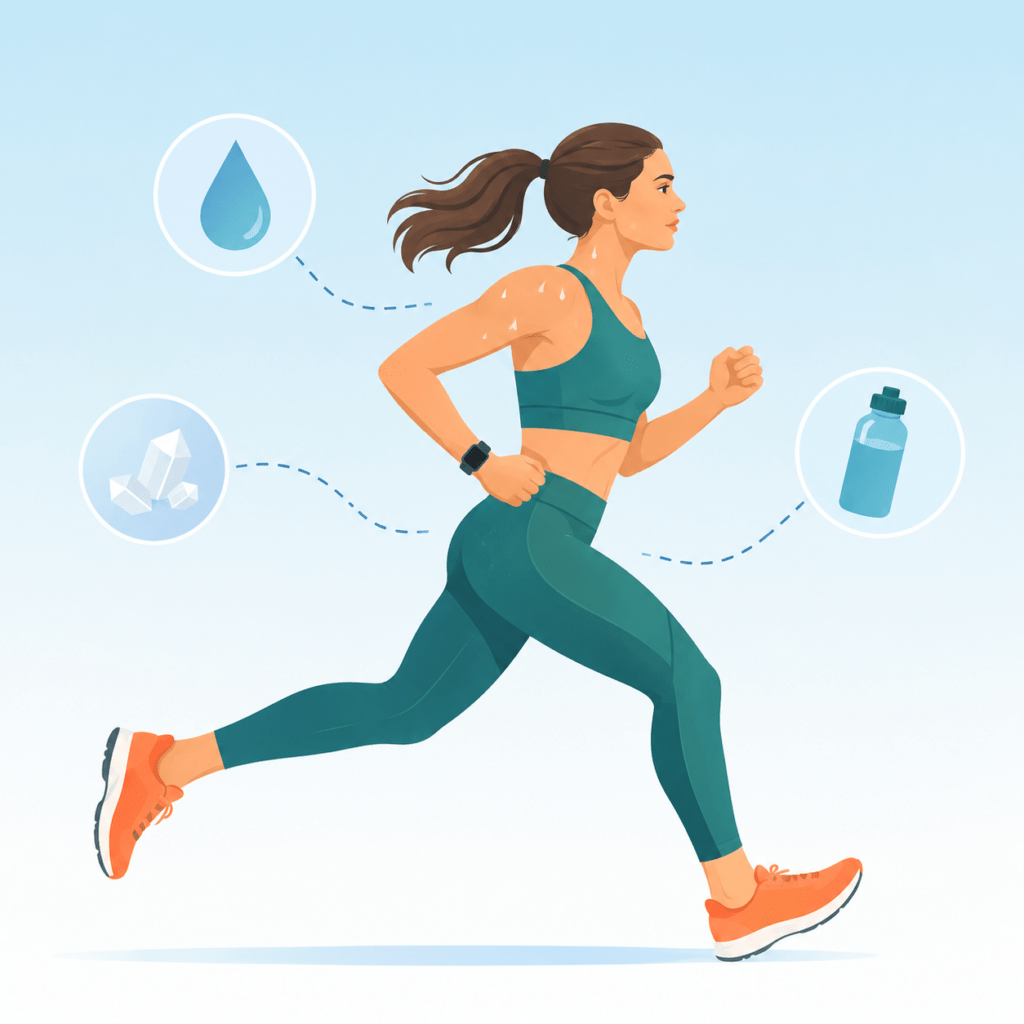
Instead of guessing, athletes training regularly in heat or for long durations can estimate how much fluid they actually lose:
- Weigh yourself (in minimal clothing) immediately before exercise.
- Weigh yourself again immediately after, subtracting any fluid you drank during the session.
- Convert the weight lost to fluid ounces (1 pound ≈ 16 oz) and add back any fluid you drank during the workout.
- Divide by the duration of exercise in hours to get your hourly sweat rate.
Most people lose somewhere between 16 and 48 ounces (about 0.5–1.5 liters) of sweat per hour, though this varies widely with body size, heat, humidity, and how heat-acclimated you are. Knowing your number turns “drink when thirsty” into an actual plan, especially for repeat training in the same conditions.
Popular Electrolyte and Sports Drinks, Compared
Here’s how some of the most searched-for hydration products differ on the numbers that matter most — sodium and sugar per serving:
| Product | Sodium (approx.) | Sugar (approx.) | Best fit |
|---|---|---|---|
| LMNT | ~1,000 mg | 0g | Heavy sweaters, keto/low-carb dieters, long hot workouts |
| Liquid I.V. | ~500 mg | ~11g | Fast rehydration when carbs are also useful (illness, travel, longer exercise) |
| Gatorade (original) | ~150–160 mg | ~21g (per 20 oz) | Endurance exercise over 60–90 minutes needing fuel |
| Nuun | ~300 mg | ~1g | Light-to-moderate activity, all-day sipping |
| Pedialyte | Formulated close to oral rehydration solution ratios | Low | Illness recovery, medically-oriented rehydration |
Exact numbers vary by flavor and formula, and brands update their products, so it’s worth checking the current label before buying. The pattern to notice: the higher the sodium, the more suited a product is to heavy, prolonged sweating rather than daily sipping — and the higher the sugar, the more it’s built for fueling rather than pure hydration.
Sugar: When It Helps and When It Hurts
Sugar in a hydration drink isn’t inherently a problem — it’s about matching the dose to the activity.
Sugar helps when:
- Training or competing longer than 90 minutes
- You need fast-available carbohydrate during an endurance event
- You’re replenishing glycogen right after a hard session
Sugar becomes unnecessary — or counterproductive — when:
- The workout is under 60 minutes
- It’s a youth sports practice
- You’re hydrating in heat without a real fueling need
- You’re prone to stomach upset during exercise
- You’re just trying to stay hydrated through a normal day
Regularly drinking sugar-sweetened sports drinks outside of genuine endurance training has been linked to unnecessary weight gain, dental problems, and poor overall nutrition quality, particularly in adolescents who may not need the extra calories a sports drink provides for casual practices.
Why Kids Need a Different Approach
Youth athletes aren’t just small adults. They tolerate less fluid volume at once, are more sensitive to sugar spikes, and are more prone to both gastrointestinal upset and heat illness. Because of this, pediatric and sports-medicine guidance generally reserves sports drinks for young athletes training intensely or for extended periods, favoring water or low-sugar electrolyte options for typical practices.
The Overhydration Risk: Hyponatremia
More water isn’t automatically safer. Drinking large volumes of plain water without replacing sodium — especially during long endurance events — can dilute blood sodium levels to a dangerous point, a condition called hyponatremia.
Symptoms range from nausea, headache, and swelling to confusion and, in severe cases, seizures. Confusion or disorientation during or after exercise is a medical emergency and needs immediate attention.
This is genuinely rare in the general population, since healthy kidneys are efficient at excreting excess water.
The higher-risk groups are endurance athletes who over-drink water during multi-hour events and people with certain underlying medical conditions. The practical takeaway: don’t chug large volumes of plain water during long, sweaty efforts — alternate with an electrolyte drink instead.
Who Might Need More Electrolytes Than Average
Certain situations increase electrolyte needs beyond typical daily intake:
- Endurance training or competing longer than 60–90 minutes
- Heavy sweating in hot or humid conditions
- Illness involving vomiting or diarrhea
- Gastrointestinal surgery or conditions like Crohn’s disease or ulcerative colitis
- Postural orthostatic tachycardia syndrome (POTS)
- Diuretic medications
- Excessive alcohol intake
- Following a very low-carb or ketogenic diet, which naturally increases sodium excretion
If you fall into one of these categories regularly, a higher-sodium electrolyte product (rather than a sugary sports drink) is usually the more targeted solution.
A Simple Homemade Electrolyte Drink
You don’t need a branded product to replace electrolytes effectively. A basic homemade version (makes about 1 liter):
- 3½ cups water
- ½ teaspoon salt
- 2–3 tablespoons honey or sugar
- 4 oz unsweetened orange juice or coconut water
The small amount of sugar isn’t just for taste — pairing glucose with sodium actually improves how efficiently your intestines absorb both the fluid and the minerals, which is the same principle behind clinical oral rehydration solutions.
Frequently Asked Questions
Are electrolytes and sports drinks the same thing?
No. Electrolytes are minerals (sodium, potassium, chloride, magnesium, calcium) your body needs for fluid balance and muscle function. Sports drinks are products that combine electrolytes with sugar, primarily to fuel longer or more intense exercise.
Do I need an electrolyte drink for a normal workout?
Usually not. For sessions under about 60 minutes at moderate intensity, water is enough, and you can replace any lost minerals at your next meal.
Is it bad to drink sports drinks every day?
For most people, yes — daily sports drink consumption without matching activity levels adds unnecessary sugar and calories. Save sports drinks for genuinely long or intense training days, and choose water or a low-sugar electrolyte option the rest of the time.
Can drinking too much water be dangerous?
Yes, though it’s uncommon. Excessive water intake without electrolyte replacement — particularly during long endurance events — can cause hyponatremia, a potentially serious drop in blood sodium.
What’s the difference between isotonic, hypotonic, and hypertonic drinks?
It refers to how concentrated a drink is compared to blood. Hypotonic drinks are more dilute and absorb fastest; isotonic drinks match blood concentration and balance hydration with energy; hypertonic drinks are more concentrated and deliver more energy but absorb more slowly.
Do kids need sports drinks for practice?
Generally not for typical practices. Sports drinks are usually reserved for young athletes training intensely or for extended periods; water or a low-sugar electrolyte option is preferred otherwise.
The Bottom Line
Electrolytes are a nutritional need. Sports drinks are a fueling tool built around that need, with sugar added for energy.
For most day-to-day hydration, water and a balanced diet cover it. For long, intense, or hot workouts — or for recovering from illness — matching the right electrolyte concentration and sugar content to your specific situation, rather than defaulting to whatever’s most heavily marketed, is what actually supports performance and safety.
Related Posts
Stay Informed With the Latest & Most Important News
Previous Post
Next Post









Advertisement