
















Now Reading: Tai Chi Walking: The Slow-Movement Trend Everyone’s Trying
-
01
Tai Chi Walking: The Slow-Movement Trend Everyone’s Trying


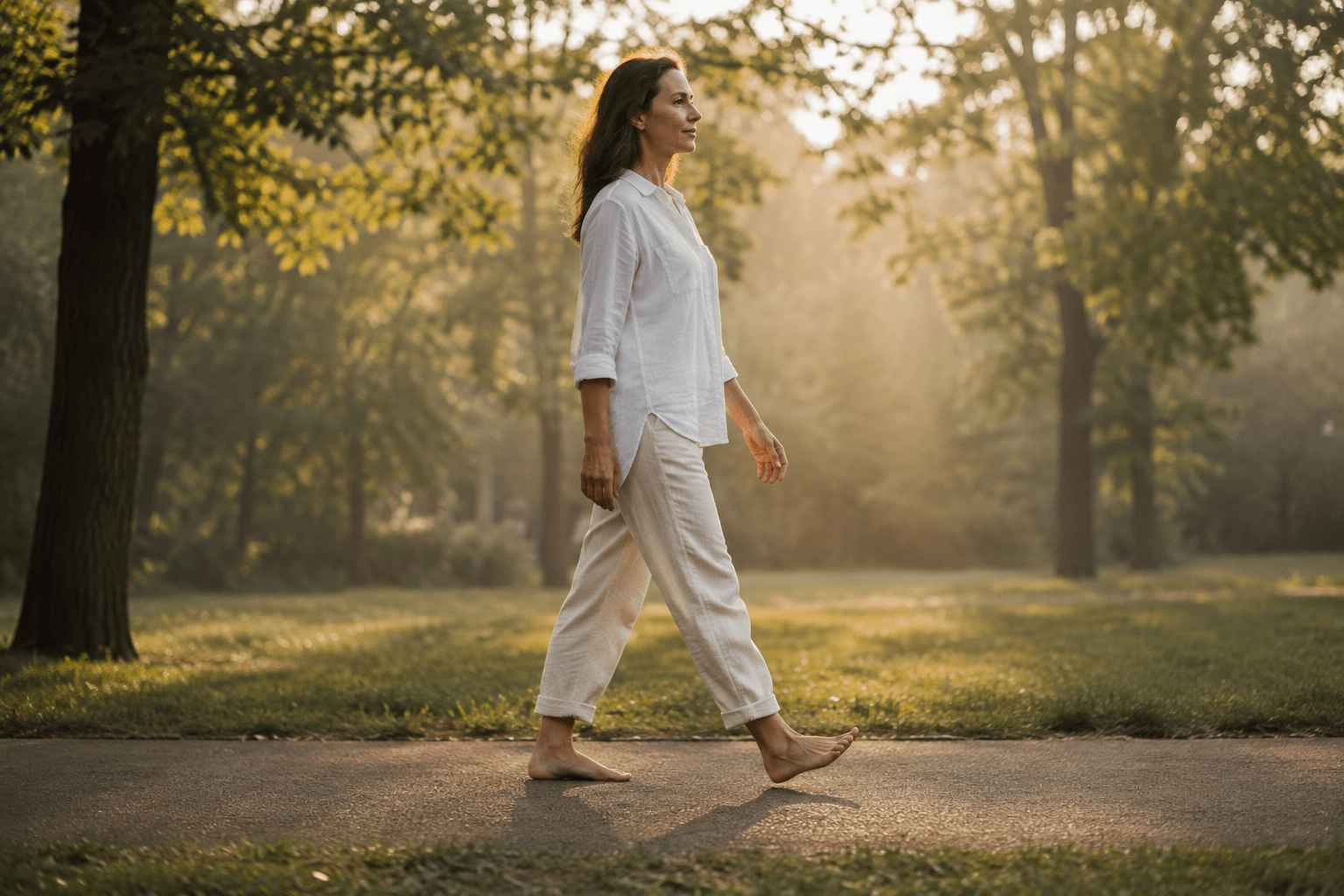
Scroll through TikTok or Instagram right now and you’ll see it: someone in a hallway or a park, moving at a pace so slow it looks almost like a video buffering. No music, no sweat, no step counter in sight.
It’s called tai chi walking, and in 2026 it has quietly become one of the biggest wellness trends online — outpacing nearly every other fitness fad, according to search-interest data tracked by health publications.
Under hashtags like #taichiwalking, people are posting “before and after” progress videos, crediting the practice with everything from better balance to a calmer nervous system.
It arrives at an interesting moment.
The 10,000-steps benchmark — itself a 1965 marketing slogan from a Japanese pedometer brand rather than a scientific finding — has lost its grip as the default fitness goal, and a wave of alternative walking trends (12-3-30, 6-6-6, Nordic walking) has moved in to fill the gap.
Tai chi walking stands apart from most of them because it isn’t about covering distance or burning calories at all. It’s about how you move, not how far or how fast.
So is this actually a meaningful practice, or just old wisdom repackaged for the algorithm?
The honest answer sits in between: the underlying technique is genuinely old and well studied, but the viral, bite-sized version circulating online hasn’t been tested in isolation.
Here’s what’s actually behind the trend.
Table of contents
What Is Tai Chi Walking?
Tai chi walking is a slow, deliberate stepping technique drawn from tai chi chuan (taijiquan), the centuries-old Chinese martial art built around gentle, flowing movement, controlled breathing, and focused attention.
Rather than practicing a full tai chi form — with its sequence of arm movements, turns, and stances — tai chi walking isolates just the stepping and weight-transfer mechanics for focused, repeatable training.
The core difference from ordinary walking comes down to one word: momentum.
When you walk normally, you lean forward and let gravity carry you into the next step, with weight shared between both feet through most of the transition.
In tai chi walking, you consciously shift 100% of your weight onto one leg — traditionally called the “full” or “substantial” leg — before the other, completely “empty” leg moves at all.
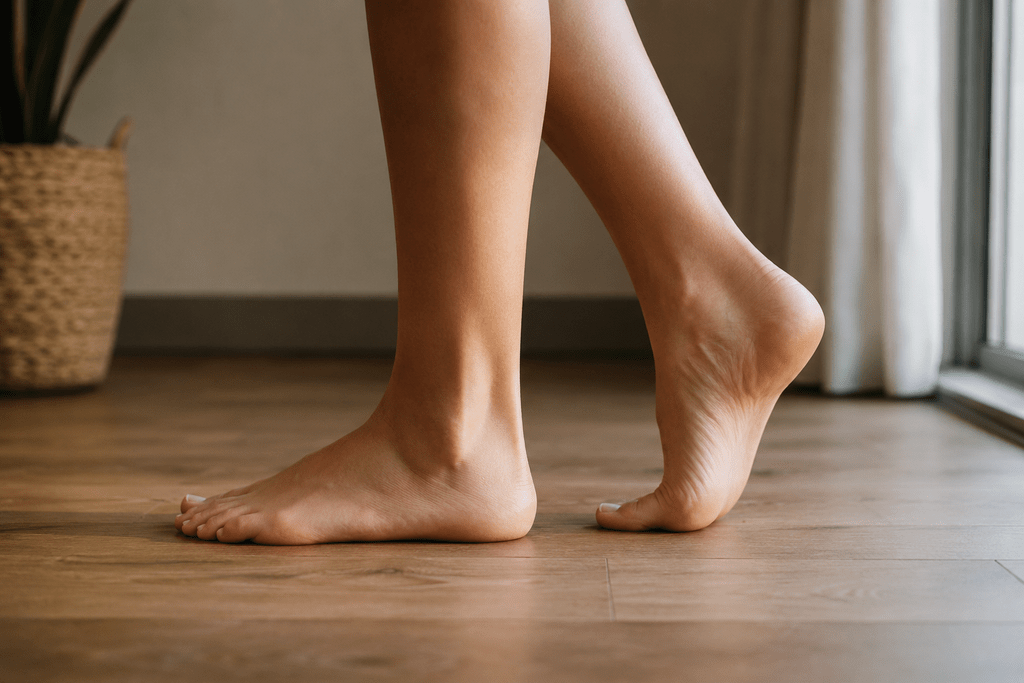
That empty foot should feel light enough to lift without any effort. Only once it’s truly weightless do you step forward, placing the heel down first and rolling gradually onto the whole foot as the weight transfers across.
Add in coordinated, unforced breathing (often called dan tian breathing in the tai chi tradition) and a tall, relaxed posture, and a simple walk becomes what practitioners describe as “moving meditation.”
As Dr. Paul Lam, founder of the Tai Chi for Health Institute, describes it, the practice combines mindful weight transfer, balance, upright posture, and awareness into a daily habit that also serves as an entry point into fuller tai chi training.
Why It’s Suddenly Everywhere
A few things converged to push tai chi walking into the mainstream in 2026.
First, there’s fatigue with high-intensity fitness culture — a growing appetite for movement that doesn’t leave people exhausted, following the same cultural shift that produced “cozy cardio” and other low-key workout trends.
Second, there’s the longevity conversation: as more people focus on healthspan rather than just cardio numbers, balance, mobility, and independence in later life have become fitness goals in their own right, not afterthoughts.
Tai chi master and author Leda Elliott, who has watched the trend spread online, points to a simpler explanation: people are drawn to practices that feel grounding without demanding equipment, a studio, or special clothing — you can practice it in a hallway. That low barrier to entry, combined with satisfying “slow-mo” video content, is a near-perfect match for how wellness trends spread on social platforms.
It’s also worth noting what tai chi walking is not competing directly with.
Unlike the 12-3-30 treadmill trend or the 6-6-6 walking method, which are built around pace, incline, and duration for fat-burning, tai chi walking makes no claims about calorie burn or cardio conditioning.
It’s a balance-and-nervous-system practice riding on the coattails of the broader walking-trend boom — and that distinction matters when deciding whether it’s the right fit for your goals.
The Science: What Research Actually Shows
This is where nuance matters.
Tai chi walking, as a bite-sized viral format, hasn’t been studied as its own intervention.
Nearly all the clinical evidence comes from research on classical, structured tai chi programs — typically involving one to four sessions a week over several weeks or months.
That’s an important distinction: the benefits below are well documented for tai chi practiced regularly and properly, not necessarily for a few minutes of slow stepping copied from a video.
With that caveat in place, the research base for tai chi itself is unusually solid for a mind-body practice:
- Fall prevention. A randomized controlled trial in JAMA Internal Medicine (2018), involving 670 adults aged 70+, found a therapeutic tai chi program outperformed both multimodal exercise and conventional stretching at preventing repeat falls. A meta-analysis in the Journal of the American Geriatrics Society, pooling ten randomized studies, found tai chi could cut short-term fall rates by roughly 43%, and injurious falls by about 50%, compared with other interventions.
- Balance and neuromuscular response. A 2012 study in the New England Journal of Medicine found tai chi improved balance and reduced falls in Parkinson’s patients, outperforming traditional strength training in that trial — an effect partly linked to faster neuromuscular reaction times after sustained practice.
- Balance in adults with chronic conditions. A 2025 study in the Journal of Diabetes Investigation found tai chi chuan outperformed fitness walking at improving balance and reducing fall risk in older adults with type 2 diabetes and mild cognitive impairment over 36 weeks.
- Sleep. A 2025 review in BMJ Evidence-Based Medicine, covering 22 clinical trials, found tai chi — alongside yoga, walking, and running — was associated with meaningfully reduced insomnia symptoms.
- Arthritis pain and stiffness. Research in the Journal of Rheumatology found 12 weeks of tai chi reduced pain by about 35% and stiffness by 29% in older adults with arthritis, while improving the ability to perform daily tasks like climbing stairs.
- Stress and the nervous system. The slow pace and coordinated breathing are associated with activating the parasympathetic nervous system — the body’s “rest and digest” mode — in contrast to higher-intensity training, which tends to raise cortisol in the short term. Researchers caution, though, that a complex mind-body practice like tai chi doesn’t always show up cleanly in quantitative measures, so absence of a strong effect in one study doesn’t mean no effect exists.
The Centers for Disease Control and Prevention recognizes structured tai chi programs (such as Tai Chi for Arthritis and Fall Prevention) as an evidence-based fall-prevention intervention — a notable stamp of approval for a practice most people still associate with retirees doing slow-motion moves in the park.
What the research does not show is that a five-minute viral clip of “tai chi walking” delivers the same outcomes as a structured, supervised program practiced for months.
Dr. Christopher Gold, an internal medicine physician at Mount Sinai, notes that while research on tai chi broadly shows improvements in balance, functional mobility, and quality of life, the walking-only version specifically has been studied far less.
Tai Chi Walking vs. Regular Walking
| Regular Walking | Tai Chi Walking | |
|---|---|---|
| Weight transfer | Momentum-based, passive | Deliberate, complete 100% shift |
| Foot placement | Automatic | Heel-first, consciously controlled |
| Pace | Natural, efficient | Slow, unhurried |
| Balance demand | Low — both feet often share weight | High — single-leg stability at every step |
| Breathing | Automatic | Coordinated with each step |
| Primary goal | Getting somewhere; cardio | Balance, posture, body awareness, calm |
How to Try Tai Chi Walking
You don’t need equipment, a class, or even much space — a clear stretch of floor a few meters long is enough.
- Stand tall. Feet shoulder-width apart, weight even between both feet, knees soft (never locked), spine upright as if a string is gently lifting the crown of your head.
- Shift your weight fully onto one leg. Feel it “sink” into that foot. The other foot should become light enough to lift without effort — a true “empty” foot, not just partially weighted.
- Step slowly with the empty foot. Heel touches down first, then the rest of the foot lowers gradually. It’s still carrying no weight at this point.
- Transfer your weight forward gradually onto the new front foot, in one smooth, continuous motion — not a sudden drop.
- Repeat on the other side, breathing naturally and letting your inhale and exhale settle into rhythm with the movement rather than forcing it.
Aim for 5–10 minutes to start, ideally in a quiet space free of tripping hazards.
Ten to fifteen minutes daily is a reasonable target once the movement feels familiar. Most people take at least three to five seconds per step — if you’re moving faster than that, you’re likely rushing past the balance training the technique is meant to provide.
Common Mistakes to Watch For
- Rushing the pace — the slowness is the point, not an inconvenience.
- “Double-weighting” — leaving 10–20% of your weight on the supposedly empty foot instead of fully transferring it.
- Looking down at your feet, which disrupts posture and balance.
- Locking the knees or letting them travel past the toes.
- Holding your breath or tensing the shoulders.
Mild fatigue in the standing leg is normal; sharp or joint pain is not — that’s a sign to shorten the session or ease the stance.
Who Should — and Shouldn’t — Jump In
Tai chi walking is low-impact and broadly accessible, which is part of its appeal. It tends to be particularly useful for:
- Older adults concerned about falls or balance — this is where the clinical evidence is strongest.
- People managing arthritis or joint stiffness, thanks to its gentle, controlled range of motion.
- Anyone dealing with everyday stress or mild anxiety, given its link to parasympathetic nervous system activation.
- People recovering from injury or surgery who need very low-impact movement, ideally with guidance from a physical therapist.
It’s not a substitute for cardiovascular exercise or strength training — its energy expenditure is roughly comparable to brisk walking, not a workout in the conventional sense. And anyone with significant balance disorders, recent orthopedic surgery, uncontrolled cardiovascular conditions, or a history of dizziness or vertigo should check with a healthcare provider before starting, and ideally learn the technique from a qualified instructor rather than a video alone.
The Bottom Line
Tai chi walking isn’t a miracle, and it isn’t new — it’s a centuries-old training drill that tai chi masters used long before anyone filmed it in a hallway.
What’s genuinely new is the packaging: a low-barrier, five-minutes-a-day version that’s found its way into millions of feeds at exactly the moment people are looking for gentler, more sustainable ways to move.
The scientific support for tai chi in general is real and comparatively strong, especially for fall prevention, balance, and stress regulation.
Whether the viral shortcut delivers the same results as consistent, structured practice is still an open question — but as a low-risk, accessible entry point into mindful movement, it’s easy to see why it’s suddenly everywhere.
Frequently Asked Questions
Is tai chi walking scientifically proven?
The short viral format itself hasn’t been independently studied. What is well documented is the effect of classical, structured tai chi, from which the technique is derived — including benefits for fall prevention, balance, and stress regulation.
How is tai chi walking different from just walking slowly?
Slow walking still relies on momentum and shared weight between both feet. Tai chi walking requires a complete, deliberate weight transfer to one leg before the other foot moves at all, which is what creates the balance-training effect.
How often should you practice it?
Daily practice of 10–15 minutes is a reasonable starting point for beginners; studies on structured tai chi programs typically involve one to four sessions per week over several weeks to months.
Can tai chi walking replace cardio or strength training?
No. Its energy expenditure is roughly comparable to brisk walking, so it’s best treated as a complement to, not a replacement for, dedicated cardiovascular and strength training.
Is it safe for beginners to learn from social media alone?
It’s a reasonable starting point, but alignment mistakes (like double-weighting or knee position) are hard to catch without feedback. A class or a few sessions with a certified instructor can help correct form, especially for anyone with existing joint or balance concerns.

Stay Informed With the Latest & Most Important News
Previous Post
Next Post










Advertisement