




















Now Reading: Community-Driven Fitness: Why Working Out Alone Is Losing Popularity
-
01
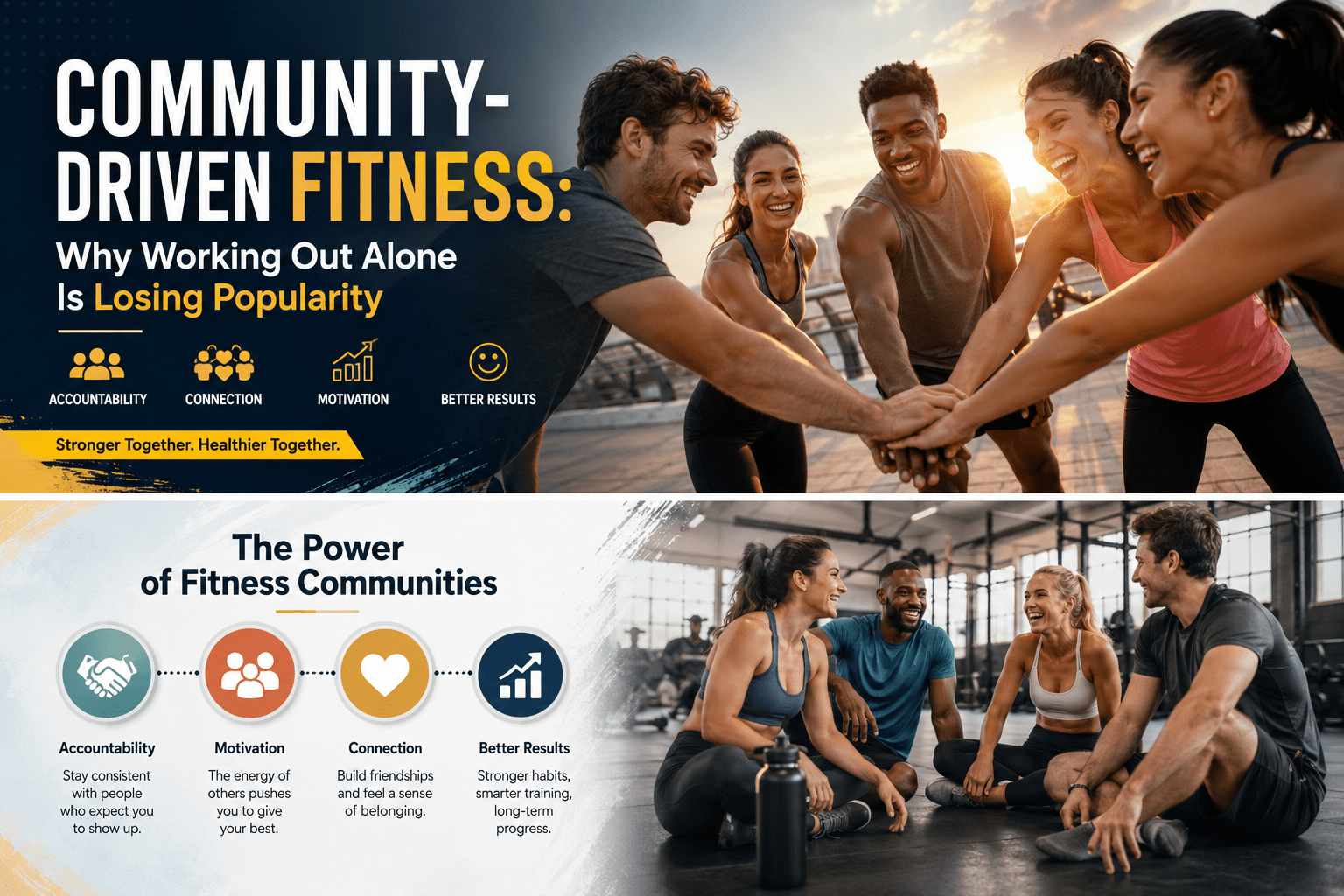
Community-Driven Fitness: Why Working Out Alone Is Losing Popularity


For years, fitness was often treated as a personal journey.
You went to the gym alone, followed a workout video at home, ran with headphones on, or tracked every step without ever speaking to the person next to you.
That approach still works—and for some people, it is exactly what they prefer. But fitness is increasingly becoming more social.
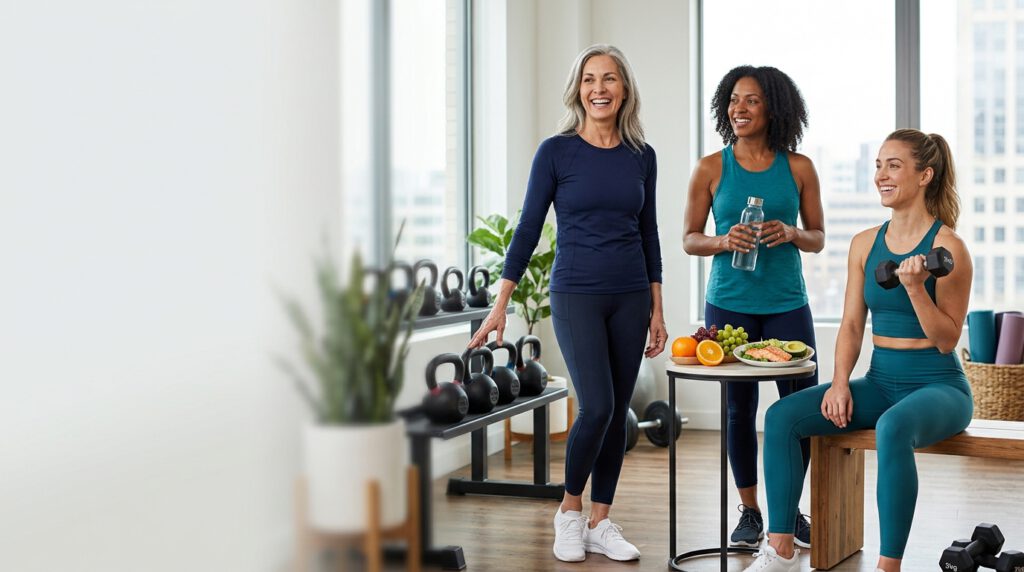
Running clubs, group fitness classes, recreational sports leagues, walking groups, cycling communities, pickleball games, and workout buddies are giving people a new reason to stay active: they are not just exercising; they are connecting.
This shift is part of a broader movement toward community-driven fitness, where social connection, accountability, enjoyment, and physical activity come together.
In fact, the American College of Sports Medicine (ACSM) included Adult Recreation and Sport Clubs among its top fitness trends for 2026 for the first time, pointing to growing interest in activities that combine fitness with fun, flexibility, and social connection.
So, is working out alone really becoming less popular?
Not necessarily. The more accurate story is that people are discovering that fitness does not have to be a solitary experience.
Table of contents
- What Is Community-Driven Fitness?
- Why Working Out Alone Is Losing Its Appeal
- The Rise of Social Fitness
- Why Fitness Communities Can Make Exercise More Sustainable
- The Social Benefits of Working Out Together
- Community Fitness and Mental Well-Being
- Does Group Fitness Actually Work Better Than Working Out Alone?
- The Power of Accountability
- Why the People Around You Matter
- Technology Is Making Fitness More Social
- What If Group Fitness Intimidates You?
- How to Find the Right Fitness Community
- You Don’t Have to Choose Between Solo and Social Fitness
- The Future of Fitness May Be More Connected
- Final Thoughts
What Is Community-Driven Fitness?
Community-driven fitness is an approach to physical activity that combines exercise with social interaction and a shared sense of belonging.
It can take many forms, including:
- Group fitness classes
- Running and walking clubs
- Cycling groups
- Recreational basketball and soccer leagues
- Pickleball clubs
- Hiking groups
- Cross-training communities
- Workout partners
- Online fitness communities
- Local sports platforms and apps
The common factor is simple: you are active alongside other people who share some of your goals or interests.
That social element can make exercise feel less like another task on your to-do list and more like something you genuinely look forward to.
Why Working Out Alone Is Losing Its Appeal
Working out alone is not inherently bad. Solo exercise can be flexible, convenient, affordable, and highly personalized.
The problem is that flexibility can sometimes work against consistency.
1. There Is Less Accountability
When you exercise alone, skipping a workout is easy.
You might tell yourself you’ll train tomorrow because you’re tired, busy, or simply not in the mood. Nobody is waiting for you at the track or expecting you at class.
A workout buddy or fitness group changes that dynamic.
When other people expect you to show up, missing a session becomes more noticeable. The CDC specifically identifies social networks, friendships, buddy systems, and walking or activity groups as forms of social support that can help people start, maintain, or increase physical activity.
That does not mean accountability eliminates every missed workout. It simply adds another reason to keep your commitment.
2. You Have Fewer Decisions to Make
Solo training often means deciding everything yourself.
What should I do today? How many sets? How long should I run? Should I increase the weight? What workout should I follow?
That freedom can eventually create decision fatigue or boredom.
Group fitness can simplify the process. The class has a schedule, the coach provides direction, and the workout already has a structure.
Instead of spending energy deciding whether to exercise, you simply show up and participate.
3. Exercise Can Become Repetitive
Even an effective workout routine can become boring when repeated indefinitely.
Community-based activities introduce variety through different people, challenges, environments, and activities.
A weekly running club, for example, can turn an ordinary run into a social event. A recreational basketball league can provide competition and variety without requiring you to treat every session like a serious training camp.
The activity becomes something you experience rather than something you simply complete.
The Rise of Social Fitness
The growing interest in social fitness is not limited to traditional gyms.
People are finding community in places that may not even look like conventional fitness environments.
A running club can bring together people of completely different fitness levels. A pickleball group can combine recreation and movement. A walking group can provide a low-pressure way for people to become more active.
ACSM’s 2026 fitness trends report specifically highlights adult recreation and sports clubs, including running and cycling clubs and recreational leagues for basketball, soccer, and pickleball. These formats provide structured opportunities to be active outside traditional gym environments.
This matters because not everyone is motivated by lifting heavier weights or chasing a faster personal record.
For some people, fun is the motivation.
For others, it is friendship.
For others, it is simply knowing that someone will notice if they do not show up.
Why Fitness Communities Can Make Exercise More Sustainable
One of the biggest advantages of community fitness is that it can give exercise a social purpose.
You may initially join a running club because you want to improve your fitness. But after a few weeks, you might keep attending because you enjoy seeing the same people every Saturday.
That distinction matters.
Long-term physical activity is not just about knowing that exercise is good for you. It is also about finding activities you can realistically continue doing.
The CDC describes social support as a useful strategy for helping people maintain physical activity, with examples including buddy systems and organized activity groups.
A community can provide several layers of support:
- Accountability: People know when you are there.
- Encouragement: Others can motivate you through difficult sessions.
- Routine: Regular group meetings create structure.
- Belonging: You become part of something bigger than a single workout.
- Enjoyment: Social interaction can make activity more rewarding.
- Shared goals: Progress becomes something you can celebrate together.
The Social Benefits of Working Out Together
Fitness communities can offer something a solo workout cannot easily reproduce: repeated opportunities for human connection.
Exercise naturally creates situations where people cooperate, communicate, encourage one another, and share experiences.
You might celebrate finishing your first 5K with a running group, laugh with teammates after a difficult game, or simply have a conversation with someone while walking.
Over time, these repeated interactions can help turn strangers into familiar faces—and familiar faces into friends.
This is particularly relevant for adults, who may have fewer natural opportunities to make new friends after leaving school or university.
A fitness community provides a built-in environment where social interaction happens around a shared activity.
You do not necessarily have to walk into a room and announce that you are looking for new friends.
You simply show up to exercise.
Community Fitness and Mental Well-Being
The benefits of exercise extend beyond physical health, and social fitness adds another dimension.
Regular physical activity is associated with improvements in mood and overall well-being. But when exercise also includes social interaction, people can gain the psychological benefits of connection, encouragement, and shared accomplishment.
Community activities can provide a sense of belonging and reduce the feeling that you are going through your fitness journey completely on your own.
However, it is important not to oversell this effect. A fitness group is not a substitute for professional mental health care when someone is experiencing a mental health condition.
Instead, community fitness can be viewed as one healthy source of movement, routine, social interaction, and support.
Does Group Fitness Actually Work Better Than Working Out Alone?
This is where the evidence becomes more interesting.
It would be tempting to say that group workouts are always better than solo workouts—but current research does not support such a simple conclusion.
A 2026 systematic review and meta-analysis published in Nature Human Behaviour examined 71 studies involving more than 22,000 participants for physical-activity outcomes, comparing group-based and individual approaches. The researchers found a small advantage for group-based programs in physical activity, but it was not statistically significant. Group and individual approaches were broadly comparable for physical activity and health outcomes.
The researchers did find a significant advantage for group-based approaches in functional outcomes after removing statistical outliers, although the overall picture remains nuanced.
The takeaway is important:
Group fitness is not automatically superior to solo fitness.
Instead, different formats work for different people.
Someone who loves running alone at sunrise may be more consistent without a group.
Someone who repeatedly skips workouts when training alone may thrive in a running club.
The best workout format is often the one that makes it easiest for you to stay active consistently.
The Power of Accountability
Motivation is often treated as the key to fitness success.
But motivation comes and goes.
Accountability can be more dependable.
Imagine two scenarios.
In the first, you plan to run Saturday morning by yourself. When Saturday arrives, you are tired and decide to stay in bed.
In the second, three friends are waiting for you at 8 a.m.
The workout has not magically become easier—but now there is a social commitment attached to it.
That small difference can matter.
The CDC recognizes buddy systems and activity groups as practical forms of social support that can help people maintain physical activity.
The goal is not to pressure yourself into exercising.
It is to create an environment where showing up becomes easier.
Why the People Around You Matter
Your environment can influence your behavior.
When you regularly spend time with people who enjoy being active, physical activity becomes a normal part of your social life.
You may hear about a weekend hike, get invited to a recreational game, discover a new running route, or decide to try an activity because someone in your group enjoys it.
That is one of the hidden strengths of fitness communities: they can make being active feel normal rather than exceptional.
Instead of asking, “Should I work out today?” exercise becomes something your community simply does.
Technology Is Making Fitness More Social
Community-driven fitness is not limited to physical spaces.
Technology has made it much easier to find people with similar interests.
Fitness and sports platforms can help users:
- Discover local games and events
- Find workout partners
- Join sports leagues
- Organize matches
- Track shared challenges
- Communicate with teammates
- Participate in online fitness communities
The 2026 research on group versus individual physical activity also included online and virtual group formats, showing that community-based activity is no longer limited to people meeting in the same physical location.
That creates opportunities for people who may not feel comfortable immediately joining an in-person group.
You can start online, find people with similar interests, and eventually transition into real-world activities—or remain part of a digital community.
What If Group Fitness Intimidates You?
There is another side to community-driven fitness that should not be ignored: group settings can be intimidating.
Walking into an unfamiliar gym or class can feel uncomfortable, especially if you are new to exercise.
You may wonder:
- Will everyone be fitter than me?
- Will people judge me?
- Will I know what to do?
- What if I cannot keep up?
- Will the coach pay attention to beginners?
These concerns are completely understandable.
The solution is not simply to “get over it.”
Instead, look for a community with a culture that matches your needs.
Do a Quick Culture Check
Before joining a gym or fitness group, look at its website and social media.
Do you see a wide range of people?
Are beginners represented?
Do coaches appear to provide guidance?
Does the environment look welcoming?
Are community events and social activities mentioned?
Those details can tell you a lot about what the experience may feel like.
Ask Questions Before Joining
A good fitness community should be willing to explain how its classes work.
Ask about:
- Beginner options
- Class sizes
- Coaching
- Fitness requirements
- Modifications
- Trial sessions
- Scheduling
- Community events
Pay attention to how they respond.
A welcoming community will generally be interested in understanding your goals and helping you determine whether the environment is appropriate for you.
How to Find the Right Fitness Community
You do not need to join the first group you discover.
Start by asking yourself what you actually enjoy.
Choose an Activity You Like
If you hate running, joining a running club because it is popular probably will not solve your consistency problem.
Consider:
- Walking
- Running
- Cycling
- Swimming
- Strength training
- Yoga
- Pilates
- Pickleball
- Basketball
- Soccer
- Hiking
- Dance
- Recreational leagues
The best community is built around an activity you are willing to keep doing.
Consider Your Social Preferences
Not everyone wants a loud, highly competitive environment.
Some people prefer small groups.
Others enjoy large classes.
Some want friendly competition, while others simply want conversation and encouragement.
Your ideal community should fit your personality as well as your fitness goals.
Try Before You Commit
If possible, attend a trial class or one group session before making a long-term commitment.
Pay attention to how people treat beginners.
Ask yourself:
Did I feel welcome?
Did I enjoy the experience?
Could I imagine coming back next week?
Those questions may be more useful than asking whether the workout was the hardest session you have ever completed.
You Don’t Have to Choose Between Solo and Social Fitness
Perhaps the biggest misconception about community-driven fitness is that you have to abandon solo workouts.
You do not.
A hybrid approach may actually be ideal.
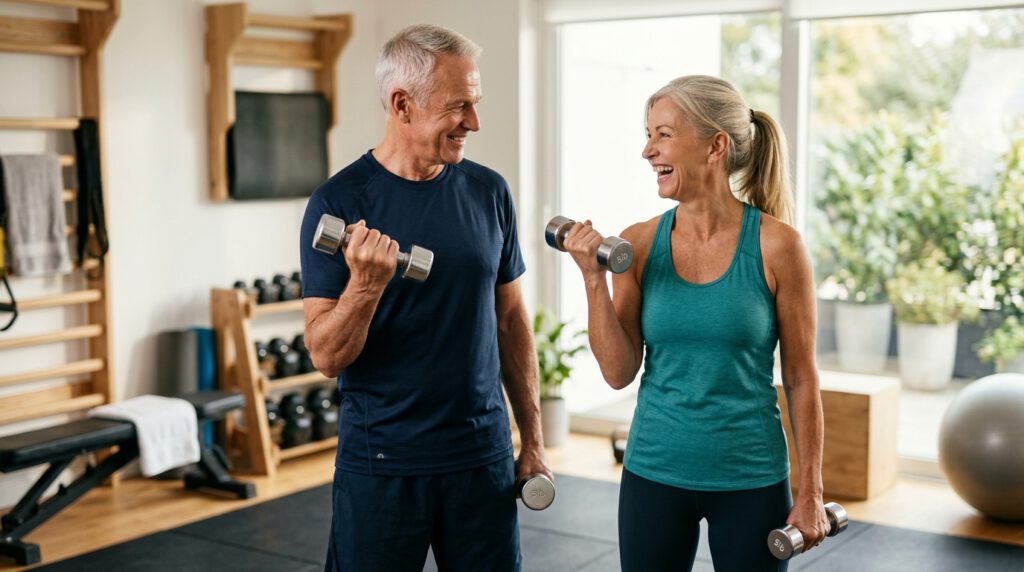
You could lift weights alone three days a week and join a running group on Saturday.
You could do home workouts during busy weekdays and play basketball with friends on the weekend.
You could train individually while participating in an online fitness community for accountability.
You could even use solo workouts for focused training and community activities for fun and social connection.
There is no rule saying your fitness routine has to belong to only one category.
The Future of Fitness May Be More Connected
The fitness industry is evolving beyond the idea that exercise has to happen in a traditional gym.
The growing popularity of adult recreation clubs, running groups, cycling communities, pickleball, and recreational leagues reflects a broader desire to combine movement with enjoyment and social connection. ACSM’s inclusion of Adult Recreation and Sport Clubs as a 2026 trend is one clear sign of that shift.
At the same time, recent research suggests that we should not declare solo exercise obsolete. A large 2026 meta-analysis found that both individual and group-based approaches can be effective.
So the future is probably not solo versus community.
It is choice.
People can exercise alone when they want independence and flexibility, then turn to communities when they want motivation, accountability, friendship, or simply more fun.
Final Thoughts
Working out alone is not disappearing—and it does not need to.
But fitness is becoming more than a set of exercises performed in isolation.
For many people, the most sustainable fitness routine is one that provides something beyond physical results: people to meet, goals to share, encouragement to receive, and a community to return to.
Community-driven fitness turns exercise from something you have to force yourself to do into something you can look forward to.
Whether it is a Saturday morning running club, a weekly pickleball game, a neighborhood walking group, a recreational soccer league, or simply a workout buddy who expects you to show up, the principle is the same:
You do not have to exercise alone to make fitness your own.
The strongest fitness community is not necessarily the one with the fittest people. It is the one that makes you feel welcome, keeps you moving, and gives you a reason to come back.
Related Posts

Stay Informed With the Latest & Most Important News
Previous Post
Next Post









Advertisement