




















Now Reading: How Much Protein Do You Actually Need Per Day? (Simple Formula)
-
01
How Much Protein Do You Actually Need Per Day? (Simple Formula)


If you’ve ever stood in the grocery store squinting at a protein bar label wondering “is this enough, or way too much,” you’re not alone.
Protein advice online ranges from “0.8 grams per kilogram is plenty” to “eat a gram per pound or you’re wasting your workouts” — and in 2026, the official U.S. guidelines just shifted too, which makes the confusion worse.
The good news: your actual number isn’t complicated.
It comes down to one simple formula, adjusted for your body weight, activity level, age, and goals. Let’s break it down.
Table of contents
- The Simple Formula
- Wait — Didn’t the Protein Guidelines Just Change?
- How Much Protein Do You Need by Age?
- Protein Needs by Activity Level and Goal
- How Much Protein Per Meal? (The Leucine Threshold)
- Is It Possible to Eat Too Much Protein?
- Special Situations That Change Your Protein Needs
- Best Sources of Protein (Animal and Plant)
- What About Protein Powder?
- Frequently Asked Questions
- Key Takeaways
The Simple Formula
Body weight × protein coefficient = your daily protein target (in grams)
| Weight Unit | Coefficient |
|---|---|
| Pounds | multiply by 0.36–0.73 |
| Kilograms | multiply by 0.8–1.6 |
Where you land in that range depends on how active you are and what you’re trying to achieve:
| Goal / Activity Level | g per kg body weight | g per lb body weight |
|---|---|---|
| Sedentary, general health (minimum) | 0.8 g/kg | 0.36 g/lb |
| General health (current U.S. guidelines) | 1.2–1.6 g/kg | 0.55–0.73 g/lb |
| Active adult / weight maintenance | 1.2–1.6 g/kg | 0.55–0.73 g/lb |
| Fat loss / calorie deficit (preserve muscle) | 1.6–2.4 g/kg | 0.73–1.1 g/lb |
| Muscle gain / hypertrophy | 1.6–2.2 g/kg | 0.73–1.0 g/lb |
| Endurance athletes | 1.2–1.6 g/kg | 0.55–0.73 g/lb |
| Adults 65+ | 1.0–1.2 g/kg (often up to 1.5) | 0.45–0.55 g/lb |
Quick Example
A 150-pound (68 kg) sedentary adult using the old baseline minimum: 150 × 0.36 = 54 grams of protein per day
The same person, using current general-health guidance: 68 × 1.2 to 1.6 = 82–109 grams per day
An active 150-pound adult aiming for muscle gain: 68 × 1.8 = roughly 122 grams per day
Notice the range moved a lot. That’s not a mistake — the numbers you’ll see quoted online genuinely depend on which guideline you’re reading, and one of them changed very recently. Here’s the full story.
Wait — Didn’t the Protein Guidelines Just Change?
Yes, and this is the part most articles on this topic haven’t caught up with yet.
For roughly 70 years, the U.S. Recommended Dietary Allowance (RDA) for protein sat at a flat 0.8 grams per kilogram of body weight per day (about 0.36 g/lb).
That’s the number still cited in most nutrition textbooks, and it’s genuinely useful — but it was designed as the minimum intake to prevent deficiency in a mostly sedentary reference population, not an optimal target for muscle health, weight management, or aging well.
The newly released 2025–2030 Dietary Guidelines for Americans moved away from that decades-old baseline.
The updated guidance now points adults toward 1.2 to 1.6 grams per kilogram per day — 50% to 100% more than the old RDA — prioritizing nutrient-dense protein foods as a core part of a healthy eating pattern.
A few things worth knowing about this shift:
- It’s based largely on trials looking at weight management, fat loss, and preservation of lean body mass during calorie restriction, rather than long-term chronic disease outcomes.
- Nutrition researchers have pushed back on how broadly it should apply, noting the evidence base doesn’t fully address groups like people with kidney disease, or long-term cardiovascular and cancer risk.
- It brings the general public guidance much closer to what sports nutrition organizations and geriatric researchers have recommended for active adults and older adults for years.
Practical takeaway: the old 0.8 g/kg figure isn’t “wrong” — it’s a floor, not a target. For most healthy adults today, 1.2–1.6 g/kg/day is a more realistic and well-supported everyday range, with higher intakes justified during fat loss, muscle building, or older age.
How Much Protein Do You Need by Age?
Adults (18–64)
Most healthy adults do well in the 1.2–1.6 g/kg/day range described above. If you’re sedentary and simply want to avoid deficiency, 0.8 g/kg is the floor — but it’s rarely the number you actually want to aim for.
Adults 65 and Older
As we age, muscles become less responsive to protein — a phenomenon researchers call anabolic resistance. The body needs a larger protein “signal” at each meal to trigger the same amount of muscle repair it once got from less. This is why older adults are generally advised to aim higher: 1.0–1.2 g/kg/day at minimum, often up to 1.2–1.5 g/kg/day, to help offset age-related muscle loss (sarcopenia).
Teens and Children
Growing bodies need proportionally more protein for development — roughly 0.91 g/kg/day is a commonly cited benchmark for adolescents, though needs shift with growth spurts and activity level. A pediatrician or dietitian can fine-tune this for a specific child.
Protein Needs by Activity Level and Goal
| Body weight | Sedentary | Active / general fitness | Endurance training | Muscle building | Fat loss (deficit) |
|---|---|---|---|---|---|
| 130 lb (59 kg) | 47 g | 71–95 g | 71–95 g | 106–130 g | 106–142 g |
| 150 lb (68 kg) | 54 g | 82–109 g | 82–109 g | 122–150 g | 122–163 g |
| 180 lb (82 kg) | 65 g | 98–131 g | 98–131 g | 147–180 g | 147–197 g |
| 200 lb (91 kg) | 72 g | 109–145 g | 109–145 g | 164–200 g | 164–218 g |
A few notes on why these ranges shift by goal:
- Endurance athletes need extra protein to repair muscle fibers broken down by long training sessions and to support recovery — typically 1.2–1.6 g/kg/day.
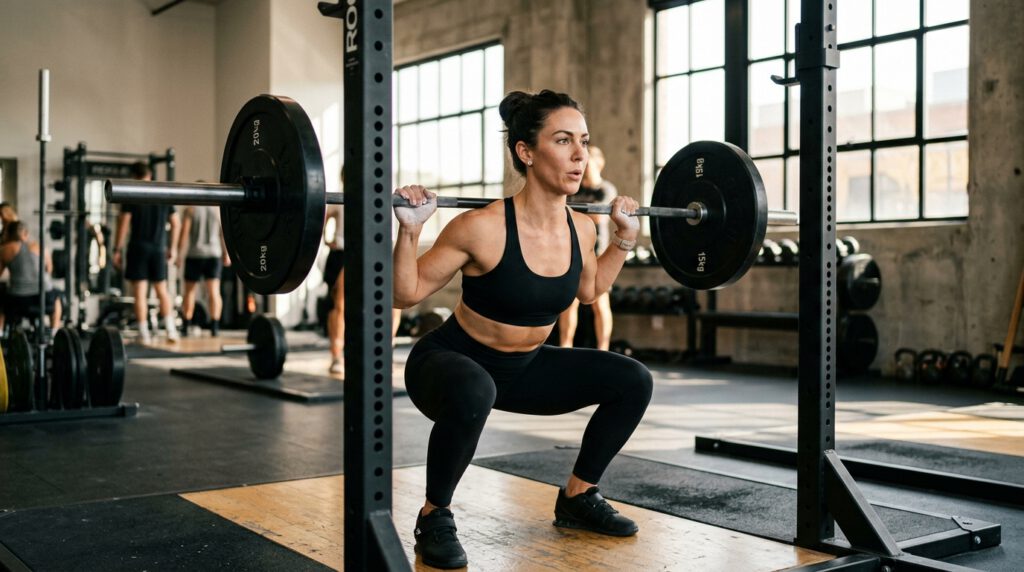
- Strength/muscle-building needs more amino acid supply to fuel new tissue growth — 1.6–2.2 g/kg/day, with some research supporting up to 2.2 g/kg for maximizing hypertrophy, provided the protein sources are complete (contain all nine essential amino acids).
- Fat loss actually calls for more protein relative to bodyweight, not less — 1.6–2.4 g/kg/day helps protect lean muscle mass while you’re in a calorie deficit, which is exactly when your body is most tempted to break muscle down for energy.
- If you’re carrying significant excess body fat, base the calculation on a target or lean body weight rather than total weight — using total weight for someone with a high body-fat percentage tends to overestimate true protein needs.
How Much Protein Per Meal? (The Leucine Threshold)
Total daily grams only tells half the story — when you eat your protein matters too.
Muscle protein synthesis (the process that repairs and builds muscle) is triggered by a specific amino acid called leucine. Research has identified a “leucine threshold” — roughly 2.5 grams of leucine per meal for adults under 65, closer to 3 grams for adults over 65 — needed to fully switch on this process. In real food terms, that generally works out to:
- ~25–35 grams of high-quality protein per meal for most adults
- ~35–40 grams per meal for adults over 65, due to anabolic resistance
- Slightly more for plant-based eaters, since most plant proteins carry less leucine gram-for-gram than animal sources
Studies on this “muscle full” effect have found that protein synthesis rises with meal protein content up to a point — often cited around 20–30 grams from a fast-digesting protein like whey — after which additional protein in that single sitting mostly gets used for energy rather than extra muscle building.
That doesn’t mean bigger meals are wasted; it just means spreading protein across 3–4 meals a day tends to beat stacking it all into one, since each adequately-dosed meal gives your body a fresh opportunity to trigger muscle repair.
Is It Possible to Eat Too Much Protein?
For most healthy people, no — this is one of the most persistent myths in nutrition.
The concern originated decades ago from guidance meant for people with existing kidney disease, where protein restriction can help reduce strain on already-compromised kidneys.
Over time, that clinical advice got generalized to everyone, even though it was never meant to apply broadly.
What the current evidence actually shows:
- Long-running population studies, including the Framingham Offspring Study, have found no link between higher protein intake — even above 100 g/day — and declining kidney function in healthy adults with normal blood pressure and blood sugar.
- A meta-analysis from McMaster University reviewing dozens of studies found no evidence that high-protein diets harm kidney function in healthy people; if anything, kidney function tends to adapt normally to a heavier protein load (a process called hyperfiltration), which is not the same as damage.
- Major nutrition and kidney health organizations agree that protein is not a risk factor for kidney problems in people with normal kidney function.
- The nuance: this reassurance applies to people with healthy kidneys. If you have chronic kidney disease, diabetes with kidney involvement, or another condition affecting kidney function, protein needs are usually lower, not higher, and should be set with a doctor or renal dietitian. Some researchers also flag red and processed meat specifically (rather than protein overall) as the bigger long-term concern for kidney and cardiovascular health — fish, poultry, eggs, and dairy generally show neutral or even favorable associations.
Bottom line: if your kidneys are healthy, “too much protein” is rarely something to worry about. The bigger real-world risk is displacing other nutrients (fiber, healthy fats, phytonutrients) by over-focusing on protein alone.
Special Situations That Change Your Protein Needs
Protein requirements aren’t one-size-fits-all. A few situations call for adjusting the formula:
- Pregnancy: needs rise progressively through each trimester to support fetal tissue, placental growth, and increased blood volume — commonly landing somewhere around 75–100+ grams per day by the third trimester, though your OB or a dietitian should personalize this.
- Breastfeeding: similarly elevated, to support milk production.
- Injury, surgery, or immobilization: protein needs can temporarily jump to 1.6–2.0+ g/kg/day, since the body needs extra material for tissue repair and to counter the accelerated muscle loss that happens during immobility.
- Illness, including cancer treatment: needs often rise to roughly 1.2–2.0 g/kg/day to help maintain muscle mass, support immune function, and aid wound healing — especially important since appetite loss during treatment can make hitting these numbers harder.
- Chronic kidney disease (not on dialysis): typically requires lower protein intake — this should always be set by a physician or renal dietitian, not a general calculator.
- Dialysis: needs increase again, since dialysis itself removes amino acids from the body.
If any of these apply to you, treat the ranges in this article as a starting point for a conversation with a healthcare provider, not a fixed prescription.
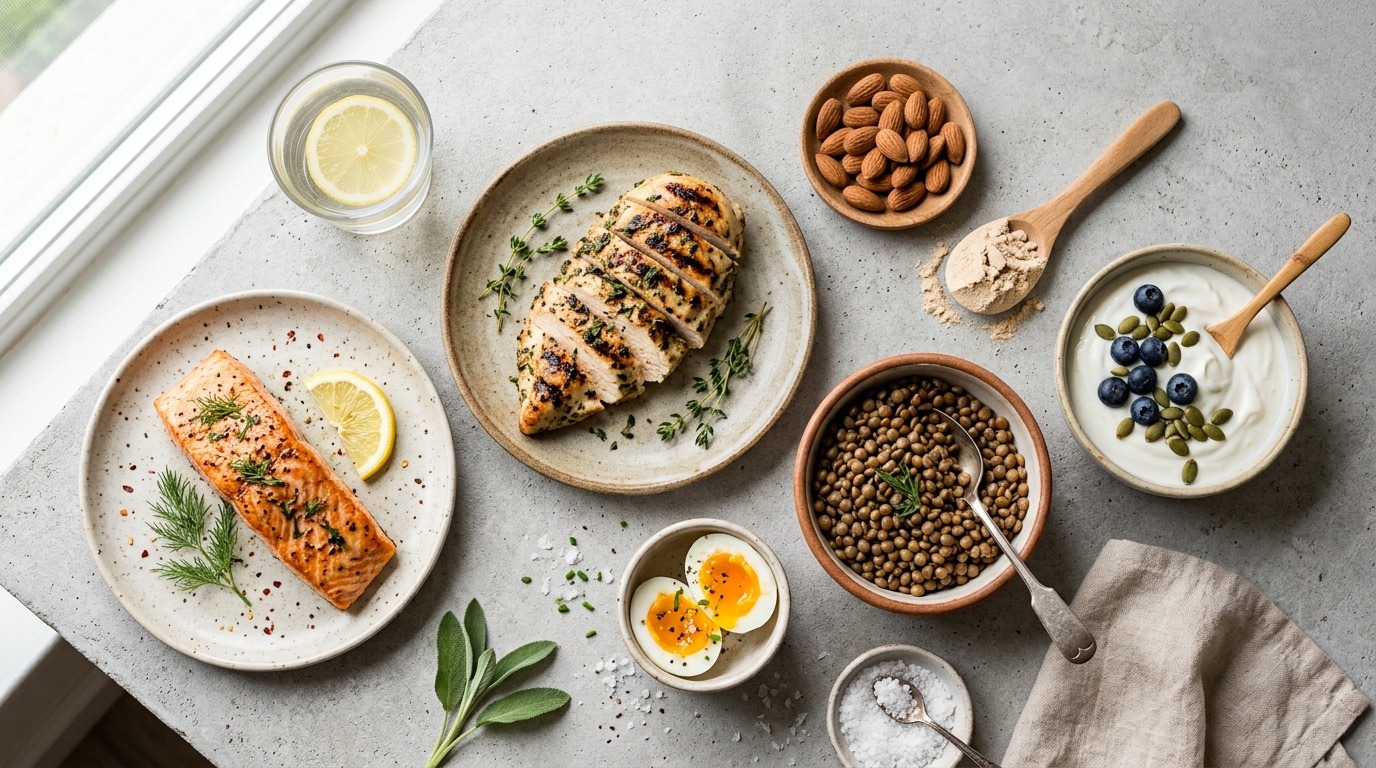
Best Sources of Protein (Animal and Plant)
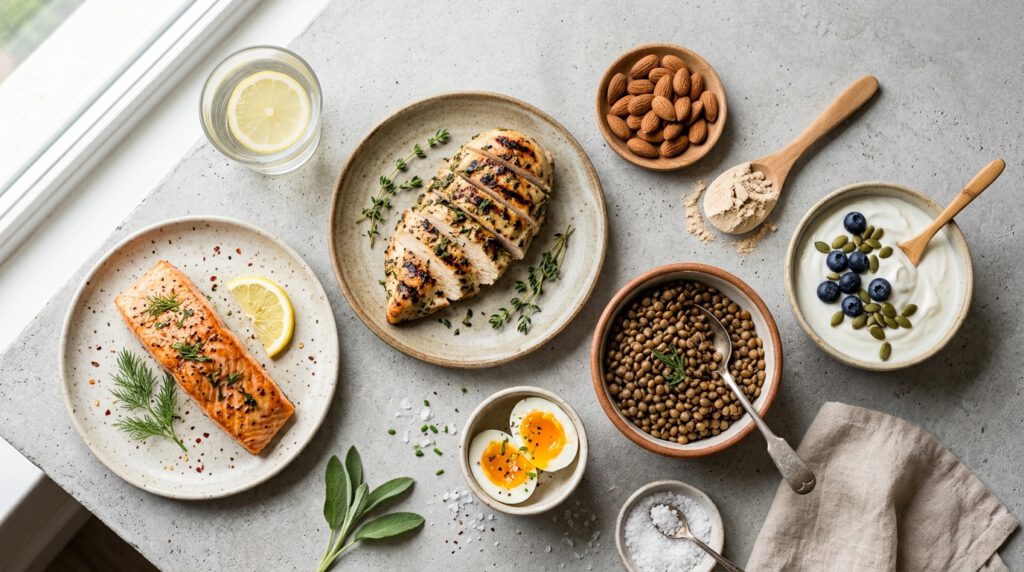
You don’t need to eat more meat to hit your number — plenty of options exist across both animal and plant foods.
Animal-based protein
| Food | Portion | Protein |
|---|---|---|
| Chicken breast | 3 oz | 26 g |
| Beef | 3 oz | 27 g |
| Eggs | 3 medium | 21 g |
| Tuna | 5 oz can | 20 g |
| Salmon | 3 oz | 17 g |
| Greek yogurt | ½ cup | 10–16 g |
| Cottage cheese | ½ cup | 14 g |
| Milk | 1 cup | 8 g |
Plant-based protein
| Food | Portion | Protein |
|---|---|---|
| Lentils | 1 cup cooked | 18 g |
| Beans | 1 cup cooked | 16 g |
| Peanuts | 2 oz | 14 g |
| Tofu / soy products | ½ cup | 7–16 g |
| Soy milk | 1 cup | 8 g |
| Nut butter | 2 tbsp | 7 g |
Animal proteins are “complete” — they supply all nine essential amino acids your body can’t make on its own. Most individual plant proteins are missing or lower in at least one essential amino acid, but eating a variety of plant sources across the day (beans, grains, nuts, soy) easily covers the full amino acid profile — they don’t all need to be eaten in the same meal, despite the old “protein combining” myth.
Beyond the protein grams themselves, think about the whole “protein package” — the fat, fiber, and micronutrients that come along with it.
Fatty fish and legumes bring omega-3s or fiber along for the ride; processed and fatty red meats bring more saturated fat. Both can fit a healthy diet, but the surrounding nutrition matters as much as the protein number.
What About Protein Powder?
Whole foods should be your first choice, but protein powder is a legitimate tool when you’re short on time, appetite, or convenience.
- Whey protein: fast-digesting, complete, popular for post-workout recovery. Whey isolate has more protein with less fat and carbs than whey concentrate, and is generally safe for people who are lactose intolerant.
- Casein: digests slowly, which makes it a common choice before bed or for longer-lasting fullness.
- Plant-based blends: made from pea, soy, hemp, rice, or egg white; look for blends (like pea + rice) that combine to cover the full amino acid profile, since single-source plant powders like plain rice protein can fall short on certain amino acids.
Most scoops deliver 20–30 grams of protein; ready-to-drink shakes can run higher, up to 40+ grams. Check labels for added sugar, and remember that collagen powder — while popular for skin, joint, and hair support — is not a complete protein and shouldn’t be relied on as your only protein source.
Frequently Asked Questions
What’s a simple way to estimate my protein needs without a calculator?
Multiply your weight in pounds by 0.36 for the bare minimum, or by 0.55–0.73 for a more realistic everyday target in line with current guidelines. Active or muscle-building goals push that number higher, up to around 1 gram per pound.
Is 1 gram of protein per pound of body weight necessary for muscle gain?
It’s a popular rule of thumb in gym culture, and it does fall within evidence-based ranges for muscle building (roughly 0.73–1.0 g/lb, or 1.6–2.2 g/kg). It’s a reasonable target if you’re training seriously, though the science suggests the benefit plateaus somewhere in that range rather than continuing to climb with even more protein.
Can I get enough protein on a vegetarian or vegan diet?
Yes. It takes a bit more intentionality — eating a variety of plant proteins across the day and often needing slightly higher total intake to account for lower leucine content per gram — but complete amino acid coverage and adequate total protein are both achievable on a well-planned plant-based diet.
Does eating more protein help with weight loss?
It can help by increasing fullness, supporting muscle retention during a calorie deficit, and slightly raising the number of calories burned during digestion. It’s not a magic fix on its own — you still need an overall calorie deficit — but higher protein intake is one of the more consistently useful tools for weight management.
How do I know if I’m not getting enough protein?
Deficiency signs — muscle weakness, hair and skin changes, slower wound healing, a weaker immune response — usually develop gradually over weeks or months rather than overnight, and tend to show up faster in older adults and athletes. There’s no single blood test that reliably confirms adequate protein intake; a healthcare provider typically assesses this through diet history and muscle mass rather than labs alone.
Key Takeaways
- The old 0.8 g/kg RDA is a floor to prevent deficiency, not an optimal target — the newer 2025–2030 Dietary Guidelines point most adults toward 1.2–1.6 g/kg/day.
- Active goals push the number higher: 1.6–2.2 g/kg for muscle gain, 1.6–2.4 g/kg for fat loss, 1.2–1.6 g/kg for endurance training.
- Spread protein across 3–4 meals, aiming for roughly 25–35 grams per meal (more for adults over 65), rather than saving it all for dinner.
- For healthy adults, high protein intake is not linked to kidney damage — that concern applies specifically to people with existing kidney disease.
- Mix animal and plant sources, and pay attention to the whole “protein package,” not just the grams on the label.
This article is for general educational purposes and isn’t a substitute for personalized medical or nutritional advice. If you have a health condition — especially kidney disease, diabetes, or you’re pregnant — talk to a doctor or registered dietitian before making major changes to your protein intake.
Related Posts
Stay Informed With the Latest & Most Important News
Previous Post
Next Post









Advertisement