























Now Reading: Is Seed Oil Really Bad for You? Separating Panic from Science
-
01
Is Seed Oil Really Bad for You? Separating Panic from Science


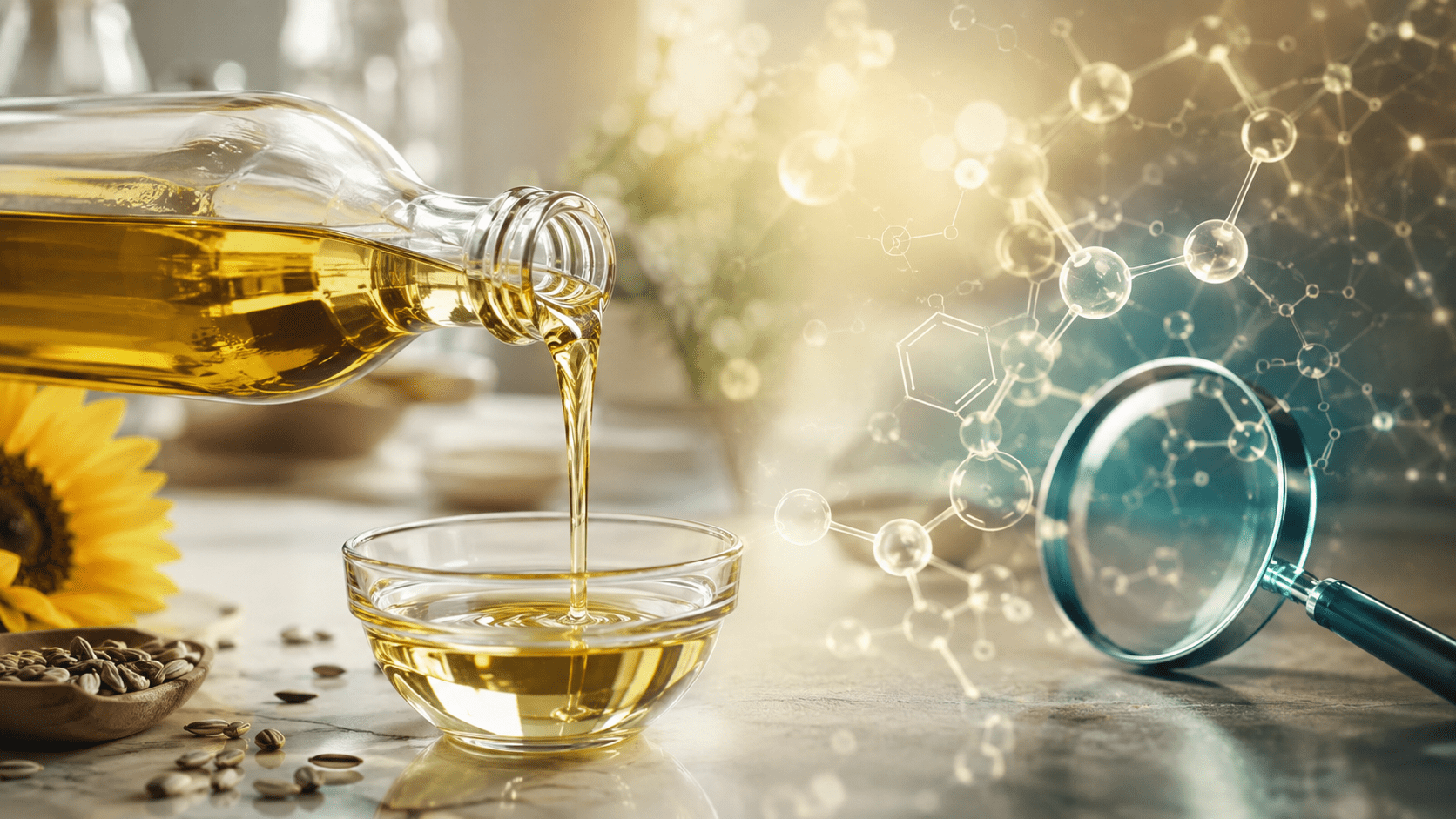
Open any wellness account on social media and you’ll eventually run into the same warning: seed oils are “toxic,” “poison,” or “the root cause of chronic disease in America.”
Restaurants are pulling them off menus. Health influencers call them “the hateful eight.” Even the U.S. Secretary of Health and Human Services has said Americans are being “unknowingly poisoned” by them.
But peer-reviewed nutrition science tells a very different story — one where seed oils consistently come out looking better for your heart than the animal fats being pushed as their replacement. So who’s right?
Let’s separate the panic from the actual peer-reviewed evidence.
Table of contents
What Exactly Are Seed Oils?
Seed oils are fats extracted from the seeds of plants, rather than from fruit (like olive or avocado oil) or from animals (like butter, lard, or tallow).
The most commonly criticized group — sometimes nicknamed the “hateful eight” — includes canola, corn, cottonseed, grapeseed, rice bran, safflower, soybean, and sunflower oil. (Technically, corn and rice bran oil come from the fruit/bran of the plant rather than the seed, but they get lumped into the same category in the debate.)
Most seed oils sold in stores are refined: the oil is extracted using heat and a solvent (usually hexane), then filtered, deodorized, and bleached to remove strong flavors, colors, and impurities.
This is what gives them a neutral taste, a long shelf life, and a high smoke point — and it’s also the step critics point to when they call the oils “industrial” or “unnatural.” Cold-pressed, unrefined versions exist, but they’re pricier, more perishable, and have much lower smoke points.
Why Did Seed Oils Become Public Enemy No. 1?
The backlash didn’t come from a single landmark study — it built up through a mix of social media claims, wellness influencers, and, more recently, U.S. health policy. Health Secretary Robert F. Kennedy Jr. has repeatedly called seed oils “one of the most unhealthy ingredients” in the American diet and moved to phase several of them out of school lunch programs in early 2026.
Fast-food and fast-casual chains — including Steak ‘n Shake, BOA Steakhouse, and Sweetgreen — have publicly ditched seed oils in favor of beef tallow or olive oil, and food giants like PepsiCo have followed with reformulated products.
A 2026 industry survey found roughly 28% of Americans now say they actively avoid seed oils.
That momentum reached federal policy in January 2026, when the new 2025–2030 Dietary Guidelines for Americans dropped the usual explicit recommendation to swap saturated fat for canola, corn, soybean, or sunflower oil, and instead highlighted olive oil, butter, and beef tallow as go-to fats — while still capping saturated fat at 10% of daily calories.
Nutrition scientists were quick to point out the contradiction: the strongest evidence reviewed by the guidelines’ own advisory committee still shows that replacing butter, tallow, and lard with vegetable oils improves LDL cholesterol, a relationship that’s been documented for roughly 75 years. Public health researchers, including several who served on that advisory committee, described the shift as reflecting political priorities more than new science.
In short: the “seed oils are dangerous” narrative has become policy in some corners of government even though it isn’t well supported by the clinical evidence. That gap is exactly what’s fueling the confusion.
The Core Claims — and What the Science Actually Says
Claim: Seed oils cause chronic inflammation
This is the most common accusation, and it rests on the idea that omega-6 fatty acids (which seed oils are rich in, mainly as linoleic acid) trigger inflammation, while omega-3s calm it. It’s a tidy story — but it doesn’t hold up in human trials.
Controlled clinical trials have not found that omega-6 intake raises inflammatory markers in people, even though the theory has some support in isolated cell and animal studies. Researchers now understand that linoleic acid gets converted into compounds like lipoxins, which are actively anti-inflammatory. Registered dietitians and nutrition scientists interviewed throughout 2026 have repeatedly made the same point: omega-6 fats are essential — the body can’t make them on its own — and normal dietary levels haven’t been shown to drive chronic inflammation.
Claim: The omega-6-to-omega-3 ratio is dangerously out of balance
It’s true that the modern diet’s omega-6-to-omega-3 ratio (often cited around 10:1 to 50:1) is far higher than it was for early humans, and some researchers link a very high ratio to a greater risk of cognitive decline and inflammatory bowel disease. But the fix, according to the researchers who actually study this, isn’t cutting omega-6 — it’s eating more omega-3.
In one large analysis following blood-fatty-acid levels across roughly 68,000 people in 30 studies, the cardiovascular benefit of high linoleic acid held up regardless of a person’s omega-3 levels. The advice from nutrition scientists is consistent: eat more walnuts and fatty fish, not less seed oil.
Claim: Hexane extraction makes seed oils toxic
Hexane, a solvent derived from crude oil, is used to efficiently extract oil from seeds.
It sounds alarming, but the vast majority of hexane is removed during refining, deodorizing, and bleaching, and residue testing in the final product is low. The people with genuine, documented hexane exposure risk are factory workers handling it in bulk — not people eating the finished oil.
Cold-pressed oils skip this step entirely, at the cost of a shorter shelf life and lower smoke point.
Claim: Seed oils cause heart disease
This is where the evidence runs most strongly against the seed-oil-panic narrative.
A large, decades-long analysis of blood linoleic acid levels found that people with the highest levels had a lower risk of cardiovascular disease and a roughly 7% lower risk of developing heart disease compared with those with the lowest levels. Separately, a long-term U.S. cohort study of more than 200,000 people found that higher plant oil intake was associated with a lower risk of dying from cardiovascular disease or cancer, while higher butter intake was associated with a higher risk of death over the same period. Multiple meta-analyses show seed oils like canola and soybean oil lower LDL (“bad”) cholesterol more effectively than butter, lard, or beef tallow — the very oils being promoted as their replacement.
Claim: Seed oils cause cancer
This one deserves nuance rather than a flat denial. A 2025 lab study found that linoleic acid can fuel the growth of triple-negative breast cancer (TNBC) cells specifically, by activating a protein pathway linked to tumor growth. That’s a genuinely interesting and important finding — but the researchers behind it were careful to note it applies to one aggressive cancer subtype, not omega-6 consumption broadly, and that completely eliminating omega-6 fats from your diet would carry its own health costs, since they’re essential nutrients. This is a case for more targeted research, not a verdict that seed oils cause cancer in general.
Where the Confusion Really Comes From
Nutrition scientists studying the seed-oil backlash point to one recurring pattern: people are conflating seed oils with the ultra-processed foods they’re usually found in.
Seed oils are cheap, shelf-stable, and neutral-tasting, which is exactly why they show up in chips, frozen meals, fried fast food, and salad dressings.
When researchers see rising rates of obesity, diabetes, and heart disease alongside rising seed oil consumption, it’s tempting to draw a straight line between the two — but that’s an association, not causation.
The actual driver in the ultra-processed category is more plausibly the sodium, added sugar, refined starch, and sheer calorie density, not the cooking oil itself. As one Johns Hopkins nutrition researcher put it: eating less ultra-processed food and more whole food is the fix — not swapping out the oil while keeping the fries.
Seed Oils vs. Olive Oil vs. Animal Fats: A Quick Comparison
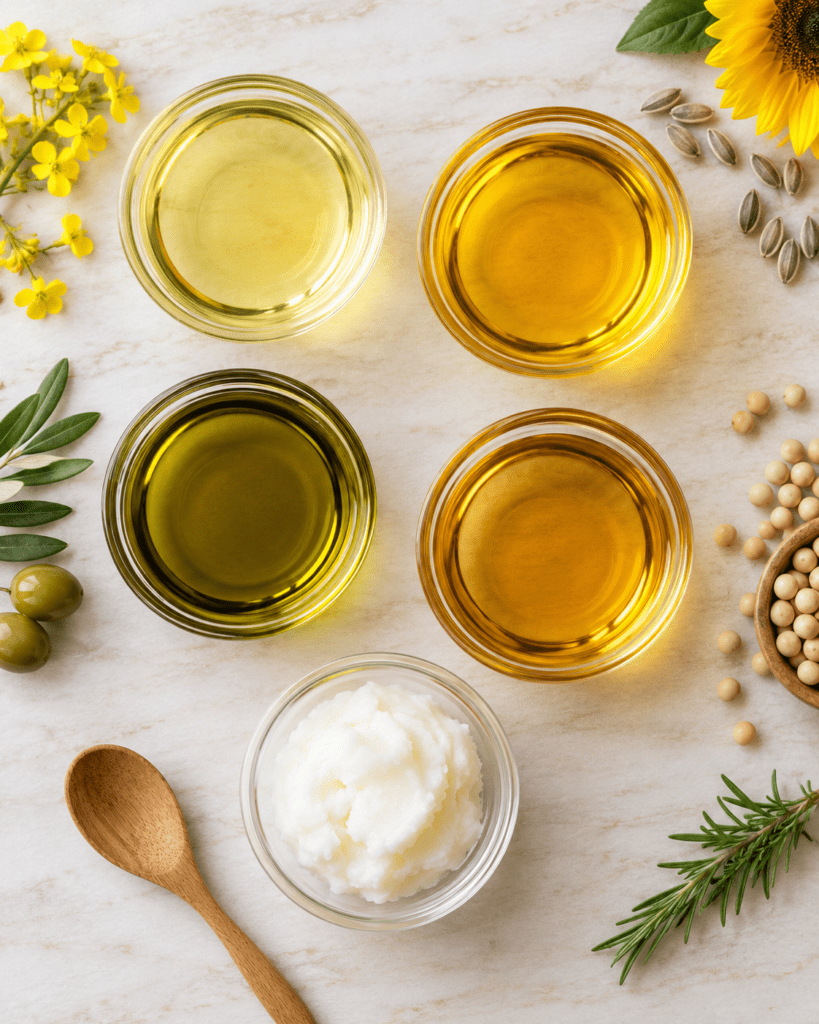
| Oil | Main fat type | Typical smoke point | What the evidence shows |
|---|---|---|---|
| Canola oil | Monounsaturated + omega-6/omega-3 | ~400–450°F | Lowers LDL more than olive oil in some trials; modest weight benefits |
| Soybean oil | Polyunsaturated (omega-6) | ~450°F | Linked to lower all-cause mortality vs. saturated fat in cohort studies |
| Sunflower/Safflower oil | Polyunsaturated or monounsaturated (varies by type) | ~450–500°F | Lowers LDL cholesterol; high-oleic versions are more heat-stable |
| Extra-virgin olive oil | Monounsaturated | ~350–410°F | Strong, long-standing evidence of cardiovascular benefit; not ideal for high-heat frying |
| Butter | Saturated | ~300–350°F | Raises LDL cholesterol; linked to higher mortality risk vs. plant oils in cohort data |
| Beef tallow | Saturated | ~400°F | More heat-stable for frying, but raises LDL cholesterol |
The practical takeaway: no oil is “toxic,” but the fatty-acid profile matters, and repeatedly reheating any oil — seed oil, olive oil, or tallow — degrades it and creates harmful breakdown compounds. Restaurant fryers that go weeks without a fresh oil change are a bigger risk factor than the type of oil in the fryer.
So Should You Cook With Seed Oils?
Based on the current evidence, yes — in normal amounts, as part of a varied diet. A few practical, evidence-based guardrails:
- Use seed oils for everyday cooking — sautéing, baking, stir-frying. Their neutral flavor and high smoke point make them genuinely well suited to this.
- Save extra-virgin olive oil for lower-heat or no-heat uses — dressings, drizzling, gentle sautéing — where its flavor and antioxidant compounds are preserved.
- Don’t reuse frying oil indefinitely. Oxidation and breakdown compounds build up with repeated heating, regardless of oil type; discard oil that looks dark or smells off.
- Focus on the food, not just the oil. If the goal is reducing chronic disease risk, cutting back on deep-fried and ultra-processed foods will do far more than switching from canola oil to tallow.
- Get more omega-3s if you’re worried about the omega-6:omega-3 ratio — fatty fish, walnuts, chia and flax seeds — rather than avoiding omega-6.
The Bottom Line
The scientific record on seed oils is unusually one-sided for a topic that generates this much online outrage: large cohort studies, clinical trials, and meta-analyses consistently associate seed oils with lower cardiovascular risk than the saturated animal fats currently being promoted as their replacement. The “toxic,” “poison,” and “inflammatory” framing isn’t coming from the peer-reviewed nutrition literature — it’s coming from a mix of oversimplified biology, guilt by association with ultra-processed food, and a political movement that has now shaped federal dietary policy.
That doesn’t mean seed oils are a health food, and it doesn’t mean every claim about them is baseless — the cancer-subtype research, for instance, is worth watching. But “bad for you” isn’t where the evidence lands. Moderation, variety, and minimizing ultra-processed and fried food still matter far more than which bottle of oil is in your pantry.
Frequently Asked Questions
Are seed oils actually toxic?
No. Regulatory food-safety testing and decades of clinical research have not found seed oils to be toxic at normal dietary intake levels. Concerns about hexane residue and processing chemicals are not supported by residue testing in the finished product.
Do seed oils cause inflammation?
Controlled human trials have not shown that seed oils or their omega-6 content increase inflammation. Some of their breakdown products are actually anti-inflammatory.
Is canola oil healthier than olive oil?
They’re both considered healthy oils. Some trials show canola oil produces slightly better cholesterol improvements than olive oil, while olive oil has a longer track record in cardiovascular research and unique antioxidant compounds. Neither is “bad.”
Should I switch to beef tallow for frying?
Tallow is more heat-stable for repeated frying, but it’s higher in saturated fat, which raises LDL cholesterol — a well-established cardiovascular risk factor. Seed oils generally come out ahead on that specific measure.
What’s the healthiest cooking oil overall?
There’s no single “best” oil — extra-virgin olive oil, canola oil, and soybean oil all have strong evidence behind them for different uses. Variety, freshness, and avoiding repeated reheating matter more than picking one “perfect” oil.
Related Posts
Stay Informed With the Latest & Most Important News
Previous Post
Next Post










Advertisement