






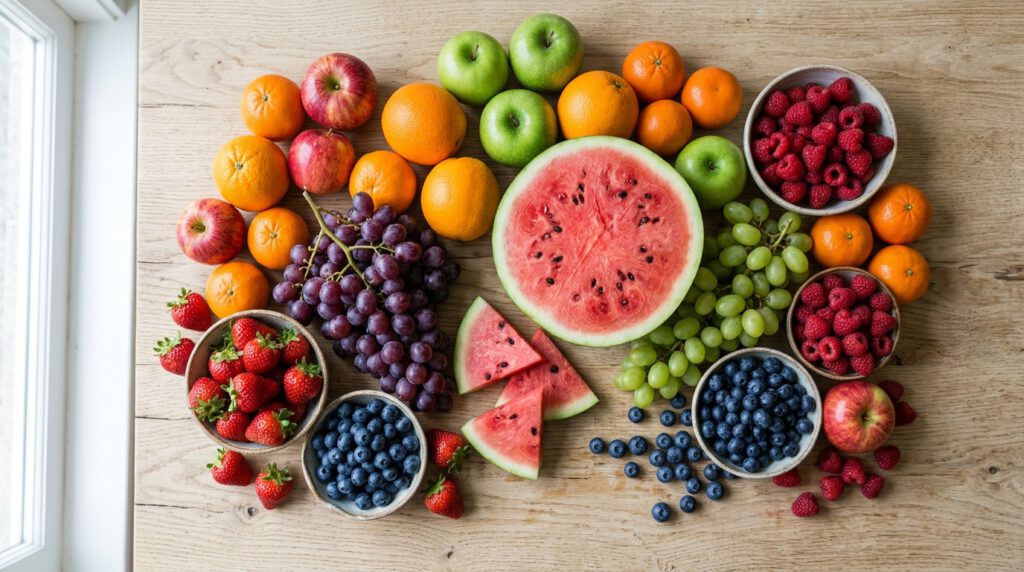


















Now Reading: Is Fruit Bad for Weight Loss? Debunking the Sugar Myth
-
01
Is Fruit Bad for Weight Loss? Debunking the Sugar Myth


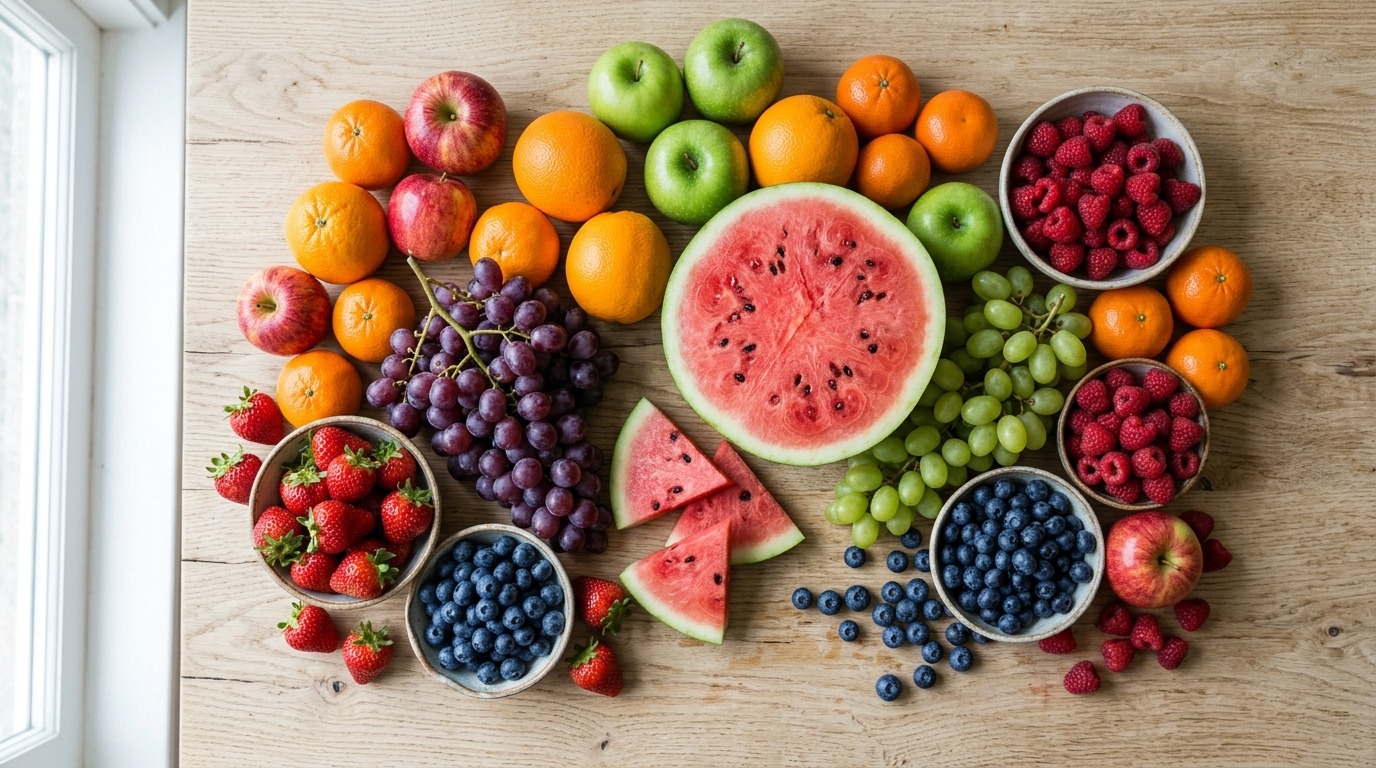
No, fruit is not bad for weight loss. Despite its reputation as “nature’s candy,” whole fruit is one of the most misunderstood foods in modern dieting.
The sugar inside an apple or a bowl of berries is bundled with fiber, water, and micronutrients that slow digestion, blunt blood sugar spikes, and help you feel full on relatively few calories.
Multiple large studies — including a 2020 JAMA meta-analysis and the long-running Nurses’ Health Study — link whole fruit intake to a lower, not higher, risk of weight gain and metabolic disease.
The confusion usually comes from lumping fruit sugar in with the added sugar found in soda, candy, and pastries. They are chemically related but metabolically worlds apart.
This article breaks down where the “fruit is fattening” myth came from, what the actual research says, and how to use fruit strategically if weight loss is your goal.
Table of contents
- Where the “Fruit Is Bad for You” Myth Came From
- Natural Sugar vs. Added Sugar: Why the Body Treats Them Differently
- Does Fruit Spike Insulin and Cause Weight Gain?
- Why Fiber Is the Real Difference-Maker
- Calorie Density: Why Fruit Helps You Eat Less, Not More
- Whole Fruit vs. Fruit Juice vs. Dried Fruit
- Fruit and Diabetes: A Quick Note
- Best Fruits for Weight Loss
- How Much Fruit Should You Actually Eat?
- Practical Tips for Using Fruit in a Weight-Loss Plan
- Common Myths About Fruit and Weight Loss, Debunked
- FAQ
- The Bottom Line
Where the “Fruit Is Bad for You” Myth Came From
The idea that fruit sabotages weight loss took off with the rise of very-low-carb and ketogenic diets, which count all carbohydrate sources — including fruit — against a strict daily limit.
A single large banana or apple can use up a meaningful chunk of a 20–30g daily carb allowance, so keto resources often warn dieters to limit fruit to small amounts of berries.
That advice makes sense within a ketogenic framework, where the goal is to keep the body in ketosis.
But it has been generalized into a much broader — and inaccurate — claim: that fruit sugar behaves like the added sugar in cookies and soft drinks, and therefore undermines weight loss for everyone. The research doesn’t support that generalization.
It’s also worth noting how far actual intake is from being a public health problem in the other direction. According to CDC survey data, only around 1 in 10 American adults meets the recommended daily intake of fruit.
Public health guidance has spent decades trying to get people to eat more fruit, not less — which should already be a clue about where the actual risk lies.
Natural Sugar vs. Added Sugar: Why the Body Treats Them Differently
Fructose is fructose at the molecular level, whether it’s in an orange or a candy bar — but the food matrix around it changes everything.
- Whole fruit delivers its natural sugar alongside fiber, water, and a slower-releasing structure of intact plant cells. This blunts the speed at which sugar enters the bloodstream.
- Added sugar in processed foods (sucrose, high-fructose corn syrup) usually arrives with fat, refined starch, and little to no fiber, so it digests quickly and doesn’t trigger the same fullness signals.
This distinction shows up clearly in the research. A 2020 systematic review and meta-analysis in JAMA Network Open examined how different sources of fructose relate to metabolic syndrome risk.
Sugar-sweetened beverages were associated with a higher risk, while whole fruit was associated with a lower risk of developing metabolic syndrome. Fruit juice only showed a protective effect at moderate intake, not high intake — reinforcing that the “whole food” context matters as much as the sugar itself.
A similar pattern appears with liver health. Fructose has been linked to worsening liver fibrosis in patients with fatty liver disease, but research published in the Journal of Hepatology found that this association was specifically tied to industrially processed fructose, not the fructose naturally occurring in fruit.
Does Fruit Spike Insulin and Cause Weight Gain?
This is the core of most people’s concern, so it’s worth looking at the strongest available evidence.
Diabetes risk: The Nurses’ Health Study, published in the BMJ, tracked large cohorts over time and found that total whole fruit consumption was associated with a hazard ratio of 0.98 for type 2 diabetes — essentially neutral to slightly protective. Individual fruits (apples, blueberries, grapes) were consistently linked to lower diabetes risk, while fruit juice intake was linked to higher risk.
A half-million-person study: Research published in PLOS Medicine, involving roughly 500,000 Chinese adults, found that higher fresh fruit intake was associated with a lower risk of developing diabetes in the first place, and that restricting fruit intake in people who already had diabetes was not supported by the outcome data.
Insulin response: A study in the American Journal of Clinical Nutrition found that eating table sugar alongside fruit (blackcurrants and lingonberries) actually produced a smaller insulin spike than sugar alone — the fiber and polyphenols in the fruit slowed glucose absorption.
Direct weight-loss data: A randomized controlled trial published in Metabolism compared a very-low-fructose diet to a diet with moderate, natural fructose (largely from fruit) under matched calorie restriction. Both groups lost weight, but the moderate-fructose group — the one still eating fruit — lost more weight than the low-fructose group. This is one of the more direct pieces of evidence that fruit does not need to be restricted for weight loss to happen, and may even support it.
Taken together, the research consistently distinguishes “fructose from fruit” from “fructose from processed sources,” and finds no basis for treating them the same.
Why Fiber Is the Real Difference-Maker
Fiber is the single biggest reason fruit behaves so differently from candy in the body. Fiber-rich foods slow gastric emptying, which means food stays in the stomach longer and blood sugar rises more gradually.
This has two knock-on effects that matter directly for weight loss:
- Greater satiety. In the classic Satiety Index study published in the European Journal of Clinical Nutrition, researchers fed subjects equal-calorie portions of 38 different foods and measured how full people felt afterward. Fiber, protein, and water content were all positively correlated with satiety scores — fruit, largely thanks to fiber and water, scored well above many processed carbohydrate foods.
- Reduced later-meal intake. In a University of Liverpool study on dried plums (prunes), participants who snacked on prunes ate fewer total calories at their next meal than those who ate raisins or candy at matched calorie levels — evidence that fiber-and-polyphenol-rich fruit can suppress subsequent hunger, not just delay it.
A separate randomized crossover study on watermelon (a fruit often assumed to be “too sugary” because of its sweetness) found that swapping a 92-calorie low-fat cookie snack for an equal-calorie watermelon snack over four weeks improved satiety and reduced body weight and adiposity markers in overweight participants — despite watermelon having a relatively high glycemic index. Water content, it turns out, matters as much as sugar content.
Calorie Density: Why Fruit Helps You Eat Less, Not More
One of the most practical reasons fruit supports weight loss is simple physics: it has a low calorie density. Because fruit is mostly water and fiber, you get a large, satisfying portion for relatively few calories — the opposite of energy-dense processed snacks, where a small portion delivers a large calorie load.
| Fruit (100g, raw) | Calories | Sugar | Fiber |
|---|---|---|---|
| Watermelon | ~30 kcal | ~6g | ~0.4g |
| Strawberries | ~32 kcal | ~5g | ~2g |
| Orange | ~47 kcal | ~9g | ~2.4g |
| Apple (with skin) | ~52 kcal | ~10g | ~2.4g |
| Blueberries | ~57 kcal | ~10g | ~2.4g |
| Mango | ~60 kcal | ~14g | ~1.6g |
| Grapes | ~69 kcal | ~16g | ~0.9g |
| Banana | ~89 kcal | ~12g | ~2.6g |
| Dates (dried) | ~277 kcal | ~66g | ~7g |
Figures are approximate USDA reference values and will vary by variety and ripeness.
Compare that to a typical cookie, which can pack 480–500 calories per 100g with almost no fiber or water to slow it down. Swapping processed snacks for fruit is one of the most consistently supported “crowding out” strategies in nutrition research: fruit displaces higher-calorie foods rather than simply adding to total intake.
Notice, too, that “sugar grams” alone don’t predict how fattening a fruit is. Watermelon has more sugar per 100g than some vegetables but very few actual calories, because the rest of its weight is water.
This is why judging fruit purely by sugar content — rather than looking at calorie density and fiber — is a big part of where the myth goes wrong.
Whole Fruit vs. Fruit Juice vs. Dried Fruit
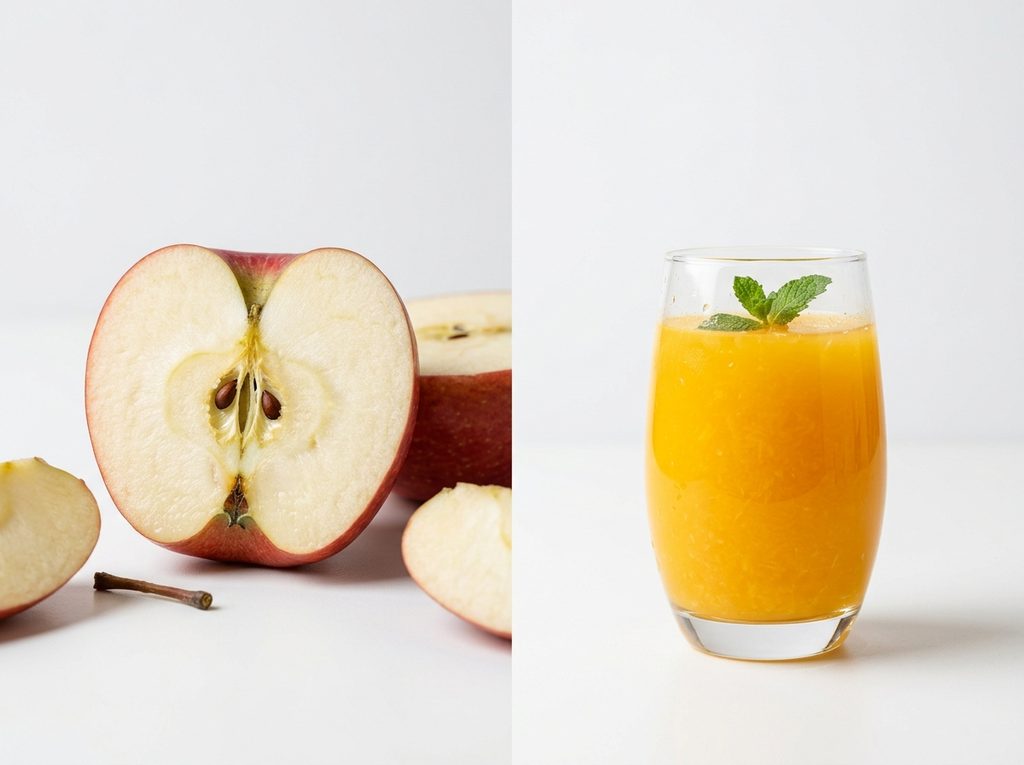
Not all forms of fruit are equal for weight management, and this is the one area where the “be careful” advice genuinely applies.
- Whole fruit keeps its fiber and requires chewing, both of which support satiety and slow sugar absorption. This is the form most associated with weight loss in the research above.
- Fruit juice strips out the fiber and pulp, leaving concentrated sugar you can drink quickly without triggering fullness signals. A study comparing whole apples, apple pomace, cloudy juice, and clear juice found that whole fruit and pomace lowered LDL cholesterol more effectively than clear juice, which lacks the pectin fiber. The researchers concluded that clear juice isn’t a nutritional substitute for whole fruit. The Dietary Guidelines for Americans still allow 100% juice to count toward fruit intake, but recommend most servings come from whole fruit.
- Dried fruit (dates, raisins, dried mango) is calorie-dense because water has been removed, concentrating both sugar and calories into a small volume — the “Dates” row in the table above shows this clearly. It still retains fiber, so it’s not equivalent to candy, but portion control matters far more than with fresh fruit.
Practical rule of thumb: for weight loss, prioritize whole fresh or frozen fruit, treat 100% juice as an occasional addition rather than a staple, and measure dried fruit by the tablespoon rather than the handful.
Fruit and Diabetes: A Quick Note
Because “fruit spikes blood sugar” is such a common concern, it’s worth stating plainly: people with diabetes are not advised to avoid fruit.
Registered dietitians commonly recommend pairing fruit with a source of protein or healthy fat — apple slices with nut butter, berries with cottage cheese, grapes with a cheese stick — to further flatten any blood sugar response, and to watch portion sizes rather than eliminating fruit outright.
This lines up with the large-scale diabetes studies cited above, which found no benefit to fruit restriction even in people who already had diabetes.
Best Fruits for Weight Loss
If you’re building a weight-loss-friendly fruit rotation, these categories consistently score well on satiety-per-calorie:
- High-water fruits — watermelon, cantaloupe, strawberries, oranges — deliver large, filling portions for very few calories.
- High-fiber fruits — apples, pears, raspberries, blackberries — slow digestion and support fullness for longer.
- Protein-and-fat-containing fruits — avocado, in particular, is a fruit that adds satiating fat and can be used to round out a meal rather than as a separate “sweet” snack.
- Lower-sugar berries — blueberries, raspberries, and blackberries offer a strong nutrient-to-sugar ratio along with antioxidant compounds.
None of this means other fruits — bananas, grapes, mangoes — are “off-limits.” They simply have a higher calorie density per serving, so portion awareness matters more with them than with watermelon or berries.
How Much Fruit Should You Actually Eat?
The Dietary Guidelines for Americans recommend 1.5 to 2 cup-equivalents of fruit per day for most moderately active adults — roughly two medium pieces of whole fruit, or one piece plus a cup of berries or chopped fruit.
This isn’t a “weight loss protocol”; it’s the general healthy-eating baseline, and the research above suggests staying within (or even meeting) this range supports rather than hinders weight management.
Very few people currently overshoot this amount. USDA consumption data shows that only about 12–15% of U.S. adults meet the fruit recommendation at all, and per-capita fruit consumption has actually declined over the past two decades. In practice, “eating too much fruit” is rarely the reason someone struggles with weight loss — total calorie intake from processed foods, portion sizes, and liquid calories (soda, juice, alcohol) are far more common culprits.
Practical Tips for Using Fruit in a Weight-Loss Plan
- Default to whole, fresh, or frozen fruit rather than juiced or heavily processed fruit products (fruit bars, sweetened applesauce).
- Use fruit to replace, not add to, processed snacks. Swapping an afternoon cookie for an apple or a bowl of berries is where most of the “crowding out” benefit comes from.
- Pair fruit with protein or fat — Greek yogurt with berries, apple with peanut butter — to extend satiety further, especially if you’re managing blood sugar.
- Watch portions on calorie-dense fruits like bananas, grapes, mangoes, and especially dried fruit, without eliminating them.
- Choose canned fruit packed in water or its own juice, not heavy syrup, if fresh isn’t available — frozen fruit with no added sugar is an equally good, budget-friendly option.
- Don’t fear fruit before or after exercise — the natural sugars provide quick, well-tolerated energy without the blood sugar crash associated with refined sugar.
Common Myths About Fruit and Weight Loss, Debunked
- “Fruit sugar is the same as added sugar.” Chemically similar, metabolically different — the fiber, water, and nutrient matrix in whole fruit changes how the body processes it.
- “Fruit causes insulin spikes that lead to fat storage.” Large cohort studies show neutral-to-protective associations between whole fruit and diabetes risk, and fruit eaten with sugar can actually blunt insulin response.
- “Diabetics should avoid fruit.” Portion control and pairing with protein/fat is the recommended approach — not elimination.
- “All fruit is equally ‘diet-friendly.’ Water-rich, high-fiber fruits are the most satiating per calorie, but no whole fruit needs to be avoided for weight loss.
- “Fruit juice counts the same as whole fruit.” It lacks the fiber that makes whole fruit so filling and blood-sugar-friendly — treat it as a smaller part of your fruit intake, not the main source.
FAQ
Does eating fruit at night affect weight loss?
No credible research shows that the time of day you eat fruit affects fat storage. What matters is total daily calorie intake, not the clock.
Can I eat unlimited fruit and still lose weight?
Fruit is low in calorie density, but it still contains calories. “Unlimited” isn’t necessary — meeting the recommended 1.5–2 cups per day, while replacing processed snacks with fruit, is the evidence-backed approach.
Is fruit juice as healthy as whole fruit for weight loss?
No. Juicing removes the fiber that slows sugar absorption and promotes fullness, making it easier to consume excess calories quickly. Whole fruit is the better choice for weight management.
Which fruits are lowest in sugar?
Watermelon, strawberries, and citrus fruits tend to have less sugar and fewer calories per serving than fruits like grapes, mangoes, or bananas, though all can fit into a weight-loss diet in appropriate portions.
Is dried fruit bad for weight loss?
Not inherently, but its calories and sugar are concentrated because the water has been removed. A small handful of raisins or dates has meaningfully more calories than the equivalent fresh fruit, so portion size matters more here than with fresh fruit.
The Bottom Line
Fruit is not the obstacle to weight loss it’s often made out to be.
The natural sugar in whole fruit comes packaged with fiber, water, and nutrients that slow digestion, support fullness, and — according to the largest studies available — are associated with a lower, not higher, risk of weight gain and metabolic disease. The real dietary culprits behind stalled weight loss are far more often added sugar, refined carbohydrates, and liquid calories from soda and juice — not the apple in your lunch bag.
If you’re trying to lose weight, fruit doesn’t need to be restricted. It needs to be prioritized in its whole form, paired thoughtfully, and used to crowd out the processed foods that actually work against your goals.
Related Posts
Stay Informed With the Latest & Most Important News
Previous Post
Next Post










Advertisement