



















Now Reading: Gym Anxiety Is Real: How to Overcome Fear of the Gym as a Beginner
-
01
Gym Anxiety Is Real: How to Overcome Fear of the Gym as a Beginner


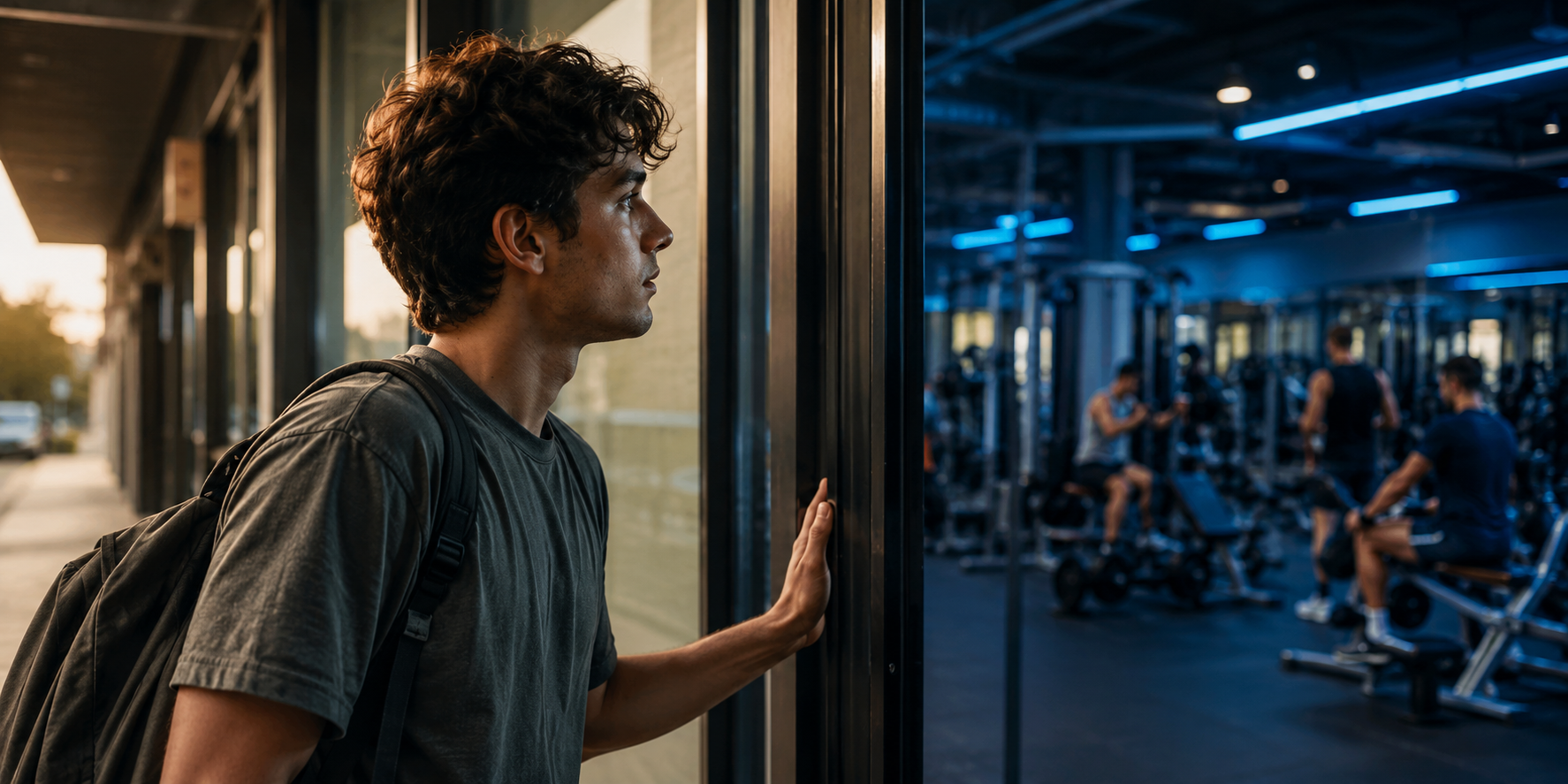
If your heart races just thinking about walking through the gym doors, you’re not imagining things — and you’re definitely not alone.
This feeling even has a name: gym anxiety, sometimes called “gymtimidation.”
It’s the wave of nervousness, self-consciousness, or outright dread that shows up before, during, or after a workout, and it stops countless people from ever starting their fitness journey.
The good news?
Gym anxiety is completely manageable. With the right mindset and a few practical strategies, you can walk into any gym feeling confident — even if you’ve never lifted a weight in your life.
Table of contents
- What Is Gym Anxiety?
- Is It Normal to Feel Anxious at the Gym?
- What Causes Gym Anxiety?
- How to Know If You Have Gym Anxiety
- 10 Practical Ways to Overcome Gym Anxiety as a Beginner
- Reframe Your Inner Dialogue
- When the Gym Still Feels Like Too Much
- When to Reach Out for Extra Support
- Frequently Asked Questions
- The Bottom Line
What Is Gym Anxiety?
Gym anxiety is the discomfort or fear associated with exercising in a gym setting.
It can strike at different moments — some people feel it the night before a workout, others feel it the second they step onto the gym floor, and some only feel it afterward, replaying the session in their heads.
It commonly centers around things like:
- Exercising while other people are watching
- Body image or how you look in workout clothes
- Not knowing how to use the equipment correctly
- Worrying about doing an exercise “wrong”
- Feeling out of place as a beginner
- Sweating or struggling in front of others
- Navigating locker rooms or unfamiliar layouts
Is It Normal to Feel Anxious at the Gym?
Yes — completely. Almost everyone experiences some nervousness in unfamiliar environments, and a gym full of equipment, mirrors, and strangers is exactly that kind of environment for a first-timer. Feeling shaky, self-conscious, or hesitant on your first few visits doesn’t mean something is wrong with you.
That said, if this anxiety is intense, persistent, and starts creeping into other parts of your daily life — not just the gym — it may be connected to a broader anxiety condition, such as social anxiety or generalized anxiety disorder. In that case, a mental health professional can help you sort through it and find the right support.
What Causes Gym Anxiety?
Understanding why you feel anxious is the first step toward managing it. Some of the most common triggers include:
1. Being a Complete Beginner
If you’ve never set foot in a gym — or it’s been years since you have — everything feels unfamiliar. That uncertainty alone is often enough to trigger anxiety.
2. Switching to a New Gym
Even experienced gym-goers can feel a spike of nervousness after changing locations. A new layout, new machines, and an unfamiliar crowd reset the “unknown” factor all over again.
3. Struggling With Equipment
Not being able to figure out how to adjust a machine — especially with people around — can make anyone want to quietly walk away instead of asking for help.
4. Changing in Public Locker Rooms
For many people, getting undressed or changing clothes around strangers is one of the most uncomfortable parts of the entire gym experience.
5. Trying a New Type of Workout
Starting something unfamiliar, like weight training, in front of people who look like they know exactly what they’re doing can feel intimidating — even though everyone was a beginner once.
6. A Crowded, Busy Gym Floor
Packed gyms, especially during peak hours, can heighten anxiety simply because there’s more activity, more noise, and more eyes around.
How to Know If You Have Gym Anxiety
Gym anxiety can show up both mentally and physically. Common signs include:
- Feeling nervous, on edge, or scared when thinking about the gym
- Avoiding the gym altogether, or overthinking every visit
- A racing heartbeat, sweating, or muscle tension unrelated to the workout itself
- Feeling distressed or uncomfortable while you’re actually there
- Constantly worrying about what others might think of you
If several of these sound familiar, you’re dealing with gym anxiety — and the tips below are built specifically for you.
10 Practical Ways to Overcome Gym Anxiety as a Beginner
1. Do Your Homework Before You Go
Uncertainty fuels anxiety, so remove as much of it as possible in advance. Look up the gym’s layout, class schedule, and amenities online, and if you can, book a quick tour. Knowing where the locker rooms, water fountains, and equipment are located makes the space feel far less intimidating on day one.
2. Walk In With a Plan
Wandering around a gym with no idea what to do next is one of the fastest ways to feel overwhelmed. Before you leave the house, write down exactly what you’re going to do — which machines, how many sets, how long you’ll spend on cardio.
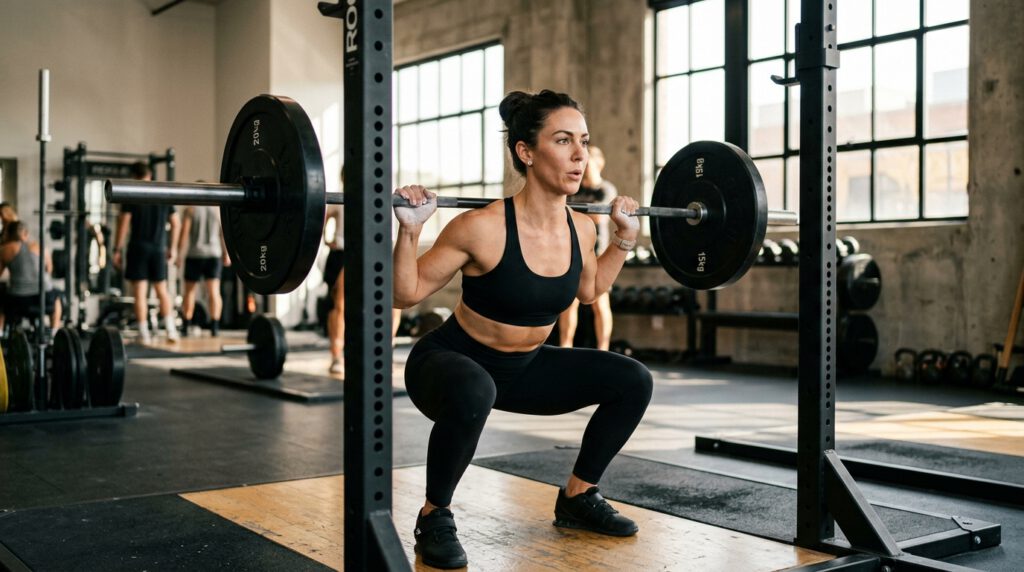
As a beginner, keep it simple. Stick to machines first, since most come with built-in diagrams and guided movement paths, before moving on to free weights. A short, structured plan covering just 3–5 exercises is plenty for your first few sessions.
3. Choose Your Time Wisely
Gyms have rhythms. If crowds make you anxious, avoid the after-work rush and aim for quieter windows instead — mid-morning, early afternoon, or late evening tend to be far less busy. A quieter gym floor gives you room to breathe (literally and figuratively) while you get comfortable.
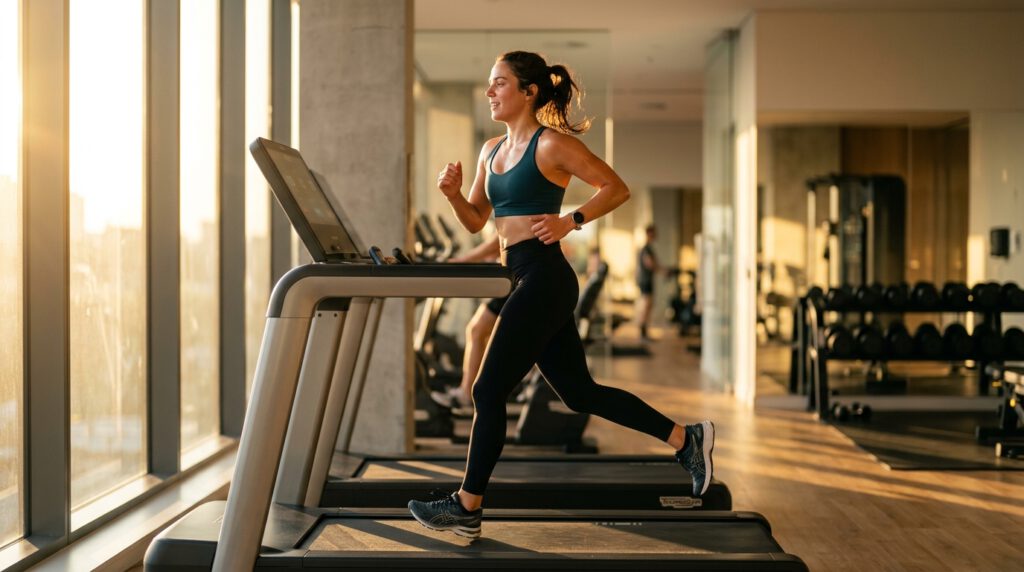
4. Ease In With a Warm-Up Lap
Instead of heading straight for the weights, start on a treadmill or bike that faces the gym floor. A few minutes of light cardio lets you get a feel for the space, see how things flow, and mentally prepare — without the pressure of jumping straight into unfamiliar equipment.
5. Bring Your Own Comfort Zone
A great playlist and a solid pair of headphones can do wonders. Music creates a personal bubble that helps you focus on your workout instead of your surroundings, and it can genuinely boost your mood before you even start.
Wear whatever makes you feel comfortable and confident — there’s no dress code for confidence.
6. Get a Little Professional Guidance
Many gyms offer a free session with a personal trainer for new members — take it. A trainer can walk you through proper form, how to adjust machines, and how to structure a workout, which removes a huge chunk of the guesswork (and the anxiety that comes with it).
7. Try a Beginner-Friendly Class
It might feel counterintuitive to try group fitness when you’re anxious about being watched, but instructor-led classes actually take the pressure off. The instructor tells you exactly what to do, so there’s no second-guessing — and everyone in the room is focused on following along, not judging you.
8. Bring a Friend
Working out with someone you trust — especially someone who already knows the gym — can make the whole experience feel lighter. They can show you around, keep you company, and take away some of the “unknown” that fuels anxiety in the first place.
9. Start Ridiculously Small
You don’t need a full hour-long session to count as a win. A 10-minute walk on the treadmill or a short stretch session is still a real workout. Gradual, repeated exposure to the gym — even in small doses — builds comfort and confidence over time.
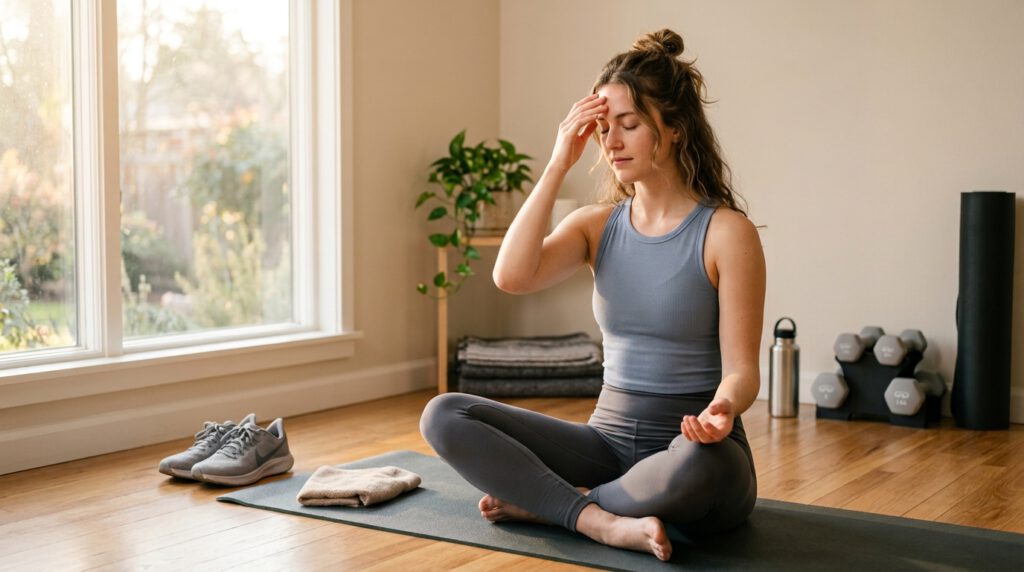
10. Practice the 3-3-3 Grounding Technique
If anxiety hits in the moment, try this simple grounding exercise:
- Name three things you can see around you.
- Name three things you can hear.
- Notice three physical sensations in your body.
This quick mental reset can pull you out of a spiral of anxious thoughts and back into the present moment.
Reframe Your Inner Dialogue
Negative self-talk is often at the root of gym anxiety. Thoughts like “everyone’s watching me” or “I look ridiculous” can spiral quickly if left unchecked. Try catching those thoughts and gently reframing them:
- Instead of “That person thinks I have no idea what I’m doing,” try “That person is focused on their own workout, just like I should be.”
- Instead of “I don’t know what I’m doing,” try “I’m learning something new, and that’s okay.”
Over time, this kind of reframing becomes second nature — and it doesn’t just help at the gym.
When the Gym Still Feels Like Too Much
If you’re not ready to walk through those doors yet, that’s okay. There are plenty of ways to stay active in the meantime:
- Work out at home using free workout videos or fitness apps — no equipment required.
- Get moving outdoors with a walk, jog, bike ride, or a pickup game of basketball.
- Look for a smaller, more inclusive gym or studio if a big, crowded facility feels like too much. Sometimes a change of environment — like an all-female gym or a body-inclusive studio — makes all the difference.
When to Reach Out for Extra Support
Occasional nerves about the gym are completely normal. But if your anxiety is intense, doesn’t improve with these strategies, or is affecting other parts of your life — like work, school, or relationships — it may be worth talking to a mental health professional. Gym anxiety can sometimes be connected to broader conditions like social anxiety disorder, generalized anxiety disorder, or panic disorder, all of which are very treatable with the right support.
Frequently Asked Questions
How do I stop a panic attack at the gym?
Step outside or find a quiet corner to reset, use a grounding technique like the 3-3-3 rule, and focus on slow, deep breathing. Staying hydrated and easing into unfamiliar exercises gradually can also help prevent panic attacks before they start.
Is it normal to feel anxious every time I go to the gym, even after a few visits?
It’s common in the beginning, but it should gradually ease as the environment becomes familiar. If the anxiety stays just as intense after many visits, consider adjusting your approach — a different time of day, a smaller gym, or a class format — or speaking with a professional.
What’s the best type of exercise if I have anxiety?
There’s no single “best” exercise — what matters most is choosing something you enjoy and can stick with. Many beginners find that structured classes or simple cardio machines feel more approachable than jumping straight into free weights.
How can I support a friend who has gym anxiety?
Offer to go with them, let them set the pace, and avoid pushing them into anything they’re not ready for. Sometimes just having a familiar face nearby is enough to make the gym feel far less intimidating.
The Bottom Line
Gym anxiety is real, common, and nothing to be embarrassed about. Nearly everyone who now walks confidently onto a gym floor once stood exactly where you are — nervous, unsure, and wondering if they belonged there. With a plan, a bit of preparation, and small consistent steps, that fear fades faster than you’d expect.
You don’t have to be fearless to start. You just have to start.
Related Posts


Stay Informed With the Latest & Most Important News
Previous Post
Next Post










Advertisement