



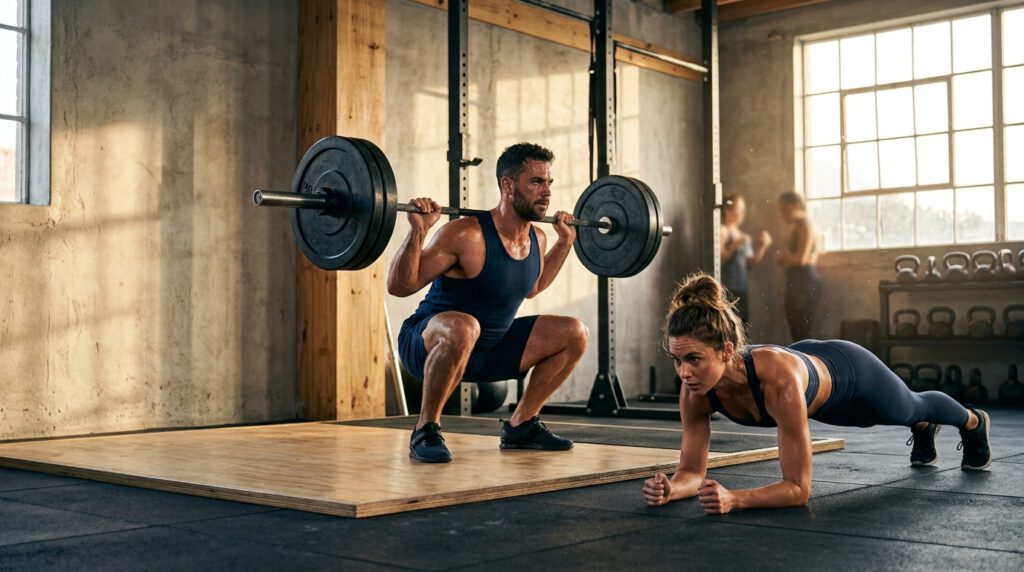
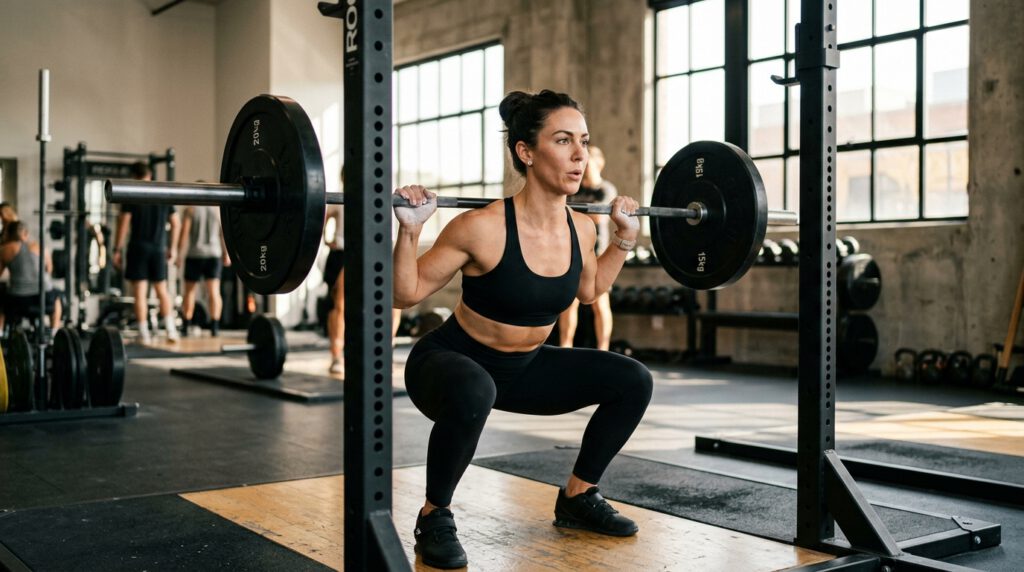
















Now Reading: Push Pull Legs vs Full Body: Which Is Better for Beginners?
-
01
Push Pull Legs vs Full Body: Which Is Better for Beginners?


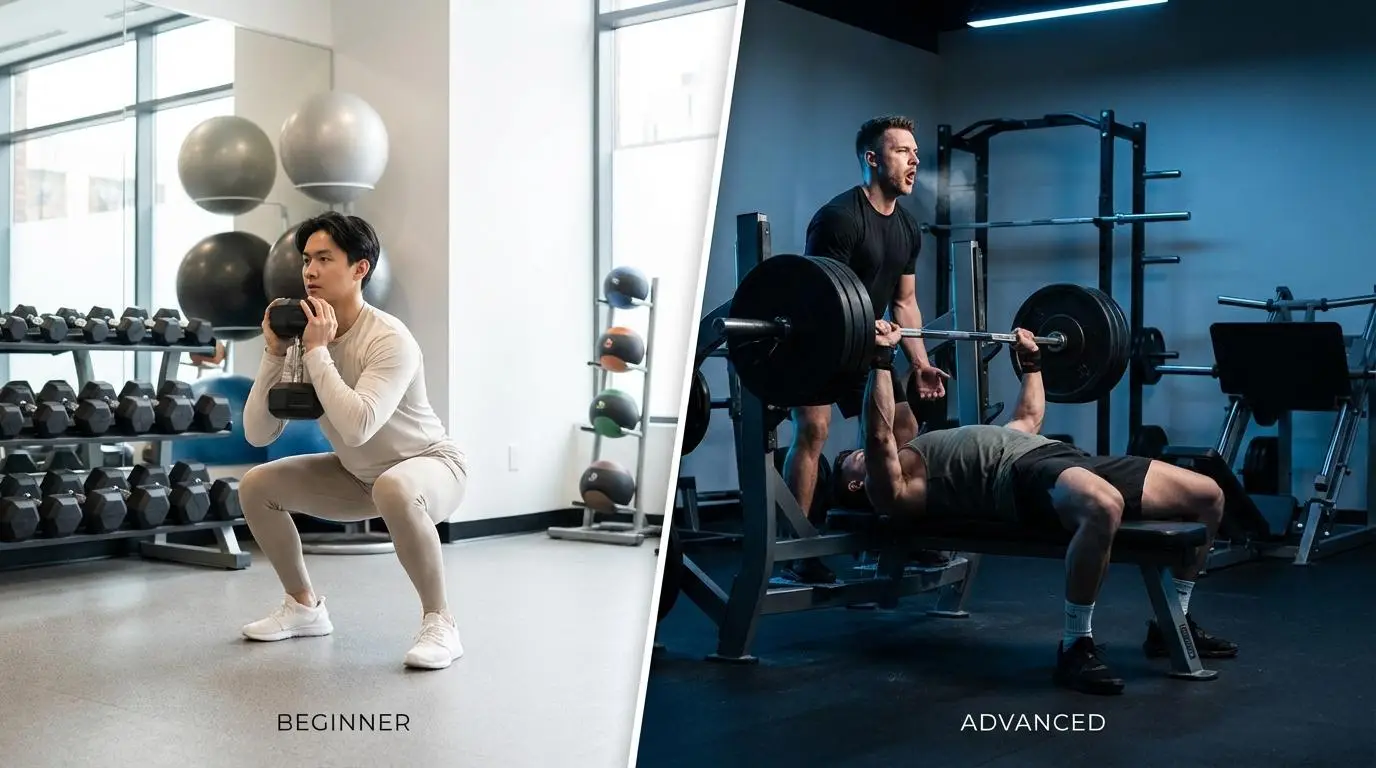
Starting a strength training program can feel confusing, especially when you come across popular workout splits like Push Pull Legs (PPL) and Full Body workouts.
Both approaches can help you build muscle, increase strength, and improve your fitness. But they organize your training in very different ways.
So, when it comes to Push Pull Legs vs Full Body, which workout split is better for beginners?
For most people who are new to strength training, a Full Body workout is usually the more practical starting point. It allows you to train major muscle groups multiple times per week, practice fundamental exercises regularly, and make progress without requiring a high number of gym days.
However, that doesn’t mean Push Pull Legs is a bad choice for beginners—or that Full Body will always produce better results.
The best workout split ultimately depends on your training frequency, goals, schedule, recovery, and ability to stay consistent.
In this guide, we’ll compare Push Pull Legs vs Full Body, explain the pros and cons of each, and help you decide which one makes the most sense for your fitness journey.
Table of contents
- Push Pull Legs vs Full Body: Quick Answer
- What Is a Push Pull Legs (PPL) Workout?
- Benefits of Push Pull Legs
- Drawbacks of Push Pull Legs for Beginners
- What Is a Full Body Workout?
- Push Pull Legs vs Full Body: Key Differences
- Is Full Body Better Than PPL for Beginners?
- Why Full Body Training Works So Well for Beginners
- Does Training a Muscle More Often Build More Muscle?
- Push Pull Legs vs Full Body for Muscle Growth
- Push Pull Legs vs Full Body for Strength
- Which Is Better for Fat Loss?
- How Many Days Should a Beginner Train?
- Can Beginners Do Push Pull Legs?
- When Should You Choose Push Pull Legs?
- Full Body vs PPL: Which Should You Choose?
- Full Body vs PPL: Decision Based on Your Goal
- Can You Combine Full Body and PPL?
- What Matters More Than Your Workout Split?
- Common Beginner Mistakes When Choosing a Workout Split
- Push Pull Legs vs Full Body: The Bottom Line
- Frequently Asked Questions
- Is Full Body better than PPL for beginners?
- How many days a week should beginners work out?
- Can beginners do Push Pull Legs?
- Is PPL better for muscle growth?
- Is Full Body better for fat loss?
- How long should beginners do Full Body workouts?
- Should I switch from Full Body to PPL?
- Can I build muscle with Full Body workouts?
- Frequently Asked Questions
Push Pull Legs vs Full Body: Quick Answer
If you’re looking for the short answer:
Full Body is generally the better starting point for beginners who can train 2–4 days per week.
It provides a simple way to train the major muscle groups regularly without requiring six gym sessions every week.
Push Pull Legs can also work for beginners, particularly if you enjoy the structure and can consistently train several days per week. However, a traditional PPL routine is often more useful once you want more training volume or need to dedicate additional work to specific muscle groups.
Most importantly, research does not show that a split routine is inherently superior to Full Body training when total training volume is similar. A 2024 systematic review and meta-analysis found similar improvements in strength and muscle growth between split and Full Body routines when training volume was equated.
What Is a Push Pull Legs (PPL) Workout?
Push Pull Legs, commonly called PPL, is a resistance training split that organizes exercises according to movement patterns and the muscles involved.
A typical PPL program divides your workouts into three categories:
Push Day
Push workouts generally train muscles involved in pressing movements, including:
- Chest
- Shoulders
- Triceps
Common exercises include:
- Bench press
- Overhead press
- Incline dumbbell press
- Dumbbell shoulder press
- Lateral raises
- Triceps extensions
Pull Day
Pull workouts focus on muscles responsible for pulling movements, including:
- Back
- Biceps
- Rear delts
Common exercises include:
- Pull-ups
- Lat pulldowns
- Barbell rows
- Seated cable rows
- Face pulls
- Biceps curls
Leg Day
Leg workouts typically target:
- Quadriceps
- Hamstrings
- Glutes
- Calves
Exercises can include:
- Squats
- Romanian deadlifts
- Leg presses
- Lunges
- Leg curls
- Calf raises
How Often Do You Do PPL?
One advantage of PPL is its flexibility.
You can use it as a 3-day-per-week routine, training Push, Pull, and Legs once each week.
You can also run a higher-frequency version such as:
- Monday: Push
- Tuesday: Pull
- Wednesday: Rest
- Thursday: Legs
- Friday: Push
- Saturday: Pull
- Sunday: Rest
Or use a six-day rotation:
Push → Pull → Legs → Push → Pull → Legs
The important point is that PPL doesn’t automatically mean you have to train six days per week.
For beginners, however, a six-day PPL schedule may be unnecessarily demanding.
Benefits of Push Pull Legs
PPL can be an effective training structure, especially when your training experience and weekly volume increase.
1. More Room for Training Volume
Because each session focuses on fewer muscle groups, you can perform more exercises and sets for a particular area without trying to train your entire body in one workout.
This can be useful for people focused heavily on muscle hypertrophy.
Research suggests that weekly resistance-training volume is an important factor in muscle growth, meaning that increasing useful training volume can support greater hypertrophy—provided you can recover from it.
2. Focused Workouts
A PPL workout allows you to concentrate on a smaller number of muscle groups.
For example, on Push Day, you don’t need to move from legs to back to chest and then shoulders. Instead, your exercises follow a more focused theme.
3. Useful for Higher Training Frequencies
If you enjoy going to the gym frequently, PPL can make it easier to distribute your weekly training volume across multiple sessions.
4. Easy to Customize
You can add or reduce exercises depending on your goals.
For example, someone trying to bring up their shoulders might dedicate additional work to lateral raises and pressing movements.
Drawbacks of Push Pull Legs for Beginners
PPL isn’t automatically better simply because it looks more advanced.
Higher Time Commitment
A traditional PPL routine may require more gym sessions than a beginner actually needs.
If you can only train two or three times per week, a Full Body routine may make it easier to train all major muscle groups consistently.
More Complicated Programming
Beginners need to learn basic movement patterns, exercise technique, progressive overload, and recovery.
Adding a complicated training split too early can make the process harder than necessary.
Missing a Workout Can Matter More
With a classic once-per-week PPL schedule, missing Leg Day means you may go a full week before training your legs again.
That’s one reason beginners may benefit from a routine that trains each major muscle group more frequently.
What Is a Full Body Workout?
A Full Body workout trains multiple major muscle groups during the same training session.
Instead of separating chest, back, and legs into different days, you might perform a combination of:
- Squats or another leg exercise
- Bench press or push-ups
- Rows or lat pulldowns
- Romanian deadlifts
- Lunges
- Shoulder exercises
- Core work
You don’t necessarily need to perform every exercise in every session.
A well-designed Full Body program distributes exercises throughout the week so that you can train the major movement patterns without making each workout excessively long or exhausting.
Benefits of Full Body Workouts
1. Excellent for Beginners
Full Body training gives beginners frequent opportunities to practice important movements.
Instead of practicing the squat once every seven days, for example, you might perform a squat variation two or three times per week.
That repeated exposure can make it easier to develop exercise technique and become comfortable with resistance training.
2. Works Well With Fewer Gym Days
Full Body training is especially convenient if you have a busy schedule.
A beginner can build an effective program around two or three resistance-training sessions per week, depending on their goals and overall activity.
Current ACSM guidance emphasizes training all major muscle groups at least twice per week and prioritizes consistency over complicated programming.
3. Easier to Maintain
Life doesn’t always go according to plan.
If you miss a workout in a Full Body program, you’ve still trained your major muscle groups recently rather than potentially missing an entire body part for the week.
4. Efficient Training
A Full Body workout can combine several major movement patterns into one session.
That makes it a practical option for people who don’t have time to visit the gym five or six days every week.
Push Pull Legs vs Full Body: Key Differences
| Feature | Push Pull Legs | Full Body |
|---|---|---|
| Basic structure | Push, Pull, Legs | Major muscle groups in each workout |
| Typical frequency | 3–6 days/week | 2–4 days/week |
| Muscle frequency | Depends on PPL setup | Usually 2–3 times/week |
| Session focus | Specific muscle groups/movements | Whole-body training |
| Training volume | Easier to distribute high volume | Moderate volume per session |
| Best for | Intermediate lifters and higher-volume training | Beginners and people with limited time |
| Flexibility | High | High |
| Learning exercises | Less frequent practice of some movements | More frequent practice |
| Recovery | Distributed by muscle group | Requires planning across the whole body |
| Complexity | Moderate | Usually simpler |
The table describes common ways these routines are used—not strict rules. A PPL routine can be designed for three days per week, while Full Body training can also be performed four days per week.
Is Full Body Better Than PPL for Beginners?
Usually, yes—but not because Full Body is inherently superior for muscle growth.
The main advantage for beginners is practicality.
A beginner often benefits from:
- Frequent practice of basic exercises
- A manageable number of weekly gym sessions
- Simple progression
- Adequate recovery
- Consistent training
A Full Body program can provide all of these things.
But there’s an important distinction:
Full Body isn’t automatically better for building muscle.
A 2024 systematic review and meta-analysis comparing split and Full Body resistance training found no significant difference in muscle growth or strength when training volume was equated.
That means the real question isn’t simply:
“Which workout split builds more muscle?”
Instead, ask:
“Which program allows me to train consistently while doing enough quality work and recovering properly?”
For many beginners, the answer is Full Body.
Why Full Body Training Works So Well for Beginners
1. You Practice Movements More Often
Beginners need time to learn how to perform resistance exercises correctly.
Training major movement patterns several times per week gives you more opportunities to improve.
This can be especially useful for exercises such as:
- Squats
- Hip hinges
- Rows
- Presses
- Lunges
- Pull-downs
The goal isn’t to lift as much weight as possible immediately.
The goal is to develop good technique and gradually become stronger.
2. It Fits a Busy Schedule
You don’t need to spend six days in the gym to make progress.
For many beginners, three Full Body workouts per week provide a simple and sustainable starting point.
For example:
Monday: Full Body A
Wednesday: Full Body B
Friday: Full Body A
The following week, you could switch the order:
Monday: Full Body B
Wednesday: Full Body A
Friday: Full Body B
This approach provides regular exposure to the major movement patterns while allowing rest days between sessions.
3. It Helps Build a Strong Foundation
Beginners shouldn’t worry about doing dozens of isolation exercises.
Early progress comes from mastering fundamental movement patterns and gradually increasing training demands.
A simple Full Body routine can help you establish that foundation before moving toward a more specialized split.
4. It Can Be Easier to Recover From
Beginners often experience significant soreness when they first start resistance training.
A sensible Full Body routine doesn’t mean doing enormous amounts of work for every muscle in every workout.
Instead, you can use a manageable number of exercises and sets and gradually increase your training load.
The 2026 ACSM resistance-training guidance emphasizes individualization and gradual progression rather than unnecessarily complicated training methods.
Does Training a Muscle More Often Build More Muscle?
This is where the comparison gets more interesting.
Older research suggested that training muscles around twice per week could be advantageous compared with once-weekly training.
However, more recent evidence indicates that training frequency by itself isn’t the main driver of hypertrophy when total weekly volume is matched.
A systematic review and meta-analysis found no meaningful difference in muscle hypertrophy between different training frequencies when volume was equated.
In other words:
Frequency is a tool for organizing your training volume—not a magic muscle-building variable.
Training a muscle three times per week isn’t automatically better than training it twice.
The advantage of higher frequency is often that it allows you to distribute your weekly work more comfortably and maintain better workout quality.
Push Pull Legs vs Full Body for Muscle Growth
If your primary goal is building muscle, both programs can work.
The deciding factors include:
- Weekly training volume
- Exercise selection
- Training effort
- Progressive overload
- Nutrition
- Sleep
- Recovery
- Consistency
PPL may become more convenient as you need more weekly volume.
For example, imagine you eventually want to perform a relatively high amount of weekly work for your chest, back, legs, shoulders, and arms.
Trying to fit everything into three Full Body workouts could make individual sessions very long.
A PPL split can distribute that work across more training days.
But for a beginner, you generally don’t need extremely high training volume.
That’s why PPL isn’t automatically the better choice simply because your goal is hypertrophy.
Push Pull Legs vs Full Body for Strength
Both routines can increase strength.
For beginners, however, Full Body training can be particularly useful because you can practice important compound movements more regularly.
Over time, strength gains depend on factors such as:
- Progressive overload
- Exercise technique
- Training volume
- Training intensity
- Recovery
- Consistency
Research comparing split and Full Body routines has found similar strength improvements when training volume is comparable.
So you don’t need a PPL split to become strong.
Which Is Better for Fat Loss?
This is another area where workout split comparisons can become misleading.
Neither Full Body nor PPL automatically causes more fat loss.
Fat loss primarily depends on maintaining an appropriate energy balance over time.
Resistance training can help preserve or build lean muscle while you’re losing body weight, but the workout split itself isn’t a fat-loss shortcut.
Full Body training may be a convenient choice during a fat-loss phase because it allows you to train major muscle groups with relatively few weekly sessions.
But PPL can work too.
The better choice is the routine you can perform consistently while maintaining your nutrition and overall activity.
How Many Days Should a Beginner Train?
For most beginners, two to three resistance-training days per week can be a practical starting point.
Three days is particularly convenient for a Full Body program because you can place rest days between workouts.
For example:
3-Day Beginner Full Body Schedule
Monday
- Squat
- Bench press
- Row
- Romanian deadlift
- Core exercise
Wednesday
- Leg press or lunge
- Overhead press
- Lat pulldown
- Hip hinge variation
- Core exercise
Friday
- Squat variation
- Incline press
- Cable or dumbbell row
- Leg curl
- Optional arm work
This is only an example framework—not a universal prescription. Exercise selection should be adjusted to your equipment, experience, preferences, and ability.
ACSM’s current guidance emphasizes regular resistance training for all major muscle groups and making the program fit the individual rather than following a rigid one-size-fits-all formula.
Can Beginners Do Push Pull Legs?
Yes.
There’s nothing inherently wrong with a beginner using PPL.
The problem is assuming that a beginner needs an advanced six-day PPL routine to make progress.
A three-day PPL schedule can look like:
Monday: Push
Wednesday: Pull
Friday: Legs
However, this setup means each major muscle group is directly trained only once per week.
Another option is to rotate through the three workouts continuously rather than restarting every Monday.
For example:
Week 1:
- Monday: Push
- Wednesday: Pull
- Friday: Legs
Week 2:
- Monday: Push
- Wednesday: Pull
- Friday: Legs
If you’re only training three days per week, a Full Body routine may be more practical if you want to train each major muscle group multiple times throughout the week.
When Should You Choose Push Pull Legs?
PPL may make more sense when:
- You enjoy training frequently
- You have four or more days available
- You want to increase weekly training volume
- You enjoy more specialized workouts
- You want additional work for specific muscle groups
- You have enough training experience to manage recovery and progression
You don’t necessarily need two years of training experience before trying PPL.
The idea that you must wait exactly 1–2 years before switching to a split is too rigid.
There is no universal deadline.
Instead, consider changing your routine when your current program no longer fits your goals, schedule, preferences, or ability to manage training volume.
Full Body vs PPL: Which Should You Choose?
Here’s a simple way to decide.
Choose Full Body if:
- You’re new to resistance training
- You can train 2–4 days per week
- You want a simple program
- You want frequent practice of basic exercises
- Your schedule changes frequently
- You want an efficient routine
Choose PPL if:
- You enjoy training more frequently
- You want more room for weekly volume
- You prefer specialized sessions
- You want to focus on particular muscle groups
- You already have some training experience
- Your schedule supports several gym sessions per week
Full Body vs PPL: Decision Based on Your Goal
| Your Situation | Better Starting Choice |
| Complete beginner | Full Body |
| Only 2 days available | Full Body |
| 3 days available | Full Body is often easier |
| 4 days available | Either can work |
| 5–6 days available | PPL becomes more practical |
| General fitness | Full Body |
| Learning basic movements | Full Body |
| High-volume hypertrophy training | PPL may be more convenient |
| Specializing in weak muscle groups | PPL may be useful |
| Frequently changing schedule | Full Body |
| Experienced lifter | Either, depending on goals |
Remember: these are practical guidelines rather than hard rules.
Can You Combine Full Body and PPL?
Yes.
You don’t have to permanently commit to one training split.
A hybrid approach can be useful if your schedule or goals change.
For example, someone might use:
Monday: Full Body
Wednesday: Push
Friday: Full Body
Saturday: Pull/Leg emphasis
Or you could use a Full Body routine during busy periods and transition to PPL when you have more time.
The best program isn’t necessarily the one with the most complicated structure.
It’s the one that gives you enough productive training while allowing you to recover and remain consistent.
What Matters More Than Your Workout Split?
If you’re a beginner, don’t spend too much time worrying about whether PPL or Full Body is theoretically superior.
Focus on these fundamentals first:
1. Consistency
Training regularly matters more than finding the “perfect” split.
The 2026 ACSM position stand reviewed more than 137 systematic reviews involving over 30,000 participants and emphasized consistency and individualization as central principles of effective resistance training.
2. Progressive Overload
Your training needs to become appropriately more challenging over time.
That might mean:
- Adding weight
- Performing more repetitions
- Adding a set
- Improving technique
- Increasing your range of motion
Progress doesn’t mean increasing weight every single workout.
3. Good Technique
Don’t sacrifice form simply to lift heavier weights.
Beginners should prioritize controlled, repeatable technique before chasing maximum loads.
4. Adequate Recovery
Your muscles need time to recover between challenging workouts.
Sleep, nutrition, rest days, and sensible training volume all matter.
5. Enough Weekly Volume
If muscle growth is your goal, total weekly training volume is an important consideration.
Current ACSM guidance suggests that higher weekly volume can be useful for hypertrophy, with approximately 10 sets per muscle group per week being a practical target for many adults—but this shouldn’t be treated as a rigid requirement for every beginner.
Common Beginner Mistakes When Choosing a Workout Split
Choosing PPL Because It Looks More Advanced
A complicated routine isn’t necessarily more effective.
If you can’t consistently complete a six-day program, a simpler three-day routine will likely serve you better.
Changing Programs Too Frequently
Give your routine enough time to evaluate whether you’re progressing.
Constantly switching between Full Body, PPL, upper/lower, and other splits can make progression difficult to track.
Doing Too Much Volume Too Soon
Beginners don’t need enormous workouts.
Start with a manageable amount of work and gradually increase your training demands.
Ignoring Recovery
More training isn’t always better.
If performance is consistently declining and fatigue remains high, your program may need adjustment.
Focusing Only on the Split
Your workout split is just one part of the bigger picture.
Exercise selection, weekly volume, effort, progression, nutrition, sleep, and consistency all influence your results.
Push Pull Legs vs Full Body: The Bottom Line
So, Push Pull Legs vs Full Body—which is better for beginners?
For most beginners, Full Body is the better starting point because it is simple, time-efficient, and makes it easy to train major muscle groups regularly.
But don’t confuse “better for beginners” with “better for muscle growth.”
Research suggests that Full Body and split routines can produce similar gains in strength and muscle growth when training volume is comparable.
PPL becomes particularly useful when you have more training days available, want to distribute higher weekly volume across more sessions, or want greater specialization.
So instead of asking:
“Which split is scientifically the best?”
Ask:
“Which program can I perform consistently, progress with, and recover from?”
For a beginner training around three days per week, a simple Full Body routine is often the easiest answer.
As your experience, goals, and available training time change, you can always move to PPL—or another training split that better fits your needs.
The best workout routine is ultimately the one you can follow consistently and progress with over time.
Frequently Asked Questions
Is Full Body better than PPL for beginners?
For most beginners, Full Body is a practical starting choice because it is simple, efficient, and allows frequent practice of major movements. However, PPL can also work if it fits your schedule and preferences.
How many days a week should beginners work out?
A beginner can start with two or three resistance-training sessions per week, depending on their schedule, fitness level, and goals. Training all major muscle groups at least twice per week is consistent with current ACSM guidance.
Can beginners do Push Pull Legs?
Yes. Beginners can use PPL, but they don’t need to train six days per week. A three-day PPL routine is possible, although Full Body may be more convenient when you want to train all major muscle groups multiple times per week.
Is PPL better for muscle growth?
Not necessarily. Evidence suggests that split and Full Body routines can produce similar muscle growth when overall training volume is comparable. PPL can, however, make higher training volumes easier to distribute across the week.
Is Full Body better for fat loss?
Not automatically. Fat loss depends primarily on maintaining an appropriate energy balance. Full Body can be convenient during a fat-loss phase because it provides efficient resistance training with fewer weekly gym sessions.
How long should beginners do Full Body workouts?
There is no fixed time limit. You don’t have to switch after exactly six months or one year. Stay with Full Body as long as you’re progressing, recovering well, and enjoying the routine. Change your split when your goals, schedule, or training needs change.
Should I switch from Full Body to PPL?
You can consider switching when you want more training volume, have more days available to train, want to specialize in certain muscle groups, or simply prefer the structure of PPL. You don’t need to reach a specific number of months or years before making the change.
Can I build muscle with Full Body workouts?
Absolutely. Full Body training can build muscle effectively when you use appropriate exercises, sufficient training volume, progressive overload, and adequate recovery.
Related Posts

Stay Informed With the Latest & Most Important News
Previous Post
Next Post









Advertisement