




















Now Reading: The Neuroscience of Friction: How to De-Optimize Bad Habits and Automate Good Ones
-
01
The Neuroscience of Friction: How to De-Optimize Bad Habits and Automate Good Ones


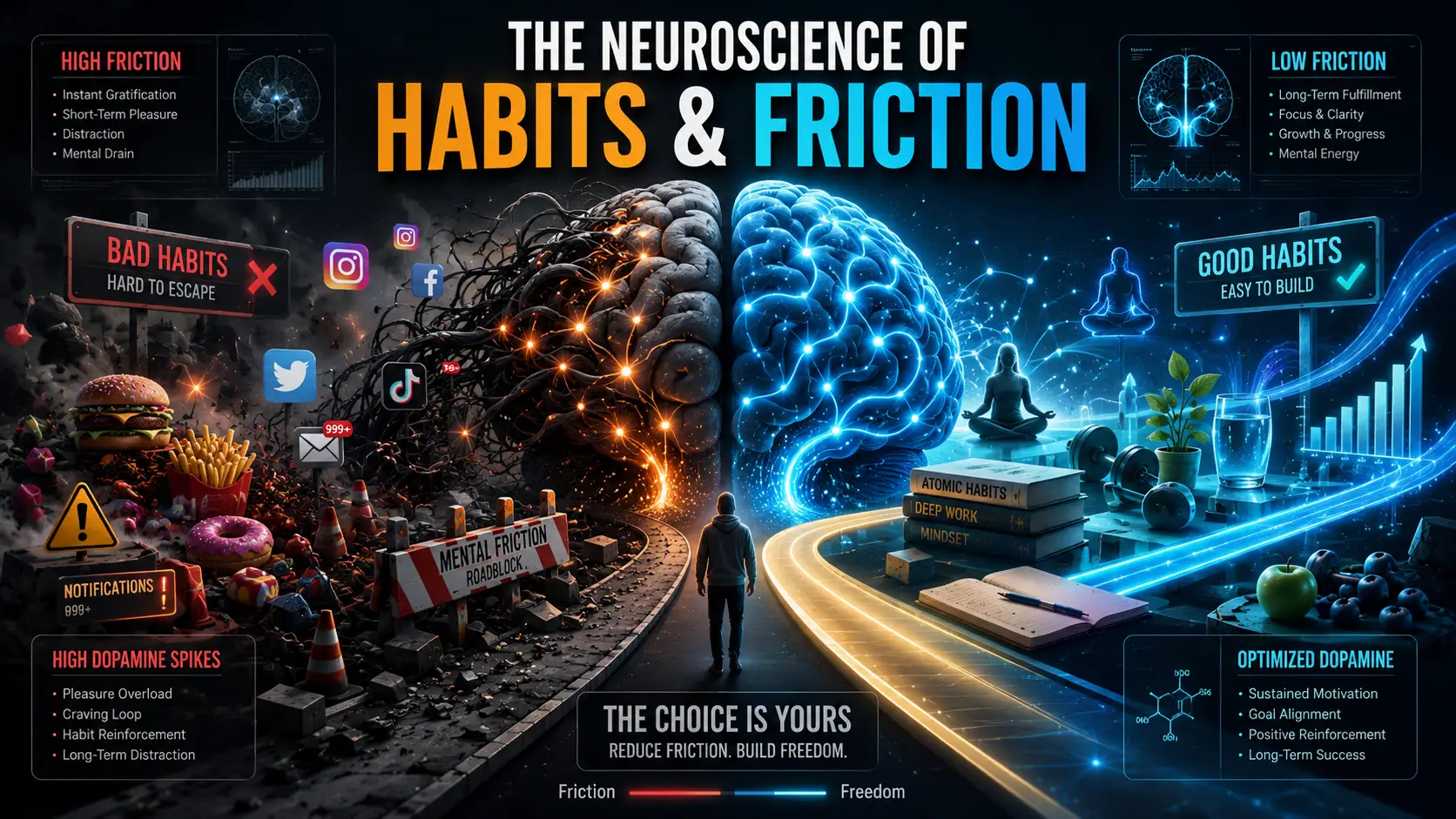
Why is it so easy to scroll social media for hours but so hard to meditate for five minutes?
The answer lies in how your brain handles friction.
Your brain is constantly searching for the easiest path toward reward. Habits that feel effortless become automatic, while behaviors requiring extra mental or physical effort often get ignored. This is why understanding the neuroscience of friction can completely transform your productivity, health, and self-discipline.
By intentionally increasing friction for bad habits and reducing friction for good ones, you can rewire your brain to work for you instead of against you.
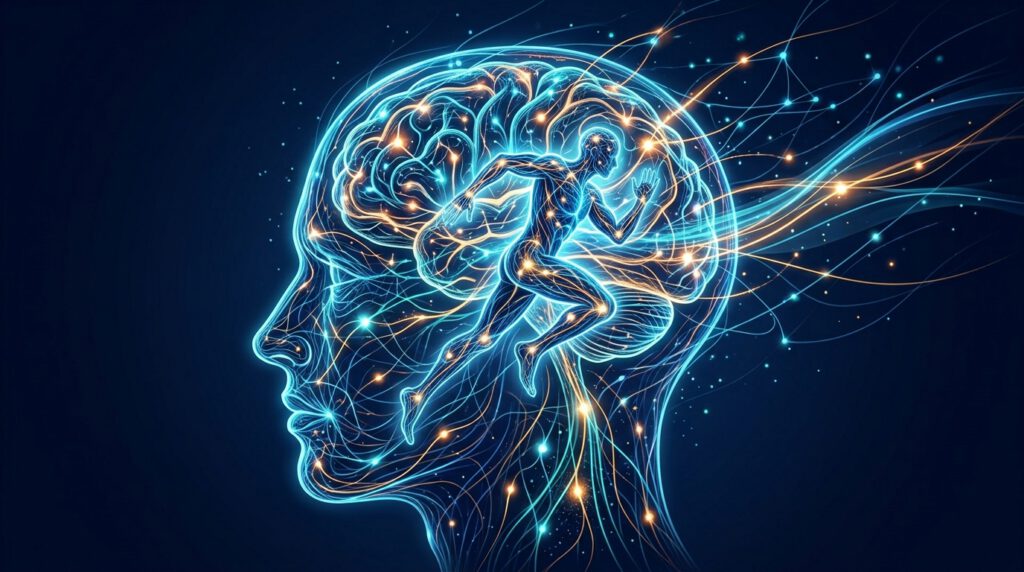
This process is backed by neuroscience, habit psychology, and the brain’s ability to reshape itself through neuroplasticity.
Table of contents
What Is Behavioral Friction?
Behavioral friction refers to any obstacle — physical, mental, emotional, or environmental — that makes a behavior harder or easier to perform.
Small inconveniences can dramatically influence your decisions.
For example:
- Keeping junk food in the kitchen increases the likelihood of snacking.
- Leaving your phone beside your bed increases the chance of doomscrolling.
- Placing workout clothes beside the bed increases the likelihood of exercising.
Your brain naturally gravitates toward behaviors requiring the least effort. This principle is deeply connected to survival and energy conservation.
The key is simple:
- Increase friction for bad habits.
- Decrease friction for good habits.
The Neuroscience Behind Habit Formation
To understand why friction works, you need to understand how habits are formed inside the brain.
The Basal Ganglia: Your Brain’s Autopilot System
The basal ganglia is the brain region responsible for automating repeated behaviors.
Once a behavior is repeated enough times, your brain transfers control from conscious thinking to automatic execution. This allows you to perform routines like driving, brushing your teeth, or checking your phone without much thought.
The brain does this to conserve mental energy.
Habits are essentially compressed behavioral shortcuts.
This is why bad habits can feel incredibly difficult to break — they are neurologically optimized.
The Prefrontal Cortex and Willpower
Your prefrontal cortex handles:
- Decision-making
- Self-control
- Focus
- Planning
- Delayed gratification
But the prefrontal cortex consumes significant cognitive energy.
Relying purely on willpower is exhausting.
When you manipulate friction correctly, you reduce the need for constant self-control. Instead of fighting temptations mentally, you redesign your environment so better behaviors happen automatically.
You stop relying on motivation and start relying on systems.
Dopamine and Anticipation
Many people think dopamine is only released after a reward.
In reality, dopamine spikes in anticipation of a reward.
Your brain constantly predicts which behaviors will produce pleasure, relief, or satisfaction. Once the brain associates a cue with a reward, it begins craving the behavior automatically.
This creates the famous habit loop:
- Cue
- Craving
- Response
- Reward
Over time, the loop becomes deeply embedded in neural pathways.
That’s why environmental triggers matter so much.
How to De-Optimize Bad Habits
Breaking bad habits is rarely about discipline alone.
It’s about making the unwanted behavior inconvenient enough that your brain chooses an easier alternative.
1. Create Physical Barriers
Physical distance weakens automatic behavior.
If you constantly eat unhealthy snacks:
- Move them to a hard-to-reach location.
- Stop storing them in visible areas.
- Avoid buying them entirely.
If your phone distracts you:
- Put it in another room.
- Use a timed lockbox.
- Delete addictive apps temporarily.
Even tiny increases in inconvenience reduce impulsive behavior dramatically.
2. Increase the Number of Steps
The more steps required to perform a habit, the less automatic it becomes.
Examples include:
- Removing saved credit card information
- Logging out of social media accounts
- Turning off autoplay on streaming apps
- Using website blockers like Freedom
Each extra step interrupts the brain’s automatic routine.
This gives the prefrontal cortex time to regain control.
3. Use the 20-Second Rule
Psychologist Shawn Achor popularized the “20-Second Rule.”
The idea is simple:
Add just 20 seconds of inconvenience to a bad habit.
Examples:
- Remove batteries from the TV remote
- Store gaming consoles in a closet
- Keep distracting apps behind multiple folders
Those few seconds are often enough to break impulsive momentum.
4. Replace Instead of Remove
The brain hates behavioral voids.
Instead of eliminating a habit completely, replace it with a healthier alternative.
For example:
- Replace stress smoking with walking
- Replace late-night scrolling with audiobooks
- Replace sugary snacks with fruit or tea
The cue stays the same, but the response changes.
This is far more sustainable than relying on suppression alone.
How to Automate Good Habits
Building good habits requires reducing activation energy.
You want positive behaviors to become the easiest option available.
1. Prepare Your Environment
Environment design is one of the most powerful behavior-change tools.
Examples:
- Lay out workout clothes the night before
- Put a book on your pillow
- Keep a water bottle on your desk
- Place healthy snacks within reach
When the desired behavior is obvious and convenient, resistance decreases dramatically.
2. Use Habit Stacking
Habit stacking connects a new habit to an existing routine.
This works because the brain already has strong neural pathways attached to established behaviors.
Examples:
- Meditate after brewing coffee
- Stretch after brushing your teeth
- Practice gratitude before sleeping
- Walk during your lunch break
The existing habit becomes the trigger for the new one.
3. Create Implementation Intentions
Vague goals rarely work.
Specific “if-then” plans are far more effective.
Instead of:
“I’ll work out more.”
Use:
“If it is 7:00 AM on Monday, Wednesday, and Friday, then I will put on my running shoes and walk for 20 minutes.”
This reduces decision fatigue and increases behavioral consistency.
4. Start Extremely Small
One of the biggest mistakes people make is setting goals that require massive motivation.
Research shows habits form through repetition, not intensity.
Start tiny:
- Read one page
- Meditate for one minute
- Do five pushups
- Walk for five minutes
Small wins create dopamine reinforcement, making repetition easier over time.
The Science of Neuroplasticity
Your brain is not fixed.
It constantly rewires itself based on repeated experiences.
This ability is called neuroplasticity.
There are two forms:
Experience-Dependent Neuroplasticity
This happens automatically through repetition.
The brain strengthens whatever behaviors you repeatedly perform — good or bad.
That’s why mindless scrolling can become automatic.
Self-Directed Neuroplasticity
This is the conscious process of intentionally rewiring your brain.
You actively design your environment, routines, language, and thought patterns to support positive habits.
This is where behavioral friction becomes powerful.
You are no longer passively shaped by your habits.
You become the architect of them.
Why Most Habits Fail
One of the biggest myths in self-improvement is the idea that habits form in 21 days.
Research suggests habit formation can take anywhere from a few weeks to several months depending on the complexity of the behavior and the individual.
Most people fail because they rely on:
- Motivation
- Willpower
- Perfectionism
- All-or-nothing thinking
But lasting habits are built through consistency, repetition, and environment design.
Not intensity.
Practical Strategies to Rewire Your Brain
Here are evidence-based ways to make habit formation easier:
Change Your Environment
Your environment often influences behavior more than motivation does.
Design spaces that encourage the identity you want.
Reframe Your Internal Language
Instead of saying:
- “I hate exercise.”
Try:
- “Exercise helps me feel energized and strong.”
Your brain responds to emotional associations.
Visualize Success
Mental rehearsal activates many of the same neural circuits as real action.
Visualization strengthens motivation and behavioral readiness.
Avoid the All-or-Nothing Mindset
Missing one workout does not destroy a fitness habit.
Consistency matters more than perfection.
Progress compounds over time.
The Real Secret to Self-Discipline
The most disciplined people are not constantly resisting temptation.
They simply design environments where good choices happen automatically.
They reduce friction for healthy behaviors and increase friction for destructive ones.
That’s the real neuroscience of habit change.
Success is often less about motivation and more about architecture.
Final Thoughts
Your habits shape your identity, your productivity, your health, and ultimately your future.
The good news is that your brain is adaptable.
By understanding behavioral friction, dopamine, neuroplasticity, and the habit loop, you can intentionally redesign your life.
Start small.
Reduce friction for the person you want to become.
Increase friction for the behaviors holding you back.
Over time, your brain will automate the process — and what once felt difficult will eventually become second nature.
Related Posts



Stay Informed With the Latest & Most Important News
Previous Post
Next Post









Advertisement