

























Now Reading: Why You Feel Lazy to Work Out (And How to Fix It)
-
01
Why You Feel Lazy to Work Out (And How to Fix It)


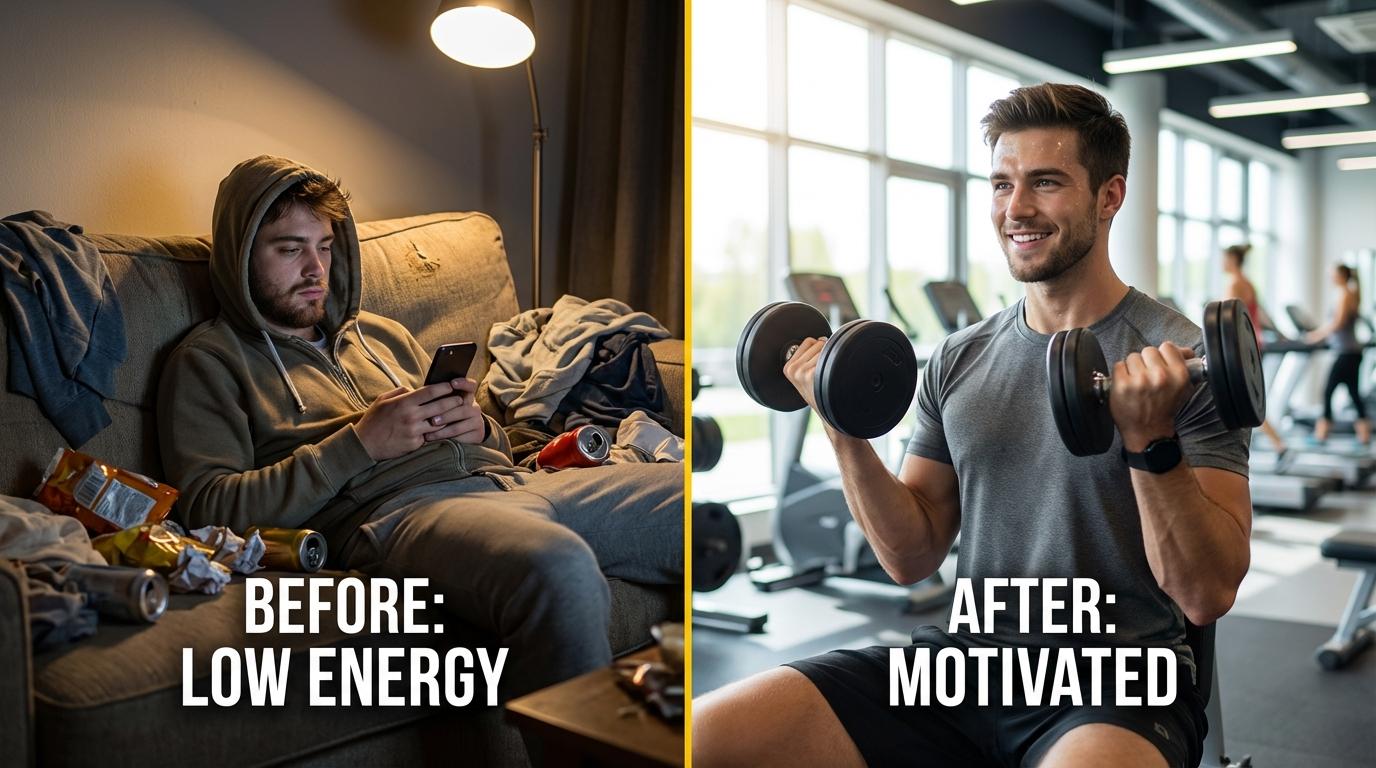
We’ve all been there—you plan to work out, but suddenly you feel too lazy, too tired, or just not in the mood.
The truth is, feeling “lazy” to work out isn’t really about laziness. It’s often a mix of low energy, stress, unrealistic expectations, or simply not enjoying your routine.
The good news? You can fix it.
In this guide, you’ll learn why you feel lazy to work out and practical strategies to rebuild your motivation and stay consistent.
Table of contents
- Why You Feel Lazy to Work Out
- How to Fix It (Proven Strategies)
- 1. Use the 10-Minute Rule
- 2. Lower Your Expectations
- 3. Start with Light Activities
- 4. Find What You Enjoy
- 5. Change Your Environment
- 6. Focus on Your “Why”
- 7. Create a Flexible Workout Schedule
- 8. Move More During the Day
- 9. Use Music as Motivation
- 10. Find a Workout Partner
- 11. Try Something New
- 12. Build the Habit Slowly
- Mindset Shifts That Change Everything
- Boost Your Energy for Exercise
- Final Thoughts
Why You Feel Lazy to Work Out
1. Low Energy and High Stress
If you’re not sleeping well or dealing with stress, your body produces more cortisol, which leads to fatigue and low motivation.
When your energy is low, your brain naturally chooses comfort over effort.
2. Overwhelming Goals
Setting goals that are too big—like working out every day or losing weight quickly—can feel intimidating.
Instead of motivating you, they often make you avoid starting altogether.
3. Lack of Enjoyment
If you hate your workouts, you won’t stick with them. Motivation drops quickly when exercise feels like a chore instead of something enjoyable.
4. Boring Routine (Monotony)
Doing the same workout repeatedly can become dull and uninspiring, making it harder to stay consistent.
5. Your Brain Prefers Comfort
Biologically, your brain is wired to save energy. That means it naturally pushes you toward rest instead of physical effort.
6. Life Stress and Busy Schedule
Work, responsibilities, and daily stress can push workouts to the bottom of your priority list.
7. Unrealistic Expectations
Expecting fast results can lead to frustration. When progress feels slow, motivation disappears.
How to Fix It (Proven Strategies)
1. Use the 10-Minute Rule
Tell yourself you’ll work out for just 10 minutes.
Starting is the hardest part—and once you begin, you’ll likely continue.
2. Lower Your Expectations
Stop aiming for perfection.
Even a short workout is better than nothing. Small, consistent actions beat extreme effort.
3. Start with Light Activities
If intense workouts feel overwhelming, begin with:
- Walking
- Stretching
- Yoga
This helps your body ease into movement without stress.
4. Find What You Enjoy
Don’t force yourself into workouts you hate.
Try different activities like:
- Dancing
- Swimming
- Cycling
- Team sports
Enjoyment is the key to consistency.
5. Change Your Environment
A new workout location can refresh your mindset.
Try:
- Outdoor workouts
- A different gym
- Exercising at home with music
6. Focus on Your “Why”
Ask yourself:
Why do I want to work out?
- Better health
- More energy
- Improved mental wellbeing
A strong purpose keeps you going when motivation fades.
7. Create a Flexible Workout Schedule
Schedule your workouts like appointments—but stay flexible.
Have a backup plan:
- If you can’t do 1 hour → do 15 minutes
- If you miss a session → move the next day
8. Move More During the Day
Don’t rely only on workouts.
Simple movement helps build momentum:
- Walking
- Household chores
- Taking the stairs
9. Use Music as Motivation
Listening to energetic music can boost your mood and make workouts more enjoyable.
10. Find a Workout Partner
Exercising with a friend increases accountability and makes workouts more fun.
11. Try Something New
Break boredom by exploring new activities like:
- Hiking
- Basketball
- Swimming
- Fitness classes
Variety keeps things exciting.
12. Build the Habit Slowly
Don’t go from 0 to 100.
Start small:
- 10–15 minutes daily
- Gradually increase time and intensity
Consistency is more important than intensity.
Mindset Shifts That Change Everything
Avoid the All-or-Nothing Mentality
You don’t need to be perfect.
Working out 3 times a week is still a success.
Focus on Progress, Not Perfection
Small improvements over time lead to big results.
Remember: Any Movement Is Better Than None
Even a short walk is a win.
Boost Your Energy for Exercise
If you constantly feel too tired to work out, fix your energy first:
- Get enough sleep
- Stay hydrated
- Eat balanced meals
- Avoid too much caffeine late in the day
Your energy level directly affects your motivation.
Final Thoughts
Feeling lazy to work out is completely normal—and happens to everyone.
The key isn’t forcing motivation. It’s making exercise easier, more enjoyable, and part of your daily routine.
Start small. Stay consistent. And most importantly—find what works for you.
Because once you build the habit, motivation follows.
Related Posts



Stay Informed With the Latest & Most Important News
Previous Post
Next Post










Advertisement