

















Now Reading: Why You’re Not Losing Weight Despite Eating Healthy (Hidden Calories Explained)
-
01
Why You’re Not Losing Weight Despite Eating Healthy (Hidden Calories Explained)


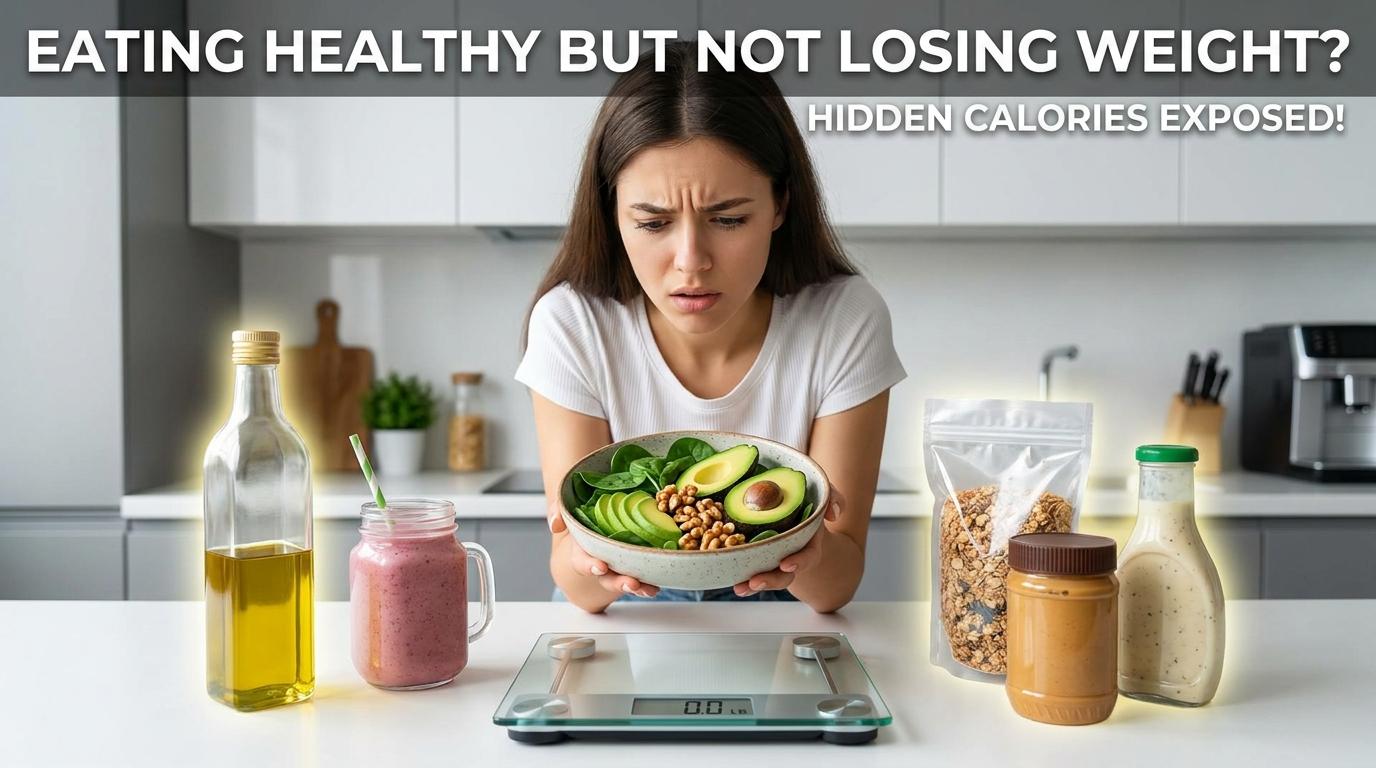
Have you ever wondered why the scale won’t budge—even though you’re eating “healthy” and working out regularly?
You’re not alone.
The truth is, weight loss isn’t just about eating healthy foods. It’s about energy balance—and hidden calories can silently sabotage your progress.
Table of contents
The Real Reason: Hidden Calories
Eating healthy doesn’t automatically mean you’re in a calorie deficit.
Many nutritious foods are calorie-dense, meaning small portions can contain a lot of calories. If you’re unknowingly eating more than your body needs, weight loss will stall.
Top Reasons You’re Not Losing Weight
1. Overestimating Healthy Fats
Healthy fats like olive oil, avocado, and nuts are essential—but they’re high in calories.
- 1 tablespoon of oil ≈ 120 calories
- A few “drizzles” can add hundreds of extra calories
👉 Small additions can completely erase your calorie deficit.
2. Drinking Your Calories
Smoothies, protein shakes, juices, and fancy coffee drinks may seem healthy—but they can be calorie bombs.
Unlike solid food, liquid calories:
- Don’t keep you full
- Are easy to overconsume
3. “Healthy” Foods That Are Calorie-Dense
Foods like:
- Granola
- Nuts & nut butters
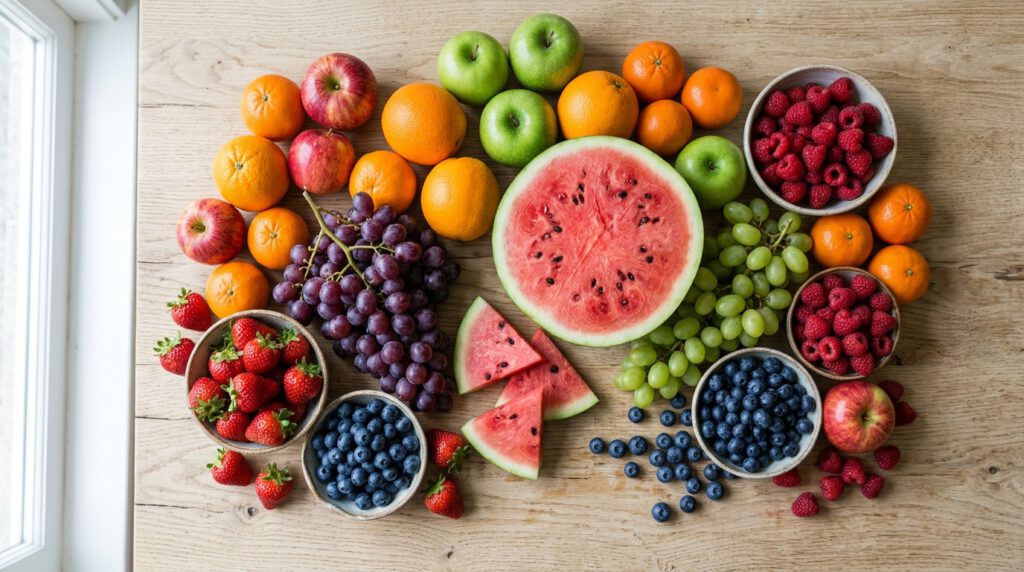
- Dried fruits
are nutritious—but extremely high in calories in small portions.
👉 Easy to overeat without realizing it.
4. Hidden Calories in Sauces & Condiments
Even clean meals can become high-calorie with:
- Salad dressings
- Ketchup
- Hummus
- Balsamic glaze
These add sugar and fat quickly.
5. Restaurant & Takeout Traps
“Healthy” meals at restaurants often include:
- Extra oil
- Butter
- Sugary dressings
👉 You lose control over ingredients and portions.
6. The Weekend Effect
Eating clean all week but overeating on weekends can cancel your progress.
👉 Weekly calorie balance matters more than daily perfection.
Other Hidden Reasons Your Weight Loss Stalled
H3: You Might Be Eating More Than You Think
Without tracking, it’s easy to underestimate calories.
Studies show people who track their food intake lose more weight.
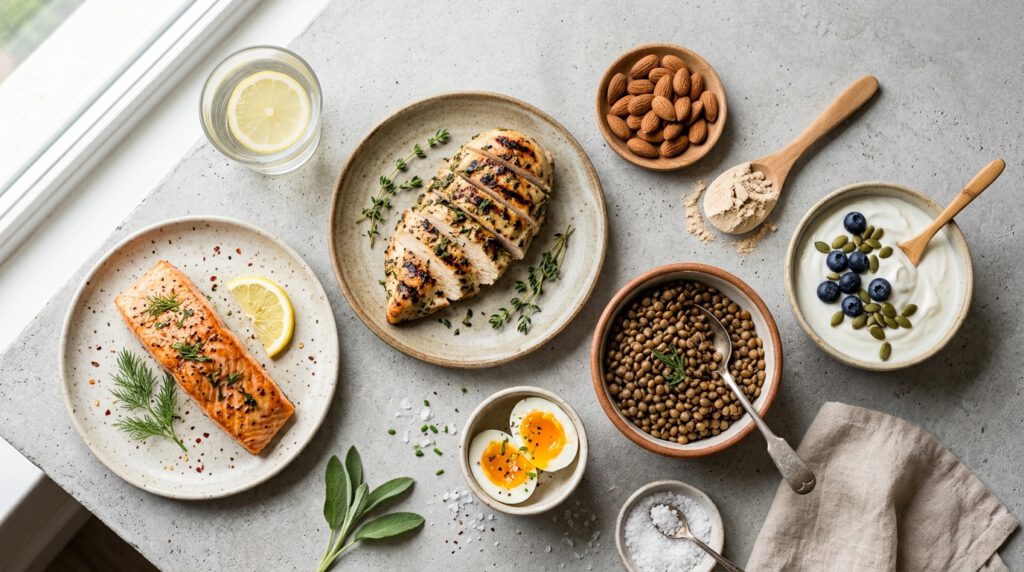
H3: You’re Not Eating Enough Protein
Protein helps:
- Control hunger
- Preserve muscle
- Increase metabolism
Low protein = more cravings and overeating.
H3: You’re Not Sleeping Enough
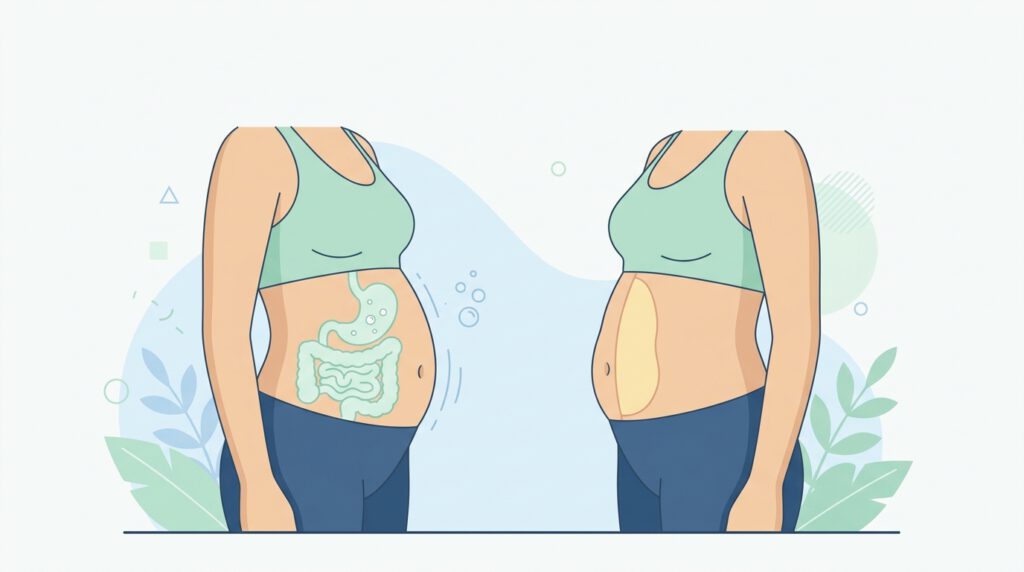
Poor sleep disrupts hormones and increases fat storage—especially around the belly.
H3: Stress Is Slowing You Down
High stress raises cortisol, making your body hold onto fat.
You Might Still Be Losing Fat
Sometimes the scale doesn’t move because:
- You’re gaining muscle
- Water weight fluctuates
👉 Measure progress beyond the scale.
Understanding Energy Balance (The Game Changer)
Weight loss comes down to one simple principle:
- Calories in > Calories out → Weight gain
- Calories in < Calories out → Weight loss
But your body adapts.
Extreme dieting can slow your metabolism—a process called metabolic adaptation—making progress harder over time.
How Your Body Burns Calories
Your daily energy use includes:
- BMR (60–70%) – basic body functions
- TEF – digestion (protein burns more calories)
- Exercise – workouts
- NEAT – daily movement (walking, standing, etc.)
👉 Decreased daily movement (NEAT) can be a hidden cause of the distal discharge.
How to Fix It (Actionable Tips)
✅ Measure Your Portions
Stop guessing—use a spoon or food scale for oils and fats.
✅ Choose Whole Foods
Eat whole fruits instead of drinking juices or smoothies.
✅ Track Honestly
Track everything:
- Oils
- Snacks
- Small bites
👉 “Invisible calories” are the biggest.
✅ Increase Protein Intake
Add protein to every meal to stay full longer.
✅ Drink More Water
Water can:
- Reduce appetite
- Increase calorie burn
✅ Focus on Weekly Balance
Don’t panic over one day—look at your weekly habits.
✅ Move More Daily
Increase steps and daily activity—not just workouts.
Common Mistakes to Avoid
- Thinking “healthy” = low calorie
- Ignoring portion sizes
- Over-relying on apps without awareness
- Expecting fast results
- Cutting calories too aggressively
Why Weight Loss Takes Time
Weight loss isn’t linear.
You might:
- Lose fat but gain muscle
- Experience plateaus
- See fluctuations on the scale
👉 Sustainable fat loss = 1–2 pounds per week
The Bottom Line
If you’re eating healthy but not losing weight, the issue isn’t willpower—it’s awareness.
Hidden calories, portion sizes, and daily habits matter more than you think.
Once you understand how energy balance really works, weight loss becomes a strategy—not a struggle.
FAQ
Why am I eating healthy but gaining weight?
You’re likely consuming more calories than you burn—even from healthy foods.
Can healthy food make you fat?
Yes, if eaten in large quantities. Calories still matter.
How do I break a weight loss plateau?
- Track your intake
- Increase activity
- Adjust calories slightly
- Improve sleep and stress
Want faster results?
Start by tracking your meals for just 3 days—you’ll be surprised where hidden calories are hiding.
Related Posts
Stay Informed With the Latest & Most Important News
Previous Post
Next Post









Advertisement