
























Now Reading: Smartwatch for Fitness Tracking: Is It Worth the Money?
-
01
Smartwatch for Fitness Tracking: Is It Worth the Money?


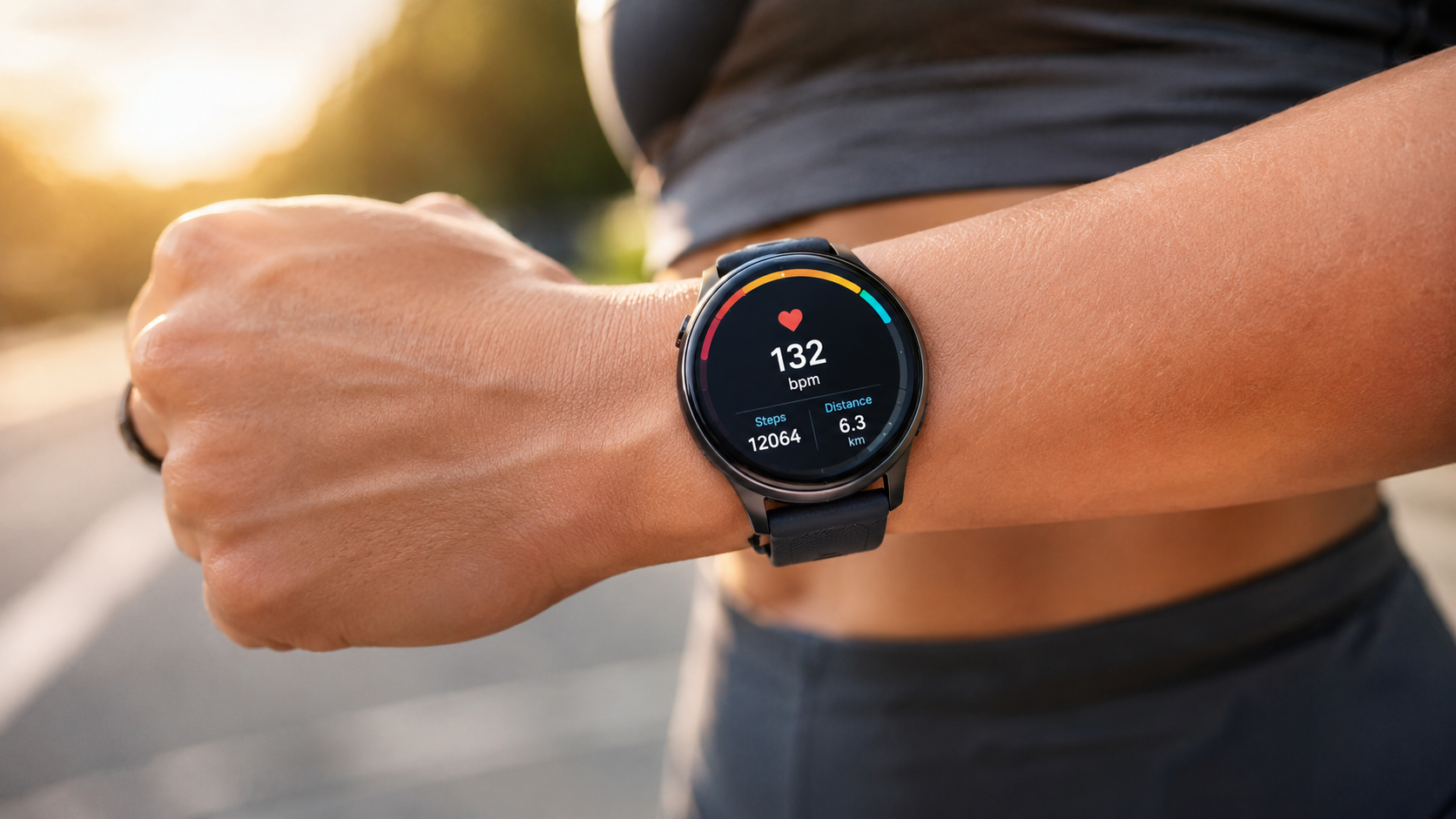
Fitness smartwatches have gone from niche gadgets to one of the most gifted pieces of tech on the planet.
But strap one to your wrist and you’ll immediately face a flood of numbers — steps, heart rate, “calories burned,” sleep stages, stress scores, VO2 max — and a nagging question: is any of this actually helping you get fitter, or are you just paying $300 for a fancy pedometer?
The honest answer is: it depends on how you use it.
A fitness smartwatch is genuinely worth the money if you use it to build daily movement habits, guide your workout intensity, and spot long-term health trends.
It’s not worth it if you’re relying on it for precise calorie counting, diagnosing sleep disorders, or as a substitute for professional coaching.
Below, we break down exactly where these devices earn their keep — and where they fall short — plus which models are actually worth buying in 2026.
Quick Answer: Is a Fitness Smartwatch Worth It?
| Worth it for | Not worth it for |
|---|---|
| Daily step and movement motivation | Precise calorie-burn tracking |
| Real-time heart rate during workouts | Diagnosing sleep disorders |
| GPS pace and route tracking for runs/rides | People who only want a basic step count |
| Spotting long-term resting heart rate trends | Anyone who ignores notifications and never checks the app |
What Does a Fitness Smartwatch Actually Track?
Most modern smartwatches and fitness trackers monitor a similar core set of metrics, though accuracy varies a lot by brand and price point.
- Step count: Measured with an accelerometer, this is generally the most reliable metric on any device. The famous “10,000 steps a day” target isn’t based on peer-reviewed science — it traces back to a 1965 marketing campaign for a Japanese pedometer called the Manpo-kei, which literally means “10,000 steps meter.” That said, research does show a real link between higher daily step counts and lower all-cause mortality risk, with benefits leveling off around 12,000 steps.
- Heart rate: Optical wrist sensors are decent at rest but become noticeably less accurate during high-intensity exercise, and accuracy can dip further depending on skin tone or wrist tattoos. Resting heart rate trends over a 7-day average, however, are a genuinely useful marker of recovery and stress.
- Calories burned: This is the weakest metric on virtually every wearable. Independent testing has found that no major consumer tracker estimates calorie burn within 20% of lab-measured values, with some popular models off by 27% or more. Treat these numbers as rough trend indicators, never as a dieting tool.
- Sleep tracking: Wrist-based trackers can reasonably distinguish “asleep” from “awake,” but they’re much less reliable at separating light, deep, and REM sleep stages. If sleep quality is a serious concern, a proper sleep study is still the gold standard.

When a Fitness Smartwatch Is Worth the Money
1. It gets you moving more.
Studies — including a 2022 analysis published in The Lancet Digital Health — found that wearables meaningfully increase daily step counts, with the biggest jump happening in the first three to six months of use. Simple nudges like a “move” alert or a visible ring closing can add well over 1,000 extra steps a day for people who were previously sedentary.
2. It gives you real workout feedback.
For runners and cyclists, built-in GPS delivers useful real-time pacing, route mapping, and distance data — something a basic pedometer simply can’t do. Heart rate zones during a workout also help you train at the right intensity instead of guessing.
3. It reveals long-term health trends.
A single day’s reading means very little, but a rising 7-day average resting heart rate over several days can be an early flag for accumulated stress, poor recovery, or overtraining — well before you’d notice it any other way.
4. It supports habit-building and accountability.
Wearables work best when paired with clear goals, reminders, and social features like step challenges or leaderboards. Friendly competition with friends or an app community measurably boosts activity levels.

When You Should Save Your Money
1. You’re chasing precise calorie numbers.
As noted above, calorie-burn estimates can be off by 20–50%. Using them to plan how much you “earned” to eat is one of the fastest ways to develop an unhealthy relationship with food and exercise.
2. You only care about basic steps and distance.
If step counting is genuinely all you want, a $30–$50 budget pedometer or entry-level band does the job just as well as a $400 flagship.
3. You get anxious around numbers.
Some users report that constant tracking makes achievements feel less satisfying, and rigid daily targets can trigger guilt or perfectionist thinking when goals are missed. If that sounds like you, loosen your targets or take tracking breaks.
4. You’re not going to look at the data.
A smartwatch that just buzzes with notifications you ignore is an expensive regular watch. The value only shows up if you actually review trends in the app periodically.
5. Privacy matters to you.
These devices collect a large amount of personal health data, and not every company handles it the same way. It’s worth checking a brand’s privacy policy before buying, and reviewing your data-sharing settings once you do.

Budget vs. Premium: What Changes With Price
| Budget ($100–$250) | Premium ($250–$800+) | |
|---|---|---|
| Display | Basic touchscreen, smaller | Larger, brighter AMOLED |
| Health sensors | Heart rate, basic SpO2 | ECG, advanced sleep apnea detection, HRV |
| GPS | Often phone-dependent | Built-in, multi-band, more accurate |
| Build | Plastic/aluminum | Titanium, stainless steel, sapphire glass options |
| Battery life | Often longer (fewer features draining power) | Varies widely — some outdoor models last weeks |
If your needs are simple — steps, basic heart rate, notifications — a budget tracker will genuinely cover 90% of what most people use their watch for. Premium models mainly earn their price through better sensors, more accurate GPS, and durability, not through “better” step counting.

What to Look for When Buying a Fitness Smartwatch
- Phone compatibility: Apple Watches only pair with iPhones; Wear OS watches (Samsung, Google) generally need Android. Fitbit and Garmin devices tend to work across both ecosystems.
- Comfort and fit: A band that’s too loose or tight throws off heart rate accuracy, so try the size before committing if possible.
- Battery life: Ranges from about 18 hours (some feature-heavy smartwatches) to 20-plus days (fitness-focused bands and rugged outdoor watches). GPS use drains battery fastest.
- Water resistance: Check the IP or ATM rating if you plan to swim or shower with it — not all “water-resistant” watches are built for submersion.
- Charging method: Wireless charging pucks are the most convenient; some budget models still require cable clips that are easy to lose.
Best Fitness Smartwatches to Buy Right Now
Here are solid picks across different budgets and use cases, based on current Amazon listings.
| Watch | Best for | Amazon Link |
|---|---|---|
| Apple Watch Series 10 | iPhone users who want the deepest health ecosystem (ECG, sleep apnea alerts) | View on Amazon |
| Samsung Galaxy Watch 8 | Android users who want AI-driven coaching and sleek design | View on Amazon |
| Garmin Fenix 8 | Serious multi-sport athletes who need rugged build and long battery life | View on Amazon |
| Garmin Vivoactive 6 | Best all-around balance of price, GPS accuracy, and fitness features | View on Amazon |
| Fitbit Charge 6 | Straightforward fitness tracking with a longer battery and lower price | View on Amazon |
| Amazfit Active 2 | Best value pick — most core features at a budget-friendly price | View on Amazon |
Prices and exact product variants on Amazon change frequently — always confirm current pricing and availability before publishing or purchasing.
Frequently Asked Questions
Are fitness smartwatches accurate?
Step counting is generally reliable. Heart rate is fairly accurate at rest but less so during intense exercise. Calorie burn estimates are the least accurate metric, often off by 20% or more.
Do I need a smartwatch or would a basic fitness tracker work?
If you only want step counts, notifications, and basic heart rate, a budget fitness tracker covers the essentials for a fraction of the price. Choose a full smartwatch if you want GPS-based training data, apps, payments, or advanced health sensors like ECG.
Can a smartwatch replace a personal trainer or doctor?
No. It’s a self-monitoring tool, not a diagnostic device. Use the data to spot trends and stay motivated, but treat concerning readings — like chronically elevated resting heart rate — as a reason to consult a professional, not a final diagnosis.
Is it worth buying an expensive smartwatch over a budget one?
Only if you need the specific premium features — advanced sensors, multi-band GPS, ECG, or rugged build quality. For general fitness tracking and motivation, a budget model performs nearly as well.
The Bottom Line
A fitness smartwatch is worth the money for people who want daily movement motivation, real workout feedback, and long-term health trend tracking — and who will actually look at the data. It’s not worth it if you’re chasing precise calorie numbers, want it purely to count basic steps, or find that constant metrics stress you out more than they help.
Pick the device that matches how you’ll actually use it, not the one with the longest feature list.
Related Posts

Stay Informed With the Latest & Most Important News
Previous Post
Next Post










Advertisement