
























Now Reading: Do You Really Need a Multivitamin If You Eat Well?
-
01
Do You Really Need a Multivitamin If You Eat Well?


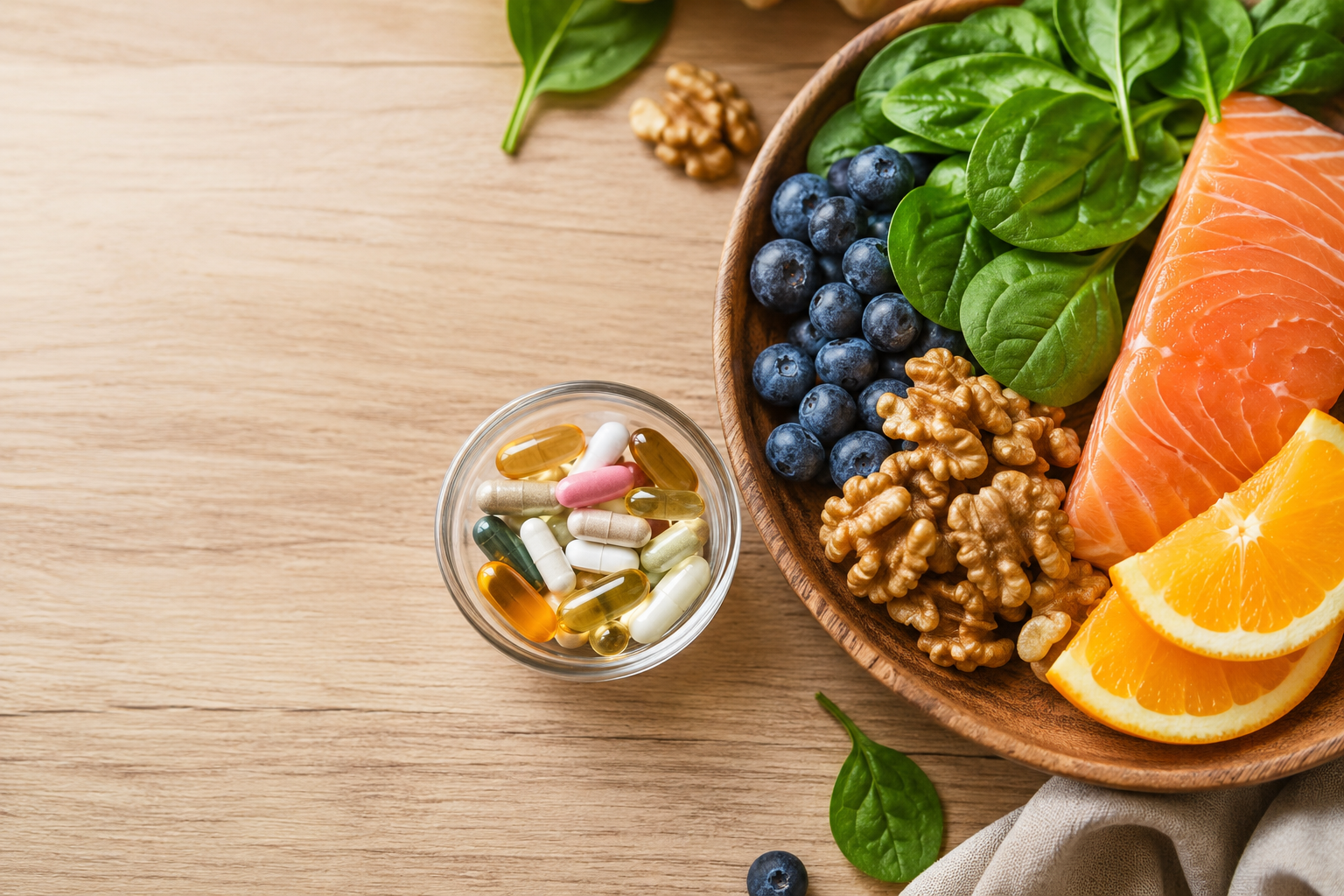
Walk down any pharmacy aisle and you’ll see it: shelf after shelf of multivitamins promising more energy, a stronger immune system, and better long-term health.
Nearly half of American adults — and about 70% of adults over 65 — take one regularly. Globally, people spend well over $170 billion a year on dietary supplements, with multivitamins leading the pack.
But if you’re already eating a reasonably healthy diet — plenty of vegetables, whole grains, lean protein, healthy fats — do you actually need one? Or are you just creating expensive urine?
The short answer: for most healthy adults who eat a well-balanced diet, a daily multivitamin is not medically necessary.
But “most people” isn’t “everyone,” and there are specific life stages, conditions, and dietary patterns where a multivitamin genuinely helps.
Let’s break down what the evidence shows.
Table of contents
- What the Research Actually Says
- An Important Nuance: Newer Research Isn’t Entirely One-Sided
- When You Might Actually Need a Multivitamin
- The Special Case of Vitamin D
- The Risks of Taking Supplements You Don’t Need
- What About Vitamin C for Colds?
- What About Athletes?
- If You Do Take a Multivitamin: How to Choose One Safely
- Best Multivitamins on Amazon (If You Decide You Need One)
- The Bottom Line
What the Research Actually Says
This isn’t a fringe opinion — it’s the consensus among major medical institutions after decades of large-scale research.
Johns Hopkins researchers reviewed the evidence in an editorial bluntly titled “Enough Is Enough: Stop Wasting Money on Vitamin and Mineral Supplements.” They looked at three major studies:
- An analysis covering 450,000 people found multivitamins did not reduce the risk of heart disease or cancer.
- A 12-year study tracking nearly 6,000 men found no reduction in mental decline, including memory loss and slower thinking.
- A trial of over 1,700 heart attack survivors taking high-dose multivitamins for up to 55 months showed no difference in future heart attacks, heart surgeries, or deaths compared to a placebo group.
“Pills are not a shortcut to better health and the prevention of chronic diseases,” says Dr. Larry Appel, director of the Johns Hopkins Welch Center for Prevention, Epidemiology and Clinical Research.
His own approach reflects the research: no routine supplements, just consistent meals built around produce, whole grains, low-fat dairy, and fish rather than red meat.
The U.S. Preventive Services Task Force reached a similar conclusion after reviewing 26 clinical and cohort studies: there isn’t enough evidence that multivitamins meaningfully prevent cardiovascular disease or cancer in healthy, well-nourished adults.
Harvard Health has reported comparable findings — an analysis of more than 390,000 participants across three major U.S. studies found that daily multivitamin use did not lower mortality risk.
Dr. Matthew Silvis of Penn State Health puts it plainly: “For most people, they don’t need multivitamins or supplements.
If you have a well-balanced diet and you’re able to eat nutritious foods — fruits, vegetables, etc. — you don’t need a multivitamin or a supplement.”

Why Whole Food Still Wins
Part of the reason has to do with how your body processes nutrients.
Whole foods deliver vitamins and minerals alongside fiber, water, and thousands of other plant compounds — all working together in ways a pill can’t replicate.
A multivitamin can hand you 100% of the Recommended Daily Allowance for roughly 26 nutrients, but it can’t give you the fiber in an apple or the antioxidant compounds unique to leafy greens.
There’s also a hard biological ceiling on how much your body can actually use. “If you have a well-balanced diet, you just literally urinate out the vitamins and minerals that you are taking with the multivitamin,” Silvis explains.
Once you’re past your absorption limit, the excess is simply excreted. In other words, if your diet already covers your needs, that daily pill may be doing very little beyond producing expensive urine.
An Important Nuance: Newer Research Isn’t Entirely One-Sided
It’s worth noting that the evidence picture has gotten a little more nuanced in recent years.
The COSMOS trial — a large randomized study — found that daily multivitamin use was associated with measurably slower cognitive aging in older adults, particularly those with a history of cardiovascular disease, equivalent to roughly two years of “younger” brain function over the study period.
A 2025 rapid review of 19 meta-analyses covering more than 5.5 million participants similarly found that multivitamin and mineral use improved global cognition, episodic memory, and immediate recall in older or cognitively healthy adults, and was linked to reduced psychological symptoms in some groups.
This doesn’t overturn the broader picture — most large trials still show no meaningful reduction in cancer, heart disease, or overall mortality from multivitamin use in well-nourished adults.
But it does suggest that for older adults specifically, the cognitive benefits deserve a closer look, and it’s a good example of why “talk to your doctor” isn’t just a throwaway line — the right answer really does depend on who you are.
When You Might Actually Need a Multivitamin
Even with a genuinely healthy diet, certain life stages and health conditions create nutrient gaps that food alone may not close.
Pregnancy and Women of Childbearing Age
This is the clearest, most evidence-backed exception.
Folic acid, taken before and during early pregnancy, helps prevent neural tube defects like spina bifida. Because roughly half of pregnancies in the U.S. are unplanned, the CDC recommends that all women of childbearing age (15–45) get 400–600 micrograms of folic acid daily — often before they even know they’re pregnant.
Prenatal multivitamins also typically supply extra iron, calcium, vitamin D, and DHA, which support fetal development.

Adults Over 50
As we age, the body naturally absorbs vitamin B12 from food less efficiently, regardless of diet quality. The National Academy of Medicine specifically recommends that people over 50 eat B12-fortified foods or take a B12 supplement in a more absorbable form.
Older adults are also more likely to have reduced appetite, chewing difficulties, medication side effects, or social isolation — all of which can quietly erode food intake and, with it, nutrient status.
Increased needs for vitamin D and calcium are common in this group as well, largely to support bone health.

Restrictive or Limited Diets
- Vegans and strict vegetarians often fall short on vitamin B12, iron, zinc, and sometimes calcium and omega-3s, since these nutrients are more concentrated in or better absorbed from animal foods.
- Anyone on a restricted diet for more than a week — a post-surgical liquid diet, an elimination diet, or a weight-loss plan that cuts out entire food groups — may need a temporary multivitamin to bridge the gap.
- People with limited appetite or busy, chaotic eating patterns who genuinely can’t eat a varied diet most days are reasonable candidates too.
Medical Conditions That Affect Absorption
Some health conditions interfere with how well your body absorbs nutrients, even from a great diet:
- Celiac disease and inflammatory bowel disease (including ulcerative colitis and Crohn’s)
- Cystic fibrosis
- Prior weight-loss surgery (gastric bypass) or procedures like the Whipple procedure
- Chronic alcohol use, which impairs absorption of several B vitamins and vitamin C
Certain Medications
A few common medications can deplete nutrients over time:
- Diuretics for blood pressure can lower magnesium, potassium, and calcium
- Proton pump inhibitors for acid reflux can reduce absorption of vitamin B12, calcium, and magnesium
- Levodopa/carbidopa for Parkinson’s disease can reduce absorption of folate, B6, and B12
If you take any of these long-term, it’s worth asking your doctor whether a targeted supplement makes sense — note that in most of these cases, a single nutrient supplement is more appropriate than a full multivitamin.
The Special Case of Vitamin D
Vitamin D deserves its own mention because it doesn’t fit the usual “just eat better” advice.
Very few foods naturally contain meaningful amounts of it, and while some products are fortified, most people rely primarily on sunlight exposure — specifically UVB rays hitting the skin — to produce it. That’s a problem for anyone who lives somewhere with limited winter sunlight, spends most of the day indoors, or has darker skin (melanin reduces the skin’s vitamin D production).
More than 90% of Americans get less than the estimated average requirement for vitamin D from food alone.
For many people, a standalone vitamin D supplement — rather than a full multivitamin — is the more targeted, evidence-backed fix.

The Risks of Taking Supplements You Don’t Need
“More is better” is a tempting assumption, but it isn’t how vitamins work, and taking unnecessary supplements isn’t entirely risk-free.
Toxicity from fat-soluble vitamins.
Unlike water-soluble vitamins (like vitamin C), fat-soluble vitamins — A, D, E, and K — are stored in body fat rather than flushed out. Excess vitamin A, for example, can cause hypervitaminosis, leading to vision and skin changes, bone pain, and even liver damage over time.
Vitamin E and beta-carotene supplements have also been linked to harm in some studies, particularly at high doses.
Drug interactions.
Supplements aren’t inert. They can interact with prescription medications, sometimes reducing their effectiveness or amplifying side effects.
Always tell your doctor about every supplement you take, not just prescription drugs.
A false sense of security.
Perhaps the subtler risk: relying on a pill can make it easier to deprioritize the vegetables, whole grains, and varied protein sources that actually drive long-term health. As Dr. Appel puts it, other nutrition habits — eating well, maintaining a healthy weight, cutting back on saturated fat, sodium, and added sugar — have far stronger evidence behind them than any pill.
What About Vitamin C for Colds?
It’s one of the most popular reasons people reach for a supplement, but the evidence is shaky. According to Dr. Silvis, there’s no solid proof that vitamin C prevents colds, and whether it shortens recovery time remains inconclusive. If you’re already eating fruits and vegetables regularly, you’re likely meeting your vitamin C needs through food.
Excess vitamin C isn’t dangerous the way excess vitamin A can be, but it can cause gastrointestinal discomfort like nausea, diarrhea, and cramping at high doses.
What About Athletes?
High-intensity athletes are a genuine exception, but not for the reasons most people assume. It’s less about micronutrients and more about protein and energy demands.
Professional athletes burning enormous amounts of fuel daily may struggle to eat enough whole food to maintain muscle mass, which is where protein shakes and targeted supplements like creatine come in. But that logic doesn’t extend to casual exercisers or recreational athletes. As Dr. Silvis puts it, “Your child on a T-ball team does not need a protein shake.”
If You Do Take a Multivitamin: How to Choose One Safely
If you fall into one of the higher-need groups above, or you simply want the “nutritional insurance” of a multivitamin, keep a few things in mind:
- Skip the premium price tag. Generic and store-brand multivitamins deliver the same nutrients as expensive name brands — there’s no meaningful difference in bioavailability.
- Look for the USP seal. The United States Pharmacopeia verification confirms that a product actually contains what its label claims, in the stated amounts, and is free of contaminants like heavy metals.
- Avoid mega-doses. More isn’t better. Taking many times the Recommended Daily Allowance can interfere with nutrient or medication absorption and, in some cases, become toxic over time.
- Be skeptical of vague marketing claims. Labels promising to “support brain health” or “boost energy” are often marketing language, not evidence-based claims specific to that formula. Be extra cautious of multivitamins padded with unproven herbs and botanicals.
- Consider whether you need a full multivitamin or just one nutrient. If you have osteoporosis, you may only need calcium and vitamin D. If you have iron-deficiency anemia, you may only need iron. A comprehensive multivitamin isn’t always the most efficient — or cheapest — solution.
Best Multivitamins on Amazon (If You Decide You Need One)
If you fall into one of the higher-need groups above and want to shop for a specific product, here are a few well-reviewed, USP-verified or third-party-tested options on Amazon, organized by need. Prices, formulations, and availability change often, so double-check the current listing before buying, and run any new supplement by your doctor first — especially if you’re pregnant or taking medication.
| Need | Product | Why it fits |
|---|---|---|
| General multivitamin for women | Nature Made Multi for Her | USP-verified, budget-friendly, covers 23 core nutrients including folic acid and iron |
| General multivitamin for men | Nature Made Multivitamin For Him | USP-verified, 22 key nutrients, no unnecessary iron |
| Adults 50+ | Nature Made Multi for Him/Her 50+ | Formulated for age-related needs like B12 and D absorption |
| Pregnancy | Nature Made Prenatal Multivitamin with Folic Acid | USP-verified prenatal formula with folic acid, iron, and DHA options |
| Vegan or plant-based diets | Garden of Life Organics Multivitamin | Certified vegan and organic, includes B12 and vegan D3 from lichen |
| Standalone vitamin D (most people’s biggest gap) | Nature Made Vitamin D3 1000 IU | USP-verified; a targeted fix rather than a full multivitamin |
A couple of buying tips worth repeating here: skip the premium price tag (generic and brand-name versions perform the same), look for the USP or NSF seal on the label, and steer clear of mega-dose formulas unless a doctor has specifically recommended one.
The Bottom Line
If you eat a genuinely varied, whole-food-based diet — plenty of produce, whole grains, quality protein, and healthy fats — a daily multivitamin is unlikely to move the needle on your long-term health, and the money might be better spent on nutrient-dense groceries instead.
But “eating well” is doing a lot of work in that sentence, and real life doesn’t always cooperate. Pregnancy, aging past 50, restrictive diets, certain medical conditions, and specific medications can all create genuine nutrient gaps that a well-chosen supplement can help close.
And for vitamin D specifically, most people — regardless of diet quality — may benefit from a standalone supplement, given how little of it comes from food.
The best next step isn’t guessing.
If you’re unsure whether your diet is actually covering your needs, a registered dietitian can assess your eating patterns and identify real gaps, and your doctor can flag any medication interactions or absorption issues worth addressing.
A multivitamin should fill genuine nutritional gaps — not replace the food choices that do most of the real work.
This article is for general educational purposes and isn’t a substitute for personalized medical advice. Talk to your doctor or a registered dietitian before starting any new supplement, especially if you’re pregnant, managing a chronic condition, or taking prescription medications.
Related Posts

Stay Informed With the Latest & Most Important News
Previous Post
Next Post









Advertisement