


















Now Reading: Social Media Fitness FOMO: How Instagram is Quietly Ruining Your Progress
-
01
Social Media Fitness FOMO: How Instagram is Quietly Ruining Your Progress



You open Instagram for “motivation.”
Five minutes later, you’re watching shredded influencers doing impossible workouts at 5 AM, drinking green smoothies, and somehow looking perfect after leg day.
Suddenly your simple plan to do a quick home workout feels pathetic.
So you do nothing.
This is Social Media Fitness FOMO — and it’s silently destroying people’s consistency, motivation, and relationship with exercise.
The problem isn’t laziness.
It’s psychological overload.
Modern fitness culture has turned movement into performance. Instead of exercising for health, energy, or mental clarity, people now feel pressured to optimize everything:
- The perfect workout split
- The ideal body
- The cleanest diet
- The most aesthetic gym routine
- The “disciplined” lifestyle
And when your brain feels overwhelmed, especially if you struggle with executive dysfunction, ADHD, anxiety, or burnout, the result is paralysis.
Ironically, the more fitness content you consume, the less likely you are to start.
Table of contents
- The Hidden Psychological Damage of Fitness FOMO
- Why Executive Dysfunction Makes Fitness Even Harder
- The 2-Minute Rule: The Antidote to Fitness FOMO
- Why the 2-Minute Rule Actually Works
- Simple “Stupid Easy” Workouts That Still Count
- How Social Media Quietly Kills Motivation
- Neurodivergent-Friendly Fitness Strategies
- The Real Goal Isn’t Looking Perfect
- How to Escape Fitness FOMO
- Final Thoughts
- FAQ
The Hidden Psychological Damage of Fitness FOMO
Instagram Turns Exercise Into Comparison
Human brains naturally compare.
But social media creates a nonstop highlight reel of genetically gifted athletes, edited bodies, carefully staged transformations, and unrealistic productivity.
Your brain begins to think:
- “If I can’t do a full intense workout, why bother?”
- “Everyone else is more disciplined than me.”
- “I’m already behind.”
- “I’ll never look like that.”
This creates emotional resistance before you even start moving.
Instead of associating exercise with feeling better, your brain links it to:
- shame
- pressure
- inadequacy
- failure
Eventually, working out starts feeling emotionally exhausting.
Why Executive Dysfunction Makes Fitness Even Harder
For people with ADHD, autism, chronic stress, anxiety, or burnout, the hardest part is rarely the workout itself.
It’s starting.
Executive function is your brain’s management system. It controls:
- task initiation
- planning
- transitions
- motivation
- working memory
- emotional regulation
When executive dysfunction appears, fitness becomes mentally heavy.
You may:
- want to exercise but freeze instead
- overthink preparation
- procrastinate for hours
- get overwhelmed by gym routines
- struggle transitioning from work to workouts
- abandon routines after missing one day
Social media makes this worse by convincing you that every workout must be intense, optimized, and impressive.
But sustainable fitness doesn’t work that way.
The 2-Minute Rule: The Antidote to Fitness FOMO
One of the most effective ways to overcome workout paralysis comes from the famous 2-Minute Rule, popularized by James Clear in the book Atomic Habits.
The concept is simple:
Scale any habit down to a two-minute action.
Instead of focusing on an entire workout, you focus only on starting.
Examples:
- Put on workout shoes
- Stretch for 2 minutes
- Do 5 squats
- Walk outside briefly
- Dance to one song
That’s it.
The goal is not intensity.
The goal is showing up.
Why the 2-Minute Rule Actually Works
1. It Lowers Mental Resistance
Your brain avoids large, uncomfortable tasks.
“Do a full 60-minute workout” feels overwhelming.
But:
- “Put on gym clothes”
- “Do 5 wall push-ups”
- “Stretch for 2 minutes”
…feels manageable.
Tiny actions bypass the brain’s avoidance response.
2. Starting Is Harder Than Continuing
Executive dysfunction makes initiation extremely difficult.
But once movement begins, momentum naturally builds.
Many people who promise themselves “just 2 minutes” end up continuing for:
- 10 minutes
- 20 minutes
- even a full workout
Because the hardest part was never exercising.
It was starting.
3. Consistency Beats Intensity
Social media glorifies extreme discipline.
Real fitness progress comes from repetition.
A small workout done consistently for months beats occasional “perfect” workouts followed by burnout.
As James Clear explains:
“A habit must be established before it can be improved.”
Simple “Stupid Easy” Workouts That Still Count
One of the biggest mindset shifts is accepting that tiny workouts matter.
Especially on difficult mental health days.
Here are examples of low-resistance movement that still builds consistency:
Absolute Minimum Workout Ideas
- 5 wall push-ups
- 10 bodyweight squats
- Walking around the block
- Stretching for 3 minutes
- Dancing to one full song
- One yoga flow
- Light mobility work
- Standing outside briefly
These may sound insignificant.
But they reinforce identity:
“I’m someone who shows up.”
That identity matters more than intensity.
How Social Media Quietly Kills Motivation
Perfectionism Creates Paralysis
Fitness influencers rarely show:
- skipped workouts
- burnout
- executive dysfunction
- inconsistent days
- mental exhaustion
You only see optimized performance.
That creates unrealistic expectations where anything less than “perfect” feels like failure.
So instead of doing a small workout…
…people wait for the “perfect” time.
And often never begin.
Fitness Content Can Become Procrastination
Many people consume fitness content instead of exercising.
They:
- save workout videos
- watch motivational reels
- research routines endlessly
- compare programs
- overanalyze supplements
But never actually move.
This creates the illusion of productivity while reinforcing avoidance.
Neurodivergent-Friendly Fitness Strategies
If traditional fitness advice has never worked for you, your brain may simply need different systems.
Not more guilt.
1. Reduce Friction Everywhere
Make exercise easier to start:
- sleep in workout clothes
- keep gym bags packed
- use home workouts
- remove unnecessary preparation
The fewer steps required, the easier initiation becomes.
2. Create Visual Triggers
Visual cues help bypass working-memory overload.
Examples:
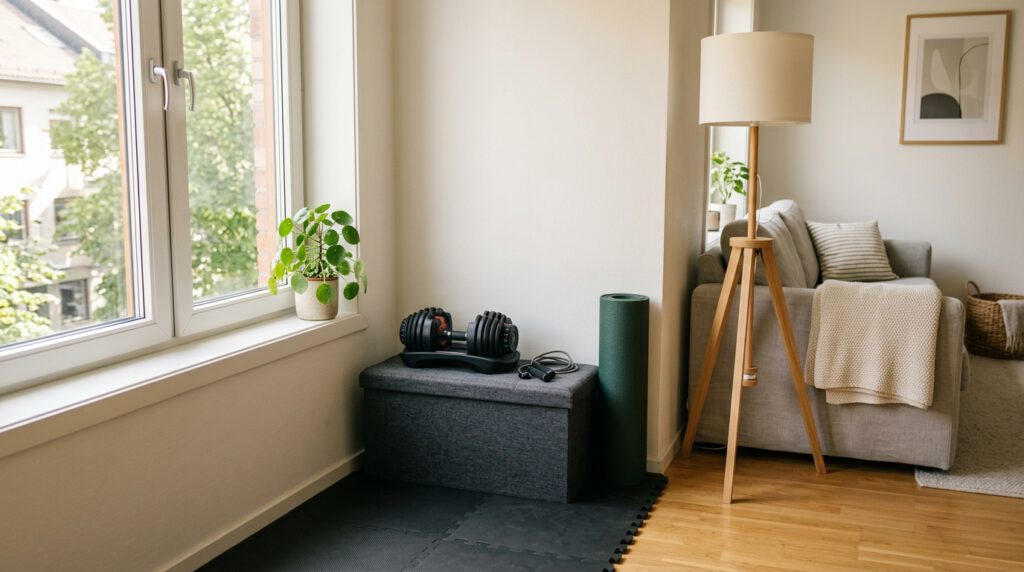
- workout mat already on the floor
- shoes beside the bed
- water bottle filled in advance
- gym bag beside the door
Your environment should remind your brain what to do.
3. Use Backup Workouts
Avoid all-or-nothing thinking.
Create a “minimum viable workout” for low-energy days.
Even 2 minutes counts.
Consistency protects momentum.
4. Stop Treating Exercise as Punishment
Movement should support your nervous system — not stress it further.
You do not need:
- punishment workouts
- aesthetic perfection
- extreme discipline
- influencer-level routines
You need sustainability.
The Real Goal Isn’t Looking Perfect
Social media convinces people fitness is about aesthetics.
But exercise actually improves:
- mood
- cognitive function
- stress management
- sleep quality
- energy levels
- long-term health
The healthiest people are rarely the most extreme.
They’re the most consistent.
And consistency usually comes from simplicity.
Not pressure.
How to Escape Fitness FOMO
Audit Your Feed
Ask yourself:
“Does this content motivate me or make me feel inadequate?”
Unfollow accounts that trigger:
- shame
- comparison
- perfectionism
- anxiety
Follow creators who promote:
- realistic fitness
- mental health
- sustainable habits
- beginner-friendly movement
Focus on Action, Not Identity
You do not need to become a “fitness person” overnight.
You only need one small action today.
That’s how habits form.
Use the 2-Minute Rule Daily
On hard days:
- put on your shoes
- stretch briefly
- walk for 2 minutes
Give yourself permission to stop afterward.
Ironically, that permission often makes continuing easier.
Final Thoughts
Instagram has transformed fitness into a performance competition.
But your body and brain do not care about aesthetics, algorithms, or influencer routines.
They care about consistency.
If social media has made exercise feel overwhelming, intimidating, or emotionally draining, scale things down.
Start stupidly small.
Because sustainable fitness doesn’t begin with motivation.
It begins with showing up for two minutes.
FAQ
What is Social Media Fitness FOMO?
Social Media Fitness FOMO is the anxiety and comparison triggered by fitness content on platforms like Instagram and TikTok, making people feel inadequate about their own workouts, bodies, or progress.
Why does Instagram make me less motivated to exercise?
Constant exposure to unrealistic fitness standards can create overwhelm, perfectionism, and emotional exhaustion, making exercise feel intimidating instead of rewarding.
What is the 2-Minute Rule for exercise?
The 2-Minute Rule involves shrinking a habit into a tiny action that takes less than two minutes, such as putting on workout clothes or stretching briefly, making it easier to overcome procrastination.
Can small workouts actually help?
Yes. Small consistent actions build habit strength, reduce resistance, and often create momentum for longer workouts later.
How does executive dysfunction affect fitness?
Executive dysfunction can make task initiation, planning, transitions, and consistency difficult, causing people to struggle with starting or maintaining exercise routines despite wanting to work out.
Related Posts

Stay Informed With the Latest & Most Important News










Advertisement