

























Now Reading: The Psychology of Showing Up: How Identity-Based Habits Beat Willpower
-
01
The Psychology of Showing Up: How Identity-Based Habits Beat Willpower



Most people don’t fail at habits because they lack discipline.
They fail because they’re fighting the wrong battle every single day. “I want to exercise more” sounds motivating for about two weeks — then life gets busy, willpower runs dry, and the habit quietly disappears.
Compare that to someone who simply says, “I’m a runner.” They don’t negotiate with themselves at 6 a.m. They just lace up, because that’s what runners do.
That gap — between forcing a behavior and becoming the kind of person who does it naturally — is the core idea behind identity-based habits. And it isn’t just self-help folklore. It’s backed by decades of research in psychology, neuroscience, and behavioral science.
This article breaks down why willpower alone is a losing strategy, what the science actually says about identity and behavior, how to build an identity that sticks, and — just as importantly — where this approach can go wrong if you’re not careful.
Table of contents
- Why Willpower Alone Fails You
- What Identity-Based Habits Actually Are
- The Science Behind It
- Identity-Based vs. Outcome-Based Habits
- How to Define the Identity You Want
- Building Habits That Match the Identity
- Reinforcing Identity Through Environment and Community
- Watching Your Self-Talk
- Where Identity-Based Habits Can Backfire
- A Simple Framework to Start Today
- FAQ
- Conclusion
Why Willpower Alone Fails You
Willpower feels like the obvious tool for change: try harder, resist temptation, push through. The problem is that willpower behaves less like a personality trait and more like a battery.
- It depletes with use. Every decision you resist — the snooze button, the extra cookie, the scroll instead of the workout — drains a limited pool of mental energy.
- Stress and fatigue make it worse. Hunger, poor sleep, and a demanding schedule all shrink your available self-control before you’ve even tried to act.
- It creates a boom-bust cycle. Relying on sheer determination often produces intense short bursts of effort followed by burnout, which is why so many New Year’s resolutions collapse within weeks.
- It keeps behavior separate from identity. Goals like “lose 20 pounds” or “read more books” describe an outcome you want, not who you are — so once the outcome is hit or missed, the motivation to continue disappears with it.
Habits, by contrast, ask far less of your brain. Once a behavior becomes automatic, it no longer competes for the same limited willpower resource — which is exactly where identity comes in.
What Identity-Based Habits Actually Are
Identity-based habits flip the usual order of behavior change. Instead of starting with an outcome, you start with a self-image, and let the behavior follow from it.
- Outcome-based: “I want to run a marathon.” (focused on results)
- Identity-based: “I am a runner.” (focused on self-image)
This distinction traces back to self-perception theory, developed by psychologist Daryl Bem in the 1970s. The theory holds that we don’t just act according to who we think we are — we also infer who we are by watching our own behavior. Repeatedly acting like a runner leads your brain to conclude, “I must be a runner,” which then makes the next run feel less like a decision and more like an identity being expressed.
James Clear popularized this framework in Atomic Habits, describing three layers of behavior change: outcomes (what you get), processes (what you do), and identity (what you believe).
Clear argues that lasting change works from the inside out — identity first, habits second, outcomes third — because every small action functions as a “vote” for the type of person you’re becoming.
The Science Behind It
This isn’t just a catchy reframe — there’s real research behind why identity-linked behavior tends to outlast goal-only approaches.
Habits and self-concept are genuinely intertwined.
Research on habit and identity has found that habits help define who we are, especially when they connect to core personal values — and that this connection is associated with stronger self-esteem and a clearer sense of an “ideal self.” A related line of research found that habits tied explicitly to personal values showed a noticeably stronger link to identity than habits without that connection, suggesting that why a habit matters to you shapes how deeply it becomes part of your self-concept.
Your brain is doing real structural work.
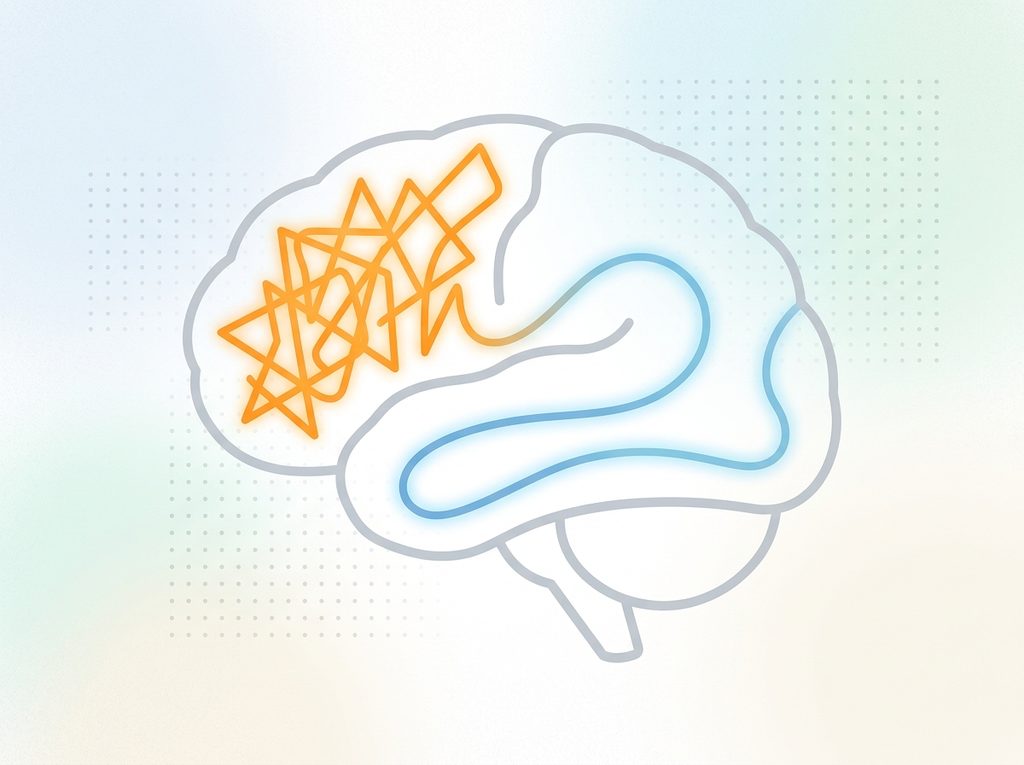
Neuroscience shows that habit formation involves a shift in which brain regions are in charge of a behavior. New actions rely heavily on the prefrontal cortex — the region responsible for conscious decision-making. But as a behavior repeats in response to the same cue, control gradually shifts to the basal ganglia, a deep-brain structure specialized in automatic, procedural behavior. Dopamine reinforces this shift: over time, it’s released in anticipation of the reward rather than only after it, which is what makes a habit start to feel automatic rather than willed.
“21 days” is a myth — automaticity takes longer, and it varies.
A widely cited study by researcher Philippa Lally and colleagues at University College London tracked how long it actually takes for a behavior to become automatic. The median was 66 days — but simpler habits solidified faster, and more complex ones took considerably longer, in some cases past 250 days. The takeaway: there’s no universal deadline for a habit to “click,” which is exactly why identity (a durable belief) is a more reliable engine than motivation (a short-term feeling) for carrying you through that whole window.
Identity acts as a buffer under stress.
When your self-concept includes “I’m someone who stays calm” or “I’m someone who trains,” that belief shapes how you respond even when willpower is running low, because the behavior is no longer a decision you have to consciously make every time — it’s simply consistent with who you already believe you are.
Identity-Based vs. Outcome-Based Habits
| Outcome-based habits | Identity-based habits | |
|---|---|---|
| Starting question | “What do I want to achieve?” | “Who do I want to become?” |
| Motivation source | External milestone | Internal self-concept |
| What happens after a lapse | Feels like failure; often triggers quitting | Feels like a one-off exception |
| What happens after the goal is hit | Motivation often disappears | Behavior continues, because it’s part of identity |
| Energy cost | High — relies on willpower | Lower — relies on self-consistency |
How to Define the Identity You Want
Building a new identity isn’t wishful thinking — it’s something you can design deliberately.
- Visualize your future self. Set aside quiet time, pick a timeframe (six months, a year), and build a specific mental scene: where is this future version of you, what have they overcome, how do they feel? Because our brains process our “future self” almost like a different person, this exercise helps close what psychologists call psychological distance — the gap between who you are now and who you’re becoming.
- Write identity-based statements, not just goals. Trade “I want to write more” for “I am someone who writes daily.” These aren’t affirmations about who you already are — they’re honest declarations of who you’re actively becoming, and they should feel authentic, not aspirational fluff.
- Use your own name. Research on self-talk suggests that switching from “I am disciplined” to “[Your name] is disciplined” can heighten the psychological pull of the statement, partly by creating a small, useful tension between your current behavior and the identity you’re claiming — a version of cognitive dissonance that nudges action into alignment with belief.
- Ask the identity-first question in the moment. When motivation dips, the more useful question isn’t “Do I feel like doing this?” — it’s “What would a [runner / writer / calm person] do right now?”
Building Habits That Match the Identity
Once the identity is defined, small consistent actions are what turn it from a statement into a lived reality.
- Start absurdly small. One paragraph if you’re becoming a writer. Fifty steps if you’re becoming active. One minute of tidying if you’re becoming organized. Consistency in the early phase matters far more than intensity — intensity can come later.
- Use habit stacking. Attach the new behavior to a habit that already runs on autopilot: “After I pour my morning coffee, I write one sentence.” This borrows the existing cue’s reliability instead of asking your brain to build a new trigger from scratch.
- Apply BJ Fogg’s Tiny Habits method. Stanford researcher BJ Fogg’s B=MAP model argues that behavior happens when Motivation, Ability, and a Prompt converge — and that shrinking the ability requirement (making the habit tiny) is more reliable than trying to boost motivation. Fogg also emphasizes an often-skipped step: celebration. A small internal “yes” or fist pump right after the behavior creates a positive emotional signal that speeds up the identity shift — you don’t just do the healthy thing, you feel like the kind of person who does it.
- Design for obviousness, ease, and reward. Keep the cues visible (shoes by the door), reduce friction (clothes laid out the night before), and make sure the habit delivers some sense of success, however small — that feeling is what your brain files away as evidence for the new identity.
Reinforcing Identity Through Environment and Community
Identity doesn’t just live in your head — it’s shaped by your surroundings.
- Environmental cues. Objects placed deliberately in your space — a journal on the nightstand, running shoes by the door — act as visible reminders and small triggers for the identity you’re building.
- Community and social identity. Spending time around people who already embody the identity you want makes the behavior feel normal rather than exceptional. Social identity research shows that belonging to a group shapes behavior, partly because we start to hold ourselves to the standards of people we consider “like us.”
- Accountability. Sharing progress with someone, or simply knowing someone will ask how it’s going, adds a layer of consistency that pure self-motivation often can’t sustain on its own.
Watching Your Self-Talk
The words you use about yourself function as evidence your brain collects, just like actions do. Casual lines like “I’m not a morning person” or “I’m bad with money” quietly become self-fulfilling, because they shape which behaviors feel “in character” and which feel like a fight.
The fix isn’t blind positivity — it’s honest re-evaluation. Ask whether the label is actually true, look for counter-evidence, and replace it with a statement that’s both accurate and forward-looking: not “I am a millionaire” (which your brain will reject as false), but “I’m someone who’s learning to manage money carefully” (which is true and identity-aligned).
Where Identity-Based Habits Can Backfire
This framework is powerful, but it isn’t a cure-all, and pretending otherwise does readers a disservice.
- Identity rigidity. A self-concept can become a cage as easily as a launchpad. Someone who over-identifies as “the disciplined one” may struggle to rest without guilt; someone who has fully internalized “I’m anxious” may avoid situations that would actually help them grow. Identity should be a working hypothesis you keep updating with evidence, not a fixed label you defend at all costs.
- Performative identity. Adopting the language of an identity (“I’m a runner”) without the internal alignment to back it up can lead to habits that look good on social media but collapse the moment no one’s watching. Genuine identity change requires the behavior and the belief to reinforce each other, not just the appearance of one.
- The early-weeks fragility problem. New identities are most vulnerable in their first few weeks, before enough behavioral evidence has accumulated to withstand a bad day. A single missed session early on can carry outsized weight against a self-concept that hasn’t solidified yet — which is exactly when extra structure (accountability, environment design, very small starting actions) matters most.
- It’s not a substitute for support. If a “negative” self-label is tied to something like depression, chronic anxiety, or disordered patterns, identity-reframing techniques are not a replacement for professional support — they work best as one tool among several, not the whole solution.
A Simple Framework to Start Today
- Pick one identity — not five. Trying to overhaul your whole self-concept at once dilutes the effort that any single identity needs to take hold.
- Write one identity statement using your own name.
- Choose one tiny action that “votes” for that identity — small enough that skipping it feels harder to justify than doing it.
- Attach it to an existing habit using habit stacking.
- Celebrate immediately after doing it, even briefly.
- Track it loosely for 60–90 days, expecting some days to be exceptions rather than treating them as failures.
FAQ
How long does it take to build an identity-based habit?
There’s no fixed number. Research suggests automaticity for a habit can take anywhere from about two months to well over 250 days, depending on complexity — identity change tends to track a similar or slightly longer timeline, since it depends on accumulated evidence, not a calendar date.
What’s the difference between a habit and an identity-based habit?
A habit is just a repeated behavior. An identity-based habit is a behavior that’s anchored to a belief about who you are, which is what makes it resistant to motivation dips and occasional lapses.
Can I build more than one identity-based habit at a time?
You can, but it’s slower and less reliable. Establishing one identity fully before layering in another tends to produce more durable results than trying to overhaul several parts of your self-concept simultaneously.
Is identity-based habit change scientifically supported, or just popular self-help advice?
Both — it’s a case where a popular framework (largely from James Clear’s Atomic Habits) lines up with genuine research in self-perception theory, habit neuroscience, and social identity theory, even though some of the framework’s mainstream packaging simplifies the underlying science.
Conclusion
Willpower was never designed to carry you for months or years — it’s a short-term resource that runs out exactly when you need it most. Identity works differently.
When a behavior is tied to who you believe you are, showing up stops being a daily negotiation and starts being simple consistency.
The path there isn’t dramatic: it’s one small, repeatable vote at a time, cast in an environment that supports the person you’re becoming, with enough self-awareness to keep that identity flexible rather than fixed.
Start with one identity, one tiny action, and let the evidence build from there.
References
- Frontiers in Psychology — research on habit and identity
- Psychology Today — identity as a buffer against stress-driven decisions
- PMC — value alignment and habit-identity correlation
- James Clear, Atomic Habits (2018)
- Bem, D. J. (1972). “Self-Perception Theory,” Advances in Experimental Social Psychology
- Lally, P., et al. (2010). “How are habits formed: Modelling habit formation in the real world,” European Journal of Social Psychology
- Fogg, B. J. (2019). Tiny Habits: The Small Changes That Change Everything
- Graybiel, A. M. (2008) — basal ganglia and habit formation
Related Posts

Stay Informed With the Latest & Most Important News
Previous Post
Next Post










Advertisement