

























Now Reading: Why You Lose Motivation After 2 Weeks (And How to Push Through It)
-
01
Why You Lose Motivation After 2 Weeks (And How to Push Through It)



You lose motivation after two weeks because the initial dopamine rush that comes with starting something new wears off right around the two-week mark — before the habit has had time to become automatic.
Once the novelty fades, your brain stops running on excitement and has to start running on effort, and that’s when most people quit. The fix isn’t finding more motivation. It’s lowering the bar, removing friction, and tracking your consistency instead of your results until the habit can carry itself.
Table of contents
The Two-Week Pattern Almost Everyone Hits
You start something new — a workout plan, a writing habit, a business idea — and for the first few days you feel unstoppable. You wake up early. You’re focused. You picture a completely different version of yourself.
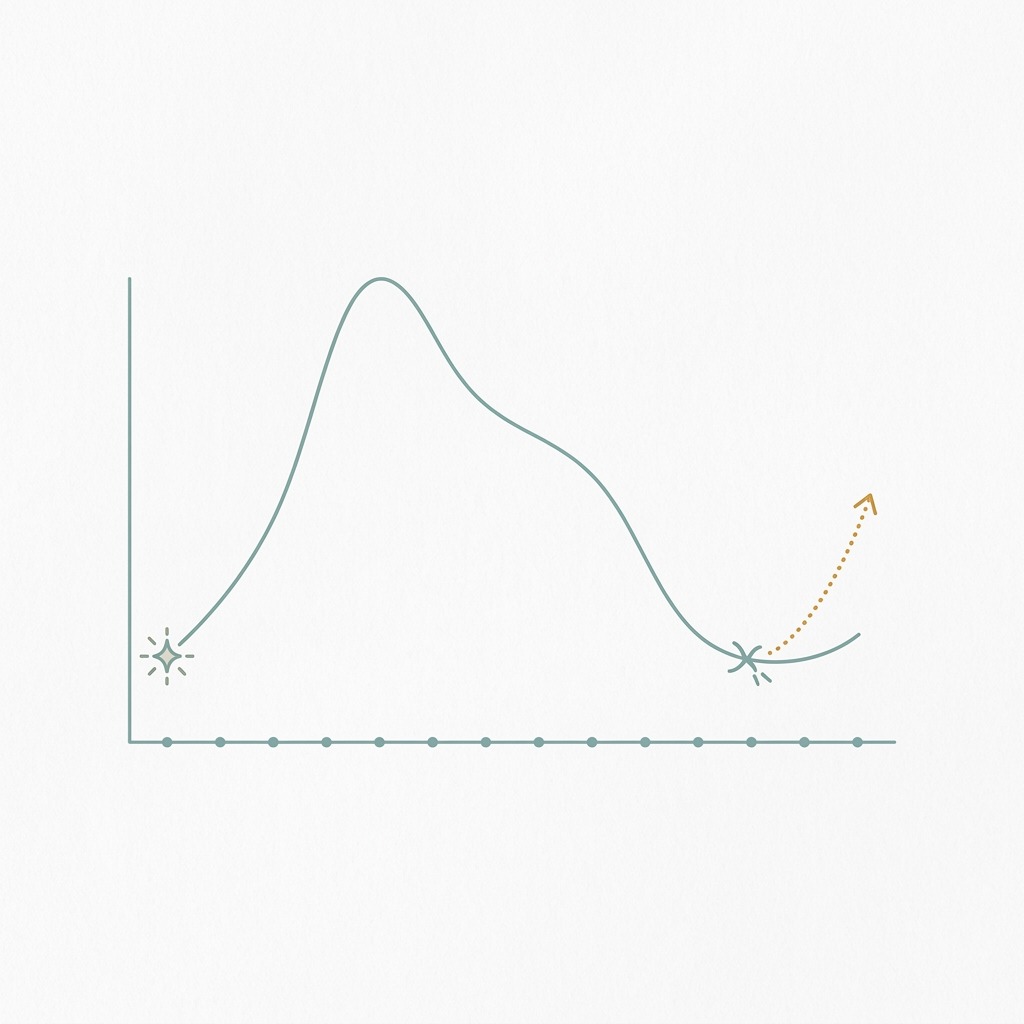
Then, somewhere around day 10 to 14, it flips. The same routine that felt exciting now feels like a chore. You skip one day, then two, and tell yourself you’ll “restart next week.” You usually don’t.
If this cycle feels familiar, the problem was never laziness or weak willpower. It’s a predictable, well-documented pattern in how motivation actually works.
Why Motivation Drops After Two Weeks: The Science
1. The Dopamine Drop
Dopamine isn’t the “pleasure chemical” people assume it is — researchers describe it more accurately as the brain’s motivation and anticipation chemical. It rises when a reward feels new, uncertain, or close, which is exactly what a brand-new goal offers. Starting something fresh activates the brain’s reward circuitry simply because the outcome still feels exciting and unknown.
The problem is that novelty is a depleting resource. As a goal becomes familiar and the results stay slow to arrive, dopamine signaling drops, and that drop is what shows up as “losing motivation.” It often feels physical — like fatigue or mental fog — rather than a conscious decision to give up, because on a neurochemical level, that’s basically what it is.
2. The Reality Gap
Big changes take longer to show visible results than the two weeks most people give them. When you check your progress and see nothing dramatic, discouragement sets in. This gap between how fast you expected change to show up and how fast it actually shows up is sometimes called the “valley of disappointment” — the stretch where you’re doing the work but the results haven’t caught up yet.
3. Decision Fatigue
Your brain defaults to routines it already knows because they’re cognitively cheap. A new habit competes with old ones for the same limited pool of willpower and decision-making energy, and fighting that friction all day, every day, is exhausting in a way that’s easy to underestimate.
4. Hidden Friction
Small obstacles do outsized damage to a fragile new habit. If your gym bag isn’t packed or your running shoes aren’t by the door, that tiny bit of extra effort is often all your brain needs as an excuse to skip today “just this once.”
Is Losing Motivation After Two Weeks Actually Normal?
Yes — and the habit-formation research backs this up.
The most-cited study on this, led by Dr. Phillippa Lally at University College London, tracked participants building a new daily habit over 12 weeks.
The average time for a behavior to start feeling automatic was 66 days, not the “21 days” figure that gets repeated everywhere (that number actually traces back to a 1960s book about plastic-surgery patients adjusting to a new appearance — it was never about habits at all).
Depending on the complexity of the behavior, Lally’s participants took anywhere from 18 to 254 days to reach automaticity.
That research also breaks the process into a rough three-stage arc:
- Weeks 1–2 (conscious effort): You’re relying on willpower and reminders. Your prefrontal cortex — the planning and self-control part of your brain — is doing all the heavy lifting.
- Weeks 3–9 (the transition zone): The action doesn’t require iron willpower anymore, but it isn’t automatic either. This is the stretch where most people quit, because it’s harder than week one and less rewarding than the eventual habit.
- Roughly day 66 onward (automaticity): Deeper brain structures take over, and the behavior starts happening with far less conscious effort.
In other words, the two-week wall isn’t a sign that something is wrong with you. It’s the exact point where the study’s data says the hardest, least rewarding stretch of habit formation begins.
Low Motivation vs. Something Deeper
It’s worth pausing on one distinction before jumping to fixes: ordinary low motivation and clinical depression are not the same thing, even though they can look similar from the inside.
Ordinary low motivation after two weeks is usually explained by burnout, goals that don’t actually matter to you, decision fatigue, or a routine that’s drifted out of sync with your values. It tends to lift once you identify the cause and change something concrete. Depression, by contrast, tends to bring persistent sadness and a loss of pleasure in things you’d normally enjoy — not just a lack of drive toward one specific goal.
If your lack of motivation has lasted more than a few weeks, shows up alongside changes in mood, sleep, or appetite, or is seriously affecting your day-to-day functioning, it’s worth talking to a doctor or therapist rather than assuming it’s a willpower problem. And if you’re ever having thoughts of hurting yourself, the 988 Suicide & Crisis Lifeline (call or text 988) is available 24/7 in the US.
For the far more common case — you’re fine, but the drive is gone — here’s what actually works.
How to Push Through the Two-Week Wall
1. Lower the Bar Until It’s Almost Insulting
Shrink your daily commitment to something so small it’s hard to skip — two minutes of writing, one set at the gym, opening the document. Getting started is the hardest part of any task; momentum tends to build once you’re already moving.
2. Track the Process, Not the Results
Results lag behind effort, especially in the first few weeks, so measuring them daily is a setup for disappointment. Instead, count the days you showed up. A simple streak on a calendar — the “don’t break the chain” method — gives your brain a visible, immediate win even when the mirror or the scale hasn’t changed yet.
3. Remove Friction Before You Need Willpower
Prep whatever you need the night before — gym clothes laid out, the document already open, the ingredients already chopped. Every extra step between “deciding to start” and “actually starting” is a chance for your brain to talk you out of it. Make the good choice the easiest one available.
4. Expect the Dip, Don’t Interpret It as a Sign
Knowing in advance that week three will feel harder than week one changes how you respond to it. Treat the urge to quit as a predictable, temporary part of the process — not new information suggesting the goal was wrong.
5. Act First, Feel Motivated Second
It’s tempting to wait until you feel ready before starting, but the evidence and the lived experience both point the other way: action tends to generate motivation more reliably than motivation generates action. Goals that don’t feel meaningful on day one often start to feel meaningful once you’ve put in a few weeks of real effort.
6. Reconnect the Habit to Something You Actually Value
A goal that isn’t tied to something you genuinely care about has nothing to pull you back to it on a hard day. Write down why the goal matters to you in concrete terms, and check whether your daily actions actually reflect it. If they don’t, the plan — not your discipline — is probably what needs adjusting.
7. Tell Someone
Sharing your goal with one person who will actually ask how it’s going adds a light layer of accountability that’s easy to underestimate. It doesn’t need to be dramatic — a friend, a coworker, or an online group is enough.
Key Takeaways
- Motivation drops after two weeks because the dopamine-driven excitement of starting something new fades faster than results show up.
- This isn’t a personal failure — habit-formation research shows the average new behavior takes about 66 days to become automatic, and weeks 2–9 are consistently the hardest stretch.
- Ordinary low motivation is different from depression; if low drive persists for weeks alongside mood or sleep changes, it’s worth talking to a professional.
- The fix is behavioral, not emotional: shrink the daily ask, track consistency instead of results, remove friction in advance, and expect the dip.
- Action reliably produces motivation faster than motivation produces action — start before you feel ready.
FAQ
Why do I always lose motivation after two weeks?
Because the novelty-driven dopamine spike that makes new goals exciting fades around that point, while the habit hasn’t had time to become automatic yet — that usually takes closer to two months.
Is it normal to want to quit in week three?
Yes. Research on habit formation shows the stretch after the initial excitement fades and before the habit becomes automatic is consistently the hardest part of the process, not a sign you picked the wrong goal.
How do I stay motivated when I don’t feel like it?
Shrink the task until it’s almost too easy to skip, remove any friction that stands between you and starting, and track whether you showed up rather than how much you accomplished.
How long does it actually take to build a habit?
On average around 66 days, though it can range from about 18 to over 250 days depending on how complex the behavior is, according to the most widely cited habit-formation study.
When is low motivation something more than normal?
If it persists for more than a few weeks, comes with changes in mood, sleep, or appetite, or is seriously disrupting your daily life, it’s worth speaking with a doctor or therapist rather than pushing through alone.
This article is for general informational purposes and isn’t a substitute for professional medical or mental health advice.
Related Posts


Stay Informed With the Latest & Most Important News
Previous Post
Next Post










Advertisement