























Now Reading: Cardio vs. Weight Training for Fat Loss: What the Science Actually Says
-
01
Cardio vs. Weight Training for Fat Loss: What the Science Actually Says



If you’ve ever stepped into a gym with the goal of losing fat, you’ve probably faced the same question millions ask every day: Should I hop on the treadmill or grab the dumbbells?
The debate between cardio vs. weight training for fat loss is one of the most common — and most misunderstood — topics in fitness.
Some people swear by long runs. Others never leave the weight room. And both sides have strong opinions.
But what does the science actually say?
In this article, we break down the real physiological differences between cardio and weight training, how each one impacts fat loss, and — most importantly — what the optimal strategy looks like when you combine the two intelligently.
Table of contents
- What Happens in Your Body During Cardio?
- What Happens in Your Body During Weight Training?
- HIIT: The Best of Both Worlds
- Cardio vs. Weight Training: Head-to-Head Comparison
- What the Science Actually Recommends
- The Optimal Weekly Fat Loss Strategy
- Common Mistakes That Slow Fat Loss
- Frequently Asked Questions
- The Bottom Line
What Happens in Your Body During Cardio?
Cardio, or cardiovascular exercise, includes activities like running, cycling, swimming, rowing, and HIIT (High-Intensity Interval Training). The defining feature of cardio is a sustained elevated heart rate, which directly increases your calorie burn during the session.
Cardio Burns More Calories Per Session
When comparing equal time windows, cardio generally burns more calories than weight training. According to the CDC, a 154-pound person burns approximately 145 calories cycling at a moderate pace for 30 minutes — and up to 295 calories at a higher intensity. The same person lifting weights for 30 minutes burns around 110 calories.
That’s a meaningful difference per session, and it’s one reason cardio has long been considered the “go-to” tool for weight loss.
The Limitations of Cardio Alone
While cardio is excellent for burning calories in the moment, it has significant limitations when used as the only fat loss strategy:
- Muscle loss risk: When performed in high volumes without resistance training, cardio can trigger muscle breakdown — especially in a caloric deficit.
- Short metabolic boost: The post-exercise calorie burn from cardio is relatively brief compared to weight training.
- Adaptation plateau: Your body becomes more efficient at cardio over time, meaning you burn fewer calories doing the same workout as your fitness improves.
This is why many people who do cardio exclusively lose weight on the scale but don’t actually look or feel leaner — they’re losing both fat and muscle.
What Happens in Your Body During Weight Training?
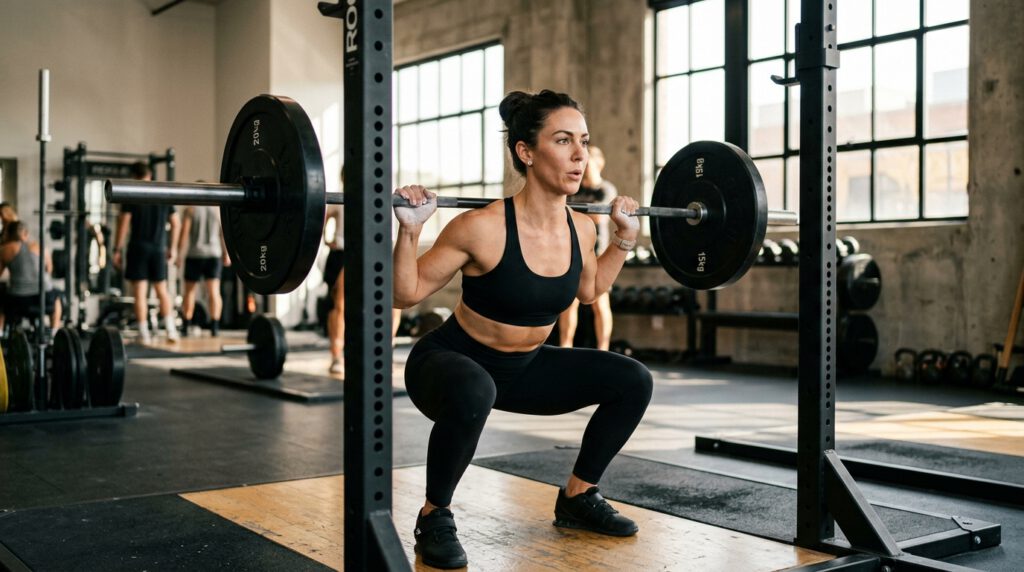
Strength training — using free weights, machines, resistance bands, or bodyweight — challenges your muscles to adapt and grow. While it burns fewer calories during the workout compared to cardio, its long-term impact on fat loss is where it truly shines.
Weight Training Builds Metabolically Active Muscle
Muscle tissue is far more metabolically active than fat tissue. The more lean muscle mass you carry, the more calories your body burns at rest — known as your Basal Metabolic Rate (BMR) or Resting Metabolic Rate (RMR).
A 2020 systematic review confirmed that resistance exercise is more effective at increasing resting metabolic rate than aerobic exercise alone, or even a combination of both. This means that every pound of muscle you build is working for you around the clock — not just during your gym session.
The EPOC Advantage (“Afterburn Effect”)
One of the most powerful, science-backed benefits of weight training is Excess Post-exercise Oxygen Consumption (EPOC) — commonly called the “afterburn effect.”
After a resistance training session, your body continues to burn extra calories for 24 to 48 hours as it repairs muscle tissue, restores glycogen, and returns to homeostasis. The intensity and volume of your session directly affect how significant this afterburn is.
Cardio also produces EPOC, but research consistently shows that weight training generates a greater and longer-lasting afterburn effect.
Weight Training Protects Muscle During Fat Loss
Here’s the critical point most people miss: when you’re in a caloric deficit, your body burns both fat and muscle. Weight training sends a signal to your body that your muscles are needed — and therefore worth preserving.
Without that signal? Your body is more likely to break down muscle tissue for energy, leaving you lighter on the scale but with a slower metabolism and less definition.
HIIT: The Best of Both Worlds
High-Intensity Interval Training (HIIT) deserves its own section because it bridges the gap between cardio and strength work.
HIIT involves alternating short bursts of intense effort with brief recovery periods — for example, 20 seconds of sprinting followed by 20 seconds of walking, repeated for 15–30 minutes.
What the Research Shows
- A study comparing HIIT, weight training, running, and cycling found that HIIT burned 25–30% more calories than the other forms in the same time period.
- Research following over 400 adults with overweight and obesity found that HIIT and traditional cardio reduced body fat and waist circumference to similar extents — but HIIT accomplished this in significantly less time.
- You can burn approximately 485 calories in a 45-minute HIIT session, including warm-up and cool-down.
HIIT can be performed with bodyweight exercises, cycling, running, or even incorporated into weight training circuits — making it highly versatile.
Cardio vs. Weight Training: Head-to-Head Comparison
| Feature | Cardio / HIIT | Weight Training |
|---|---|---|
| Calories Burned Per Session | Higher | Lower |
| Muscle Retention | Risk of muscle loss if overdone | Preserves and builds muscle |
| Metabolic Impact | Short-lived boost | Raises resting metabolic rate long-term |
| Afterburn (EPOC) | Moderate | Significant (24–48 hours) |
| Cardiovascular Health | Excellent | Moderate benefit |
| Body Composition | Reduces weight (fat + muscle) | Targets fat while preserving muscle |
| Time Efficiency | Moderate | High (especially with HIIT weights) |
What the Science Actually Recommends
After reviewing the evidence, the scientific consensus is clear: neither cardio nor weight training alone is the optimal strategy for fat loss.
The most effective approach is a combination of both, with strength training as the foundation and cardio used strategically as a supporting tool.
Here’s why this matters:
- Cardio helps increase your Total Daily Energy Expenditure (TDEE), making it easier to maintain the caloric deficit needed for fat loss.
- Weight training ensures that the weight you lose comes primarily from fat — not muscle — and keeps your metabolism elevated over time.
- Together, they enable body recomposition: losing fat while retaining (or even building) muscle.
The Role of Diet
Exercise is only one side of the equation. Fat loss ultimately comes down to energy balance — burning more calories than you consume. Both cardio and weight training become dramatically more effective when paired with:
- A moderate caloric deficit (typically 300–500 calories below your TDEE)
- Adequate protein intake to support muscle preservation (0.7–1g per pound of bodyweight is a common guideline)
- Consistent sleep and stress management, which directly affect hormones like cortisol and insulin that regulate fat storage
The Optimal Weekly Fat Loss Strategy
Based on current research, here’s a practical framework for combining cardio and weight training:
Step 1: Prioritize Strength Training (3–4x per week)
Build your weekly plan around resistance training sessions. Full-body workouts or upper/lower splits both work well. Focus on progressive overload — gradually increasing weight or reps over time.
Step 2: Add Cardio Strategically (1–3x per week)
Use cardio to close the gap in your caloric deficit, not to replace your weight training. HIIT 1–2 times per week is highly time-efficient. Steady-state cardio (walking, cycling) works well on recovery days without taxing your muscles.
Step 3: Sequence Matters Within a Session
Research suggests that when doing both in the same session, perform resistance training before cardio. This ensures your strength performance isn’t compromised and may improve overall fat loss outcomes.
Step 4: Keep Moving Throughout the Day
Aim for 7,000–10,000 steps of daily movement outside of structured workouts. Non-exercise activity (walking, chores, standing) can add up to significant calorie burn over time.
Common Mistakes That Slow Fat Loss
Doing Too Much Cardio, Not Enough Lifting
One of the most common patterns: cardio every day, minimal weight training, rapid weight loss followed by a stall. When you lose muscle along with fat, your metabolism slows — making further fat loss progressively harder.
Ignoring Recovery
More exercise isn’t always better. Overtraining — particularly excessive cardio — elevates cortisol, disrupts sleep, and can actively work against fat loss. Recovery, sleep, and nutrition are as important as the workouts themselves.
Not Tracking Progress Accurately
The scale alone is a poor metric when you’re building muscle and losing fat simultaneously. Track body measurements, progress photos, and how your clothes fit — not just your weight.
Frequently Asked Questions
Q: Can I lose fat with weight training alone, without any cardio?
Yes. You can lose fat with resistance training only. The more muscle you build, the more fat your body will burn. However, adding some cardio accelerates the process by increasing your total calorie burn.
Q: How long does it take to see results from combining cardio and weight training?
Most people notice meaningful changes in body composition within 8–12 weeks of consistent training combined with a caloric deficit. Strength improvements often appear within the first 2–4 weeks.
Q: Is HIIT better than steady-state cardio for fat loss?
HIIT burns more calories in less time and produces a greater afterburn effect. However, steady-state cardio is less taxing on the body and easier to recover from — making it a useful complement to heavy lifting. Both have a place in a well-rounded program.
Q: Should I do cardio before or after weights?
Research generally supports doing weights before cardio in the same session, as fatigue from cardio can compromise your lifting performance and reduce the muscle-preserving stimulus.
The Bottom Line
The cardio vs. weight training debate doesn’t need to be an either/or choice — and the science makes that clear.
Cardio is a powerful tool for increasing calorie burn and improving cardiovascular health.
Weight training is essential for preserving muscle, boosting your resting metabolism, and ensuring the weight you lose comes from fat.
The winning formula for sustainable fat loss is:
✅ Strength training as the foundation (3–4x per week)
✅ Cardio as a strategic supplement (1–3x per week)
✅ A moderate caloric deficit with adequate protein
✅ Consistent daily movement and quality recovery
Start there, stay consistent, and the results will follow.
Always consult a qualified healthcare professional or certified trainer before starting a new exercise or dietary program — particularly if you have existing health conditions.
Related Posts
Stay Informed With the Latest & Most Important News
Previous Post
Next Post









Advertisement