



















Now Reading: Creatine vs. Protein: Do You Really Need Both? | Complete Guide
-
01
Creatine vs. Protein: Do You Really Need Both? | Complete Guide


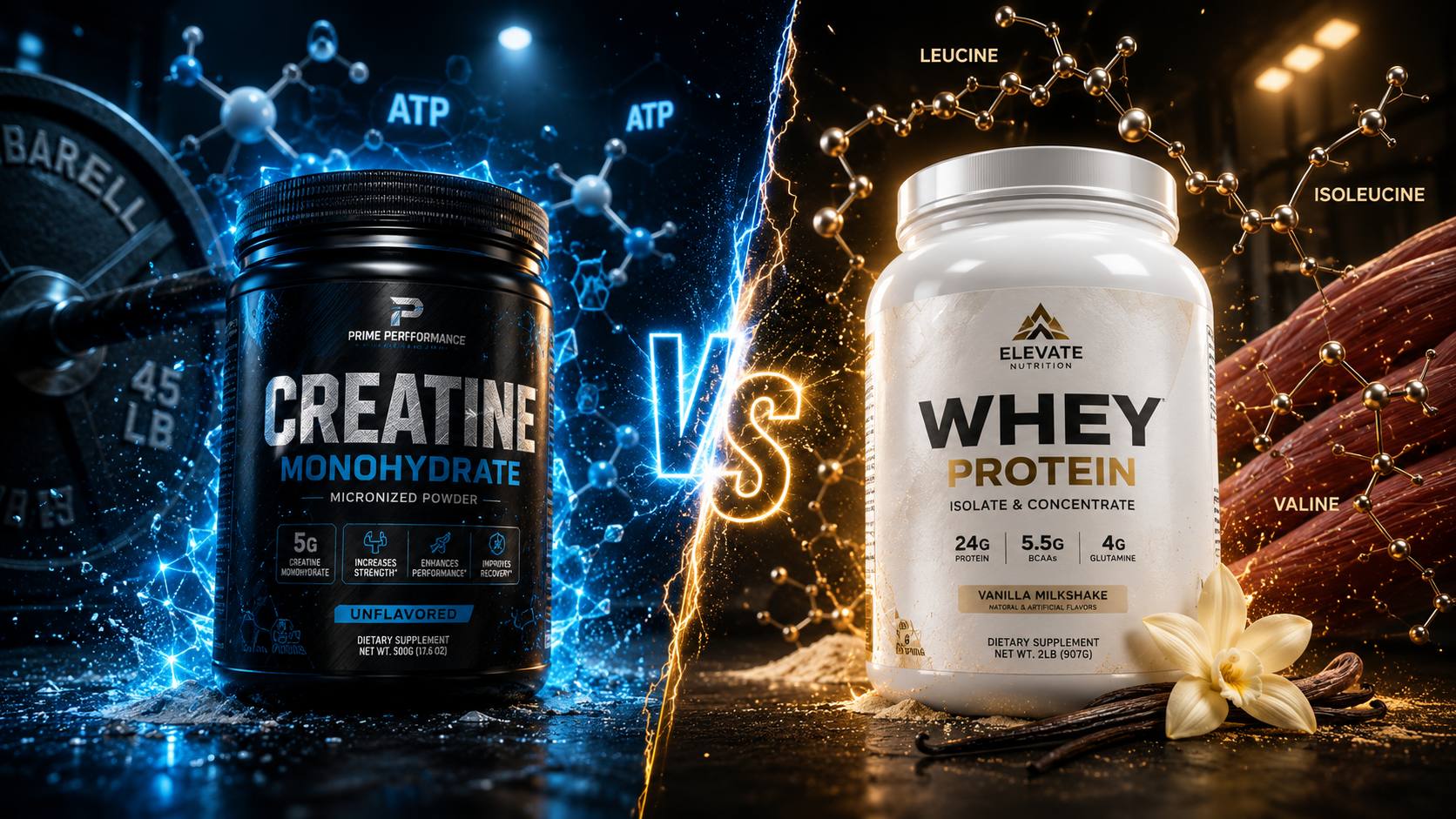
If you’ve ever stood in the supplement aisle wondering whether to grab creatine, protein powder, or both — you’re not alone.
These two supplements are among the most popular in the fitness world, but they serve completely different purposes.
So, do you really need both? The short answer is: not necessarily, but combining them can give you a real edge.
Let’s break it all down.
Table of contents
- What Is Creatine and What Does It Do?
- What Is Protein and Why Does It Matter?
- Creatine vs. Protein: The Core Difference
- Which One Should You Take for Muscle Gain?
- Dosage Guide: How Much Do You Need?
- Can You Take Creatine and Protein Together?
- Potential Side Effects to Know
- How to Prioritize Based on Your Goals
- Final Verdict
What Is Creatine and What Does It Do?
Creatine is a naturally occurring compound found primarily in your muscles. Your body produces it from three amino acids — arginine, glycine, and methionine — and you can also get it from dietary sources like red meat and fish.
Its primary role is energy production. During high-intensity, short-burst activities like weightlifting or sprinting, creatine helps your muscles rapidly regenerate adenosine triphosphate (ATP) — the body’s immediate energy currency. More ATP means more power, more reps, and better performance.
Key Benefits of Creatine:
- Increases strength and power output during intense workouts
- Boosts training capacity and overall exercise performance
- Supports lean muscle mass growth over time
- Aids in muscle recovery after resistance training
- Draws water into muscle cells, promoting hydration and cell volume
Creatine is available in several forms, with creatine monohydrate being the most researched and widely recommended. Other forms include creatine citrate, hydrochloride, malate, and pyruvate.
What Is Protein and Why Does It Matter?
Protein is a macronutrient made up of approximately 20 amino acids, and it is essential for virtually every function in your body — from building muscle and repairing tissue to producing enzymes, regulating hormones, and supporting immune function.
When you exercise, you break down muscle fibers. Protein provides the amino acids needed to repair and rebuild those fibers, making them stronger over time. Without enough protein, your body simply cannot grow muscle — no matter how hard you train.
You can get protein from a wide range of sources:
- Animal-based: meat, poultry, eggs, fish, dairy
- Plant-based: lentils, beans, peas, soy, nuts, seeds, whole grains
Protein powder is a convenient supplement — not a food replacement — that helps you hit your daily targets when whole food sources fall short.
Key Benefits of Protein:
- Supports muscle repair and growth after exercise
- Optimizes muscle protein synthesis (especially leucine-rich sources like whey)
- Increases satiety and helps with weight management
- Supports metabolism, immune health, and hormone regulation
Creatine vs. Protein: The Core Difference
| Feature | Creatine | Protein |
|---|---|---|
| Primary Role | Energy (ATP regeneration) | Muscle repair and growth |
| Best For | High-intensity, short-duration exercise | Any type of exercise |
| Found In | Red meat, fish | Meat, eggs, dairy, legumes |
| Supplement Needed? | Often yes (hard to get enough from food) | Optional if diet is sufficient |
| Works Best When | Taken consistently every day | Taken consistently, especially post-workout |
Think of it this way: protein is the building material, and creatine is the fuel that lets you work harder so that building material gets put to better use.
Which One Should You Take for Muscle Gain?
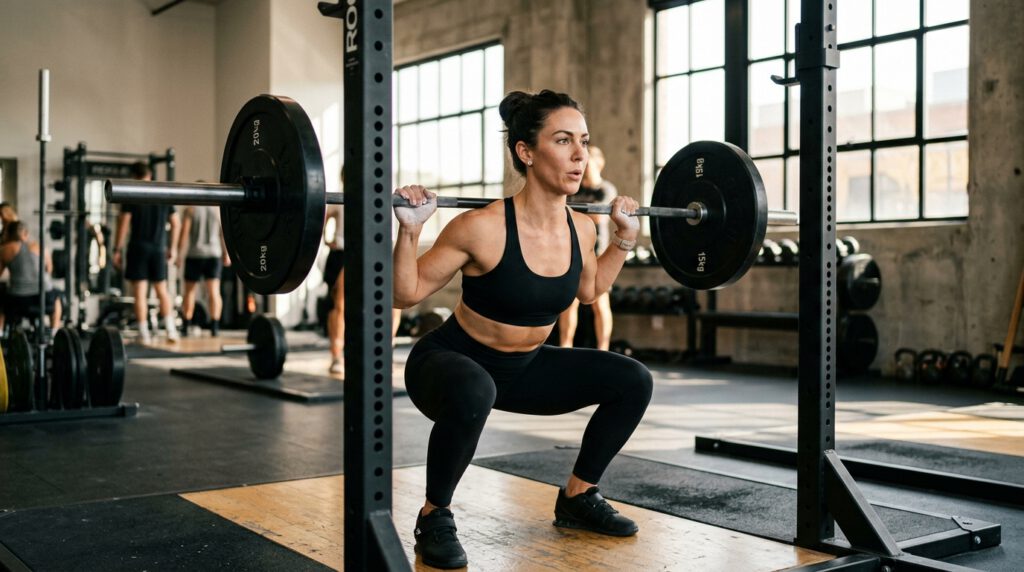
If muscle growth is your goal, protein comes first. Your body uses amino acids from protein to repair and grow muscle tissue after every workout. Without adequate daily protein intake, no other supplement will make a significant difference.
Creatine enhances your training performance — helping you lift heavier or push out extra reps — and over time, that added intensity translates into greater strength and muscle gains. Research confirms that combining creatine with resistance training can meaningfully improve muscle and strength outcomes compared to training alone.
Bottom line for muscle gain:
- Nail your protein intake first
- Add creatine once your diet is dialed in
- Use both together for the best long-term results
Dosage Guide: How Much Do You Need?
Creatine Dosage
- Standard dose: 3–5 grams of creatine monohydrate per day
- Loading phase (optional): 20 grams per day for 5–7 days (split into 4 doses), followed by a 3–5 gram maintenance dose
- Timing: Consistency matters more than timing. Post-workout is commonly recommended, but daily use is what drives results.
Protein Dosage
- General adults: 1.2–1.6 grams per kilogram of body weight per day (based on the 2025–2030 Dietary Guidelines for Americans)
- Active individuals and athletes: 1.5–2.0 grams per kilogram of body weight per day
- Post-workout: 20–25 grams of high-quality protein to optimize muscle protein synthesis
- Most standard protein powder scoops provide around 20–25 grams per serving
Can You Take Creatine and Protein Together?
Absolutely — and many athletes do. Since creatine and protein work through completely different mechanisms, they complement each other rather than compete. Taking both together, particularly after a workout, may help maximize muscle gains and speed up recovery.
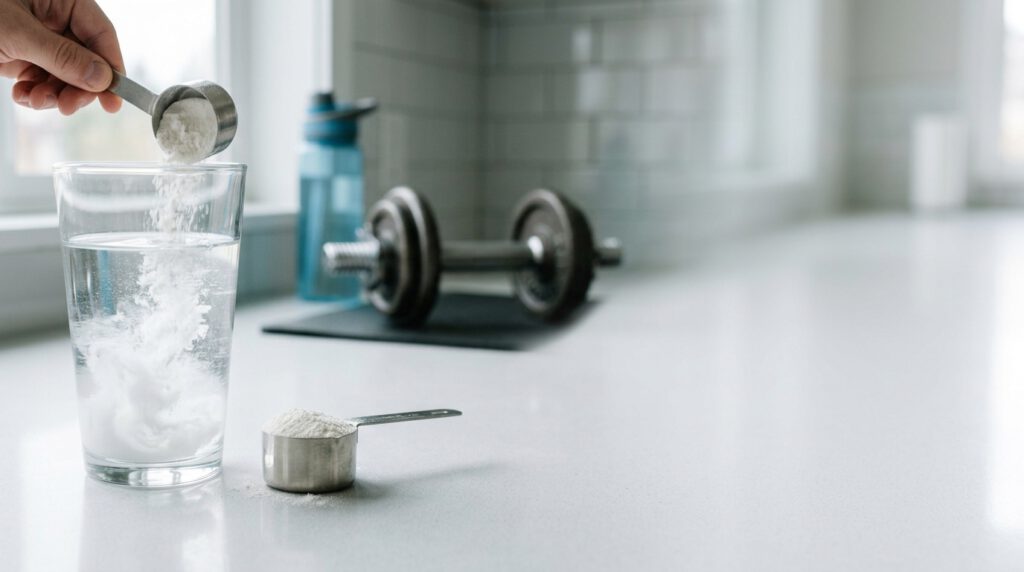
There is no known negative interaction between the two supplements. You can mix creatine powder directly into your protein shake for convenience.
Potential Side Effects to Know
Creatine is considered safe for healthy adults. Potential side effects, particularly at higher doses, include:
- Water retention and temporary weight gain
- Bloating or digestive discomfort
- These effects are generally mild and decrease with lower maintenance dosing
Protein powder is also safe when consumed in appropriate amounts, but excessive intake may:
- Cause gastrointestinal discomfort
- Put added strain on the kidneys in people with pre-existing kidney conditions
- Contribute excess calories if not accounted for in your diet
Always balance protein intake with fiber-rich carbohydrates and healthy fats, and use supplements to bridge the gap in your diet — not as your primary food source.
How to Prioritize Based on Your Goals
If you’re on a budget or just starting out: Focus on protein first. Build your diet around whole food sources and supplement only when needed.
If you’re training for strength or power sports: Add creatine to your routine alongside consistent protein intake.
If you want to maximize muscle growth and recovery: Use both. They target different pathways and work best together.
If you’re focused on weight loss: Protein takes priority. It supports muscle retention while in a caloric deficit and helps you feel fuller longer.
Final Verdict
You don’t need both creatine and protein — but combining them is one of the most effective, evidence-backed supplement strategies available for anyone serious about fitness. Protein builds the muscle; creatine helps you train hard enough to make that building worthwhile.
Before starting any new supplement regimen, it’s always a good idea to consult with a doctor or registered dietitian, especially if you have any underlying health conditions.
Always consult a healthcare professional before beginning any new supplement routine. Individual needs may vary based on health status, fitness level, and dietary habits.
Related Posts
Stay Informed With the Latest & Most Important News
Previous Post
Next Post







Advertisement