





















Now Reading: Why the Scale Isn’t Moving (Even Though You’re Doing Everything Right)
-
01
Why the Scale Isn’t Moving (Even Though You’re Doing Everything Right)


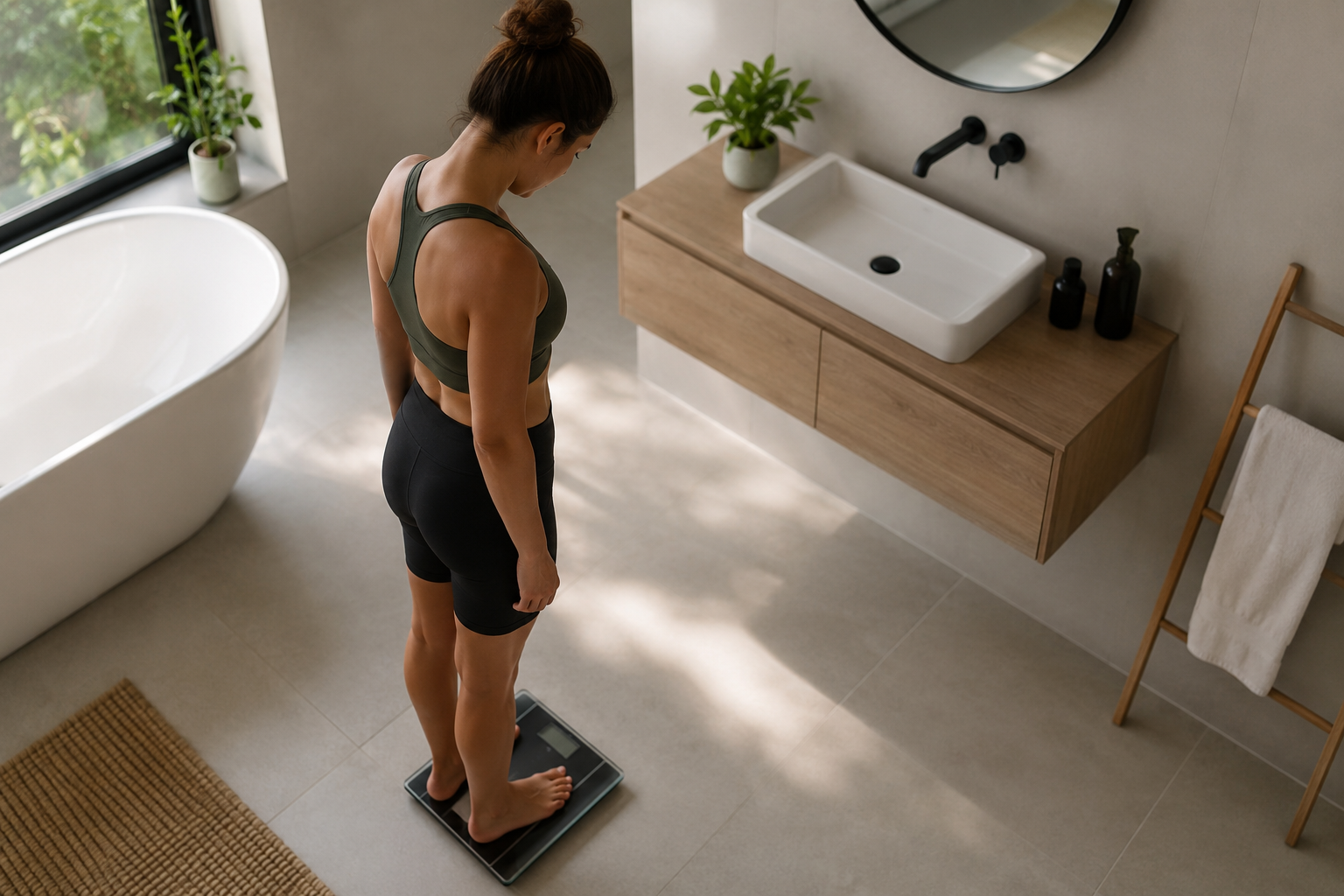
You’ve been eating clean, showing up for your workouts, and tracking your progress like clockwork. For the first few weeks, the number on the scale kept dropping — and then, out of nowhere, it stopped. Not “slowed down.” Stopped. Day after day, the same number stares back at you, no matter how disciplined you’ve been.
If this sounds familiar, take a breath: you haven’t failed, and you’re not imagining it.
What you’re experiencing is called a weight loss plateau, and it happens to almost everyone who loses weight — often for reasons that have nothing to do with effort or willpower.
Below, we break down the real science behind a stalled scale and exactly what to do about it.
Table of contents
- What a Weight Loss Plateau Really Means
- 1. You’re Gaining Muscle While Losing Fat
- 2. Water Retention Is Masking Your Progress
- 3. Small Calorie Miscalculations Are Adding Up
- 4. Your Metabolism Has Adapted
- 5. Hormones Are Working Against You
- 6. Poor Sleep and Chronic Stress Are Sabotaging You
- 7. Inconsistency Has Quietly Crept In
- How to Break Through a Weight Loss Plateau
- When to Seek Professional Help
- Frequently Asked Questions
- The Bottom Line
What a Weight Loss Plateau Really Means
A plateau isn’t a sign that your plan has failed.
It’s usually a sign that your body has successfully adapted to the changes you’ve made — and now needs a new stimulus to keep progressing.
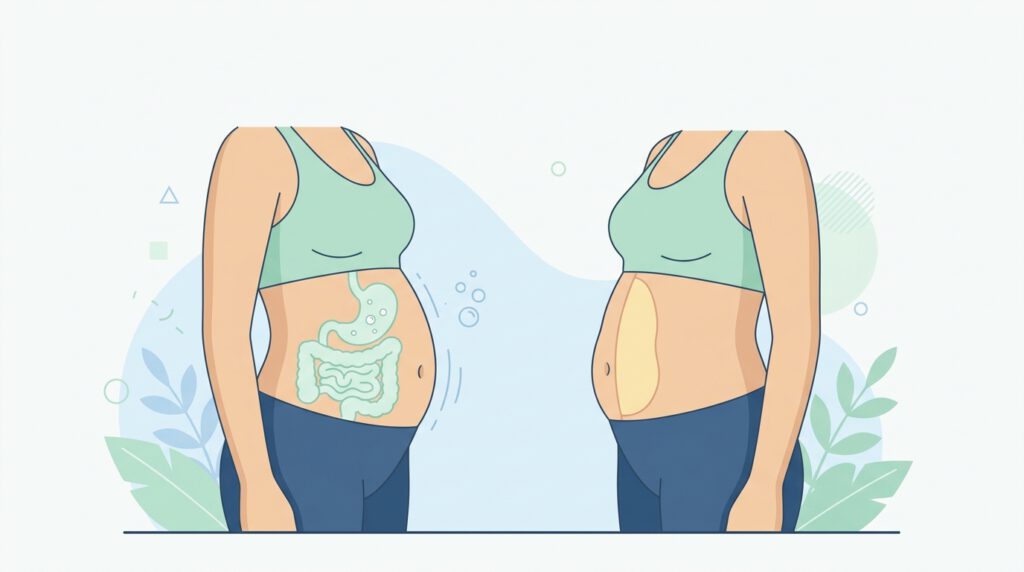
The scale is also a surprisingly narrow measurement: it can’t tell the difference between fat, muscle, water, or even the food currently sitting in your digestive system.
That single number often hides more progress than it reveals.
Here are the most common — and most overlooked — reasons the scale stops moving even when you’re doing everything “right.”
1. You’re Gaining Muscle While Losing Fat
If your clothes are fitting looser but your weight hasn’t budged, you’re likely in the middle of body recomposition — losing fat while simultaneously building lean muscle.
This is especially common if you’ve recently started strength training or increased your protein intake.
Muscle is denser than fat, meaning it takes up less space per pound.
So your waistline can shrink, your visceral and subcutaneous fat can decrease, and you can look noticeably leaner — all while the scale stays exactly the same.
What to track instead of the scale:
- Waist and hip circumference (measuring tape)
- How your clothes fit
- Progress photos taken under consistent lighting
- Body fat percentage, using smart scales or a DEXA scan if available
2. Water Retention Is Masking Your Progress
Body weight fluctuates daily, and water is usually the reason why. Several everyday factors can cause your body to temporarily hold onto extra fluid:
- Stress and cortisol: Chronic stress raises cortisol levels, which encourages your body to retain water and store fat, particularly around the midsection.
- Sodium intake: A single high-sodium meal can cause noticeable, if temporary, water retention.
- Carbohydrate and glycogen shifts: Every gram of glycogen your muscles store is bound to roughly three grams of water, so a higher-carb day can add water weight that has nothing to do with fat gain.
None of this reflects actual fat gain — it’s fluid, and it resolves on its own within days.
3. Small Calorie Miscalculations Are Adding Up
Even careful trackers underestimate their intake sometimes. A splash of cooking oil, a few bites off someone else’s plate, or a slightly generous portion size can quietly erase a calorie deficit without you noticing.
The other side of the equation is just as common: overestimating calories burned through exercise. Cardio machines and even fitness trackers calculate calorie burn using general population averages, not your specific body — research has found wearable devices can be off by an average of around 27% when estimating energy expenditure.
That “extra” 300 calories you think you earned at the gym may only be 150.
How to close the gap:
- Track intake with a food diary or app for a few days to catch hidden calories
- Use a kitchen scale for portion accuracy, especially with oils, nuts, and dressings
- Treat exercise-machine calorie counts as rough estimates, not exact numbers
4. Your Metabolism Has Adapted
This is the biological core of most plateaus. As you lose weight, you also lose some muscle mass alongside fat — and because muscle burns more calories at rest than fat does, your resting metabolic rate drops as your body gets lighter.
A lighter body also burns fewer calories doing the same activities: a 200-pound person burns more calories on a 30-minute walk than a 160-pound person doing the identical walk.
In practice, this means the calorie deficit that worked for your first 10 or 20 pounds may now only be enough to maintain your current weight — not to keep losing.
What helps:
- Recalculate your calorie needs as your weight changes
- Add strength training to preserve and build metabolically active muscle
- Periodically increase workout intensity or vary your routine so your body doesn’t fully adapt
5. Hormones Are Working Against You
Weight loss triggers a hormonal shift that can make continued progress genuinely harder, not just mentally but biologically:
- Leptin, the hormone that signals fullness, tends to decrease as you lose weight.
- Ghrelin, the “hunger hormone,” tends to increase — sometimes by as much as 10% after a single night of poor sleep.
This combination can leave you hungrier and less satisfied by the same meals that used to fill you up, making it easier to slip into a maintenance-level calorie intake without realizing it.
Underlying medical conditions can compound this further, including:
- Hypothyroidism (an underactive thyroid)
- Polycystic ovary syndrome (PCOS)
- Diabetes or insulin resistance
Certain medications, including some antidepressants, can also contribute to weight gain or stalled loss. If you suspect a medical or hormonal factor, it’s worth speaking with a doctor rather than pushing harder on diet and exercise alone.
6. Poor Sleep and Chronic Stress Are Sabotaging You
Sleep and stress aren’t “soft” wellness factors — they directly affect the hormones controlling hunger and fat storage.
Research consistently links insufficient sleep with higher ghrelin and lower leptin levels, and chronic stress raises cortisol, a hormone associated with increased fat storage and higher long-term obesity risk.
Small habits that make a measurable difference:
- Keep your bedroom cool, dark, and screen-free before bed
- Aim for 7–9 hours of sleep per night
- Build in stress-reduction practices — walking, breathing exercises, or simply saying no to things that overload your schedule
7. Inconsistency Has Quietly Crept In
Plateaus aren’t always purely physiological. Over time, small deviations — a slightly bigger dinner portion, a skipped workout, a “just this once” weekend — can accumulate without you noticing, gradually shrinking or eliminating your calorie deficit.
This isn’t a willpower failure; it’s simply what happens when a routine that once felt new becomes automatic. Reassessing your habits periodically, rather than assuming they’ve stayed the same as when you started, is often enough to spot where things shifted.

How to Break Through a Weight Loss Plateau
Once you understand why the scale has stalled, the fix usually comes down to a few strategic adjustments rather than a full overhaul:
- Recalculate your calorie needs. Your requirements change as your weight drops — what worked at your starting weight may no longer create a deficit.
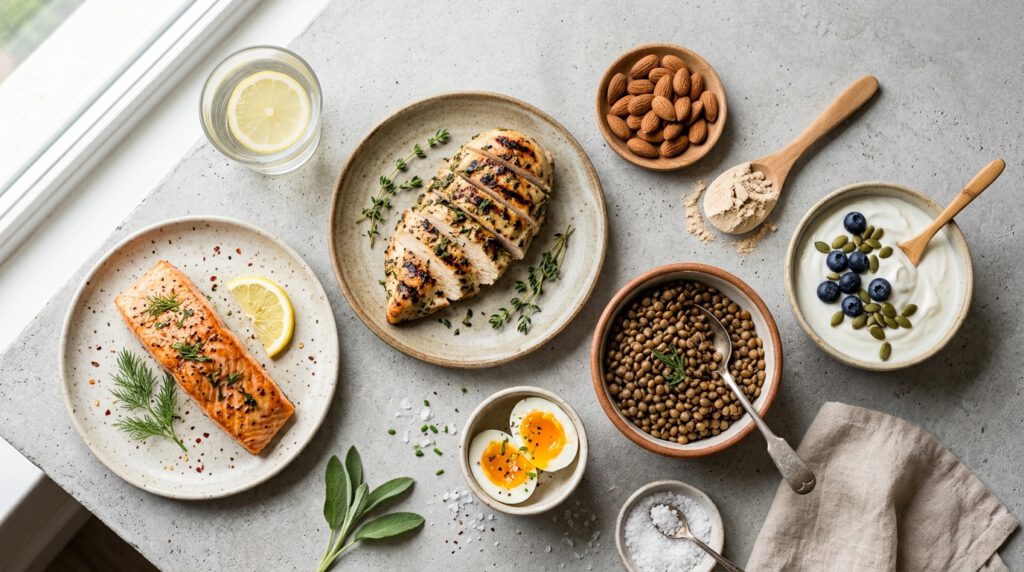
- Prioritize protein. Protein supports fullness, helps preserve muscle mass, and increases the release of hormones like GLP-1 that regulate appetite.
- Add or increase strength training. Building muscle helps offset the metabolic slowdown that comes with weight loss.
- Vary your workout intensity. Your body adapts to repeated routines — introducing HIIT or increasing intensity can reignite progress.
- Protect your sleep. Aim for 7–9 hours nightly to keep hunger hormones in balance.
- Limit alcohol. Alcohol is calorie-dense, can increase appetite, and easily disrupts a calorie deficit.
- Measure progress beyond the scale. Waist circumference, how your clothes fit, energy levels, and workout performance often move before the scale does.

When to Seek Professional Help
If you’ve made consistent adjustments and the plateau still won’t budge — or if you suspect an underlying hormonal or medical condition — it’s worth consulting a doctor, registered dietitian, or bariatric specialist.
For individuals dealing with obesity-related health conditions, medical options such as GLP-1 medications or weight loss surgery can help address biological barriers that diet and exercise alone can’t overcome.
A professional evaluation can determine whether that path makes sense for you.
Frequently Asked Questions
Why do I feel thinner but weigh the same?
This is often a sign of body recomposition — you’re losing fat and gaining muscle at similar rates. Since muscle is denser than fat, it takes up less space, so you can look and feel leaner without the scale changing. Reduced bloating or water retention can also make you feel lighter even before the number drops.
How long do weight loss plateaus typically last?
There’s no fixed timeline, but most plateaus resolve within a few weeks once you adjust your calorie intake, exercise routine, or address underlying factors like sleep and stress. If it persists for over a month despite consistent changes, it’s worth investigating other causes.
Is it harder to lose weight as you age or if you’re already lean?
Yes. Smaller or older individuals typically have less lean muscle mass, which lowers their calorie needs at rest. This means smaller adjustments to diet or activity may be needed to maintain a deficit compared to someone with a higher starting weight.
The Bottom Line
A stalled scale doesn’t mean your effort has stopped working — it usually means your body has adapted, and your plan needs to adapt with it.
Whether the cause is muscle gain, water retention, a shifting metabolism, or simply hormones doing what hormones do, a weight loss plateau is a normal, temporary part of almost every weight loss journey.
Track more than just the number, make targeted adjustments, and give your body time to respond. Progress is still happening — even when the scale insists otherwise.
Related Posts
Stay Informed With the Latest & Most Important News
Previous Post
Next Post









Advertisement