





















Now Reading: Why Am I Gaining Weight While Eating Less? (5 Hidden Reasons)
-
01
Why Am I Gaining Weight While Eating Less? (5 Hidden Reasons)


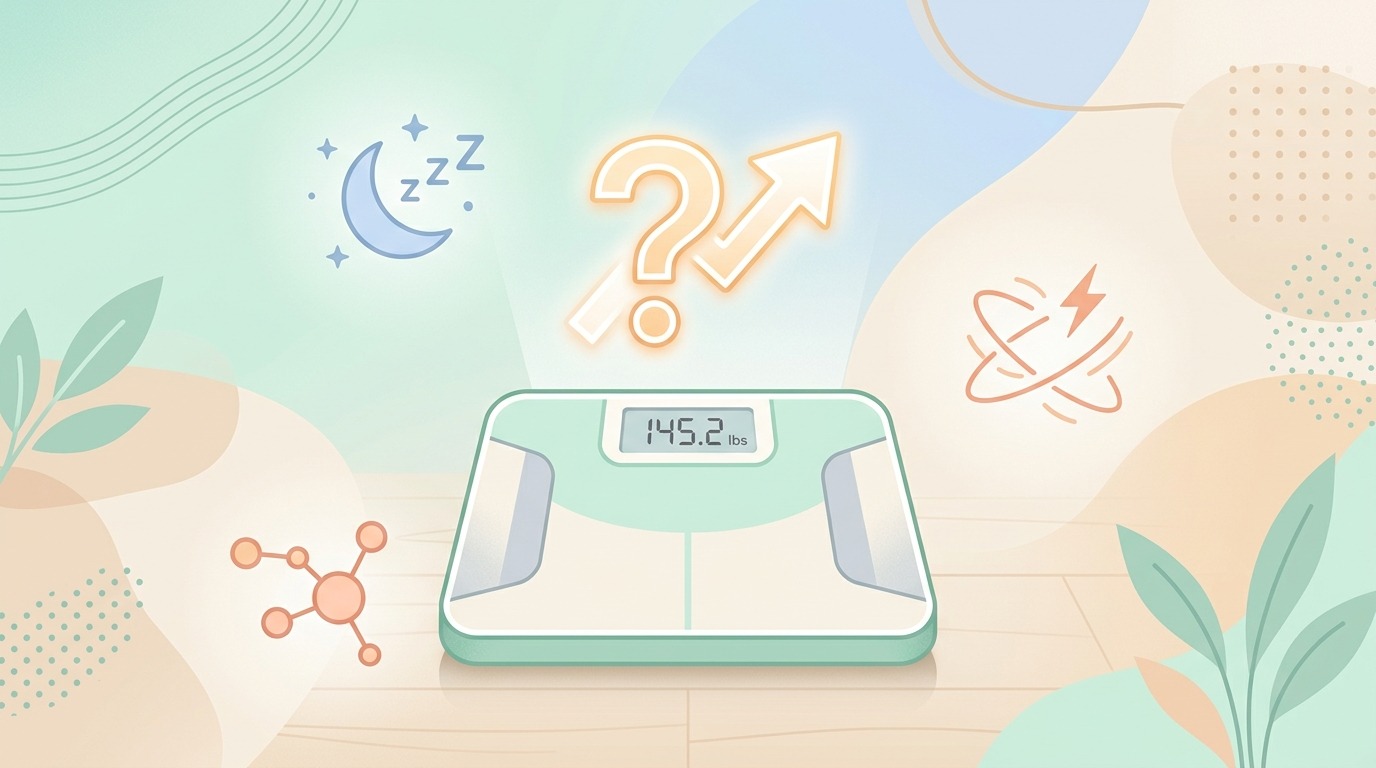
You’ve cut portions, skipped the extra snack, maybe even started skipping meals altogether — and yet the number on the scale keeps creeping up. It feels like your body is working against you.
The frustrating truth is that eating less doesn’t automatically mean losing weight. Your body doesn’t just count calories in and calories out; it responds to stress, sleep, hormones, and how consistently you eat. When that balance is disrupted, weight can go up even while your plate is getting smaller.
Here are five of the most common — and most overlooked — reasons this happens, plus how to tell what’s really going on and when it’s worth seeing a doctor.
Table of contents
- First, a Quick Reality Check: Is It Really Fat?
- 1. Your Metabolism Has Adapted to “Starvation Mode”
- 2. Chronic Stress Is Raising Your Cortisol
- 3. Poor Sleep Is Disrupting Your Hunger Hormones
- 4. You’re Losing Muscle, Not Just Fat
- 5. An Underlying Medical Condition
- How to Tell If It’s Fat, Water, or Muscle
- When Weight Gain Is a Red Flag
- What Actually Helps
- Frequently Asked Questions
First, a Quick Reality Check: Is It Really Fat?
Before assuming the worst, it helps to know that not all weight gain is fat gain.
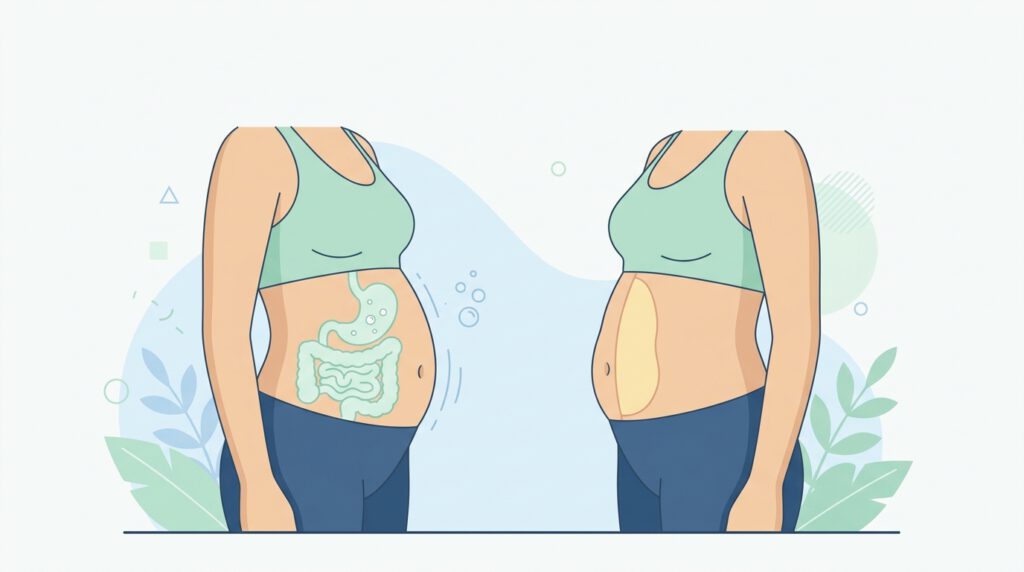
The number on the scale reflects fat, water, muscle, and even the contents of your digestive system, all mixed together. Someone who has started exercising, eats a bit more salt one day, or is mid-menstrual-cycle can easily see the scale move by a kilogram or two without gaining any fat at all.
It’s also worth being honest about the “eating less” part. Many people underestimate how much they’re actually consuming — a splash of cooking oil, a sugary coffee, weekend meals that don’t match weekday discipline, or simply moving less throughout the day (sitting more, walking less) than they realize.
This doesn’t mean the frustration isn’t real; it means the full picture is usually more complicated than “calories in vs. calories out.”
With that in mind, here are the hidden physiological reasons weight can climb even on a genuinely reduced-calorie diet.
1. Your Metabolism Has Adapted to “Starvation Mode”
When you cut calories too far or for too long, your body doesn’t just quietly burn fat — it reacts as though food is scarce. This is sometimes called metabolic adaptation: your resting metabolic rate slows down so you burn fewer calories just existing, digesting food, and moving through your day.
This response made sense for early humans surviving food shortages, but for a modern dieter it means fewer calories burned at rest, even if intake has genuinely dropped. It’s also a major reason many people regain weight after a strict diet — the body has become more “efficient” and holds onto energy more tightly than before.
2. Chronic Stress Is Raising Your Cortisol
Ongoing stress keeps your body producing cortisol, a hormone that, among other things, signals your body to hold onto energy stores — particularly around the abdomen. Elevated cortisol can also increase appetite and cravings, especially for high-sugar, high-fat “comfort” foods, which makes an already-hard calorie deficit even harder to maintain consistently.
Even if you’re technically eating less on paper, chronic stress can quietly work against you through both fluid retention and shifts in fat storage patterns.
3. Poor Sleep Is Disrupting Your Hunger Hormones
Sleep is one of the most underrated factors in weight regulation. Getting fewer than six or seven hours a night disrupts ghrelin and leptin, the hormones that control hunger and fullness — ghrelin (the “I’m hungry” signal) tends to rise, while leptin (the “I’m full” signal) tends to fall.
The result: you feel hungrier, crave denser carbohydrate- and fat-heavy foods, and your body becomes more prone to holding onto fluid. Poor sleep is also linked to higher cortisol levels, compounding the stress effect above.
4. You’re Losing Muscle, Not Just Fat
Eating too little — especially without enough protein or strength training — can push your body to break down muscle tissue for energy, not just fat. This matters because muscle is metabolically active tissue; it burns calories even at rest. Less muscle means a lower daily calorie burn overall, which can make maintaining or losing weight progressively harder over time, even on the same “reduced” intake.
On the flip side, if you’ve recently started exercising, some scale increase can simply reflect muscle gain and fluid used to repair muscle tissue — not fat. Body composition (how much of your weight is fat vs. muscle) matters more than the number alone.
5. An Underlying Medical Condition
Sometimes unexplained weight gain isn’t about diet or lifestyle at all — it’s a signal from the body that something else needs attention. Conditions and situations linked to weight gain include:
- Hypothyroidism — an underactive thyroid slows metabolism significantly, and often comes with fatigue, feeling cold, hair thinning, and constipation.
- PCOS (polycystic ovary syndrome) — affects insulin regulation in a way that promotes fat storage, especially around the midsection.
- Cushing’s syndrome — excess cortisol production, sometimes from a pituitary or adrenal issue.
- Certain medications — some antidepressants, antipsychotics, corticosteroids (like prednisone), beta blockers, and antihistamines are known to cause weight or fluid-related gain as a side effect.
- Menopause and hormonal shifts — declining estrogen is associated with increased body fat and changes in where fat is stored.
If any of this sounds familiar, it’s worth raising with a doctor rather than trying to out-diet a hormonal issue.
How to Tell If It’s Fat, Water, or Muscle
A quick way to make sense of an unexpected scale increase:
| Type | What it feels/looks like |
|---|---|
| Fat | Gradual increase in size around the belly, hips, or arms; softer appearance |
| Water | Puffiness, especially in the face, hands, or legs; weight fluctuates day to day |
| Muscle | Body feels firmer or more toned even as weight stays the same or rises slightly |
Tracking body measurements or progress photos alongside — not instead of — the scale gives a far more accurate picture than weight alone.
When Weight Gain Is a Red Flag
Most fluctuations are harmless, but see a doctor if weight gain is rapid, unexplained, or comes with any of the following:
- Persistent fatigue or feeling unusually cold
- Swelling in the legs, ankles, or abdomen
- Shortness of breath
- Hair loss or changes in your menstrual cycle
- Constipation that doesn’t improve
- Heart palpitations or irregular heartbeat
These can point to thyroid, heart, kidney, or hormonal issues that need proper testing rather than another round of dieting.
What Actually Helps
Rather than cutting calories even further — which often backfires by deepening metabolic adaptation — small, sustainable changes tend to work better long-term:
- Eat consistently rather than skipping meals, which helps avoid the “starvation mode” response
- Include enough protein to help preserve muscle mass
- Prioritize 7–9 hours of sleep
- Build in stress-management habits, even briefly (walking, breathing exercises, time away from screens)
- Add movement throughout the day, not just structured workouts
- Stay hydrated — mild dehydration can actually worsen water retention
If none of this moves the needle, that’s a sign to loop in a doctor or registered dietitian rather than restricting further.
Frequently Asked Questions
Can eating too little actually cause weight gain?
Yes. Severe or prolonged calorie restriction can slow your metabolism, increase stress hormones, and disrupt sleep and hunger signals — all of which can lead to weight gain or a stubborn plateau, even with genuinely lower intake.
Is water retention the same as fat gain?
No. Water retention is a temporary buildup of fluid, often from sodium intake, hormonal shifts, stress, or new exercise. It can add several pounds to the scale within a day or two, but it isn’t fat and typically resolves on its own.
How long does it take for metabolism to “reset” after undereating?
This varies by person, but gradually increasing calorie intake to a sustainable level, prioritizing protein, and reducing stress can support metabolic recovery over weeks to months. A doctor or dietitian can help tailor this to your situation.
When should I see a doctor about unexplained weight gain?
If weight gain is sudden, significant, or paired with symptoms like fatigue, swelling, hair loss, or an irregular heartbeat, it’s worth getting bloodwork (thyroid, hormone, and glucose panels are common starting points) rather than assuming it’s diet-related.
This article is for general educational purposes and isn’t a substitute for personalized medical advice. If you’re concerned about unexplained weight changes, please consult a doctor or registered dietitian.
Related Posts

Stay Informed With the Latest & Most Important News
Previous Post
Next Post









Advertisement