























Now Reading: Chrononutrition: The Best Time to Eat Carbs Based on Your Sleep Schedule
-
01
Chrononutrition: The Best Time to Eat Carbs Based on Your Sleep Schedule


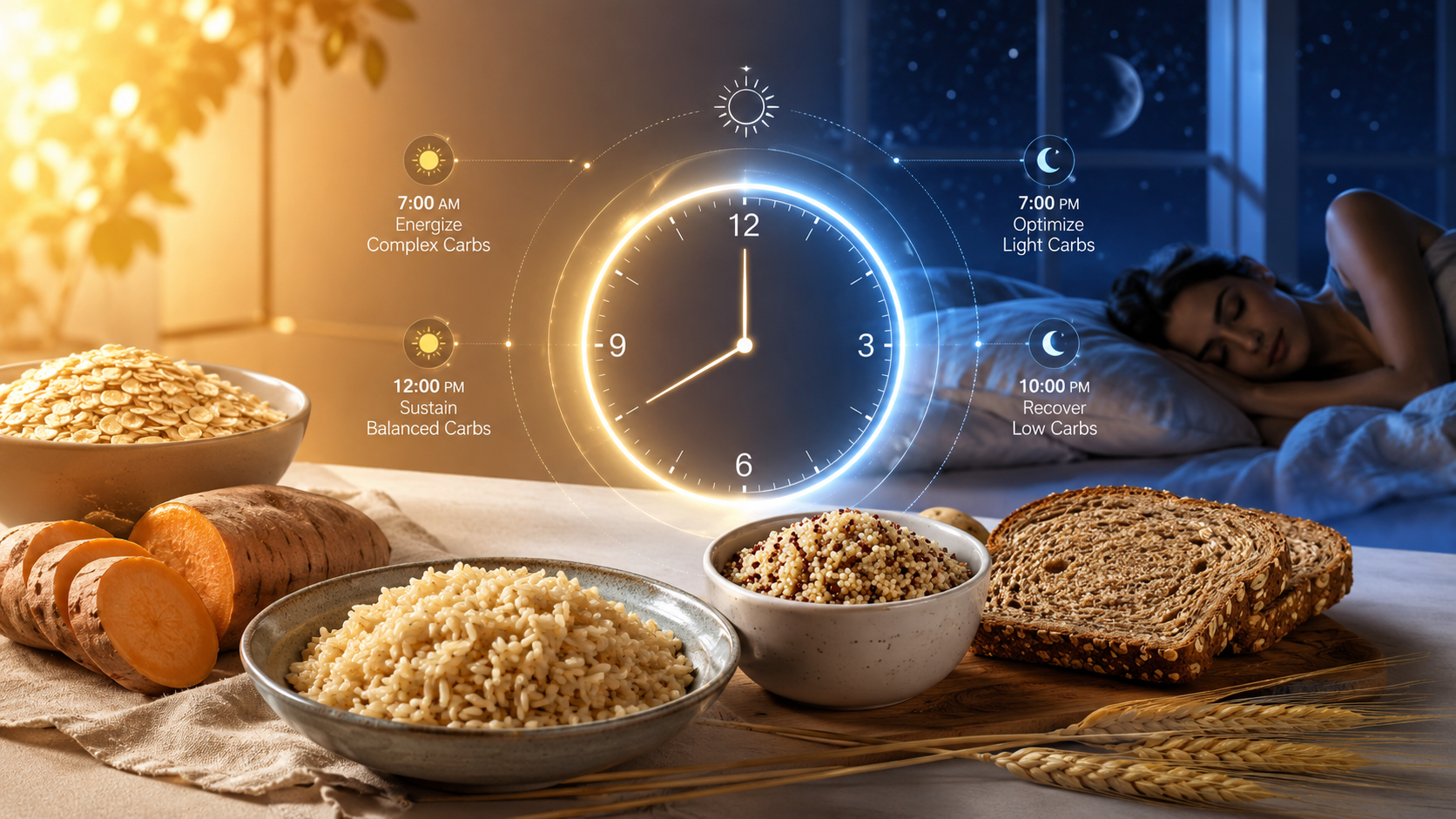
Your body doesn’t process carbohydrates the same way at 8 AM as it does at 11 PM. According to the science of chrononutrition, the timing of your meals matters almost as much as the food itself.
Research suggests that eating carbs when your insulin sensitivity is naturally higher—typically earlier in the day—can improve energy levels, support weight management, stabilize blood sugar, and even enhance sleep quality.
So when is the best time to eat carbs?
The answer depends on your sleep schedule, circadian rhythm, and chronotype.
Table of contents
- What Is Chrononutrition?
- Why Carb Timing Matters
- The Best Time to Eat Carbs Based on Your Sleep Schedule
- Are Carbs Before Bed Good or Bad?
- How to Structure Your Meals With Chrononutrition
- Health Benefits of Chrononutrition
- Chrononutrition Isn’t About Perfection
- Final Thoughts
What Is Chrononutrition?
Chrononutrition is a nutritional approach based on the body’s internal biological clock, also known as the circadian rhythm.
Originally developed by Dr. Alain Delabos in 1986, chrononutrition focuses on eating specific foods at optimal times throughout the day to align with hormonal fluctuations, metabolism, and energy production.
Your circadian rhythm influences:
- Insulin sensitivity
- Cortisol production
- Melatonin release
- Digestion and metabolism
- Hunger hormones like ghrelin
When eating patterns become irregular—late-night meals, skipped breakfasts, constant snacking, or shift work—the body’s internal clock becomes disrupted. Over time, this may contribute to:
- Weight gain
- Insulin resistance
- Poor sleep
- Fat accumulation
- Metabolic dysfunction
Chrononutrition aims to reverse this cycle through structured meal timing.
Why Carb Timing Matters
Carbohydrates affect blood sugar and insulin more than any other macronutrient.
During the morning and early afternoon, the body is generally more insulin-sensitive, meaning it can process carbohydrates more efficiently and use them for energy rather than storing them as fat.
As evening approaches:
- Metabolism slows down
- Glucose tolerance decreases
- Fat oxidation becomes less efficient
- Blood sugar regulation worsens
This is why large carb-heavy dinners often lead to:
- Poor sleep quality
- Higher overnight blood sugar
- Increased fat storage
- Morning sluggishness
Most experts recommend eating your final carb-heavy meal at least 3 to 4 hours before bedtime.
The Best Time to Eat Carbs Based on Your Sleep Schedule
1. Early Birds (Wake Up: 5 AM – 7 AM | Sleep: 9 PM – 10 PM)
Optimal Carb Window:
7:00 AM to 3:00 PM
Early risers experience an earlier cortisol and insulin sensitivity peak, making mornings the ideal time for carbohydrates.
Best Strategy
Breakfast & Lunch
Focus on complex carbohydrates such as:
- Oats
- Sweet potatoes
- Whole grains
- Brown rice
- Whole-grain bread
Pair carbs with protein and healthy fats for sustained energy.
Dinner
Keep dinner light and low in starches.
Choose:
- Lean proteins
- Vegetables
- Healthy fats
Avoid heavy meals after 6 PM to support deeper, uninterrupted sleep.
2. Standard Schedule (Wake Up: 7 AM – 9 AM | Sleep: 10 PM – 11 PM)
Optimal Carb Window:
8:00 AM to 5:00 PM
This schedule aligns with the natural circadian rhythm of most adults.
Best Strategy
Morning & Early Afternoon
Eat a balanced breakfast and a substantial lunch containing:
- Whole grains
- Legumes
- Fiber-rich carbs
- Protein sources
This helps stabilize energy and reduce cravings later in the day.
Evening
Finish dinner between 6 PM and 7 PM whenever possible.
If including carbs at dinner:
Keep portions small
Choose low-glycemic options
Add plenty of fiber and vegetables
Good choices include:
- Quinoa
- Sweet potato
- Whole-wheat pasta
- Brown rice
3. Night Owls (Wake Up: 10 AM+ | Sleep: 1 AM – 2 AM)
Optimal Carb Window:
11:00 AM to 8:00 PM
Night owls typically experience delayed hormonal patterns, including a later cortisol peak.
That means insulin sensitivity may also shift later into the day.
Best Strategy
Afternoon
Your largest carbohydrate intake should happen around lunch or early afternoon.
Choose slow-digesting carbs like:
- Oatmeal
- Whole grains
- Beans
- Sweet potatoes
Evening
Avoid large starchy meals within 4 hours of bedtime.
Late-night pizza, desserts, or refined carbs may significantly disrupt sleep and increase overnight blood sugar.
4. Shift Workers
Optimal Carb Window:
Early in your active “day”
Shift workers face one of the biggest challenges in chrononutrition because irregular schedules disrupt the circadian rhythm.
This increases the risk of:
- Obesity
- Type 2 diabetes
- Insulin resistance
- Poor sleep quality
Best Strategy
Treat the hours immediately after waking as your biological morning.
First Half of Your Wake Cycle
Consume most of your carbohydrates during this period.
Second Half
Transition toward:
- Lean proteins
- Healthy fats
- Non-starchy vegetables
Avoid large carb-heavy meals close to your main sleep period.
Are Carbs Before Bed Good or Bad?
The answer depends on the quantity and type of carbs.
Large Carb-Heavy Meals Before Bed
Usually harmful because they can:
- Spike blood sugar
- Increase fat storage
- Disrupt sleep quality
- Reduce overnight fat burning
Small Portions of Complex Carbs
Potentially beneficial when combined with:
- Magnesium-rich foods
- Tryptophan-rich foods
Examples:
- Small bowl of oatmeal with yogurt and nuts
- Banana with almond butter
- Greek yogurt with oats
These combinations may support serotonin and melatonin production, helping the body relax and prepare for sleep.
How to Structure Your Meals With Chrononutrition
Breakfast
Focus on:
- Protein
- Whole-grain carbs
- Healthy fats
Examples:
- Eggs with whole-grain toast
- Oatmeal with nuts
- Greek yogurt with berries
Morning carbs may also reduce ghrelin, the hunger hormone.
Lunch
Build meals around:
- Whole grains or legumes
- Vegetables
- Lean protein
Examples:
- Chicken with quinoa and vegetables
- Lentil bowl with brown rice
- Salmon with sweet potato
Snack
Choose minimally processed carbohydrates paired with healthy fats.
Good options:
- Fruit with almonds
- Apple with peanut butter
- Dates with walnuts
Dinner
Keep it lighter than earlier meals.
Focus on:
- Vegetables
- Protein
- Small portions of low-glycemic carbs
Aim to eat dinner at least 4 hours before sleep whenever possible.
Health Benefits of Chrononutrition
Studies suggest chrononutrition may help:
- Improve blood sugar control
- Reduce insulin resistance
- Support fat loss
- Improve sleep quality
- Lower body fat percentage
- Reduce overeating and cravings
One clinical trial published by Cambridge University Press found that overweight women who ate dinner earlier lost more weight and showed better carbohydrate metabolism compared to late-dinner eaters.
Additional research also links later meal timing and later sleep schedules with higher body fat percentages.
Chrononutrition Isn’t About Perfection
One important criticism of traditional chrononutrition is that it can become overly restrictive.
Eliminating foods entirely often leads to unsustainable dieting habits.
A more practical approach is:
- Eating at regular times
- Prioritizing carbs earlier in the day
- Choosing higher-quality carbohydrates
- Adjusting meal timing to your lifestyle
There is no single perfect eating schedule for everyone.
The best nutritional strategy is one that supports:
- Your health
- Your sleep
- Your work schedule
- Your long-term consistency
Final Thoughts
Chrononutrition shows that when you eat can be just as important as what you eat.
For most people, consuming the majority of carbohydrates earlier in the day aligns best with the body’s natural circadian rhythm and metabolic function.
Whether you’re an early bird, a night owl, or a shift worker, aligning carb intake with your sleep-wake cycle may improve:
- Energy levels
- Weight management
- Blood sugar stability
- Sleep quality
The key is simple:
Eat carbs when your body can use them most efficiently—and avoid heavy meals too close to bedtime.
Related Posts
Stay Informed With the Latest & Most Important News
Previous Post
Next Post










Advertisement