



















Now Reading: Beta-Alanine: Benefits, Side Effects, and Whether It’s Worth Taking
-
01
Beta-Alanine: Benefits, Side Effects, and Whether It’s Worth Taking


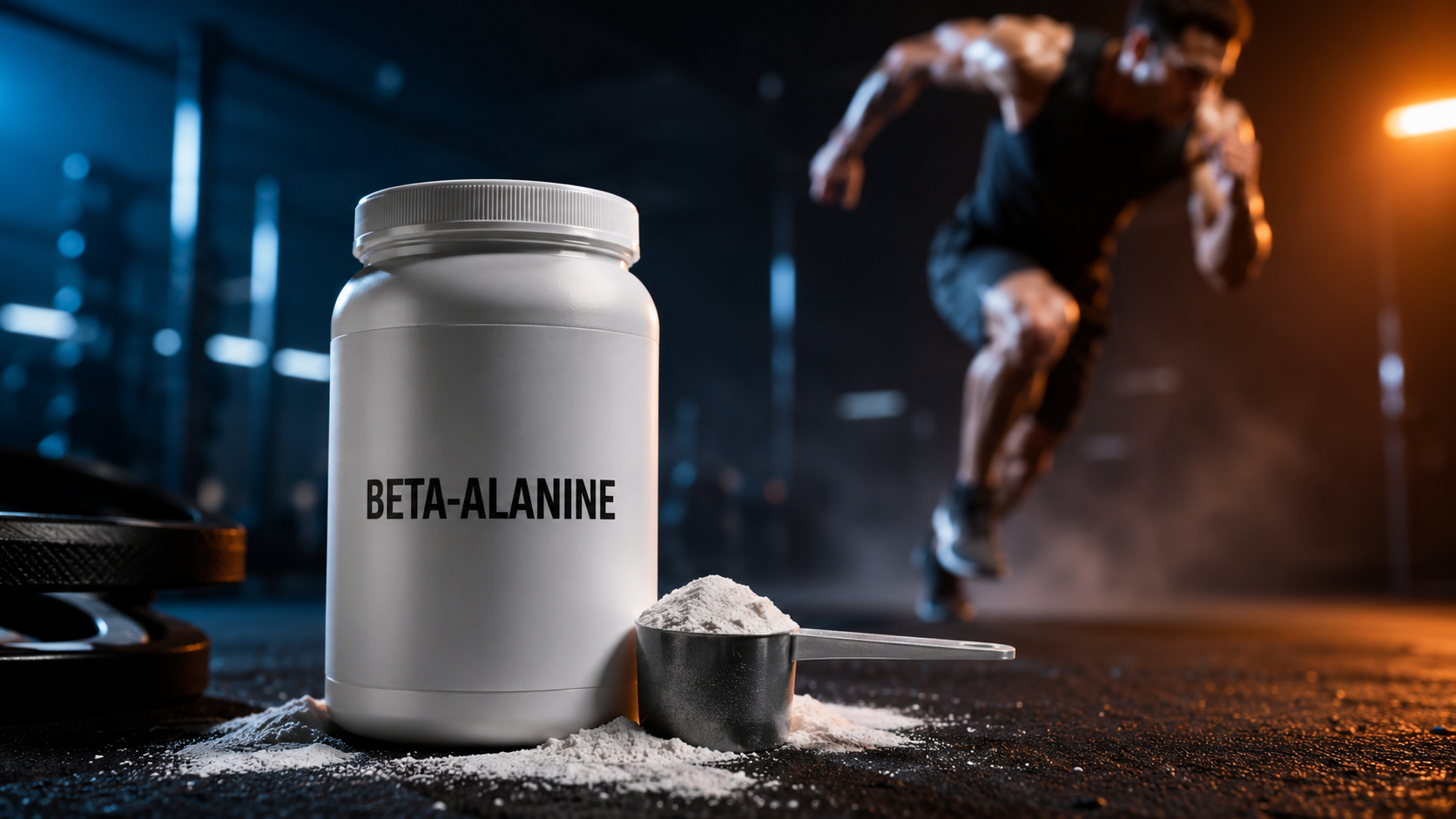
If you’ve ever felt a strange tingling in your face or hands a few minutes after taking a pre-workout supplement, there’s a good chance beta-alanine was the culprit.
It’s one of the most researched and widely used ingredients in sports nutrition, but it’s also one of the most misunderstood — some people swear by it, others feel nothing at all.
In this guide, we’ll break down exactly what beta-alanine is, how it works, its real evidence-backed benefits, the correct dosage, its side effects, and — most importantly — whether it’s actually worth taking for your specific training goals.
Table of contents
What Is Beta-Alanine?
Beta-alanine is a non-essential amino acid, meaning your body can produce it on its own.
Unlike most amino acids, though, it isn’t used to build muscle protein directly.
Instead, its main job is to combine with the amino acid histidine to form carnosine, a compound stored primarily in your fast-twitch (type II) muscle fibers — the ones responsible for short, explosive efforts.
Carnosine acts as a buffer against hydrogen ion buildup (the acidity behind that “burning” feeling) during intense exercise.
The more carnosine you have in your muscles, the longer you can push before fatigue forces you to slow down.
Beta-alanine occurs naturally in animal proteins like chicken, beef, and pork, which is why vegans and vegetarians tend to have lower baseline carnosine levels — and often notice a bigger benefit from supplementing.
How Does Beta-Alanine Work?
When you supplement with beta-alanine daily, your muscle carnosine stores gradually rise.
This isn’t an instant effect like caffeine — it takes consistent daily intake for at least 2 to 4 weeks (often up to 10 weeks for maximum saturation) before you notice a meaningful difference.
Once carnosine levels are elevated, your muscles are better equipped to resist the acidic environment created during high-intensity effort, which translates into:
- Delayed onset of muscular fatigue
- More reps or seconds of effort before your performance drops off
- A slightly faster recovery between hard efforts
Key Benefits of Beta-Alanine
1. Improved Muscular Endurance
By buffering lactic acid buildup, beta-alanine helps you maintain a more alkaline muscle environment. This reduces the early “burn” during sprints, heavy sets, or repeated high-intensity efforts, letting you squeeze out a few extra reps or seconds of output.
2. Delayed Muscle Fatigue
This is beta-alanine’s signature effect. It’s most noticeable during activities lasting 1 to 4 minutes at near-maximal intensity — think 400m sprints, heavy barbell complexes, or a hard round of intervals.
3. Better Performance in High-Intensity Interval Training (HIIT)
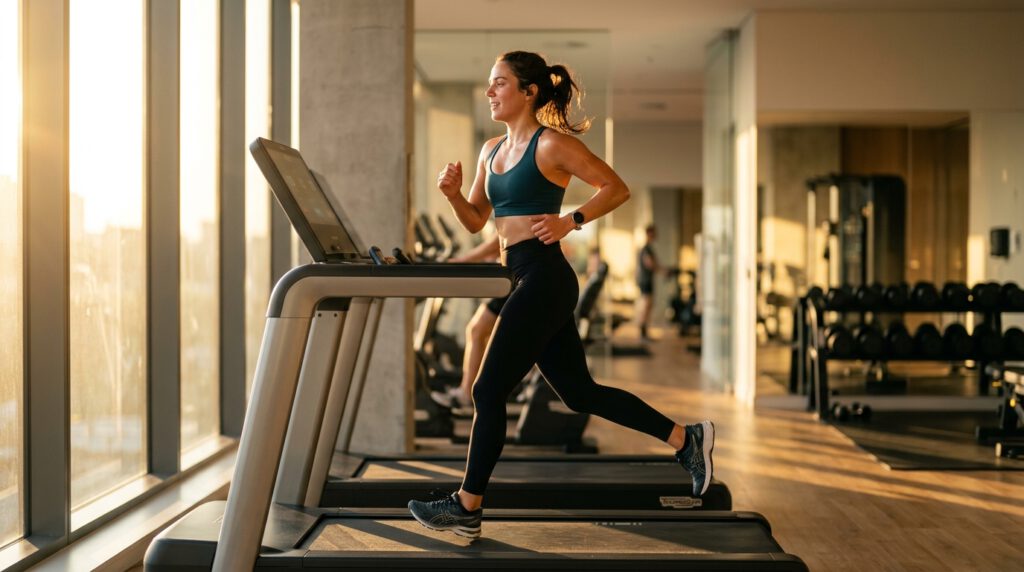
Athletes who alternate between hard efforts and short recovery periods — HIIT, CrossFit, rowing, combat sports — tend to benefit the most, since beta-alanine specifically targets the fatigue mechanism triggered by repeated intense bursts.
4. Support for Team and Explosive Sports
Sports like soccer, basketball, hockey, and football involve repeated short bursts of maximal effort. Beta-alanine can help athletes sustain that explosiveness deeper into a match or training session.
5. Indirect Support for Muscle Growth
Beta-alanine doesn’t build muscle on its own, but by letting you train harder and longer before fatigue sets in, it can indirectly support hypertrophy by increasing total training volume over time.
6. Particularly Useful for Vegetarians and Vegans
Since dietary carnosine mainly comes from meat and fish, plant-based athletes typically start with lower carnosine stores — meaning they may notice a more pronounced response to supplementation.
Beta-Alanine Dosage: How Much Should You Take?
The generally recommended dosage is 3 to 6 grams per day, with most research pointing to 4–6 grams daily for optimal carnosine saturation.
Key dosage guidelines:
- Split your doses: Instead of taking the full amount at once, divide it into 2–3 smaller servings of 1.5–2.5 grams throughout the day to minimize tingling.
- Be consistent: Unlike caffeine, timing around your workout doesn’t matter much — what matters is taking it every day.
- Loading phase: Give it 2–4 weeks minimum (up to 10 weeks for full effect) before judging whether it’s working for you.
- Cycle length: Many people run beta-alanine for 4–10 week blocks, sometimes followed by a break.
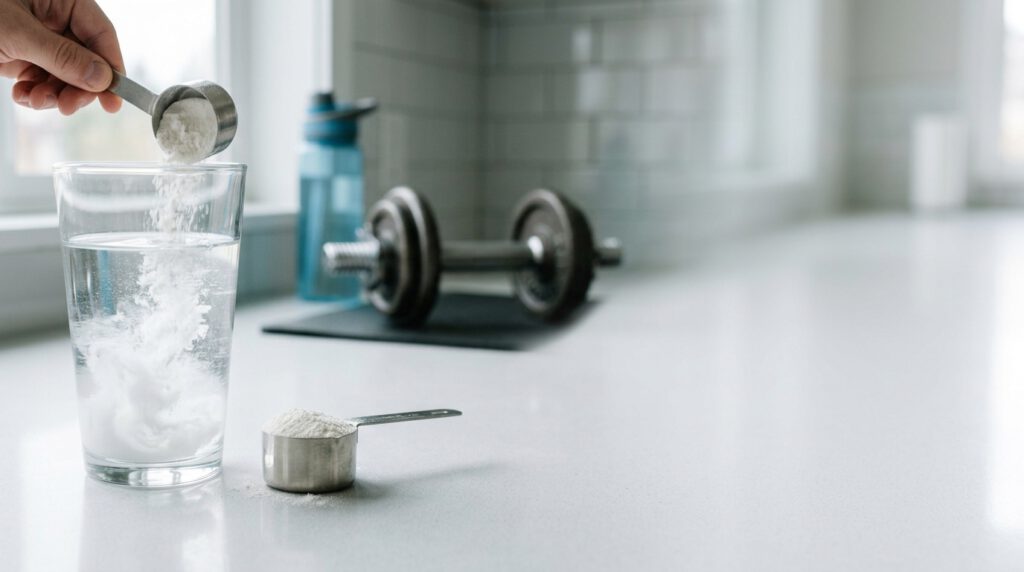
Beta-alanine is available as a standalone powder, in capsules, or blended into pre-workout formulas alongside creatine, caffeine, and citrulline.
Side Effects of Beta-Alanine
Beta-alanine has a strong safety profile at recommended doses, but a few side effects are worth knowing about.
Paresthesia (the “tingles”)
This is the hallmark — and mostly harmless — side effect: a tingling, itching, or prickling sensation in the face, neck, hands, or chest. It typically appears 15–20 minutes after a larger dose and fades within an hour or two. It’s uncomfortable for some, but not dangerous.
How to reduce it:
- Split your daily dose into smaller servings (1.5–1.6 g at a time)
- Use a sustained-release formula designed to minimize tingling
- Take it with food
Mild Gastrointestinal Discomfort
Less common, but some users report mild nausea or stomach upset, particularly on an empty stomach. Taking beta-alanine with a meal usually resolves this.
Allergic Reactions (Rare)
As with any supplement, rare allergic reactions are possible. Stop use and seek medical attention if you notice swelling, hives, trouble breathing, or dizziness.
Long-Term Safety
Most studies cover supplementation periods of up to 10 weeks. There’s no strong evidence of serious long-term risk at standard doses, but data on extended use beyond that window is still limited — so periodic breaks are a reasonable precaution.
Beta-alanine has no major known interactions with food, alcohol, or common supplements like creatine, caffeine, or protein. Still, always check with a healthcare provider before starting any new supplement, especially if you’re pregnant, breastfeeding, or managing a medical condition.
Can You Combine Beta-Alanine With Other Supplements?
Yes — it’s actually one of the more “stackable” supplements on the market:
- Beta-alanine + Creatine: A classic combo. Creatine boosts power output for short, explosive efforts; beta-alanine extends how long you can sustain high intensity. Together, they cover both ends of anaerobic performance.
- Beta-alanine + Caffeine: Common in pre-workout blends. Caffeine sharpens focus and energy, while beta-alanine delays the fatigue that would otherwise cut a hard session short.
- Beta-alanine + Protein: Supports both performance during training and recovery afterward.
Is Beta-Alanine Worth Taking?
Here’s the honest, practical answer: it depends on what you do.
Beta-alanine is likely worth it if you:
- Train in short, maximal-intensity efforts (1–4 minutes), like sprints, HIIT, or heavy circuit training
- Play sports involving repeated bursts of speed or power (soccer, basketball, combat sports, rowing)
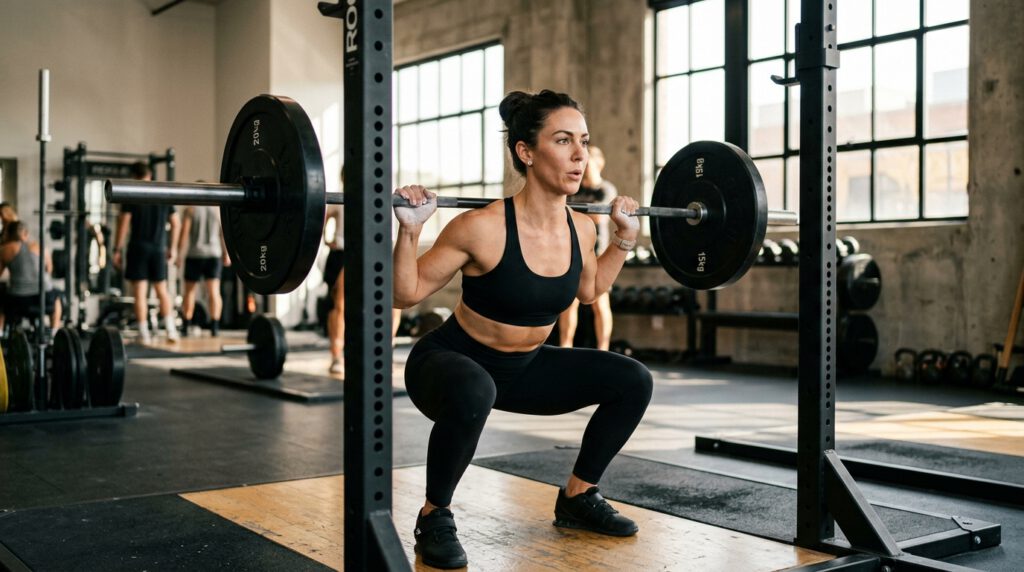
- Do CrossFit-style or high-volume resistance training
- Follow a vegan or vegetarian diet and want to raise low baseline carnosine levels
You probably won’t notice much difference if you:
- Do mostly low-intensity, steady-state cardio (long slow runs, easy cycling)
- Train casually without pushing into that 1–4 minute maximal-effort zone
- Are looking for a supplement that directly builds muscle mass (it doesn’t)
For the right athlete, beta-alanine is a low-risk, well-researched, and affordable way to extend high-intensity performance. For others, the money might be better spent elsewhere.
Frequently Asked Questions
Does beta-alanine build muscle?
Not directly. It doesn’t increase muscle protein synthesis on its own, but by letting you train harder for longer, it can indirectly support muscle growth over time.
Is the tingling sensation dangerous?
No. Paresthesia is harmless and temporary. It can be minimized by splitting your dose or using a sustained-release formula.
How long until I notice results?
Most people need at least 2–4 weeks of consistent daily use for carnosine levels to build up enough to notice a performance difference.
Can I take beta-alanine every day, including rest days?
Yes — and you should. Since it works by gradually raising carnosine stores, consistency matters more than workout-day timing.
Is beta-alanine safe for beginners?
Generally yes, at standard doses of 3–6 g per day split into smaller servings. As always, check with a healthcare professional first if you have any underlying health conditions.
Best Beta-Alanine Supplements to Buy
If you’ve decided beta-alanine fits your training, here are some well-known, highly rated options available on Amazon:
- NOW Sports Beta-Alanine Pure Powder, 2,000 mg, 500g – Made with CarnoSyn®, a clinically studied form of beta-alanine. Great for those who want a pure, unflavored powder they can dose precisely.
- NOW Sports Beta-Alanine 750 mg Veggie Capsules (120 ct) – A convenient capsule option for anyone who’d rather skip the powder scoop-and-mix routine.
- BulkSupplements Beta Alanine Powder, 500g – Unflavored, gluten-free, and budget-friendly at 3g per serving — a solid choice for stacking with creatine or a pre-workout of your choice.
- Nutricost Beta-Alanine Capsules, 3400 mg per serving (240 ct) – Third-party tested, gluten-free, and non-GMO, with a generous 60 servings per bottle.
- Thorne Beta-Alanine Sustained Release (120 tablets) – A sustained-release formula designed to minimize the tingling sensation, and NSF Certified for Sport — ideal for competitive athletes subject to drug testing.
Prices, availability, and third-party certifications can change — always check the current listing on Amazon before purchasing.
This article is for informational purposes only and is not a substitute for professional medical advice. Consult a healthcare provider before starting any new supplement, especially if you are pregnant, breastfeeding, or managing a medical condition.
Related Posts
Stay Informed With the Latest & Most Important News
Previous Post
Next Post









Advertisement