













Now Reading: The Anti-Inflammatory Diet for Athletes: Foods That Speed Up Recovery
-
01
The Anti-Inflammatory Diet for Athletes: Foods That Speed Up Recovery


Hard training breaks muscle down before it builds it back up stronger.
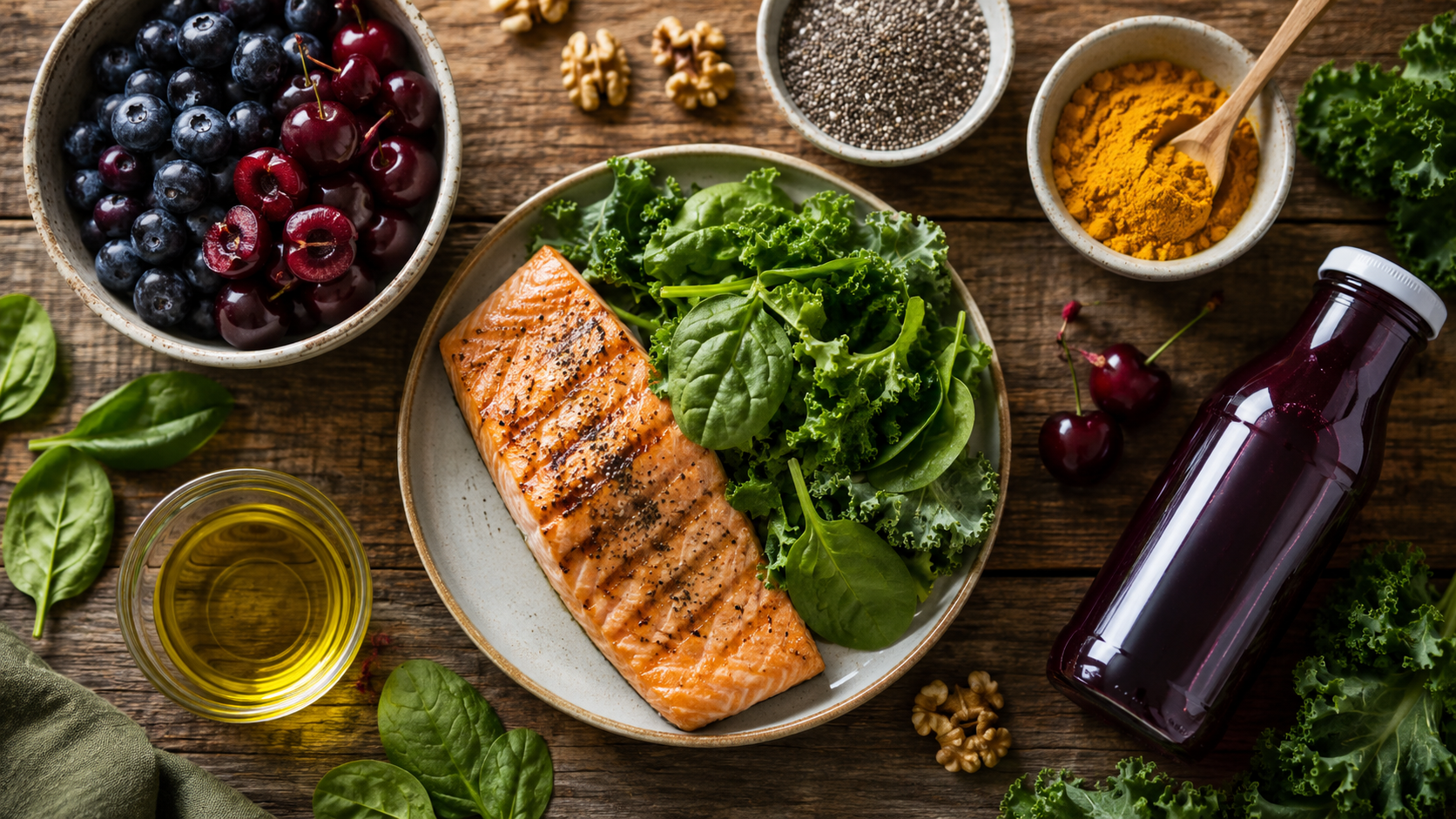
The nutrients an athlete eats in the hours and days that follow decide how fast that repair happens. An anti-inflammatory diet for athletes built around whole foods — fatty fish, tart cherries, leafy greens, and healthy fats — helps calm excess inflammation, ease soreness, and get the body ready to train again sooner.
This guide breaks down exactly which foods work, why they work, and when to eat them for the biggest recovery payoff.
Table of contents
- Why Inflammation Matters for Athletes
- Best Anti-Inflammatory Foods for Athletes
- Foods That Work Against Recovery
- What to Eat Before and After Training
- Sample One-Day Anti-Inflammatory Meal Plan
- Plant-Based and Allergy-Friendly Swaps
- Hydration, Sleep, and Recovery Habits That Support the Diet
- Food First, Supplements Second
- When Soreness Might Actually Be an Injury
- FAQ
- Key Takeaways
Why Inflammation Matters for Athletes
Every hard session creates tiny tears in muscle tissue. Inflammation is the body’s repair crew: it shows up, clears damaged cells, and rebuilds the tissue stronger than before. This process is normal, and a healthy amount of it is actually necessary for training adaptation.
Problems start when inflammation runs too high or lingers too long. Instead of supporting repair, excess inflammation causes lasting soreness, drains energy, and slows the return to full performance. That’s where food comes in — the right nutrients help keep inflammation in the productive zone instead of letting it spiral.
Normal delayed-onset muscle soreness (DOMS) usually peaks somewhere between 24 and 72 hours after a hard or unfamiliar workout. If soreness, swelling, or joint pain keeps building well past that window instead of settling down, it’s a sign to look beyond nutrition and get it checked out.
Best Anti-Inflammatory Foods for Athletes
Fatty Fish: The Omega-3 Powerhouse
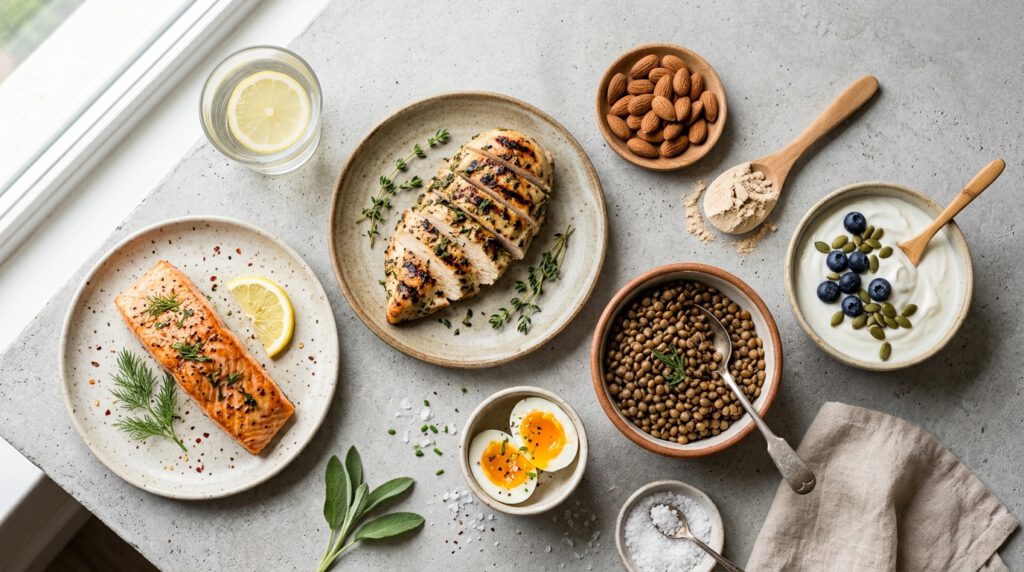
Salmon, mackerel, and sardines are loaded with EPA and DHA, the omega-3 fats that compete with the compounds responsible for driving inflammation in the body. For athletes with joint-heavy or tendon-heavy training loads, aiming for two to three servings a week is a practical target, with an extra serving on the heaviest training days. Anyone who skips fish can lean on flax, chia, and walnuts instead, though the plant-based version of omega-3 doesn’t convert into EPA and DHA as efficiently.
Tart Cherries and Berries: Polyphenols for Soreness
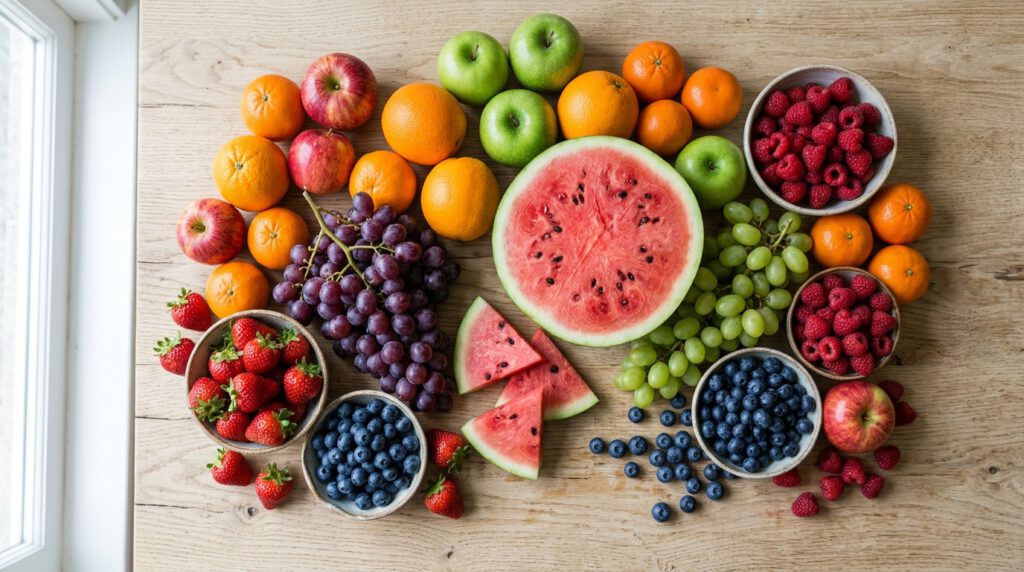
Tart cherries and colorful berries are rich in anthocyanins, plant compounds that work on some of the same pathways as common pain relievers. Athletes often use 8–12 oz of tart cherry juice or a cup of mixed berries in the post-workout window to take the edge off next-day soreness. Pomegranate is another useful source of these polyphenols and fits easily into a smoothie or post-training snack.
Leafy Greens: The Micronutrient Base
Swiss chard, spinach, kale, and collard greens deliver magnesium, vitamin K, and dietary nitrates — nutrients that support muscle function, tissue repair, and blood flow to working muscles. Two to three cups a day is a reasonable daily floor, and greens pair naturally with almost any protein and healthy fat source.
Turmeric and Ginger: Everyday Spice Upgrades
Curcumin, the active compound in turmeric, and gingerols, found in fresh ginger, both act on inflammatory signaling pathways in the body. Pairing turmeric with a pinch of black pepper improves absorption. A simple habit — half a teaspoon of turmeric and ginger stirred into a meal, smoothie, or golden milk — adds this benefit without extra calories.
Nuts, Seeds, and Olive Oil: Healthy Fats That Work Double Duty
Walnuts, chia, and flaxseed supply plant-based omega-3s and vitamin E, which protects cell membranes during aerobic training. Extra-virgin olive oil contains oleocanthal, a compound that works on some of the same enzymes targeted by common anti-inflammatory medication. A tablespoon or two of olive oil per meal, plus a small daily handful of nuts or seeds, is an easy way to build this into everyday eating.
Foods That Work Against Recovery
An anti-inflammatory eating pattern isn’t about eliminating entire food groups — athletes still need plenty of carbohydrate to fuel training. The bigger issue is over-relying on foods that crowd out real nutrition. The most common offenders are:
- Sugar-heavy sodas and energy drinks outside of training
- Frequent fried fast food
- Refined pastries and processed snack foods
- Processed meats
- Excess alcohol
None of these need to disappear completely, but keeping them as the smaller share of the diet — rather than the default — makes a measurable difference in how the body handles inflammation and recovery.
What to Eat Before and After Training
Before training: A full meal 2–4 hours out should lean on easy-to-digest carbohydrate with moderate protein and lower fat and fiber — think oatmeal with berries and yogurt, or rice with eggs and vegetables. If training starts sooner, a lighter snack 30–60 minutes beforehand, like a banana or a slice of toast with jam, sits better than a heavy meal.
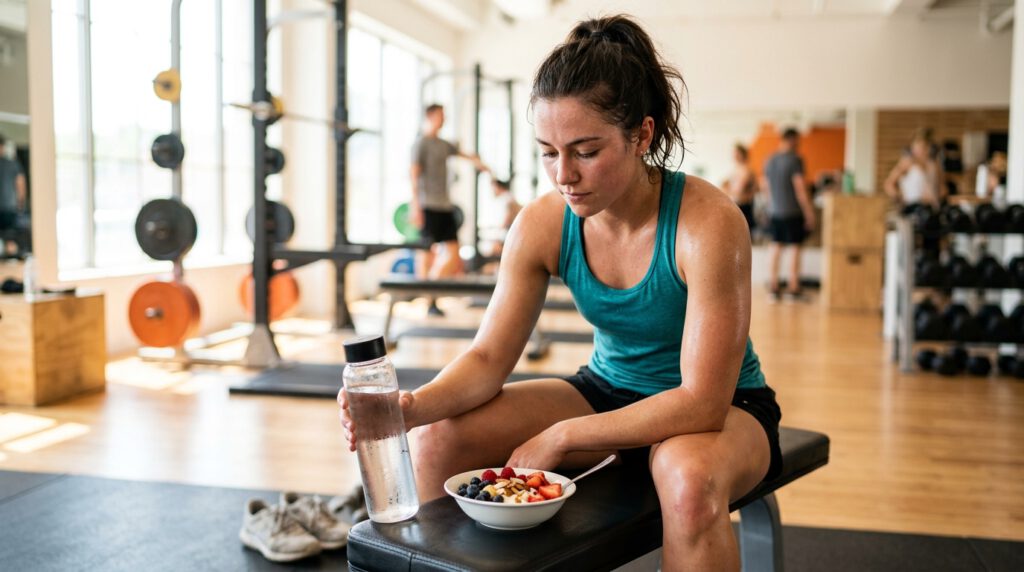
After training: The priority shifts to protein plus carbohydrate within roughly one to two hours, followed by a full anti-inflammatory meal. A smoothie with milk or soy milk, berries, and chia, or a bowl of rice with salmon and greens, both hit this target. Post-workout protein intake in the 20–40 gram range is a commonly cited benchmark.
Sample One-Day Anti-Inflammatory Meal Plan
- Breakfast: Oatmeal with milk, blueberries, chia seeds, walnuts, and Greek yogurt
- Mid-morning snack: Apple with nut butter
- Lunch: Rice or quinoa bowl with salmon, spinach, chickpeas, and olive oil dressing
- Pre-workout snack: Banana with yogurt or toast with jam
- Post-workout: Smoothie with berries, banana, and chia, or chocolate milk
- Dinner: Baked potato, roasted vegetables, leafy greens, and fish or lentils
- Evening snack: Cottage cheese with cherries, or soy yogurt with pumpkin seeds
This is a template, not a prescription — actual needs shift with body size, sport, training volume, and whether an athlete is following a plant-based or dairy-free pattern.
Plant-Based and Allergy-Friendly Swaps
Athletes who don’t eat fish, dairy, or nuts can still build a complete anti-inflammatory plate:
- No fish: tofu, tempeh, edamame, lentils, beans, flax, chia, and walnuts
- No dairy: soy yogurt and fortified soy milk generally carry more protein than almond, oat, or coconut alternatives
- No nuts: pumpkin seeds, sunflower seed butter, tahini, and hemp seeds
If certain high-fiber or high-fat foods consistently cause stomach trouble around training, adjusting timing and portion size is usually more effective than cutting the food entirely.
Hydration, Sleep, and Recovery Habits That Support the Diet
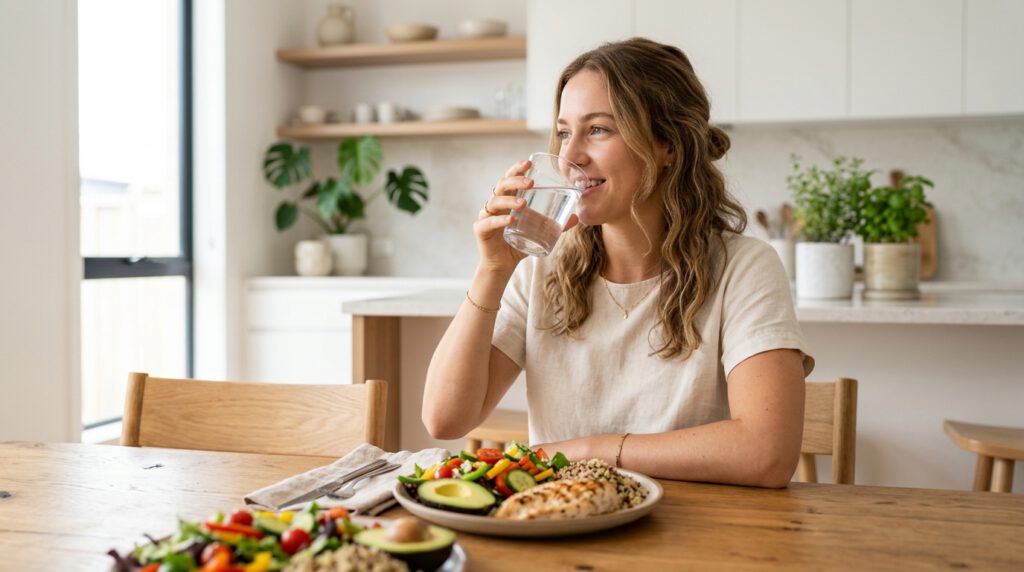
No amount of tart cherry juice makes up for poor sleep or chronic dehydration. Most adults need roughly 7–9 hours of sleep a night, and skimping on it tends to raise perceived soreness and slow recovery regardless of how clean the diet is. Fluids matter just as much, especially after long or sweaty sessions where sodium and carbohydrate replacement become part of the equation too.
An anti-inflammatory diet works best as one piece of a bigger recovery system — training load, sleep, hydration, and stress management all move the needle alongside food.
Food First, Supplements Second
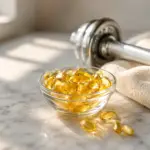
Omega-3, curcumin, and probiotic supplements come up often in recovery conversations, but their real-world benefit depends heavily on the individual, the dose, and the reason for taking them. Whole foods should be the foundation, with supplements considered only when there’s a clear gap they’re filling — and, for competitive athletes, only after checking for third-party testing and anti-doping safety.
When Soreness Might Actually Be an Injury
Everyday post-workout soreness is expected and typically resolves within a few days. Sharp pain, significant swelling, a joint that locks or gives way, or symptoms that keep getting worse instead of better are different — food isn’t going to fix those. That’s a signal to get a proper movement or medical assessment rather than trying to eat your way out of it.
FAQ
What foods reduce inflammation fastest for athletes?
Tart cherry juice and berries, eaten within 30–60 minutes after training, are among the fastest-acting options for easing next-day soreness.
How much fatty fish should athletes eat per week?
Two to three servings a week is a solid target, with an extra serving added on the heaviest training days.
Can plant-based athletes get enough omega-3s?
Yes, through flax, chia, walnuts, hemp, and soy foods — though these deliver ALA, which the body converts to EPA and DHA less efficiently than fish does.
Do anti-inflammatory foods replace ice or medication for an injury?
No. They support everyday training recovery, but an acute injury still needs proper medical evaluation and treatment.
How long does normal exercise soreness last?
Typically 24–72 hours after a hard or unfamiliar session. Soreness that keeps building past that point deserves a closer look.
Key Takeaways
An anti-inflammatory diet for athletes isn’t about one miracle food — it’s a consistent pattern built on fatty fish, berries and tart cherries, leafy greens, turmeric and ginger, and healthy fats like nuts, seeds, and olive oil, timed around training and backed by enough sleep and hydration. Get the pattern right most days, and recovery takes care of itself.
Related Posts
Stay Informed With the Latest & Most Important News
Previous Post
Next Post





Advertisement